


Latest by
-
 Registration for 2027 College Entrance Exam Begins August 24 in Jeonnam and Gwangju The registration for the 2027 College Scholastic Ability Test (CSAT) will begin on August 24, as the Jeonnam-Gwangju Integrated Education Office prepares for the first CSAT since its establishment. On August 12, the Jeonnam-Gwangju Integrated Education Office held an information session on the detailed implementation plan and registration process for the 2027 CSAT for officials from the education support offices and high schools in the Jeonnam and Gwangju regions. In the Jeonnam region, 250 registration officials attended the session at the Suncheon Bay Ecological Culture Education Center, while a simultaneous session for 80 officials took place at the former Gwangju Education Research Information Center. This session was organized to enhance the understanding of the registration process among officials and to minimize confusion in the field ahead of the first CSAT registration since the establishment of the integrated education office. Registration and changes for the 2027 CSAT will take place from August 24 to September 4, excluding Saturdays and holidays, over a period of 10 days. Current students are required to register at their current high schools, while graduates must register at their former high schools. Those who passed the high school equivalency exam must register at the testing district corresponding to their registered address. Graduates whose current address is in a different testing district from their former school may also register at their current address's testing district, even if both are in the same district but in different cities or counties. Students needing to change their registration must return to the original registration site, as changes cannot be made at different locations. Registration must be done in person, and mail-in registration is not permitted. However, individuals with disabilities, military personnel, hospitalized patients, inmates, and those residing overseas on the registration date may register through a proxy if they provide relevant documentation and proof of relationship. An online pre-registration option will also be available. Students who pre-register online must still visit the registration site to verify their identity and submit necessary documents to receive their registration confirmation. For in-person registration, students should prepare two passport-sized photos and an identification document. Graduates from other cities or testing districts may need additional documents, such as a resident registration certificate, to verify their address change. The registration fee varies based on the number of subjects chosen: 37,000 won for up to four subjects, 42,000 won for five subjects, and 47,000 won for six subjects. Starting this year, cash payments for registration fees will be eliminated, and payments will be standardized through a payment agency system. Students can use credit cards, virtual accounts, and mobile payment options. Those eligible for government assistance, such as basic livelihood recipients and single-parent families, will be exempt from the registration fee. Improvements for student convenience will also be implemented. The requirement for a photo stamp on the registration form will be abolished, and an official preliminary scoring sheet will be printed on the back of the admission ticket. Smart glasses have been added to the list of prohibited items in the exam room, and the issuance of online score reports will now extend to current students, in addition to graduates. Despite the establishment of the integrated education office, the CSAT testing districts will maintain the existing structure for the time being, operating with eight testing districts: seven education support offices in Jeonnam and one main office in Gwangju. The education office plans to consider a gradual integration plan, taking into account the different testing conditions in Jeonnam and Gwangju. The 2027 CSAT is scheduled for November 19, with scores expected to be released to students on December 11 after grading. A representative from the Jeonnam-Gwangju Education Office stated, “As this is the first year of the integrated education office, we will ensure that officials fully understand the procedures and systems from the registration stage to prevent any information gaps between Jeonnam and Gwangju. We will work closely with the education support offices and schools to ensure stable exam operations.”* This article has been translated by AI. 2026-08-12 17:28:00
 -
Aekyung Industry Reports Record Q2 Revenue of 194.2 Billion Won, 42% from Overseas Aekyung Industry reported record quarterly revenue for the second quarter of this year, achieving a turnaround to profitability compared to the previous quarter. Growth in both cosmetics and household goods sectors, particularly in overseas markets, contributed to the improved performance.The company announced on August 12 that its consolidated revenue for the second quarter reached 194.2 billion won, a 13.3% increase from the same period last year, marking the highest quarterly revenue in its history. Operating profit stood at 4.5 billion won, reflecting a return to profitability compared to the previous quarter.Notably, the growth of overseas business was significant, with overseas sales accounting for 42% of total revenue, an increase of 7 percentage points from the previous year.Cosmetics sales reached 75.3 billion won, up 20.5% year-on-year, with operating profit at 4.1 billion won. In China, the company restructured its business model and distribution channels, leading to a recovery in performance. In Japan, Aekyung expanded its offline presence with new products from its makeup brand Luna. In the U.S., AGE20’S and Luna entered local Olive Young stores, targeting the offline market.Sales in the household goods sector rose to 115.2 billion won, a 9.6% increase from the previous year, with operating profit at 400 million won. Sales of hair care and body care products expanded in overseas markets, including the U.S. and Europe.In the U.S., three products from the Kerasis line for severely damaged hair are now available in 390 Walmart locations and online. In Europe, sales channels have been broadened to include Poland, Germany, Russia, the Commonwealth of Independent States (CIS), Brazil, and Paraguay.Looking ahead, Aekyung plans to implement market-specific strategies in the second half of the year. A company representative stated, "We will continue to enter major global distribution channels and explore new markets to expand the foundation for global business growth."Additionally, Aekyung aims to increase the proportion of cosmetics sales, which was at 32% last year, to over 50% by 2028.* This article has been translated by AI. 2026-08-12 17:28:00
-
North Korea Threatens Retaliation Over South Korea's Submarine Development North Korea has condemned South Korea's efforts to develop nuclear submarines, threatening to possess the capability for retaliatory strikes that would make its adversaries' survival impossible.According to the Korean Central News Agency, Jang Kum-chul, the North Korean Foreign Ministry's First Vice Minister and head of the Department of South Korean Affairs, stated on August 12, "South Korea's ambition to possess nuclear submarines will inevitably lead to a nuclear domino effect in the Asia-Pacific region."He emphasized, "Possessing the unique capability to respond to military provocations from hostile nations with retaliatory strikes that render them unable to survive or recover is the most responsible choice for war deterrence."Jang claimed, "Since around 2003, South Korea has secretly advanced its nuclear submarine construction plans. This fact demonstrates that South Korea's ambition to possess nuclear submarines is not a defensive measure in response to our country's nuclear capabilities or a regional threat."He further asserted, "South Korea's ultimate goal is to secure the right to produce nuclear materials by escaping the constraints of nuclear spent fuel reprocessing and uranium enrichment bans, ultimately paving the way for nuclear armament. The intent behind South Korea's focus on developing nuclear submarines cannot be diluted by anyone's 'nuclear threat' or 'self-defense enhancement.'"Jang warned that South Korea's push for nuclear submarines poses a serious challenge to the safety and maritime sovereignty of North Korea, which must be addressed as a security threat.* This article has been translated by AI. 2026-08-12 17:28:00
-
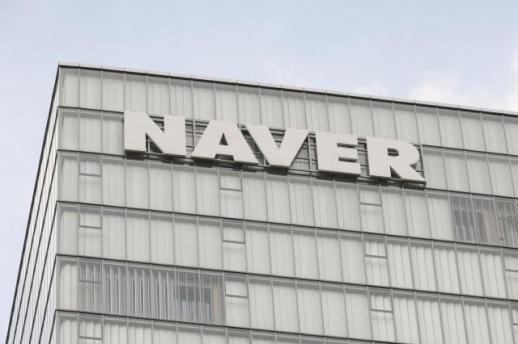 Naver confirms KEF membership, plays down labor-tension angle SEOUL, August 12 (AJP) - Naver, South Korea's largest internet company, has become the first domestic IT firm to join the Korea Enterprises Federation, the country's main employers' body. A Naver spokesperson said Wednesday that the membership, secured late last year, should be read chiefly through the lens of industrial convergence rather than labor relations. "This is a period when AI is accelerating connections across industries, and it should be seen as an effort to closely integrate with a variety of companies," the spokesperson said. The KEF is a management-side organization that specializes in advising member firms on labor and personnel matters. Experts say Naver's decision to join stands out because IT companies, long reliant on autonomous corporate cultures, had historically shown little interest in the federation's labor-management expertise. The spokesperson confirmed the KEF enrollment but said the company was not aware of any link between the membership and the kind of forceful union activity seen recently at rival Kakao. Industry accounts had tied the move to the amended trade union law known as the Yellow Envelope Act, which took effect in March and sharply broadens the liability of parent firms for subcontracted workers. Naver sits atop a sprawling structure of subsidiaries and lower-tier affiliates, a web that the revised law brings into closer regulatory focus. The company's union chapter, affiliated with the Korean Confederation of Trade Unions, has for years pressed headquarters to bargain directly over pay and welfare for workers at affiliated firms, and it plans to hold a ceremony on Aug. 20 declaring integrated bargaining across Naver group companies. AJP Takeaways • Naver has become the first South Korean IT company to join the Korea Enterprises Federation, the country's main management-side employers' body, confirming a membership secured late last year. • The company played down suggestions that the move was a defensive response to union pressure, with a spokesperson framing it instead as an effort to integrate with other firms as AI accelerates cross-industry convergence. • The membership comes as labor tensions build across Korea's tech sector, following Kakao's first-ever strike in June and ahead of a Naver union ceremony on Aug. 20 declaring integrated bargaining across group companies. 2026-08-12 17:27:21
 -
Seoul to Provide 74,000 Youth Housing Units by 2030 To prevent young people from leaving Seoul due to housing costs, the city plans to supply 74,000 youth-oriented housing units by 2030 and reduce the housing burden for 250,000 residents. On August 12, Seoul Mayor Oh Se-hoon visited the Youth Safe Housing in Gaebong-dong, Guro-gu, where he met with young residents to discuss the new housing policy. The 'Gaebong Sageum' facility, located near Gaebong Station, consists of 605 units, including 96 public rentals, 177 SH pre-purchases, and 332 private rentals. Residents highlighted the benefits of its location near transit, lower rental prices compared to the surrounding market, and restrictions on rent increases. Many expressed that their housing costs, which previously consumed over 30% of their monthly income, have decreased, allowing them to allocate savings toward personal development, job transitions, and future plans like marriage. However, concerns were raised about the difficulty in securing deposits for lease renewals due to recent tightening of household loan regulations. Mayor Oh explained that for special allocations of Youth Safe Housing, residents can renew their leases even if their income increases, emphasizing the need for financial support to ensure housing stability for young people. To expand the supply of Youth Safe Housing, the city is considering increasing the radius of eligible transit areas from 250 meters to a 10-minute walking distance of 500 meters. This aims to broaden the foundation for supplying youth housing. As of the end of July this year, 101 locations with 33,621 units of Youth Safe Housing have been completed. Public rental prices are approximately 30-50% of the surrounding market rates, while public-supported private rentals are set at 75-85% of market rates. The first public rental recruitment this year saw an average competition ratio of 105 to 1. From 2026 to 2030, the city plans to complete an additional 17,500 units of Youth Safe Housing, aiming for a total of about 46,000 units by 2030. To alleviate the construction cost burden on private developers, the city has temporarily increased the interest subsidy limit from 2% to 4% for three years starting in April, and will also reduce the public contribution rate by 5 percentage points for three years. The overall supply of youth housing will also be expanded. According to the youth housing stability measures announced in March, the city plans to provide a total of 74,000 units by 2030, including 25,000 new units added to the existing public sale and rental housing, as well as other types of housing. The new supply will include 10,000 affordable studio apartments near universities, 2,000 Ditimdol houses, and 600 Baronae houses, along with 1,700 youth-specialized housing units, 6,000 shared housing units for students and young people, and 5,000 co-living houses in transit and business districts. Housing cost support will also be implemented. The city aims to reduce the housing burden for 250,000 young people by 2030, providing support for monthly rent, rental deposit loan interest, and management fees. This year, the monthly rent support has been expanded to 200,000 won for 28,000 young people, and a new program will provide 80,000 won in management fees for those not selected for rent support. The income threshold for interest support on rental deposits will be relaxed from 40 million won to 50 million won, with a maximum interest support of 3% on loan amounts, benefiting 5,000 individuals annually. Mayor Oh stated, “Hearing from the youth today reaffirmed that a home is not just a place to stay, but a starting point for studying, working, saving, and preparing for the future. Young people should not have to leave Seoul because of housing.” He added, “We will create a more robust housing ladder for young people, allowing them to live stably while reducing the burden of rent and deposits, and we will focus our efforts on policies that young people can truly feel, including housing supply and financial and rent support.”* This article has been translated by AI. 2026-08-12 17:24:00
-
KT Alpha Reports 262 Billion Won Operating Profit in First Half of 2026 KT Alpha has improved its operating profit and net income in the first half of the year, despite a decline in revenue, marking a successful shift towards profitability. The company's strategy to reduce direct purchases and restructure its product portfolio around consignment sales has resulted in lower total sales but higher profit margins. On August 12, KT Alpha reported first-half revenue of 192.5 billion won, an operating profit of 26.2 billion won, and a net income of 24.7 billion won. While revenue decreased by 2.1% compared to the same period last year, operating profit and net income increased by 0.3% and 2.8%, respectively. In the second quarter, revenue was 96.4 billion won, with an operating profit of 12.7 billion won and net income of 13.3 billion won. Compared to the same period last year, revenue fell by 3.7%, operating profit by 8.6%, while net income rose by 0.4%. The revenue decline is attributed to a reduction in direct purchase products in T-commerce and an increase in consignment products. Direct purchases account for the entire sales amount recognized as revenue, while consignment sales only reflect the commission in revenue. Consequently, while reported revenue has decreased, total transaction volume for the first half increased by 9.0% year-on-year. By business segment, KT Alpha Shopping, a data home shopping service, saw its transaction volume increase by 3.0% compared to the same period last year. The growth was driven by an expanded mobile share, an increase in exclusive brands, and promotional products, as well as the expansion of sales channels like shopping lounges. The mobile gift certificate 'Giftishow' experienced even greater growth. First-half revenue reached 64.5 billion won, a 4.7% increase, while transaction volume surged by 14.6%, setting a record high. The expansion of partnerships with major platforms like Gmarket and Toss, along with increased demand for integrated gift certificates, contributed to this growth. The 'Giftishow Biz' service for corporate clients is also enhancing seasonal marketing and specialized services. Mobile gift certificates are becoming a key growth driver for KT Alpha. Last year, mobile gift certificate revenue was 127.4 billion won, a 12.9% increase from the previous year, while T-commerce revenue declined. In the first quarter of this year, mobile gift certificate revenue rose by 7.5% year-on-year to 32.4 billion won, with transaction volume increasing by 43.3%. KT Alpha is also accelerating its business transformation using artificial intelligence (AI) and data in the second half of the year. The company plans to enhance AI-based search and recommendations, as well as personalized curation, and to implement a more real-time shopping experience using AI shopping agents in broadcasting. In July, KT Alpha celebrated its 35th anniversary by announcing its management strategy 'SHIFT 2026.' The plan outlines a vision to evolve into a 'Connected Commerce Company' that integrates all of the company's competitive strengths based on AI and data. In the second half, KT Alpha Shopping will expand its exclusive brands and promotional products while strengthening its strategy to connect TV and mobile. Giftishow will introduce integrated gift certificates that allow customers to select desired products and will also work to secure business-to-business (B2B) clients. Park Jung-min, CEO of KT Alpha, stated, "In the second half, we will expand our T-commerce exclusive brands and strengthen our AI-based Live-like strategy, while also enhancing the scale of B2B clients in the mobile gift certificate business and advancing AI-based customer analysis to further strengthen our business competitiveness."* This article has been translated by AI. 2026-08-12 17:24:00
-
South Korea Launches Seven Major SEED Projects for Future Technologies The Ministry of Science and ICT and related agencies have unveiled a strategy to foster seven advanced technologies across three key areas: future clean energy, next-generation frontiers, and advanced supply chains. This initiative aims to secure future growth opportunities over the next 10 to 20 years.On August 12, the Ministry held a report meeting titled 'Seven SEED (Strategic Emerging Engines for Disruptive Innovation) Projects for Future Growth' at the Blue House, focusing on 'Engines for Future Exploration: Advanced Technologies.'The seven SEED projects are divided into three main categories: future clean energy, next-generation frontiers, and advanced supply chains. The clean energy sector includes small modular reactors (SMR), nuclear fusion, and renewable energy.The government plans to begin detailed design work on SMRs in collaboration with the private sector starting in 2027, aiming for commercial deployment of light-water SMRs by 2035 and construction of non-light-water SMRs in the 2030s. A special purpose company (SPC) will be established for joint investment in non-light-water SMRs to capture the global market.Nuclear fusion efforts will focus on automating design and control through an 'AI Virtual Fusion Reactor' and establishing demonstration infrastructure, with the goal of constructing an innovative fusion reactor by 2035 and beginning power generation by the end of the 2030s, alongside the development of commercial reactors in the 2040s.In the renewable energy sector, the government aims to commercialize perovskite tandem cells with over 35% efficiency, secure core technologies for large offshore wind turbines exceeding 20 MW, and conduct demonstrations of electrolysis systems in the 50-100 MW range. Additionally, it plans to localize GW-class HVDC technology and develop an AI-based 'Korean Kraken' model for power grid industrialization.The next-generation frontier category includes quantum technology, aerospace, and advanced biotechnology. In the quantum sector, the goal is to secure a 100-qubit quantum processor (QPU) by 2029 and develop a full-stack quantum computer led by domestic companies through the 'Korean Quantum Computer Grand Manufacturing Challenge.' The 'K-Quantum Foundry' initiative aims to achieve the world's top quantum chip manufacturing capabilities within ten years, while also establishing a quantum security system that combines quantum cryptography and quantum-resistant encryption.In the aerospace sector, plans include launching a lunar orbit communication satellite by 2029, the first domestically-led lunar lander (700 kg) by 2030, a space science exploration probe by 2031, and a lunar lander (1,800 kg) by 2032. The Korean low-Earth orbit satellite communication network is expected to be completed by 2035, laying the groundwork for 6G communication services.The advanced biotechnology sector aims to establish AI-driven infrastructure, including cancer-specific AI models, autonomous laboratories, and biofoundries by 2030, with a goal of commercializing brain-computer interface (BCI) products by 2035. An SPC will be launched to commercialize gene and cell therapies, targeting technology transfers and M&A achievements by 2031.The seventh SEED project focuses on building an advanced supply chain ecosystem. The government aims to increase the recycling rate of ten essential minerals to 20% by 2030 and expand the number of stockpiled items from 24 to 29, increasing stockpiling duration from a maximum of 180 days to 365 days, with a new stockpiling base in Saemangeum set to begin operations in 2028.For items requiring capacity enhancement, the government plans to invest 10 trillion won in R&D over five years, with 5 trillion won allocated to the '15 Major Co-Growth Projects' to support technology development and global expansion for anchor companies and their partners.The government will also strengthen the foundational capabilities of academia and research institutions. A support system at the university level will be introduced to expand basic research funding, and research institutes will be restructured to serve as national mission-oriented organizations. Plans also include promoting deep tech startups and introducing 'investment-type R&D.'Regarding the implementation framework, the government plans to establish a public-private joint 'Future Exploration Promotion Team' led by the Deputy Prime Minister and will monitor project roadmaps and progress through meetings of science and technology ministers.* This article has been translated by AI. 2026-08-12 17:20:00
-
Muan County Enhances Safety in Healing Agriculture with Customized Programs Muan County in Jeonnam Province is working to strengthen the foundation of sustainable healing agriculture by developing healing programs that utilize specialized resources from individual farms while ensuring visitor safety.On August 7, Muan County held a meeting at the county agricultural technology center with local healing farm operators to discuss the direction of future capacity-building education and tailored consulting for healing farms, the county announced on August 12.The meeting focused on identifying healing rural tourism products and programs that can be practically utilized in the field, considering the resources and readiness of each farm.Participants agreed that while each farm has unique rural resources and experiential elements, there is a need to refine these into programs that align with the target audience and healing objectives.In response, the county plans to promote capacity-building education and consulting centered on discovering healing resources specific to each farm, establishing representative activities, and setting healing goals for different participant groups. The aim is to enhance the competitiveness of healing agriculture by ensuring each farm has differentiated content.The importance of not only the quality of healing programs but also on-site safety management was emphasized during the meeting.A safety manager participated in the training, sharing accumulated safety management experiences and examples to integrate into the operation of healing farms. The scope of safety management was expanded beyond the existing safety for farm operations to include visitor pathways, facility usage, and heat response.Practical safety management methods were also provided to help farms identify and improve potential hazards on-site.After the training, a 'Safety and Environmental Management Guide for Healing Farms' pamphlet was distributed for ongoing use by the farms.The pamphlet includes inspection items for spaces such as agricultural machinery and tools, pathways, and indoor and outdoor experience areas, as well as safety management practices for each operational stage.Moving forward, Muan County aims to systematize healing content utilizing specialized resources from each farm while enhancing safety management capabilities to create a healing agriculture environment where visitors can participate with peace of mind.Park Si-rin, head of the Rural Support Division in Muan County, stated, “This meeting is significant as it allowed us to first hear the opinions of the farms and collaboratively determine the necessary direction for education and consulting. We will support the development of differentiated healing programs utilizing specialized resources from each farm, ensuring that the recognition that 'safety is the quality of healing' becomes established in the field.”* This article has been translated by AI. 2026-08-12 17:20:00
-
Meritz Fire & Marine Insurance Reports Over $1 Billion in First-Half Profit Meritz Fire & Marine Insurance has surpassed 1 trillion won in net profit for the first half of the year, driven by a return to profitability in auto insurance.The company reported a net profit of 1.0243 trillion won for the first half of the year, marking a 3.8% increase compared to the same period last year. In the second quarter, net profit rose 6.4% year-on-year to 558.3 billion won.Revenue for the first half reached 6.7074 trillion won, an 8.0% increase, while operating profit grew by 5.4% to 1.4006 trillion won. Insurance profit was recorded at 697.5 billion won, with investment profit at 703.1 billion won.In the insurance sector, sales of long-term and general insurance increased, and the turnaround in auto insurance contributed to the improvement in insurance profit. This, combined with strong investment returns, led to an overall increase in net profit.The profitability of the asset management division also improved. The investment return rate for asset management in the first half was 6.0%, up 0.6 percentage points from the end of the first quarter. The provisional solvency ratio (K-ICS) at the end of the first half stood at 231%.* This article has been translated by AI. 2026-08-12 17:20:00
-
SK hynix to Break Ground on Indiana Semiconductor Plant on 27th SK hynix will hold a groundbreaking ceremony for its advanced semiconductor packaging plant in West Lafayette, Indiana, on the 27th. Key executives, including CEO Kwon Noh-jung, are expected to attend, and there is speculation that SK Group Chairman Choi Tae-won and NVIDIA CEO Jensen Huang may also be present.According to industry sources on the 12th, SK hynix has begun preparations for the event by sending invitations to major clients and partners. The ceremony is anticipated to feature attendance from Kwon and other top executives from SK hynix, as well as representatives from global tech giants. There is particular interest in whether Chairman Choi and CEO Huang, a key customer of SK hynix, will be in attendance.SK hynix and NVIDIA have maintained a close partnership in the artificial intelligence (AI) semiconductor market, with SK hynix supplying high-bandwidth memory (HBM) to NVIDIA. Choi and Huang have also been meeting regularly between South Korea and the United States.If Chairman Choi attends the groundbreaking, it may signal potential additional semiconductor investments in the U.S. Recently, in an interview with local media following SK hynix's American Depositary Receipt (ADR) listing, Choi suggested that if conditions such as power, water, workforce, and supply chains are met, building a memory production facility in the U.S. could be feasible.The U.S. government has also been urging South Korean semiconductor companies to expand local production. Recently, U.S. Secretary of Commerce Gina Raimondo publicly emphasized the need for increased memory production from companies like Samsung Electronics and SK hynix. Earlier this year, SK hynix established an AI solutions company, 'AI Company,' in the U.S. to expand its local AI business base.The Indiana plant will serve as a key hub for SK hynix's AI semiconductor supply chain in the U.S. The company is investing $3.87 billion (approximately 5.5 trillion won) to build the advanced packaging facility in West Lafayette. Groundwork began in the first half of this year, and the ceremony will mark the start of the main structural construction.The company aims to begin mass production of AI memory products, including HBM, at the site in the second half of 2028. The U.S. government has also committed to providing up to $450 million in direct subsidies and $500 million in loans under the CHIPS Act.* This article has been translated by AI. 2026-08-12 17:16:00