


Latest by
-
 Haenam County Unveils 176 Key Projects for 2027 to Enhance Rural Development Haenam County has begun identifying key projects and new initiatives for 2027 to realize its goal of becoming a vibrant rural hub in South Korea.On August 12, the county held a report meeting at the government office to review 176 projects worth 218.7 billion won proposed by various departments, assessing their direction and feasibility.The meeting focused on discovering differentiated projects that respond to changing local conditions and policy environments, rather than merely repeating existing initiatives, with an emphasis on delivering tangible results for residents.In particular, the county aimed to link these projects with national government priorities, policies from the integrated Jeonnam-Gwangju special city, and commitments made during the current administration to secure external funding.The identified projects include 44 linked to national and city funding and public offerings, 100 self-funded projects, and 32 non-budget initiatives, totaling 176.Key initiatives proposed include: △Implementation of a Haenam-style basic social system △Establishment of a future agriculture artificial intelligence (AX) platform △Development of a smart agricultural machinery monitoring system △Creation of a comprehensive renewable energy plan for Haenam △Operation of wellness train tours △Introduction of a Haenam-style circular bus service.These projects aim to connect Haenam's strengths in agriculture, energy, and tourism while also addressing transportation and daily services, allowing residents to experience real changes in their lives.During the meeting, the focus was on the uniqueness and feasibility of each project, as well as how residents would perceive their impact. The necessity and expected benefits of each initiative were discussed, along with potential funding sources through national and city budgets and public offerings.Haenam County plans to carefully evaluate the viability of new projects to ensure they go beyond mere ideas, selecting those that can be realistically implemented to enhance policy effectiveness.Myung Hyun-gwan, the mayor of Haenam County, stated, “The current administration must create new outcomes that residents can truly feel. We need to actively discover differentiated policies that leverage Haenam's strengths and potential, ensuring that plans translate into real changes in governance.”Following the meeting, Haenam County will refine the details of each project based on the feedback received, reassessing their feasibility, funding strategies, and expected impacts. Projects deemed viable will be gradually incorporated into the county's governance for 2027.* This article has been translated by AI. 2026-08-12 17:08:00
 -
Korean Cosmetics Firm Kolmar Surpasses 1 Billion Won in Quarterly Operating Profit Korean cosmetics manufacturer Kolmar has achieved a significant milestone by surpassing 1 billion won in quarterly operating profit for the first time. On August 12, Kolmar announced that its consolidated operating profit for the second quarter reached 110.3 billion won, a 50.2% increase compared to the same period last year. During the same timeframe, sales rose by 17.8% to 861.3 billion won, while net profit surged by 68.9% to 70.6 billion won. For the first half of the year, cumulative sales totaled 1.5893 trillion won, marking a 14.8% increase from the previous year. Operating profit for the period was 189.2 billion won, up 41.8%, and net profit reached 130.6 billion won, a 100.9% increase. A Kolmar representative stated, "The expansion of indie brands into global markets and the peak season for sun care products have led to increased orders, particularly for skincare and sun care items. The continued launch of new products by global clients has also contributed to our record quarterly performance."* This article has been translated by AI. 2026-08-12 17:08:00
-
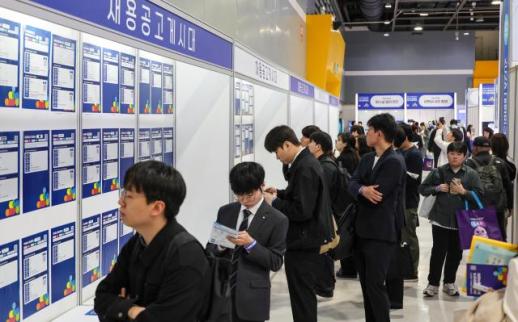 Korea's job market shuts out 20s as first rung of hiring narrows SEOUL, August 12 (AJP) - For many South Korean parents, the cost of supporting children no longer ends at university graduation, as college-educated young adults spend longer trying to secure steady jobs. "People my age rarely ask what their children do these days. Some of my friends have kids living with them without regular jobs five years after graduation," said Yun Mi-hyeong, a 56-year-old mother of two living in Seoul's Gangnam district. Employment among South Koreans in their 20s fell by 204,000 in July, while a 65,000 gain among people in their 30s trailed population growth of 83,000. The split does not prove that entry-level hiring is shrinking. But 45 months of falling youth employment, coupled with companies' growing preference for experienced recruits, makes the question increasingly difficult to ignore. The total number of employed people rose by 108,000 from a year earlier to 29.136 million, accelerating from a gain of 63,000 in June, the Ministry of Data and Statistics said Wednesday. Employment among people aged 15 to 29 fell by 191,000 to 3.441 million for a 45th consecutive monthly decline. Their employment-to-population ratio dropped 1.6 percentage points to 44.2 percent. Employment fell by 124,000 among 20- to 24-year-olds and by 80,000 among those aged 25 to 29. The youth population declined by 144,000, less than the drop in employment. Employment among people in their 30s rose to 5.631 million, but their employment-to-population ratio remained unchanged at 81.0 percent as population growth outpaced job gains. Their labor force grew by 108,000, while the number of unemployed rose by 42,000. The jobless rate climbed to 3.2 percent from 2.5 percent. The divide extends beyond July. Between July 2024 and July 2026, employment fell by 339,000 among people in their 20s and rose by 158,000 among those in their 30s. The monthly survey counts people who are working, not companies that are hiring. It does not track entry-level vacancies, actual hires or whether recruits entered with previous work experience. Bin Hyun-jun, the ministry's director general for social statistics, said public recruitment, a civil-service examination and new listings on Work24 drew more young people into job searches. That may explain part of the rise in youth unemployment, but not the longer decline in employment. A 2026 Korea Enterprises Federation survey found that 54.8 percent of companies planned to recruit only on a rolling basis, while 67.6 percent ranked relevant experience as their top hiring criterion. A February 2025 Bank of Korea study estimated the monthly probability of securing a permanent position at 1.4 percent for inexperienced workers and 2.7 percent for experienced workers. Its model attributed seven percentage points of the 17-point employment-rate gap between workers in their 20s and 30s to increased hiring of experienced workers. A January 2026 BOK study again cited preferences for experienced hires and rolling recruitment as factors delaying young people's entry into the labor market. For job seekers, that shift is visible before they even send an application. "In game development, large-scale recruitment has definitely fallen sharply from before," said Kim Sung-yoon, 29, who works in the gaming industry. "Most hiring is now project-based and rolling, and companies often look for people with at least one to three years of experience rather than fresh graduates." That has changed how young applicants try to enter the industry, he said. "People who used to aim straight for permanent jobs at large companies are now trying to get a foot in the industry through midsized companies, contract jobs, internships or even by moving into QA or operations just to build experience," Kim said. He said the problem is not necessarily companies advertising jobs for fresh graduates and then demanding experience. "They simply ask for experienced workers from the beginning." The corporate surveys, central bank research and experiences of applicants point to a plausible explanation for Korea's widening age divide: companies may still be adding workers while narrowing the openings accessible to people without experience. Proving that requires recruitment data broken down by age, experience, contract type and job level — information the monthly employment survey does not provide. Weakness was also concentrated in industries traditionally associated with stable employment. Manufacturing shed 68,000 jobs for a 25th consecutive month and construction lost 57,000 for a 27th. Employment among people aged 60 and above rose by 231,000, while employment among those in their 40s fell by 31,000. Health and social welfare services added 173,000 jobs. The overall employment-to-population ratio slipped to 63.3 percent, while the unemployment rate rose to 2.6 percent. Slower entry-level hiring cannot yet be identified as the cause of Korea's age divide. But with employment among people in their 20s falling for nearly four years, the lack of data on who is getting through the first rung of recruitment is becoming harder to overlook. ___________________________________________________________________________________ AJP Takeaways • Employment among South Koreans in their 20s fell by 204,000 in July 2026, while job gains among people in their 30s failed to keep pace with population growth. • Corporate surveys and Bank of Korea research show that rolling recruitment and preferences for experienced workers can put first-time job seekers at a disadvantage. • Korea's monthly employment survey does not track entry-level vacancies or actual hires by experience, leaving the impact of changing recruitment practices difficult to measure. 2026-08-12 17:05:11
 -
 Pandemic hangover? Young Koreans opt solo as socializing gets pricey SEOUL, August 12 (AJP) - For Jin, a corporate worker in his 30s, some friendships have simply become too expensive to maintain. “I feel uncomfortable meeting friends who want to eat somewhere expensive every single time,” he said. “I also don’t like taking turns paying for meals. Splitting the bill is just easier.” HJ Kim, 32, has reached much the same conclusion. What bothers her is not merely the price of dinner, but the invisible accounting that can begin once the plates are cleared. “Splitting the bill feels like the norm these days, but some people act as if even bringing it up is wrong,” Kim said. For people she is not particularly close to, Kim would rather leave the table owing nothing — and being owed nothing. “Even having someone pay for me feels burdensome now because I know I’ll have to return the favor,” she said. Dinner, in other words, can come with a second bill: obligation. For some young Koreans, that is becoming reason enough to decline the invitation altogether. Kim said she increasingly makes excuses to avoid company dinners and other gatherings she feels little need to attend. South Korea already has a rich vocabulary for doing things alone. There is hon-bap, eating alone; hon-sul, drinking alone; and hon-haeng, traveling alone. Collectively, those who embrace such habits are sometimes called the hon-jok, or “solo tribe.” Now rising prices and increasingly divergent lifestyles are giving solo life another selling point: it can be cheaper. ES Kim, 29, said expensive invitations have begun to make her reconsider which relationships are worth the time and money. “If I’m not close enough to someone to justify spending this much time and money, being asked to meet at an expensive place has started to feel like a burden,” she said. For JB Lee, 25, the friendship arithmetic eventually added up to a car. Tired of calculating who paid for what and the bad aftertaste that sometimes followed, Lee increasingly embraced an introvert’s life and spent more of his money on himself. The phenomenon has acquired its own vocabulary. “Friendflation” combines friendship and inflation to describe the rising cost of maintaining a social life. Another expression circulating on social media, “solo-maxxing,” gives the response a more upbeat spin: getting as much as possible out of being alone. Recent Korean data suggest the financial pressure is far from anecdotal. A July survey by part-time job platform Alba Heaven of 601 Gen Z respondents found that 93 percent had felt burdened by the rising cost of meeting friends or attending social gatherings. Nearly half, 49.1 percent, said they felt that pressure frequently. Their most common solution was straightforward: meet less. Some 71.2 percent said they had reduced spending on socializing with friends over the previous year. Of those, 83.9 percent had cut the number of gatherings. Food topped the list of financial strains, cited by 78.4 percent, followed by coffee and desserts at 40.1 percent, alcohol at 29.7 percent and birthdays and anniversaries at 25.8 percent. Travel, concerts and exhibitions also made the list. Cost is beginning to influence not only how often young people socialize, but with whom. Among those who reduced social spending, 88.8 percent said they had cut meetings with friends, former classmates or peers. Asked which friends were the most financially burdensome, 56.4 percent pointed to those who favor expensive restaurants. Even a respectable paycheck does not necessarily solve the problem. JS Nam, a medical resident in his 30s, earns a relatively high income but still sometimes questions what a weekend of socializing bought him. “After spending money going out over the weekend, I sometimes wonder where it all went,” he said. “Then I find myself having a sandwich for lunch.” The friendship gap Economists and sociologists caution, however, that splitting the check itself is not necessarily driving people apart. “Among people of a similar age, splitting the bill has already become the norm, so I don’t think that alone is much of a factor in distancing friends,” said Yang Jun-sok, professor of economics at the Catholic University of Korea. The more consequential divide may be what different friends consider an ordinary amount to spend. Kim Yun-tae, a professor of sociology at Korea University, points to what he calls “visual capitalism” — a social media-driven culture in which restaurants, holidays and experiences are continuously displayed and consumed as images. “Consumer culture has expanded across society, whether among the wealthy, the middle class or those with less,” Kim said. “At the same time, it has created enormous polarization. People are also increasingly divided by their tastes and spending habits.” Those differences matter because friendships that start on relatively equal footing often do not stay that way. College friends may once have shared cheap meals and similar budgets. A decade later, one may own a home while another pays a large deposit and rent. One considers a 100,000-won dinner an occasional treat; another barely notices the charge. Friendship suddenly has another compatibility test: not just whether two people enjoy the same things, but whether they can afford to enjoy them in the same way. Research suggests social networks already tend to reflect such economic similarities. A 2024 study published in Social Networks found friendships occur more frequently among people with similar socioeconomic backgrounds, although the researchers cautioned that this does not necessarily mean people consciously choose friends from the same social class. Where people live, study and work also determines whom they have an opportunity to meet. Kim said highly visible differences in consumption can nevertheless sharpen the divide. “People with greater financial means can end up excluding those who have less,” he said. “That can lead to feelings of deprivation and isolation and deepen social, economic and cultural polarization, which can ultimately create conflict.” Friendship now has a cover charge Friendflation is hardly unique to South Korea. In the United States, the cost of club memberships, lessons, event tickets, dining out and drinking away from home rose nearly 11 percent in the two years through April 2024, compared with a 7.5 percent rise in overall consumer prices, according to U.S. Bureau of Labor Statistics data. At the same time, many places where friendships once developed without requiring much spending — workplaces, schools and neighborhood networks — have become less central to social life. More socializing has consequently migrated to restaurants, gyms, hobby classes, concerts and other spaces where participation carries a price tag. Friendship was never free to begin with. It requires another scarce resource: time. Research by University of Kansas communication professor Jeffrey Hall found that people can require roughly 40 to 60 hours together to move from acquaintance to casual friend, and substantially longer to become close friends. Increasingly, those hours arrive with receipts attached. Not broke — selective There is an important wrinkle in the friendflation story. Young Koreans have not simply stopped spending. Long-term household data instead suggest they are becoming choosier about what deserves their money. Average monthly consumption among Korean households in their 20s and 30s declined from 2.57 million won in 2014 to 2.48 million won in 2024, according to a June 2025 Korea Chamber of Commerce and Industry report based on government household data. But the composition changed. Among households headed by people aged 30 or younger, the share spent on groceries and non-alcoholic beverages fell 3.9 percentage points over the decade. The shares devoted to restaurants and accommodation and to recreation and culture each rose 3.1 percentage points. The chamber attributed the shift partly to the growing importance of travel, dining experiences and digital content. More recent banking data tell a similar story. According to NH NongHyup Bank’s October 2025 NH Trend+ report, people in their 20s and 30s increased savings while cutting some expenses and continuing to spend on experiences they considered worthwhile. Their savings rose 15 percent in the first half of 2025 from a year earlier, more than twice the growth among older age groups. Spending at bars and karaoke venues fell 8.8 percent, while transactions at golf courses and driving ranges declined 9.6 percent. Yet spending at sports stadiums surged 65 percent, and purchases through major online ticketing platforms increased 11 percent. The bank dubbed the behavior “treatonomics”: economizing on expenditures regarded as dispensable while continuing to pay for hobbies, health and experiences that deliver greater personal satisfaction. That complicates any easy conclusion that younger Koreans have become antisocial. Yang said tighter budgets may simply force harder choices. “People may prefer splitting the bill because their budgets are already tight, whether from everyday living costs or from trying to save for major purchases such as a home or a car,” he said. Kim of Korea University said the pressure extends beyond consumption. Spending on education and self-development increasingly reflects competition in a difficult labor market. “Young people are facing difficulties finding jobs, and there is also a growing divide in the quality of jobs available to them,” he said. “In that environment, self-development is not simply about personal satisfaction. It has become a strategy for survival.” A language course, professional certificate or gym membership can therefore look less like indulgence than investment. Against those competing demands, another expensive dinner with an acquaintance becomes easier to cut. Friendflation may therefore be exposing differences that were already there — in income, priorities, ambition and taste — rather than creating them. And higher prices do not inevitably mean fewer friends. Dinner can become a walk. An expensive restaurant can become a neighborhood noodle shop. Friends can cook at home. Splitting the check can be less a sign of emotional distance than an agreement that the relationship should remain financially sustainable. Being able to say “I can’t afford that” without embarrassment may even be its own form of intimacy. Not every friendship adjusts so gracefully. HJ Kim frequently travels for work with a colleague who insists on paying for her. The generosity, she said, can sometimes make her more uncomfortable rather than less. “He keeps trying to pay for me,” Kim said. “I know he means well, but it makes me feel like I have to do something in return.” So she would rather remove the debt before it enters the relationship. “Sometimes, I’d rather just pay for my own meal,” she said. “Then nobody owes anyone anything.” AJP Takeaways • “Friendflation” describes the rising cost of maintaining friendships as higher prices make meals, coffee, entertainment and other social activities more expensive. • A July 2026 survey by South Korean part-time job platform Alba Heaven found that 93 percent of 601 Gen Z respondents felt burdened by the cost of meeting friends or attending social gatherings. • Among respondents who reduced social spending, 83.9 percent cut the number of gatherings, while 56.4 percent identified friends who favor expensive restaurants as the most financially burdensome. • Young Koreans are not simply spending less: data from the Korea Chamber of Commerce and Industry and NH NongHyup Bank suggest people in their 20s and 30s are becoming more selective, cutting some expenses while continuing to spend on travel, hobbies and experiences they value. • Friendflation does not necessarily mean the end of friendships. Lower-cost activities, splitting bills and openly discussing budgets can help people maintain relationships without taking on unwanted financial obligations. 2026-08-12 17:04:38
 -
 N. Korea fires ballistic missile ahead of UFS, possible hypersonic weapon tested SEOUL, August 12 (AJP) - North Korea fired a ballistic missile into the East Sea on Wednesday, with analysts raising the possibility that Pyongyang tested a hypersonic short-range ballistic missile or a medium-range weapon flown on a shortened trajectory. South Korea’s Joint Chiefs of Staff said it detected the missile launched from the Wonsan area at around 6 a.m. “Our military detected a ballistic missile launched from the Wonsan area toward the East Sea at around 6 a.m.,” the JCS said. “The missile flew more than 700 kilometers, and South Korean and U.S. intelligence authorities tracked and shared related information from the early stages of the launch.” Japan’s Coast Guard assessed that the missile reached a maximum altitude of about 90 kilometers and traveled roughly 690 kilometers. The launch came six days after North Korea’s previous missile test on Aug. 6. Unlike the previous launch, however, the JCS did not identify Wednesday’s missile as a short-range ballistic missile. Ballistic missiles with ranges of roughly 300 to 1,000 kilometers are generally classified as SRBMs. When North Korea launched missiles on Aug. 6, the South Korean military specifically said it had detected short-range ballistic missiles. The difference has prompted speculation that North Korea may have tested an upgraded version of the Hwasong-11Ma, a short-range hypersonic weapon based on the Hwasong-11Ga, better known as the KN-23, with a hypersonic glide vehicle-shaped warhead. The Hwasong-11Ma was first unveiled during a military parade marking the 80th anniversary of North Korea’s ruling Workers’ Party in October 2025. Its reported flight profile could support such an assessment, as the missile reached an altitude higher than the roughly 50 to 60 kilometers typically associated with the Hwasong-11Ga family and closer to the 70 to 100 kilometer range commonly associated with hypersonic glide vehicles. Another possibility is that North Korea launched its Hwasong-16Na hypersonic medium-range ballistic missile on a shortened trajectory, given the missile’s estimated maximum altitude of around 90 kilometers. Wednesday’s launch also comes days before South Korea and the United States are scheduled to begin their annual Ulchi Freedom Shield exercise on Aug. 17. North Korea has repeatedly condemned the allies’ joint military exercises as rehearsals for an invasion. AJP Takeaways △ North Korea fired a ballistic missile from Wonsan toward the East Sea on Aug. 12, 2026, with the missile flying more than 700 kilometers. △ South Korea’s Joint Chiefs of Staff is assessing whether the launch involved a hypersonic short-range ballistic missile or a medium-range ballistic missile flown on a shortened trajectory. △ The launch came five days before the South Korea-U.S. Ulchi Freedom Shield exercise was scheduled to begin on Aug. 17, 2026. 2026-08-12 17:03:26
 -
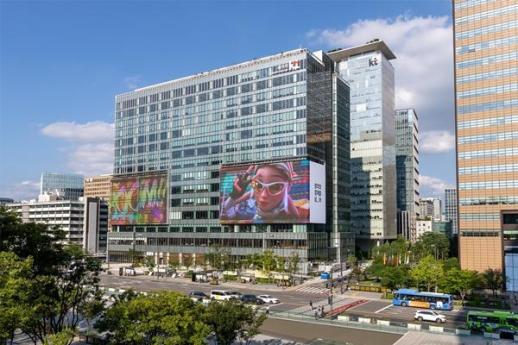 KT Q2 profit falls 36% on tough property-gain base, AI revenue climbs SEOUL, August 12 (AJP) - KT reported a 36.1 percent year-on-year drop in second-quarter operating profit, as the absence of a large one-off property gain that lifted last year's earnings to a record weighed on the bottom line. According to regulatory filings released Wednesday, the telecommunications carrier posted consolidated operating profit of 648.3 billion won ($457 million) for the April to June quarter, down from 1.01 trillion won a year earlier. Revenue fell 10.1 percent to 6.68 trillion won. Net profit slid 34.5 percent from a year earlier, dragged down partly by a 54 billion won fine imposed last month by the Personal Information Protection Commission. Revenue from its AX, or AI transformation, business jumped 22.3 percent, buoyed by rising demand from financial firms and growth at cloud unit KT Cloud, even as legacy wireless and fixed-line revenue slipped. "We will secure new growth engines based on AX while faithfully carrying out our corporate value-enhancement plan, rewarding shareholders and investors with sustained results," Chief Executive Park Yoon-young said. Shares of KT closed at 52,700 won, 0.19 percent lower than the day before. AJP Takeaways • KT's Q2 operating profit fell 36.1 percent year-on-year to 648.3 billion won ($457 million), mainly because last year's quarter was inflated by a one-off property-development gain that produced record earnings. • Against the first quarter of this year, operating profit rose 34.3 percent, and revenue from the carrier's AX (AI transformation) business jumped 22.3 percent, signaling momentum in its pivot toward AI and cloud. • KT set a 2028 target of doubling AX revenue from 2025 levels and a 9-10 percent return on equity, backed by about 1 trillion won in cumulative share buybacks and cancellations. 2026-08-12 16:56:17
 -
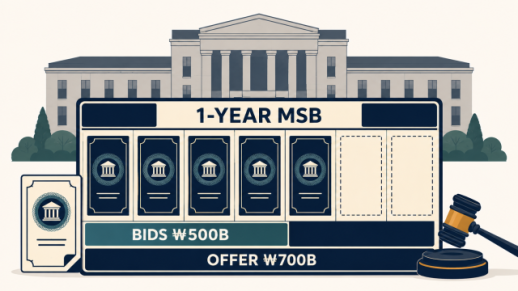 Demand for Korea's 1-yr central bank bond hits 29-mo low SEOUL, August 12 (AJP) - Demand for South Korea's one-year central bank bond fell to a 29-month-month low Wednesday as bids missed the planned issuance, signaling that the enlarged supply could not clear at the yield the Bank of Korea was prepared to pay. The weakness lay not in participation but in the size of the bids, as 15 institutions took part, one more than in July, even as their combined orders fell 41.2 percent. The BOK received 500 billion won in bids for 700 billion won ($494 million) of one-year Monetary Stabilization Bonds, producing a bid-to-cover ratio of 71.4 percent, according to the auction results. It awarded 410 billion won to 12 institutions at a yield of 3.350 percent, leaving the final issuance at 58.6 percent of the planned amount. Bids ranged from 3.150 percent to 3.450 percent, with no partial award. At the July auction, 14 institutions submitted 850 billion won of bids for the same 700 billion won offering, allowing the BOK to issue the full amount at 3.370 percent. The average bid per participating institution therefore fell 45.1 percent in one month to 33.3 billion won from 60.7 billion won. An AJP review of 339 one-year MSB auctions since 2010 found Wednesday's bid ratio was the eighth lowest over the period and the weakest since March 2024. It was also the third undersubscribed auction in the past 12 months, following bid ratios of 97.1 percent in September 2025 and 77.1 percent in October. A 2021 Capital Market Research Institute study found that one-year MSB auctions recorded an average bid ratio of 222.6 percent over the preceding decade and fell short of planned issuance in only 5.3 percent of cases. Part of the latest decline may reflect the larger offering, as the BOK raised planned one-year issuance from 500 billion won in June to 700 billion won in July and August. That explanation is limited, however, by the July comparison, when the same amount attracted 350 billion won more in bids. The result points most directly to a pricing gap between the return investors required and the yield the central bank was prepared to accept. The 3.350 percent accepted yield was the cutoff for the 410 billion won awarded, rather than the market-clearing yield for the entire 700 billion won offering. Even if the BOK had accepted every submitted bid, the auction would still have fallen 200 billion won short, suggesting that full issuance may have required a higher yield capable of drawing additional demand or a smaller offering. The auction alone, however, cannot determine whether the gap reflected expectations of higher market rates, more attractive returns on competing short-term debt or constraints on institutions' investment capacity - according to the central bank. The result came two days after the BOK announced changes intended to improve MSB liquidity, including extending the fungible issuance period for one-year bonds to three months from two and introducing benchmark issues from Aug. 31. Because Wednesday's auction was conducted under the existing framework, sales after the changes take effect will provide the next test of whether greater tradability can revive demand or investors continue to require higher yields. __________________________________________________________________________________ AJP Takeaways The bid ratio for the BOK's one-year Monetary Stabilization Bond fell to 71.4 percent, the lowest in 29 months and the eighth lowest among 339 auctions since 2010. Participation rose to 15 institutions from 14 in July, but total bids dropped 41.2 percent and the average amount per participant fell 45.1 percent. The auction points to a pricing gap rather than a broad market shock, with post-Aug. 31 sales set to test whether improved liquidity can restore demand without higher yields. 2026-08-12 16:46:52
 -
Cafes Expand Menus to Include Noodles and Other Meals Cafe franchises, traditionally focused on coffee and desserts, are now introducing meal options such as tteokbokki, fried rice, and noodles. This shift comes as competition in the coffee market intensifies, prompting cafes to enhance their food offerings to increase customer spending and expand their reach during meal times.According to industry sources, The Venti recently launched a new dish, 'Chilled Noodle Soup,' under its ready-to-eat category, 'The Venti Kitchen.' This product, developed in collaboration with a local chicken restaurant, features chilled broth with ice and chicken served in a cup format, allowing customers to enjoy a refreshing meal during the summer.Earlier in June, The Venti announced the opening of 'The Venti Kitchen' to strengthen its snack offerings, introducing items like rose and mala tteokbokki and spicy and soy sauce rice balls. The addition of chilled noodle soup further expands their meal options.Ediya Coffee is also making strides in the meal market with its new offerings, including 'Cream Fondue Kimchi Fried Rice,' 'Brown Rice Beef Bulgogi Fried Rice,' and various low-sugar tteokbokki options. By adding these items, Ediya aims to provide complete meal solutions.Notably, Ediya's tteokbokki options include original, black bean, and mala rose varieties, all designed to reduce sugar content while pairing with rice rolls. The company is currently testing these menu items primarily through delivery services to gauge their suitability and consumer response before deciding on future operations.Compose Coffee has already seen strong demand for its meal and snack options, with its 'Chewy Rice Cake Tteokbokki' selling over 140,000 units within two weeks of its February launch. Some locations experienced early sellouts, prompting inquiries for restocking. The cup format, combined with a sweet and spicy sauce, has made it convenient for on-the-go consumption.Meanwhile, Mega MGC Coffee is enhancing its presence with items like seasoned cup chicken and kimchi fried rice. By offering both snacks and meal alternatives, the competition among low-cost coffee brands is rapidly shifting from beverages to food.This trend of cafes focusing on cup foods and ready-to-eat meals is driven by increased competition due to the growing number of store locations. According to the Fair Trade Commission's franchise business information system, the number of domestic stores for major brands like Mega MGC Coffee, Compose Coffee, The Venti, Ediya Coffee, and others rose from 7,939 in 2021 to 12,299 in 2024, marking a 54.9% increase in just three years. As competition intensifies in key commercial areas, boosting sales per store has become a critical challenge.Low-cost coffee brands, which typically offer lower beverage prices, find it challenging to raise customer spending through price increases. Instead, encouraging customers to order tteokbokki, chicken, or fried rice alongside their drinks can effectively secure additional revenue. Expanding menu options allows cafes to diversify demand, spreading it across lunch and dinner times rather than concentrating it during morning and post-lunch hours. This aligns with the growing trend of single-person households and the preference for convenient meals, as consumers increasingly seek to combine drinks and simple meals at cafes.Importantly, cup-style menu items fit well within the cafe layout, allowing for easy sales without the need for extensive kitchen facilities. With simplified cooking methods and dedicated containers, these items are also convenient for takeout and delivery. For franchisees, this means they can expand their offerings without significant alterations to their existing space.An industry insider noted, "Consumers are beginning to view cafes not just as places to drink coffee but as venues for quick meals as well. Meal alternatives can increase customer spending while also capturing demand during previously weaker time slots, indicating that the trend of enhancing food lineups will continue for the foreseeable future."* This article has been translated by AI. 2026-08-12 16:44:00
-
Criticism of Samsung and SK Hynix's Efforts to Reduce Wastewater Discharge Choo Mi-ae, the Governor of Gyeonggi Province, publicly criticized Samsung Electronics and SK Hynix, stating they are not making efforts to reduce wastewater discharge, bringing the semiconductor industry's water management issues to the forefront. However, assessments of the companies' investments and management practices suggest that claims of insufficient efforts are misleading.On August 7, during a semiconductor strategy meeting, Choo criticized Samsung and SK Hynix, saying, "Intel and TSMC's U.S. plants are investing in technologies to recycle semiconductor water and aim for zero or minimal discharge," while claiming that the two Korean companies are doing the opposite. She also mentioned that as the public prepares measures to supply 1.1 million tons of semiconductor water daily, companies are "misusing" this and not making efforts to reduce discharge. Gyeonggi Province previously advised both companies to increase the reuse of process water to six times.However, Samsung Electronics is already implementing measures to reduce water usage and recycle wastewater at its semiconductor facilities. The company's Device Solutions (DS) division reported that it reduced water usage by approximately 16.76 million tons at domestic sites in 2024 through process improvements and equipment efficiency. In the same year, the amount of reused water at these sites reached about 101 million tons.Additional investments are underway. Samsung is collaborating with the Ministry of Environment, Gyeonggi Province, and the cities of Hwaseong and Osan to purify treated water that was previously discarded at the Hwaseong-Osan public wastewater treatment plant for supply to its Giheung and Hwaseong semiconductor facilities, targeting a supply of 120,000 tons per day starting in 2029. The DS division has also set a goal to limit water intake in 2030 to levels seen in 2021, despite expanding semiconductor production.Samsung's Giheung and Hwaseong facilities have received the 'Platinum' certification from the Alliance for Water Stewardship (AWS), which evaluates 100 criteria, including water intake, pollution, and ecosystem impact.Viewing discharged water solely as 'wastewater' does not accurately reflect the situation on the ground. Since 2007, Samsung's Giheung facility has been discharging treated water into the Osancheon stream. According to data released by Samsung, which cites the Ministry of Environment's water quality monitoring network, the biological oxygen demand (BOD) levels in the upstream and downstream sections of the Giheung facility improved from grade 3 to grade 1 as of 2023. The presence of wildlife, such as otters, has also been confirmed in the Osancheon stream.SK Hynix is also focusing on expanding water reuse as part of its long-term environmental goals. Through its 'Green 2030' initiative, the company aims to increase water resource reduction by 300% compared to 2019 levels by 2030. It has introduced wastewater recycling facilities, cooling tower water reuse systems, and waterless scrubbers, with plans to expand its existing wastewater recycling capacity from 60,000 tons to 80,000 tons per day.These water management activities have received positive external evaluations. In March, SK Hynix won the top award in the water resource management category at the 2025 CDP Korea Awards for the fourth consecutive year. The company explained that it operates proactive water-saving technologies and expanded reuse in its production processes, along with stricter self-regulatory discharge standards than legal requirements. While there may be discussions about whether to further reduce discharge levels, it is difficult to definitively state that the company is not making reduction efforts.Industry insiders have pointed out that the comparisons made by Choo to TSMC and Intel could be misleading. TSMC's claim of 'over 90% water recycling' and 'Near Zero Liquid Discharge' is not an already achieved performance. TSMC aims to achieve over 90% recycling and minimize liquid discharge once its industrial water recycling facility, currently under construction, is completed in 2028.Intel's 'Net Positive Water' does not mean that the company discharges no wastewater from its plants. Intel returns about 80% of the water used back to the community and is also investing in watershed restoration projects, including maintaining river flow, recharging groundwater, and conserving agricultural water, with the goal of restoring more water than it uses by 2030.Furthermore, directly comparing the current discharge levels of Samsung and SK Hynix to TSMC's 2028 goals or Intel's watershed restoration concept is not a fair comparison of the same metrics. While domestic companies should consider the goals of foreign firms, labeling them as not investing in environmental measures based on these comparisons does not align with the ongoing investments in water reuse.One industry official stated, "The demand for reducing environmental burdens and the assertion that companies are making no efforts are two different issues. Both Samsung and SK Hynix are investing in equipment and technology development for water reduction and reuse, and failing to acknowledge these facts while labeling them as 'the opposite' of foreign companies could unfairly tarnish the image of domestic firms as environmentally irresponsible." 2026-08-12 16:40:00
-
 Sempio marks 80th anniversary with 'Cook Happily' campaign Sempio employees take a commemorative photo during the 'Cook Happily' campaign marking Sempio's 80th anniversary, held on the first floor of the Sempio building in Jung-gu, Seoul, August 12, 2026. 2026-08-12 16:36:26