


Latest by
-
 NCT 127 launches interactive 'CALL 127' campaign ahead of new album SEOUL, August 03 (AJP) - K-pop boy group NCT 127 has launched an interactive promotional campaign ahead of its seventh studio album, "BLINGY," built around the idea that fans are the ones calling the group into action, SM Entertainment said Monday. SM Entertainment opened the CALL 127 website at midnight Monday as the centerpiece of the campaign leading up to the album's Aug. 24 release. Styled as a command center, the site allows visitors to browse teaser materials while following a storyline that casts NCT 127 as a team responding to calls across Seoul. A signature feature lets users press a "CALL 127" button to hear voice messages from the members, creating the impression of direct communication with the group. The website also includes behind-the-scenes images from the teaser shoot and will serve as a hub for online and offline promotional events throughout the comeback. The campaign expanded Monday with the release of the first three episodes of a trailer series on NCT 127's official YouTube channel. The videos follow Haechan, Jaehyun and Yuta as mysterious signals begin interrupting their everyday routines, setting up a storyline that will continue throughout the promotional campaign. The concept ties into what SM describes as the album's "One Team" theme, emphasizing the connection between the members and their fans through an ongoing narrative rather than standalone teaser content. "BLINGY" will be released at 6 p.m. (0900 GMT) on Aug. 24 across major streaming platforms. The nine-track album marks NCT 127's first full-length release since "WALK" in 2024 and arrives as the group celebrates the 10th anniversary of its debut this year. Since debuting in 2016, NCT 127 has established itself as one of SM Entertainment's flagship acts with songs including "Cherry Bomb," "Kick It," "Sticker" and "Fact Check." Following the album's release, the group will launch its fifth world tour, "NEO CITY – THE REDLINE," beginning with three concerts at Seoul's KSPO Dome from Sept. 18 to 20 before continuing across Asia. 2026-08-03 11:34:50
 -
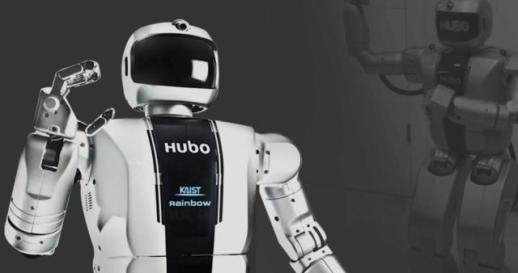 KOSDAQ robot stocks rise on U.S. curbs targeting Chinese rivals SEOUL, August 03 (AJP) — Robot stocks on South Korea's junior KOSDAQ market extended their gains Monday after the United States tightened restrictions on Chinese-made robots, while Samsung Electronics' expanded push into robotics reinforced expectations for long-term industry growth. TXR Robotics, which develops warehouse automation and logistics robots, jumped 29.93 percent to 17,450 won ($12.60), hitting the daily trading limit. SPG, a maker of precision motors and gear reducers for industrial and service robots, gained 9.62 percent to 103,700 won, while Rainbow Robotics, known for its humanoid and collaborative robots, rose 5.77 percent to 458,000 won. The rally built on momentum that began after Samsung unveiled its expanded robotics strategy in late July. Although the sector briefly pulled back during broader technology-driven market selloffs on July 24 and 28, buying interest remained resilient as investors continued to focus on the sector's long-term growth prospects. Adding to that momentum, last week's U.S. Federal Communications Commission (FCC) decision to tighten approval rules for new foreign-made humanoid and four-legged robots further lifted sentiment. The FCC said the restrictions are intended to protect national security by preventing connected robots from collecting sensitive data or disrupting critical infrastructure if hacked. The tighter U.S. rules are expected to make it more difficult for Chinese robot makers to expand in the American market, potentially opening new opportunities for Korean manufacturers. However, analysts cautioned that the extent of any benefit will depend on how broadly the measures are implemented and whether local companies can strengthen their presence in North America. Samsung's recent organizational overhaul also underscored its commitment to robotics as a future growth business. The company upgraded its robotics task force into a dedicated business unit and established a Future Robotics Division to oversee investments and strategy for next-generation robots, including humanoid, medical and logistics robots. The division also brings together a former Boston Dynamics strategy executive and a robotics professor from Seoul National University. Analysts said the restructuring could accelerate decision-making and encourage broader investment across the country's robotics ecosystem. They also expect several developments later this year — including Tesla's planned expansion of Optimus humanoid robot production, updates from Boston Dynamics and a possible unveiling of Samsung's own humanoid robot — to keep investor attention on the sector. Separately, TXR Robotics said Monday it had developed a loop-type tilt tray sorter, an automated system that sorts packages in logistics centers, providing an additional boost to investor sentiment. 2026-08-03 11:33:50
 -
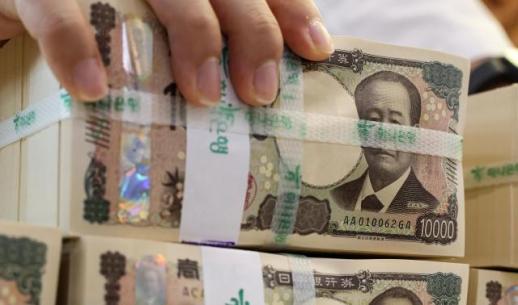 US, Japan vow to continue joint yen-supporting intervention SEOUL, August 03 (AJP) -The United States and Japan vowed Monday to continue supporting the yen after admitting to a rare joint intervention last week to stabilize the currency of the world's largest foreign holder of U.S. Treasuries, which also resulted in lifting both the South Korean won and U.S. government bonds. The admission explained last week's abrupt reversal in the yen, which in turn helped lift the South Korean won as investors unwound long-dollar positions across Asia. Since the July 31 intervention, the yen has strengthened from nearly ¥164 per dollar at its weakest point to around ¥160.2 on Monday, while the Korean won appreciated to 1,424 per dollar from 1,549.4 at the end of June. Japan’s Ministry of Finance said the two governments conducted coordinated yen-buying intervention on July 31 and remained prepared to act again if excessive volatility returned. The operation was carried out in accordance with a joint statement issued by the US and Japanese finance ministers in September last year, Japanese Finance Minister Satsuki Katayama said. Katayama said the intervention was aimed at countering recent excessive volatility and disorderly movements in the yen and that Tokyo would maintain close communication with Washington. US Treasury Secretary Scott Bessent confirmed the action in a statement Sunday, saying Washington supported Japan’s efforts to correct what he described as a substantial undervaluation of the yen. Bessent said the July 31 intervention had addressed disorderly movements in the Japanese currency and that the Treasury was closely coordinating with Japan’s Finance Ministry and the Bank of Japan. “We will not hesitate to participate in further joint intervention,” he said. US President Donald Trump also acknowledged Washington’s participation, telling reporters that Japan had needed assistance because of the yen’s decline. Trump said US participation reflected the close relationship between the two countries and would also benefit the global economy. The operation marked the first jointly acknowledged foreign-exchange intervention by the United States and Japan since March 2011. The 2011 intervention was conducted with other major economies to weaken the yen after the earthquake and tsunami in eastern Japan, while the latest operation sought to support the currency through yen purchases. It was also the first coordinated US action to strengthen the yen since 1998. The yen had weakened to almost 164 per dollar late last month, its lowest level in about four decades, before the two governments entered the market. The confirmation of the joint action pushed the dollar lower against the yen during Asian trading Monday. The South Korean currency also gained as the announcement reinforced expectations that US and Japanese authorities would resist renewed, disorderly yen depreciation. The won and yen are often sensitive to similar movements in the dollar and regional currency trading, although the US transaction did not involve a direct sale of dollars. The bond-market implications of the intervention have also drawn attention because Japan may need to raise dollars to finance repeated yen purchases. Japan is the largest foreign holder of US government debt, meaning outright sales of its Treasury holdings could add pressure to US long-term borrowing costs. As of May, it held $1.143 trillion worth U.S. treasuries. Bessent highlighted the Federal Reserve’s Foreign and International Monetary Authorities Repo Facility, or FIMA Repo Facility, as an important mechanism and called for its capacity to be expanded in the coming months. The facility allows approved foreign central banks and monetary authorities to obtain dollars temporarily by placing US Treasury securities with the Federal Reserve rather than selling them in the open market. The Fed has said the programme can help prevent disruptions in the Treasury market by reducing the need for foreign monetary authorities to sell their holdings outright when they require dollar liquidity. Japan said it planned to use the facility to secure sufficient dollar funding without selling its Treasury holdings. US Treasury yields declined during Asian trading after the joint intervention was formally confirmed. The benchmark 10-year Treasury yield stood at 4.696 percent as of 10:10 a.m. in Seoul, down 4.9 basis points from the previous close. The 30-year yield fell 3.5 basis points to 5.240 percent over the same period. 2026-08-03 11:33:31
 -
 Hanwha Systems Demonstrates AI-Based Naval Unmanned Combat Technology Hanwha Systems unveiled its full lineup of maritime unmanned systems, which are gaining attention as potential game changers in future naval warfare.On August 3, Hanwha Systems announced the successful demonstration of an 'AI-based unmanned and manned hybrid combat system for mine warfare' at the Busan Naval Operations Command base.This demonstration aimed to showcase the AI-based unmanned operational capabilities developed through civil-military collaboration and to explore the future direction of naval operations.Hanwha Systems presented its 30-ton combat unmanned surface vessel, which was launched in June, along with the reconnaissance unmanned surface vessel 'Haeryong' and autonomous underwater vehicle (AUV) technology for underwater exploration, centered around the AI-based Automatic Mine Detection System (AMDS).Additionally, the company demonstrated command and control technology capable of simultaneously managing multiple types of unmanned systems through a low Earth orbit (LEO) satellite communication-based hyper-connected network.Recent conflicts have seen an increase in asymmetric threats such as mines and drones, making unmanned systems essential for minimizing personnel casualties. The rapid advancement of AI and low Earth orbit satellite communication technology is emerging as a key capability for integrating and commanding various unmanned systems in future battlefields.During the demonstration, Hanwha Systems simulated a scenario involving an unidentified maritime explosion threat.Upon receiving mine threat information, a command was issued in natural language to the large language model (LLM)-based 'AI mission planning generation' platform to create a mission plan for locating mines at the explosion site. The reconnaissance unmanned surface vessel 'Haeryong' and a manned mine countermeasure vessel then set sail, while military drones (UAVs) began aerial reconnaissance, executing a civil-military cooperative operation.The AUV equipped on Haeryong autonomously navigated according to the AI-generated mission plan to conduct mine detection, with the collected data transmitted in real-time to the AMDS. Once the AMDS identified the mine clearance point through AI-based analysis, the unmanned surface vessel and mine countermeasure vessel moved to that location and successfully completed the mine clearance operation.Hanwha Systems also showcased hyper-connected network technology utilizing Eutelsat OneWeb's low Earth orbit satellite communication, demonstrating multi-layered communication operations. From a land control center, they simultaneously operated and controlled the AUV and two types of unmanned surface vessels using low Earth orbit satellite communication. This is expected to enable uninterrupted mission execution and expanded operational range when applied to combat unmanned surface vessels in the future.Yoo Mun-ki, head of Hanwha Systems' maritime business division, stated, 'In this demonstration at the Naval Operations Command, we proved the 'Physical AI' technology that optimizes the operation of AI-based mission planning generation platforms and actual unmanned and manned naval forces, as well as our integrated command and control capabilities encompassing AI unmanned systems, manned systems, and low Earth orbit satellite communication.' He added, 'Hanwha Systems will focus on investment and development of maritime unmanned systems that will be strategic assets for the future navy and game changers in future naval warfare.'Meanwhile, Hanwha Systems possesses a complete product lineup of underwater maritime unmanned systems, including reconnaissance unmanned surface vessels, combat unmanned surface vessels, AUVs for underwater exploration, unmanned submarines for anti-submarine reconnaissance, and next-generation mine disposal systems.* This article has been translated by AI. 2026-08-03 11:32:00
 -
 Seoul reorganizes military counterintelligence command SEOUL, August 03 (AJP) - Seoul has launched three new military intelligence and security bodies to replace the Defense Counterintelligence Command, a powerful military unit dismantled over its alleged role in former President Yoon Suk Yeol’s failed martial law attempt in 2024. The Ministry of National Defense said Monday it held a launch ceremony for the new Defense Counterintelligence Headquarters in Gwacheon, Gyeonggi Province, under the supervision of Defense Minister Ahn Gyu-back. The move marks the formal breakup of the Defense Counterintelligence Command’s main powers, which had long been concentrated in a single organization. The former command handled counterintelligence, military security and security investigations, giving it broad authority inside the armed forces. Under the new structure, those three functions have been divided among separate organizations. The Defense Counterintelligence Headquarters will take over counterintelligence duties. The Defense Security Support Group will handle military security affairs. A new Security Investigation Bureau under the Defense Ministry’s Investigation Headquarters will be responsible for investigating crimes that threaten national security. The reorganization follows months of scrutiny over the former counterintelligence command, which was accused of involvement in Yoon’s short-lived martial law bid in December 2024. The Defense Ministry has said the command’s core functions would be dispersed to prevent unchecked authority and improve political neutrality. Its duties will include responding to intelligence operations by North Korea and foreign actors against the South Korean military, as well as counterterrorism threats. It will also focus on preventing leaks of military secrets and providing counterintelligence support for new areas such as maintenance, repair and overhaul work for U.S. Navy vessels and the protection of key strategic assets. The ministry said controversial functions previously linked to the counterintelligence command, including monitoring military trends, gathering personnel intelligence and collecting information on misconduct or corruption for power-related purposes, have been institutionally abolished. 2026-08-03 11:31:27
 -
Ministry of Agriculture Announces Up to 57% Discounts on Processed Foods for Vacation Season The Ministry of Agriculture, Food and Rural Affairs is offering discounts of up to 57% on major processed foods in light of the vacation season. This initiative aims to alleviate the financial burden on consumers as food expenditures typically increase during this time.On August 3, the ministry announced that it is collaborating with ten major food companies to conduct discount promotions throughout this month at large supermarkets, convenience stores, and e-commerce platforms.As part of the summer vacation campaign, 3,838 frequently purchased processed food items, including ramen, instant meals, beverages, snacks, and frozen desserts, will be available at discounts of up to 57%. The discounted items range from meal replacements like ramen, instant rice, noodles, frozen foods, tofu, and kimchi to snacks such as chips, drinks, coffee, and frozen treats.Specific discount rates for key items include: △Nongshim ramen and snacks, 104 items at 10-33% off; △Paldo ramen and beverages, 372 items at 8-33% off; △Pulmuone tofu, bread, and noodles, 264 items at 8-50% off; △CJ CheilJedang instant meals and frozen convenience foods, 1,256 items at 15-50% off; △Lotte Chilsung beverages, 692 items at 8-57% off; and △Coca-Cola beverages, 209 items at 5-50% off.The discount promotions will be available at large supermarkets, convenience stores, and e-commerce platforms for consumer convenience. However, the specific duration of the promotions, discount rates, and eligible items may vary by retailer and product.Jung Kyung-seok, Director of Food Industry Policy at the Ministry, stated, "As food spending tends to increase during the summer vacation season due to outings and travel, we hope this event will significantly reduce the burden on consumers' shopping carts. We will continue to work closely with the food industry to ensure efforts toward price stability are felt by the public."* This article has been translated by AI. 2026-08-03 11:28:00
-
Coupang Faces First Pre-Trial Hearing in U.S. Class Action Lawsuit Coupang's first pre-trial hearing related to a class action lawsuit over a data breach is scheduled for 1 p.m. on September 1, according to Daeryun Law Firm on August 3. The hearing will take place in person at the U.S. District Court for the Eastern District of New York.Judge Ann M. Donnelly has confirmed the schedule. Initially, the defendant, Coupang, requested to skip the pre-trial meeting and instead set a timeline for submitting a motion to dismiss. However, the court denied this request and ordered an in-person meeting.The pre-trial hearing in U.S. federal court serves as a platform for the judge to gather both parties to clarify issues and establish a hearing plan before formal written arguments begin. It is similar in nature to a pre-trial preparation date under Korean civil procedure law. This process helps filter out unnecessary motions and narrow the scope of future briefings, allowing the judge to ask parties about their preliminary views or questions on each issue.Daeryun stated, "The court's decision to mandate an in-person meeting can be interpreted as a measure of case management, considering the seriousness and complexity of the matter." They added, "Given the large number of victims involved in this class action and the various procedural defenses and issues related to the application of Korean law raised by Coupang's anticipated motion to dismiss, the court likely aims to identify key issues before reviewing written submissions."As a result of this in-person meeting, the timeline for the defendant's motion to dismiss will be postponed until after September 1. Coupang had planned to submit five grounds for dismissal in writing but will first address these issues in court with the judge. Additionally, the court is expected to finalize details regarding the timeline and volume of future responses, which the parties have not yet explicitly agreed upon, under the judge's guidance on that day.The plaintiffs' legal team is preparing to attend the in-person meeting and to outline their oral responses accordingly.A representative from SJKP, representing the plaintiffs, remarked, "The court's decision to handle the case in person rather than solely through written submissions indicates an active interest in examining the issues. We aim to identify the key points of interest for the court early on, to strengthen the arguments in our forthcoming response and to prepare for the addition of new lead plaintiffs, maximizing the time available for our response."Meanwhile, Daeryun Law Firm has established a 24-hour collaborative system across major cities worldwide, including New York, Washington D.C., Seoul, and Busan, enabling immediate responses from local attorneys to support multinational transactions and disputes.* This article has been translated by AI. 2026-08-03 11:24:00
-
Korean Air Provides Water Relief to Earthquake Victims in Kumamoto, Japan Korean Air has initiated emergency relief efforts for victims of the earthquake in Kumamoto, Japan.The airline announced on August 3 that it has provided 1,000 boxes of Jeju Pure Water, totaling 12,000 bottles of 1.5 liters each, for the affected residents.The emergency supplies were transported on the KE557 cargo flight from Incheon to Kitakyushu on the afternoon of August 1. They will be delivered by road from Kitakyushu Airport to the earthquake-affected areas in Kumamoto for use as drinking water.On July 28, a magnitude 7.1 earthquake struck Kumamoto, resulting in dozens of casualties and a significant number of displaced individuals. The situation has been exacerbated by a heatwave.Meanwhile, Korean Air is committed to fulfilling its responsibilities as a global corporate citizen by providing free emergency relief supplies to disaster-stricken areas, including those affected by earthquakes and floods, both domestically and internationally.* This article has been translated by AI. 2026-08-03 11:20:10
-
Christopher Nolan Visits Korea for 'Odyssey' Premiere In an era where OTT and mobile viewing have become the norm, director Christopher Nolan has proven the enduring value of theaters with his new film, 'Odyssey.' Making his first visit to Korea, Nolan emphasized the universal themes that run through his work and the essence of cinema in connecting audiences through the screen. On the morning of August 3, a press conference for 'Odyssey' was held at the Four Seasons Hotel in Gwanghwamun, Seoul. In attendance were director Christopher Nolan, producer Emma Thomas, and actors Matt Damon and Charlize Theron. Nolan expressed his excitement, stating, "It is an honor to be in Korea. I have wanted to come for a long time, and this is my first visit. I wanted to bring my film to Korea." He continued, "I have known since 'Interstellar' that Korean audiences have appreciated my films, and I am aware that they have had long runs here. It is always fascinating to see my films loved in places I have never been before." Nolan added, "I wanted to come and talk to the audience directly about the film and hear their thoughts. I couldn't come for various reasons in the past, and I missed the chance to visit during 'Tenet' due to COVID-19. I am happy to meet my fans in Korea with 'Odyssey.'" 'Odyssey' tells the story of Odysseus, the hero who led the Greeks to victory in the Trojan War, as he battles the wrath of the gods on his journey home. The film adapts Homer's 'Odyssey,' regarded as the first great epic of humanity, capturing universal themes of human will, return, and the conflict between gods and humans through Nolan's signature grand scale and philosophical perspective. Nolan has consistently expanded the possibilities of theatrical films with works like 'Inception,' 'Interstellar,' 'Dunkirk,' and 'Tenet.' He emphasized the use of real locations, live stunts, practical effects, the latest IMAX technology, and minimal CGI to bring the myth to life as a tangible experience. The challenges Nolan presents in his films also leave a strong impression on the actors. Matt Damon remarked, "From the moment the director proposed this project to me over the phone, I thought it would be the best opportunity and experience. Although we had worked together on two previous films, I felt this project would be equally challenging yet even more rewarding. It turned out to be a greater experience than I had hoped for." He added, "It started with an ambitious idea, and it was the first project shot entirely in IMAX. Hundreds of crew members worked together every day. I have never seen such passionate staff and actors. It felt like everyone on set truly wanted to be there. It was a joy and an honor to work hard alongside people dedicated to the film." Charlize Theron shared, "This was my first project with the director, and I joined in the later stages, so I was quite nervous. However, it was a great experience. I could ask Matt questions and discuss camera work. What impressed me was how the director created a warm atmosphere on set. Despite the scale, it felt like we were making an independent film in an intimate setting." Nolan stated, "What a film can offer in theaters is the experience of sharing stories with the audience. While I see it personally through the camera, we collectively experience it with everyone in the theater. It is both a personal and collective experience. I believe this is something only film can achieve. Of course, films can be accessed through other channels, and that is fine, but there is no space like the theater where a film is creatively defined when it first comes into the world." He emphasized that 'Odyssey' was made to allow audiences to feel as if they are on the same journey as Odysseus, urging, "I hope you can experience it together with the audience in the theater." Nolan also highlighted the importance of the cinematic experience over the film's message, expressing his hope that audiences would naturally embrace it. He said, "I hope the film allows audiences to naturally accept and experience it, coming up with their own answers. I aimed to make it accessible even for those who may not know the story of 'Odyssey.' I hope you see it as an entertaining adventure film." Matt Damon added, "I feel a bit nervous. I am excited to present this film to you. Depending on where you are in your life, the film's resonance will differ. I believe many people will relate to it from various perspectives. I am really curious about how Korean audiences will perceive it." Charlize Theron noted, "The great thing about going to the theater is that you have a personal experience, and when you leave, a new conversation begins. I don’t watch trailers much these days. I prefer to follow the film wherever it leads me without knowing anything. I hope this film provides a good experience and sparks meaningful conversations. It’s exciting to hear different stories about who Calypso is, and I hope you all see it and share your thoughts." Producer Emma Thomas stated, "I hope you enjoy 'Odyssey' as a film. I believe theaters are spaces for collective experiences where people connect and share. This film has many themes, but one of them is connection and bonding, which resonates just as much today as it did 3,000 years ago, and I hope many people around the world can relate to it." Finally, Matt Damon expressed, "I am happy to be back in Korea, and I am even happier to be here for 'Odyssey.' I have heard that the culture of going to the movies is reviving in Korea, and I am curious about how audiences will feel after watching this film." Charlize Theron added, "I wish I could stay for another two weeks. It feels like I have experienced so much in just a few days. I think it’s because of the warm welcome I received." Nolan concluded, "I came to Korea ahead of the release. I am grateful for the respect and appreciation you continue to show me." 'Odyssey' is set to be released in theaters on August 5.* This article has been translated by AI. 2026-08-03 11:20:00
-
China's July Manufacturing PMI Falls Below Benchmark for First Time in Five Months The National Bureau of Statistics of China and the China Federation of Logistics and Purchasing announced on July 31 that the Manufacturing Purchasing Managers' Index (PMI) for July 2026 recorded 49.2. This marks a decline of 1.1 points from the previous month, falling below the benchmark of 50 for the first time in five months. Both new orders and production, which had been above 50 the previous month, dropped below this threshold.The new orders index fell by 2.7 points to 48.5, while the production index decreased by 1.5 points to 49.9. This is the first time in two months that new orders have fallen below 50 and the first time in five months for production.By sector, production and new orders in non-metallic mineral products, steel smelting and rolling processing, and automotive industries all fell below 50. In contrast, general equipment, computer, communication, and electronic equipment showed positive performance, with both indices exceeding 53.0.New export orders recorded a decline of 0.5 points to 49.6, falling below the benchmark for the first time in two months.The prices of major raw materials fell by 1.0 point to 53.2, marking a decline for four consecutive months. Shipment prices decreased by 0.4 points to 47.8, remaining below the benchmark for two months.By company size, the PMI for large enterprises dropped by 1.2 points to 49.5, for medium-sized enterprises it fell by 0.8 points to 49.7, and for small enterprises it decreased by 0.8 points to 47.4. This is the first time in eight months that large enterprises have fallen below 50.The expected production management activity index, which reflects companies' outlook, stood at 54.1, indicating continued optimism, although it decreased by 0.2 points from the previous month.The manufacturing PMI is calculated based on data comparing the production and order status of 3,200 companies from the previous month. A reading above 50 indicates expansion in production and orders, while a reading below 50 indicates contraction.Additionally, the non-manufacturing PMI for July was reported at 49.0, a decline of 1.2 points from the previous month, falling below the benchmark for the first time in three months.The services sector recorded a drop of 1.1 points to 49.3, falling below 50 for the first time in three months. Among the sectors, postal services, communication, radio, television, satellite information transmission services, and cultural, sports, and entertainment sectors recorded high levels above 55. However, capital market services and real estate continued to remain below 50.The construction sector fell by 2.0 points to 47.0, marking seven consecutive months below the benchmark.Meanwhile, the expected business activity index for the non-manufacturing sector slightly increased by 0.1 points to 55.4. The services sector remained unchanged at 56.0, while construction increased by 0.7 points to 51.8.The non-manufacturing PMI surveyed 4,300 companies.The comprehensive PMI, which is a weighted average of the manufacturing and non-manufacturing PMIs, stood at 49.3, a decrease of 1.3 points from the previous month, falling below 50 for the first time in five months. 2026-08-03 11:20:00