


Latest by
-
 Investigation into Voting Paper Shortage Progresses as Officials are Questioned The joint investigation team probing the voting paper shortage that occurred during the June 3 local elections has begun investigating the research project commissioned by the National Election Commission (NEC) that served as the basis for reducing the printing volume of voting papers. The aim is to examine whether the NEC's internal decision-making process was appropriate when it lowered the minimum printing standard to 50% of the number of voters.According to legal sources on July 9, the joint investigation team, led by Deputy Chief Prosecutor Kim Tae-hoon of the Seoul Central District Prosecutors' Office, plans to summon one official involved in the NEC's research project as a witness for questioning. They also intend to question one official each from the Seoul City Election Commission, the Seocho District Election Commission, and the Gwangjin District Election Commission.The Korea Administrative Research Institute conducted a study in 2022 on improving election procedures at the request of the NEC. After completing the research, the institute submitted a report titled "Improvement Measures for Election Procedures - Focusing on City and County Committees" to the NEC in December of the same year.The report reportedly suggested reducing the printing volume of voting papers used on election day, citing issues such as the high number of discarded voting papers and a lack of storage space for them. Following this, the NEC is said to have utilized the report to lower the printing volume from over 60% to over 50% of the number of voters.The report included opinions on the necessity of reducing the printing volume of voting papers and noted instances where papers were stored in city and county committee meeting rooms due to a lack of storage space before distribution on the morning of election day. It also raised concerns about potential security issues from storing election materials and voting papers together, and suggested delaying the start time for early voting due to excessively early arrival times for election commission staff.The joint investigation team plans to verify the appropriateness of the research project commissioning and execution, the content of the report, and the process by which the report led to the actual policy of reducing voting paper printing. They will also investigate what internal reviews and approvals the research results underwent before being reflected in policy.Additionally, the investigation team is looking into the circumstances surrounding the disposal of voting paper storage boxes. The Seoul Eastern District Court conducted an on-site verification at the second polling station in Jamsil 7-dong on June 10 to secure evidence related to the voting paper shortage but found that the storage boxes in question had been disposed of.The election commission reportedly stated that the boxes were disposed of before they received the court's list of items to be preserved as evidence. The joint investigation team plans to confirm the timing and directives regarding the disposal of the storage boxes with officials from the Seoul City Election Commission. Previously, on July 3, the team also questioned officials from the Seocho District Election Commission who were responsible for operations related to the second polling station in Jamsil 7-dong.This investigation marks a significant step in questioning officials based on materials secured following a search and seizure operation. On June 11, the joint investigation team conducted searches at seven locations, including the NEC and the Seoul City Election Commission, to gather materials related to the voting paper shortage.The scope of the joint investigation is expanding to encompass the entire election commission. The investigation team has recently received additional personnel from the prosecution and police to form a dedicated team focused on personnel and budget issues. This team is looking into allegations of hiring irregularities and overseas business trips raised in the political arena. The team is led by Lim Hong-seok, a senior prosecutor at the Tongyeong branch of the Changwon District Prosecutors' Office, who has experience with the Das Special Investigation Team.Earlier, President Lee Jae-myung directed the expansion of the joint investigation team during a cabinet meeting last month, instructing them to also investigate budget issues and hiring irregularities within the election commission. Consequently, the joint investigation team plans to broaden its scope to include inquiries into the overall operations of the election commission alongside identifying the causes of the voting paper shortage.* This article has been translated by AI. 2026-07-09 11:12:00
-
LG Display Publishes Study on Gaming OLED Monitor Performance LG Display announced on July 9 that it has completed performance experiments analyzing the impact of refresh rates on gaming monitor performance and has presented the findings at international conferences.According to the paper titled "Analysis of the Impact of Refresh Rate on FPS Game Performance," using monitors with higher refresh rates improves users' ability to identify moving objects on the screen, enhancing both reaction speed and accuracy.Refresh rate refers to the number of times a display refreshes the image per second. A refresh rate of 60Hz means the screen updates 60 times in one second, while 480Hz means it updates 480 times. High refresh rates are particularly crucial in first-person shooter (FPS) games, where quick judgment and rapid response can determine victory or defeat.The experiment involved 31 adult gamers and was conducted using a blind test format. Participants experienced FPS games in four different refresh rate environments: 60Hz, 240Hz, 360Hz, and 480Hz, in random order. Both quantitative metrics, reflecting actual game results, and qualitative metrics, based on user experience, were measured.Quantitative assessments included the "hit score," which indicates the number of targets hit, and the "event interval time," which measures the time taken to eliminate a target from the moment a specific situation occurs. Qualitative assessments evaluated the smoothness of screen transitions, ease of target tracking, and overall preference on a five-point scale.The results showed a significant improvement in actual game performance in high refresh rate environments. The hit score for accurately hitting targets improved by 38% in the 480Hz environment compared to the lowest refresh rate of 60Hz.Notably, performance continued to improve even beyond the already high refresh rate of 240Hz. The 480Hz environment showed an additional 10% increase in win rate compared to 240Hz. This counters the perception that users may not notice performance differences beyond a certain refresh rate, demonstrating that higher refresh rates can lead to actual improvements in gaming performance.User satisfaction also increased with higher refresh rates. Participants reported that as the refresh rate increased, screen transitions became smoother, and tracking fast-moving enemies became easier. Consequently, overall preference for the monitors also rose.LG Display explained that these results are linked to the physical characteristics of OLED technology. As refresh rates increase, OLED can reduce input lag—the time it takes for user input signals to be reflected on the screen—and minimize motion blur, where quickly moving objects appear blurry.In this experiment, the input lag time in the 480Hz environment was reduced by more than 10ms compared to 60Hz. This allowed users to receive information displayed on the screen more quickly, enabling them to more accurately identify and respond to the positions of moving enemies.Based on these research findings, LG Display plans to strengthen its strategy in the ultra-high refresh rate gaming OLED market. As the refresh rate competition in the gaming monitor market moves beyond 500Hz towards 700Hz, the company aims to leverage high refresh rates as a technological advantage that enhances user experience and gaming performance.In May, LG Display developed a "27-inch 540·720Hz DFR OLED" panel that achieves world-class refresh rates. This product received the prestigious "Display of the Year" award from the Society for Information Display (SID), the leading display conference in the world.Choi Young-seok, Chief Technology Officer of LG Display, stated, "Based on our experience in commercializing products with overwhelming performance, such as the 27-inch 720Hz DFR OLED, we will secure key technologies for next-generation displays and further strengthen our technological competitiveness in the gaming display industry."* This article has been translated by AI. 2026-07-09 11:08:00
-
High-Yield Camping Site Investments Could Lead to Financial Loss On July 9, the Ministry of Culture, Sports and Tourism and the Ministry of Land, Infrastructure and Transport warned the public about illegal schemes promoting investments in camping sites. These schemes often promise high returns, with one operator in Gyeonggi Province selling camping site memberships worth 100 million won.Under current law, individual sales or memberships for camping sites are prohibited. Camping sites must be registered and operated as a whole by the business operator, making the sale of individual plots or shares a violation of the Tourism Promotion Act.Operators engaging in illegal sales of camping sites could face up to three years in prison or fines of up to 30 million won. Additionally, if an operator's registration is revoked, it could restrict property rights for individual plots, making it difficult for investors to recover their funds, especially since shareholders cannot sell land without the consent of other shareholders.* This article has been translated by AI. 2026-07-09 11:08:00
-
President Lee's Approval Rating at 43.8%; Democratic Party at 39.2%, People Power Party at 25.3% President Lee Jae-myung's approval rating stands at 43.8%, according to a recent public opinion poll. On July 8, Cookie News commissioned Hankyoreh Research to survey 1,004 adults aged 18 and older nationwide from July 4 to 6. The results showed that 53.0% of respondents disapproved of the president's performance, while 43.8% approved. Additionally, 3.1% of respondents were unsure. Regionally, the highest disapproval rating was recorded in Incheon and Gyeonggi Province at 57.5%, followed by Seoul at 55.2%. Daegu and North Gyeongsang Province reported a disapproval rate of 60.8%, the highest in the country. Busan, Ulsan, and South Gyeongsang Province also had a disapproval rate of 53.8%, above the national average. In contrast, the Honam region showed a positive approval rating of 67.5%. By political party, the Democratic Party garnered 39.2% support, while the People Power Party received 25.3%, resulting in a gap of 13.9 percentage points between the two parties. The Justice Reform Party received 4.4%, other parties 4.1%, the Reform Party 2.8%, and the Progressive Party 2.2%. Meanwhile, 19.3% of respondents indicated they did not support any party, and 2.7% were unsure, leading to a total of 22.0% of undecided voters. The survey was conducted using 1.4% landline interviews and 98.6% mobile ARS. The margin of error is ±3.1 percentage points at a 95% confidence level, with a response rate of 1.4%. For more details, please refer to the Central Election Survey Deliberation Commission's website.* This article has been translated by AI. 2026-07-09 11:08:00
-
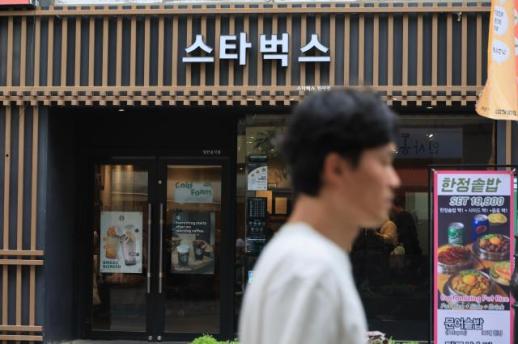 Starbucks Korea resumes promotions after 'Tank Day' backlash SEOUL, July 09 (AJP) - Starbucks Korea is relaunching customer promotions after a marketing controversy over the anniversary of the 1980 Gwangju Uprising forced the company to close every store in the country simultaneously for staff training, something it had never done in its 27 years in Korea. The coffee chain said Tuesday it will give free drink coupons and food discount coupons to all Starbucks Rewards members through Aug. 14. Existing members received the coupons the same day, and anyone who joins by July 31 will get theirs the day after signing up. Starbucks Korea's rewards program had about 15 million members as of early this year. The free drink coupon covers one tall-size iced Caffe Americano, iced Caffe Latte or iced Vanilla Latte, or their hot equivalents. At regular prices, that is a drink worth 4,700 won for the Americano and 5,200 won for the two latte options. A separate coupon offers 30 percent off sandwiches, cakes, bread and ice cream. The campaign marks a return to normal marketing for Starbucks Korea. The company spent much of June managing fallout from a tumbler promotion tied to May 18, the anniversary of the Gwangju Uprising, a pro-democracy movement crushed by South Korea's military government in 1980. The event was branded "Tank Day," a name critics said evoked the tanks the military sent into Gwangju. Its tagline, "tak on the desk," echoed a notorious 1987 police cover-up in which officials claimed a student activist died after they "hit the desk" during interrogation. Both references touch on some of the most painful chapters in modern Korean history. The backlash was swift. Within days, Starbucks Korea's chief executive was dismissed and the company opened an internal investigation. Its chairman issued a public apology. Starbucks Korea also temporarily eased refund rules for prepaid gift cards and postponed planned promotions and summer menu launches. The response culminated on June 22. All of Starbucks Korea's roughly 2,160 stores nationwide closed early, at 3 p.m., so employees could watch training sessions on Korean history and social sensitivity. The chain had never done that before in the 27 years since its first store opened in Seoul in 1999. Shinsegae Group, which controls Starbucks Korea through its E-Mart division, said executives across its affiliates would undergo the same training. Since then, the company has gradually eased back into business as usual. It relaunched its delayed summer products in late June before restarting rewards promotions this week. A Starbucks Korea official described the summer coupon event as part of a customer benefit program the company has run for years, rather than a response to the controversy. Starbucks Korea has rolled out several other rewards-member promotions this year, including size-up offers on cold brew and other drinks in April, a cherry blossom merchandise event in March, buy-one-get-one coupons in January, and 30 percent drink discount coupons in January, February and April. 2026-07-09 11:04:32
-
South Korea Expands Trade Security to Industrial Security, Promises Increased Government Support The South Korean government has announced plans to expand its focus from trade security, centered on managing strategic materials, to industrial security aimed at protecting industrial competitiveness. This shift comes as competition for technology and resources among major countries intensifies, alongside geopolitical conflicts, making export controls, supply chain stability, and advanced technology protection critical for corporate competitiveness.On July 9, the Ministry of Trade, Industry and Energy held the '2026 Trade Security Day' event at the Korea Chamber of Commerce and Industry in Seoul, attended by over 350 participants, including export companies, relevant agencies, and diplomatic representatives. This year marks the 16th annual celebration of Trade Security Day, which has been held since 2011.Trade security is increasingly becoming a part of corporate risk management. As sanctions against Russia, advanced technology controls on China, and export controls on critical minerals become more complex, companies that fail to conduct prior item assessments and counterparty checks, or establish internal compliance systems, risk export disruptions and sanctions.During a pre-event forum, the Industrial Trade Security Forum presented recommendations for 'Trade Security 2.0.' Composed of members from academia, research, and industry, the forum delivered three key policy suggestions to the government: redefining trade security to focus on industrial protection and competitiveness enhancement, promoting proactive trade security negotiation strategies, and ensuring joint responsibility for trade security between the government and private sector.Additional activities included an international seminar with policy researchers from South Korea, the United States, and Japan, as well as workshops for CP companies, CEO training, and business consultations. The business consultation session featured officials from the Ministry of Trade, Industry and Energy responsible for export permits, major law firms such as Kim & Chang and Pacific, the Trade Security Management Agency, and KOTRA, providing advice on export control systems and response strategies. The Ministry has also introduced a new export control consulting menu within its export voucher program to support companies facing difficulties due to major countries' export controls. This initiative was announced on July 8.The Ministry plans to continue supporting export companies and relevant agencies in enhancing their trade security capabilities in response to changes in the economic security environment.Yang Gi-wook, head of the Ministry's Industrial Resource Security Office, stated, 'As competition for technology and resources among major countries and geopolitical conflicts intensify, industrial security that can protect our industry is essential for national competitiveness. While existing trade security focused on managing strategic materials agreed upon in the international system, we will proactively strengthen industrial security through strategic export controls, advanced technology protection, and supply chain stabilization.'* This article has been translated by AI. 2026-07-09 11:04:00
-
Government Raises Eight Foreign Technical Regulations at WTO to Address Export Challenges The government has raised eight foreign technical regulations at the World Trade Organization (WTO) Technical Barriers to Trade (TBT) Committee that could hinder exports for domestic companies.The National Institute of Technology and Standards and the Ministry of Food and Drug Safety participated in the second WTO TBT Committee meeting held from July 7 to 10, 2026, to negotiate solutions to export challenges caused by these foreign regulations.The regulations identified by the government as specific trade concerns include the European Union's packaging waste regulations, single-use plastics directive, perfluorinated compounds regulation, Indonesia's tire national certification (SNI) regulation, and a draft decree on cosmetics management in Vietnam.These regulations are introduced under the guise of environmental, safety, and quality management. However, they can lead to increased testing and certification costs, customs delays, and product design changes for companies. This burden is particularly significant for industries like semiconductors, batteries, and displays, which are globally interconnected and may need to adjust production and export strategies in response to changes in foreign technical regulations.Recently, foreign technical regulations have expanded beyond simple quality standards to include carbon emissions, recycling, hazardous substances, and supply chain transparency. As a result, a company's export competitiveness may increasingly depend on how quickly it can understand and respond to various national regulations, in addition to price and quality.During the committee meeting, a special session on lithium batteries was also held, featuring domestic experts as moderators and speakers. They discussed the K-battery industry and the concerns faced by the industry in responding to global regulations, including the EU battery regulation. Choi Yo-han, head of the Life Cycle Assessment Team at the Korea Institute of Industrial Technology, served as the moderator, while Park Jung-won, head of the Trade and Environmental Affairs Division at the Battery Association, participated as a speaker.Kim Dae-ja, head of the National Institute of Technology and Standards, stated, "The government will actively work to resolve the challenges faced by our export companies due to foreign technical regulations," and urged the industry to make full use of the government's TBT consultation channels to address these export difficulties.* This article has been translated by AI. 2026-07-09 11:04:00
-
Government to Establish Early Warning System for Job Shifts Due to AI and Carbon Neutrality The government plans to establish a system to detect employment shocks early. As the job landscape rapidly changes due to the spread of artificial intelligence (AI) and the transition to carbon neutrality, the aim is to proactively respond by capturing signals of change before employment shocks materialize.However, the government has yet to specify the exact scale of employment impacts or the budget required for the changes brought about by AI and industrial transition, leaving the specifics of the policy as a future task.Development of Korean AI Exposure Index to Track Job Changes in Real TimeOn July 9, the Ministry of Employment and Labor announced the 'Basic Plan for Employment Stability in Industrial Transition' in collaboration with relevant ministries. The plan focuses on continuously monitoring changes in the job market due to AI transition (AX) and green transition (GX) and linking vocational training with employment safety nets.The government aims to quickly capture signals of labor market changes rather than making definitive predictions about the employment impacts of industrial transition. A ministry official stated in a pre-briefing, "Many experts believe it is inappropriate to prepare government policies based on predictions of the speed of AI technology development. Our role is to quickly capture actual changes in the labor market and respond flexibly through institutional measures."To this end, the government will develop a 'Korean AI Exposure Index (K-AIOE)' by 2027, reflecting the characteristics of the Korean labor market and job roles. This decision stems from the recognition that applying foreign indices to domestic job classifications has limitations in reflecting actual job differences.Jobs with high AI exposure will be tracked through the 'Korean Canary Dashboard.' This system will provide early warnings when abnormal signals appear by monitoring employment changes in real time by industry and age. An 'Industrial Transition Job Map' will also be published to provide a comprehensive view of transition trends and labor demand by industry and region.Young people are identified as a key target for response. According to an analysis by the Bank of Korea, 98.6% of the 211,000 jobs lost for those aged 15 to 29 from July 2022 to July 2023 were concentrated in industries with high AI exposure. Concerns have been raised that simple and repetitive tasks, such as data collection and analysis, are being replaced by AI, leading to a reduction in entry-level hiring and weakening the 'ladder of growth' for young workers to gain experience.However, the government does not believe that the spread of AI will necessarily lead to large-scale job losses. A ministry official remarked, "It would be misleading to quantify the changes in workforce due to AI. It is universally acknowledged that the way we work and the content of jobs are changing."The impact of the transition to carbon neutrality is likely to be concentrated in specific regions and among middle-aged workers. High-carbon industries such as coal power, automotive, petrochemicals, steel, and cement are concentrated in certain areas, and the proportion of skilled workers specialized in processes and equipment is also high. The percentage of workers aged 50 and older in high-carbon industries is 47.8%, which is 6 percentage points higher than in low-carbon industries (41.8%).Support for 1 Million in AI Job Training; Budget Yet to be DeterminedThe government will use vocational training as a key means to absorb the impacts of the transition. From 2026 to 2030, it will support AI job training for over 1 million people and expand training programs that combine AI and green technology. A 'Plus Qualification' system will also be introduced, reflecting AX and GX training completion in existing national technical qualifications.Regions most affected by industrial transition will be designated as 'Just Transition Special Zones' in advance. These special zones will receive a package of support for employment stability, new industry development, and administrative and financial assistance. The mandatory reemployment support services for middle-aged workers will gradually expand from businesses with 1,000 or more employees this year to those with 500 or more next year, and to those with 300 or more by 2029.The specific budget for each project is expected to become clearer after the government budget proposal for next year is finalized. A ministry official stated, "Next year's budget is currently under review by the financial authorities, and we will be able to explain the scale of each project once the government proposal is submitted to the National Assembly and the year-end budget is finalized."The government plans to operate this basic plan as a 'rolling plan' that will be revised annually rather than a fixed five-year plan. A ministry official noted, "This plan serves as a starting point for labor, management, and the government to respond to employment stability in industrial transition based on certain principles and directions. We will supplement detailed plans each year to align with market changes."* This article has been translated by AI. 2026-07-09 11:04:00
-
Korea Successfully Issues Record €1.7 Billion in Euro-denominated Bonds Amid Middle East Tensions The South Korean government has successfully issued a record €1.7 billion in euro-denominated foreign exchange stabilization bonds amid rising tensions in the Middle East and other external uncertainties. This issuance has reaffirmed global investors' confidence in the South Korean economy, as both the three-year and seven-year bonds recorded the lowest spread rates in history for their respective maturities.The Ministry of Economy and Finance announced on July 9 that it successfully issued €1.7 billion in euro-denominated foreign exchange bonds on July 8, equivalent to approximately $1.94 billion.The bonds were issued in two tranches: €700 million for three years and €1 billion for seven years, marking the largest issuance of euro-denominated foreign exchange bonds to date.The issuance rates were set at 2.981% for the three-year bond, which is 10 basis points above the euro mid-swap rate, and 3.285% for the seven-year bond, which is 28 basis points above the euro mid-swap rate. The coupon rates are 2.875% and 3.250%, respectively.The spread rates have significantly decreased. Both the three-year and seven-year bonds achieved the lowest spread rates in history for their respective maturities. Compared to last year's issuance of euro-denominated foreign exchange bonds, the spread for the three-year bond dropped from 25 basis points to 10 basis points, while the seven-year bond fell from 52 basis points to 28 basis points.The government assessed that this issuance has reestablished the benchmark for euro-denominated Korean bonds. Notably, the seven-year bond issuance surpassed the previous record of €750 million set in 2014 for a single tranche. Despite increased external uncertainties due to rising tensions in the Middle East, demand from global institutional investors remained strong.Prior to the issuance, the government explained its growth strategies to global investors, highlighting initiatives for a major transition in artificial intelligence, enhancing competitiveness in advanced manufacturing, and modernizing capital markets.As a result, the final issuance rates were lower than initially proposed. The three-year bond was issued at +10 basis points, down from the initially suggested euro mid-swap +14 basis points, while the seven-year bond was issued at +28 basis points, down from +32 basis points.The government noted that the spread rates achieved are lower or comparable to similar maturity bonds issued by major advanced countries and reputable public sector issuers. In fact, the spread rate of 28 basis points for the seven-year bond is lower than the comparable market rates for the Quebec and Ontario provincial governments, which have the same credit rating as South Korea.The spread rate for foreign exchange bonds serves as a benchmark for South Korean issuers, including domestic companies and financial institutions, when raising funds overseas. This reduction in spreads is expected to lower the overall foreign currency funding costs for South Korean entities.From a foreign financial stability perspective, the government has secured repayment resources for €700 million in euro-denominated foreign exchange bonds maturing in October this year, ensuring stable external payment capabilities without refinancing burdens.With this issuance, the government has fully utilized its foreign exchange bond issuance limit of $5 billion for the year. This marks the largest annual issuance of foreign exchange bonds in history.The government assessed that the successful absorption of volumes in both dollar and euro markets, along with achieving historically low spread rates, reflects strong global investor confidence in South Korean bonds.A Ministry of Economy and Finance official stated, “We will closely monitor the international financial market situation to maintain a stable foreign currency funding base and unwaveringly support our economy's external soundness.”* This article has been translated by AI. 2026-07-09 11:04:00
-
KOTRA Partners with Hyundai and Kia to Support Auto Parts Exports The Korea Trade-Investment Promotion Agency (KOTRA) is joining forces with Hyundai Motor and Kia to support domestic auto parts companies struggling with export challenges.KOTRA announced on July 9 that it signed a memorandum of understanding (MOU) with Hyundai and Kia on July 8 to assist domestic parts suppliers in entering overseas markets. This agreement aims to help companies with strong technological capabilities but facing difficulties in expanding their markets due to worsening external conditions.Auto parts rank sixth among South Korea's top 15 export items, serving as a crucial intermediate good. However, exports have been on a continuous decline since 2023 due to geopolitical risks and changes in the global trade environment.Last year, auto parts exports fell by 6% to $21 billion, and the first half of this year also saw a 6.3% decrease compared to the same period last year, totaling $10 billion.KOTRA plans to directly target overseas automakers to open export channels for domestic parts suppliers. The first joint cooperation project will take place on July 14 (local time) in Detroit, USA, featuring 'Ford-Korean Parts Supplier Day,' followed by the 'Stellantis Innovation Tech Show' on July 16.The events, held at the headquarters of global automakers Ford and Stellantis, will include participation from 44 top partner companies of Hyundai and Kia. The participating firms were jointly identified by the two automakers and ultimately selected by Ford and Stellantis.Simultaneously, a briefing on U.S. automaker purchasing policies will be conducted to help establish market entry strategies.Kang Kyung-sung, president of KOTRA, stated, "This agreement with Hyundai and Kia is significant as it creates a model for mutual growth between large and small enterprises. We will continue to create opportunities for supply chain entry in Europe and Japan in the second half of the year to actively support the export expansion of auto parts companies."* This article has been translated by AI. 2026-07-09 11:04:00