


Latest by
-
 Ruling and Opposition Parties Agree on Election Commission Reform, Disagree on Solutions The ruling and opposition parties have reached a consensus on the need for reform of the Election Commission and an investigation into the shortage of ballots that occurred during the June 3 local elections. However, they are divided on the solutions to these issues. On July 6, Han Byeong-do, acting leader of the Democratic Party, stated at a Supreme Council meeting, "The Democratic Party will submit a special investigation bill this week to resolve the ballot shortage issue. The opposition's insistence on sole recommendations is merely a claim for political strife, not for uncovering the truth." Both the Democratic Party and the People Power Party agree on the necessity of a special investigation to hold responsible parties accountable and to prevent future occurrences. However, the Democratic Party insists that a third-party recommendation is essential to eliminate political considerations, while the People Power Party argues that the opposition should have the sole right to recommend to ensure a proper investigation. Jang Dong-hyuk, leader of the People Power Party, posted on Facebook, "A specific party has even created a law that could imprison those who criticize the Election Commission for up to 10 years, and has actively blocked the Board of Audit and Inspection's oversight of the Commission, claiming it is a 'constitutional institution.'" He added, "The Democratic Party, which defended the Election Commission during the family hiring scandal, is clearly in a 'co-conspirator relationship.' Lee Jae-myung, the Democratic Party, and the Election Commission are in the same boat, so the special investigation must be recommended by the People Power Party to dismantle the election cartel that is the root of all evil." Regarding the composition of the Election Commission, the two parties have proposed different solutions. The Democratic Party's task force for protecting citizens' voting rights suggested on June 26 expanding the current single commissioner of the Central Election Commission to three commissioners, each responsible for voting, management, and organizational operations to enhance accountability. In contrast, People Power Party lawmaker Choi Eun-seok proposed an amendment to the Election Commission Act on July 5, which includes making all nine members of the Central Election Commission commissioners and establishing an audit committee composed of external personnel. Additionally, Yoon Sang-hyun, chairman of the National Assembly's Special Committee on National Investigation, called for a public recount of the remaining 2.47 million ballots at the Handball Stadium in Olympic Park, located in Songpa-gu, Seoul. Yoon explained, "The cost of renting the venue will be about 200 million won until the 10th, and mobilizing people for the recount is estimated to cost around 50 million won." He further stated, "I will request an agreement between the ruling and opposition party secretaries, and a conclusion will be reached soon." The Election Commission has previously expressed its willingness to participate in a public verification process involving both parties and citizens. However, the Democratic Party has taken a cautious stance regarding the public recount request. Kim Seong-hwa, a member of the National Assembly's Special Committee, stated in a phone interview with Aju Economy, "We are currently organizing our position. Discussions will take place gradually." As the Special Committee is set to conduct on-site investigations of the Central Election Commission on July 7, discussions regarding the recount are expected to follow in due course.* This article has been translated by AI. 2026-07-06 16:00:00
-
 Baejae High School Baseball Team Apologizes for Controversial Remarks The Baejae High School baseball team, involved in a recent controversy over derogatory remarks about the May 18 Democratic Movement, visited Gwangju to express their remorse. Eight days after the incident, the delegation of students, coaches, and staff conveyed their deep regret and committed to preventing future occurrences during their visit to Gwangju Ilgo. The 86-member delegation, which included the principal, coaches, student-athletes, parents, and officials from the Seoul Metropolitan Office of Education, arrived at Gwangju Ilgo at 3 p.m. on July 6 to deliver an official apology and pay respects at the May 18 Democratic Cemetery. During a reconciliation session between the two schools, representatives from Baejae High School read prepared statements expressing their heartfelt remorse. The team captain stated, "I sincerely apologize to the players, parents, and citizens of Gwangju who were deeply hurt by our inappropriate remarks and actions in a place that should embody dreams and hope." He added, "This incident has made all of us, including myself, reflect deeply. We have realized how important character and attitude are in life, beyond just baseball. I will strive to live with a mindset of continuous reflection." The head coach also expressed a heavy sense of responsibility, stating, "The derogatory cheers are inexcusable, and I bear the greatest responsibility for failing to teach this properly as a coach." He continued, "Saying that I couldn't stop the inappropriate cheers because I was focused solely on winning is merely an excuse. I acknowledge my mistakes and promise to fulfill my responsibilities as a coach to ensure this does not happen again." The school administration emphasized that this incident would not be dismissed as an individual lapse. In a statement from the staff, they noted, "We view this incident as a serious case stemming from a total collapse of ethical and historical awareness, not just a simple mistake or deviation. We take this matter very seriously." They expressed their shame and regret for using derogatory slogans that tarnished the spirit of sports and were linked to the May 18 Democratic Movement, stating, "We are conducting an internal investigation and disciplinary procedures to ensure such incidents do not recur, and we will strive to create an educational community that values consideration and solidarity rather than mockery." After reading the apology, the Baejae delegation moved to the National May 18 Democratic Cemetery at 4 p.m. Accompanying them were Jeong Geun-sik, the Superintendent of the Seoul Metropolitan Office of Education, and Kim Dae-jung, the Superintendent of Gwangju Metropolitan Office of Education, who shared a commitment to resolving the situation and fostering a proper historical understanding among students. In light of this incident, the Seoul Metropolitan Office of Education plans to conduct extensive visits and inspections of all school sports teams in the area by August 21 to reinforce students' rights and ethical awareness. Additionally, they will promptly implement education on history and discrimination prevention for all Baejae High School students starting after July 8.* This article has been translated by AI. 2026-07-06 16:00:00
-
 Kim Min-seok Announces Candidacy for Democratic Party Leadership Kim Min-seok, a prominent candidate for the leadership of the Democratic Party, officially announced his candidacy on July 6 in Gwangju and Seoul, marking the beginning of the party's leadership race. With Kim's announcement, former party leader Jeong Cheong-rae and lawmaker Song Young-gil are also expected to decide on their candidacies soon. In his announcement, Kim emphasized his suitability as a partner for President Lee Jae-myung in governing the country. He stated, "I declare my candidacy for the Democratic Party leadership out of an immense sense of responsibility for the success of the Lee Jae-myung administration," and called for the restoration of a capable, strong, and victorious Democratic Party. Kim highlighted that one of the key responsibilities of the newly elected party leader will be to support the government's success. He claimed, "I have worked closely with President Lee over the past few years. As the Prime Minister and a partner in governance, I successfully hosted the APEC summit and attracted an artificial intelligence (AI) hub." He also noted his experience in resolving legislative conflicts and managing the Central Election Management Commission crisis, asserting that he has demonstrated problem-solving and communication skills. Additionally, he pointed out that he is the only person who has led the party to victory in local, general, and presidential elections. However, Kim criticized the previous leadership under Jeong, stating that there was insufficient discussion and procedure regarding the merger with the Justice Party, judicial reforms, and election strategies over the past year. He remarked, "The pitfalls of self-centered politics have led to confusion in party and government cooperation," and pointed out the lack of deliberation, discussion, and consistency in the party's strategies. Meanwhile, Jeong and Song, who are also considered potential candidates for the party leadership, are expected to make their decisions soon, although they appear to be deliberating on the timing. Jeong has been visiting key Democratic strongholds, including the Honam region and the burial site of former President Roh Moo-hyun in Bongha Village, Gyeongnam, to gauge party members' sentiments ahead of his official announcement. Similarly, Song was seen holding a draft of his candidacy announcement during a National Assembly Defense Committee meeting, suggesting he may also announce his candidacy in the near future.* This article has been translated by AI. 2026-07-06 16:00:00
-
 World Cup fiasco fells Chung Mong-gyu after 13 years atop KFA SEOUL, July 06 (AJP) - South Korean football lost its most powerful figure Monday, eight days after losing its World Cup. Chung Mong-gyu resigned as president of the Korea Football Association, ending 13 years and five months in charge and completing the collapse that had already consumed his hand-picked national team coach, Hong Myung-bo, whose group-stage failure turned him into a national pariah and has now claimed the man who put him there. The scale of the failure explains the speed of the fall. South Korea entered the tournament with what local media called a golden generation, headlined by captain Son Heung-min, in an expanded 48-team format where even a third-place group finish could be enough to advance. The team beat the Czech Republic 2-1, then lost 1-0 to Mexico and 1-0 to South Africa, finishing third in Group A, and its elimination was confirmed on June 28 Korean time when DR Congo beat Uzbekistan 3-1. Hong resigned the next day. Chung lasted one more week. His departure was supposed to look different. Chung, who is also chairman of construction conglomerate HDC Group, submitted his resignation letter after presiding over a final meeting of executives at Korea Football Park in Cheonan, the association said. First elected in January 2013 and re-elected three times, he announced on May 29, two weeks before the tournament began, that he would step down after the World Cup ended on July 19, calling support for the national team his final duty. The elimination pushed him out two weeks early. "All glory and achievements belong to the players and the fans, and all shortcomings and faults are entirely my responsibility," Chung said in a farewell statement translated from Korean. "I now step down from the presidency and return to being a passionate football fan." The fall did not stop with the two men. President Lee Jae Myung wrote on X after the elimination that he was baffled by the exit, blamed personnel decisions that put factionalism and loyalty over competence, and ordered the sports ministry to investigate the national team program. The ruling Democratic Party has been planning a parliamentary hearing into the failure and the management of the Korea Football Association (KFA), and the ministry plans a fresh audit of the federation. A failure years in the making The coach who oversaw the failure was Chung's most contested decision. The KFA appointed Hong in July 2024 after firing German coach Jurgen Klinsmann barely a year into his contract. Hong was not among the two final candidates originally under consideration, and the federation bypassed the final interview and presentation stage before confirming him. The backlash was immediate and came from inside the game. Park Joo-ho, a former national team midfielder who sat on the KFA committee handling the search, said the federation had disregarded proper vetting procedures. Former captain Park Ji-sung and 2002 World Cup veterans Lee Young-pyo and Lee Dong-gook echoed him. The criticism carried extra weight because Hong had failed in the job before. He coached South Korea at the 2014 World Cup in Brazil, where the team also went out in the group stage, and a petition posted on the government's Petition 24 site late last year argued he had already been proven a failure and predicted the tournament would go badly. The state agreed the process was broken. In October 2024, the Ministry of Culture, Sports and Tourism concluded the KFA had breached its own rules in hiring both Hong and Klinsmann, finding that a meeting between Hong and the federation's technical director did not constitute a proper interview, and demanded disciplinary action against Chung and other senior officials. The KFA fought the demand in court, and in April a ruling against the federation found flaws in the appointment process and insufficient board deliberation. The KFA has appealed, and the legal battle was still running when Chung resigned. Betrayed trust Chung survived all of it politically, winning a fourth term in February last year with 85.6 percent of the vote from an electorate of football insiders, on a mandate that ran through 2029. What he could not survive was the public. Many fans had been willing to give Hong a second chance despite 2014. "Although he messed up the 2014 World Cup, I still had huge trust in Hong. People learn from mistakes, you know," Kim Ji-hoon, a 42-year-old office worker living in Seoul, told AJP. "But I was wrong. I took a day off from work to join the supporters at Gwanghwamun Square on June 25, and I disappointed my whole family, who came with me. It was just terrible." Song, a 32-year-old freelancer, shared similar feelings of disappointment. "My hopes were high because this national team was the strongest dream team we have ever had, full of powerful players. I was devastated to see how poorly Hong managed them," Song said, adding: "I think I could have managed the team better than Hong." Banned from entry That disappointment turned into open mockery. On June 26, the day after the South Africa loss, a photo spread across Korean social media showing an A4 notice on a GS25 convenience store door reading "Hong Myung-bo is unacceptable." Within days, near-identical signs were photographed on a donut shop in Daejeon, a pasta restaurant in Seoul's Hongdae district, a Korean beef restaurant in Gimje, a traditional medicine clinic, and the front gates of private homes, according to the Financial News and other Korean outlets. The anger followed Hong across the Pacific. Two days after fans jeered the returning team at Incheon International Airport, where one banner read "Hong Myung-bo! Spit out the money and get out! Dismantle the KFA," Hong flew to Los Angeles to join his family. On July 5, a video circulated on X showing the owner of a Korean restaurant in Los Angeles taping a bilingual version of the sign to his door, the English line reading "Hong Myung Bo (KOREAN HEAD COACH) IS BANNED FROM ENTRY." "I do have something to say, but that story will come out someday," Hong told reporters at Incheon before departing, in remarks translated from Korean. What comes next Chung's exit does not end the reckoning, it opens the succession. Under the KFA's articles, one of the federation's four vice presidents will serve as acting president after confirmation by the Korean Sport and Olympic Committee, and federation bylaws require an election for a new president within two months of the vacancy. 2026-07-06 15:58:02
-
 Audit Agency Launches Financial Review of Election Commission Amid Voting Issues The Audit Agency has initiated a financial audit of the Election Commission following a shortage of ballots during the June 3 local elections. The agency plans to investigate various allegations surrounding the commission, including budget execution for ballot printing, sole-source contracts, and overseas trips.On July 6, the Audit Agency announced the start of its audit focusing on the "actual conditions of election-related budget planning and execution."Previously, the agency had been collecting data for the audit after a decision by the Audit Committee last month.The audit will cover the Central Election Commission, as well as local election commissions in Seoul, Gyeonggi, and Busan, along with their respective districts and municipalities.A large audit team of 42 members, led by the Director of the Administrative and Safety Audit Bureau, will conduct the audit in two phases: from July 6 to 24 and again for 14 days in August.The Audit Agency plans to review the results of the first phase to determine the focus areas and whether to expand the audit team.This audit follows concerns about the Election Commission's inadequate initial response to the ballot shortage and issues with its command and response systems.Particularly, there have been growing calls for reform within the commission and the need for external audits due to allegations related to lowering the minimum printing standard for ballots, budget execution for printing, sole-source contracts, and overseas trips.According to the Central Election Commission's Truth Investigation Committee, 141 polling places experienced ballot shortages during the June 3 local elections.Of these, voting was halted at 26 locations due to insufficient ballots.It was also revealed that the decision to lower the minimum printing standard from 60% to 50% was made solely by the Secretary-General.The high proportion of sole-source contracts within the Election Commission has also come under scrutiny. An analysis by National Assembly member Joo Jin-woo found that 82.1% of the 2,665 contracts over the past five years were sole-source contracts, with the proportion reaching 87.7% last year.Allegations of unnecessary overseas trips by Election Commission staff have also emerged. According to data received by National Assembly member Kim Ki-hyun, there were 107 overseas trips involving 461 staff members from 2022 to June of this year, with a total budget of 2.452 billion won.Former Central Election Commissioner Noh Tae-ak reportedly took three overseas trips to Germany and Sweden during his tenure, traveling with his spouse but failing to disclose this in his post-trip reports.In response, the Audit Agency will focus on reviewing the budget planning and execution for ballot printing, ballot printing contracts, various allowances related to elections, and expenses for overseas trips. The agency will also investigate issues related to sole-source contracts, including pricing, contract splitting, and allegations of favoritism.An Audit Agency official stated, "We aim to provide solutions to public concerns regarding the Election Commission by reviewing the implementation of audit recommendations."Meanwhile, the Election Commission, as a constitutional body, is not subject to the Audit Agency's oversight according to a Constitutional Court ruling, meaning the agency can only conduct financial audits of the commission. The last regular audit of the Election Commission by the Audit Agency took place in 2022.* This article has been translated by AI. 2026-07-06 15:52:00
-
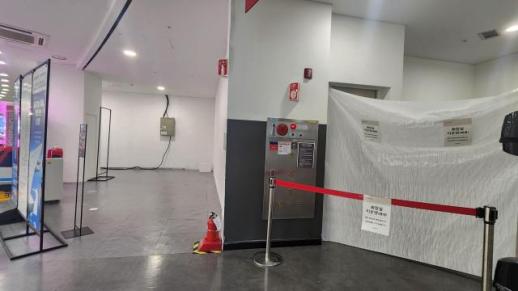 Homeplus Faces Bankruptcy, Sparking Fears of Supplier Collapses 'Cash only'At a food service counter in the Homeplus World Cup store in Seongsan-dong, Seoul, a handwritten notice stated that only cash payments were accepted. The store operator, identified as A, explained, "If customers pay by credit card, Homeplus does not settle the payments, so we have no choice but to accept only cash or bank transfers." Other vendors in the store also reported a chaotic atmosphere, with two clothing retailers beginning to withdraw their operations early that morning.As Homeplus moves toward bankruptcy following a court decision to terminate its corporate rehabilitation process, the impact on suppliers and small businesses is growing. The court's ruling has diminished the likelihood of settling debts amounting to hundreds of millions of won, raising concerns that the liquidity crisis could extend beyond suppliers to subcontractors.According to Homeplus and industry sources, 47% of the 4,603 suppliers and partners that do business with Homeplus rely on the retailer for more than half of their total sales. A survey by the Korea Federation of Small and Medium Enterprises found that the average unpaid amount for 150 small businesses is approximately 770 million won per company, with 24% of these businesses having unpaid amounts exceeding 1 billion won.If Homeplus ultimately declares bankruptcy, companies without collateral or priority claims are likely to face significant challenges in recovering their payments. As of last month, the outstanding payments owed to suppliers in the agricultural, fruit, livestock, and processed food sectors were estimated to be around 200 billion won. Industry experts believe that the total amount of unpaid debts, including other categories, is likely much higher.The government has initiated emergency support measures to prevent further damage. A total of 440 billion won in liquidity will be provided to small businesses and medium-sized enterprises that primarily deal with Homeplus. The Small Enterprise and Market Service and the Korea Venture Business Association will offer 90 billion won in emergency management stabilization funds, while 350 billion won will be allocated through special guarantees from the Korea Credit Guarantee Fund and the Technology Guarantee Fund.However, suppliers argue that financial support alone will not resolve the underlying issues. They stress that the urgent need is for Homeplus to stabilize its operations rather than relying on loan policies.B, a representative of a clothing company that relies on Homeplus for 80% of its sales, stated, "Government support is just another form of debt, and how long can we endure this? Even if support is provided, it will only be a temporary fix." He emphasized that to maintain their businesses and pay overdue amounts to subcontractors, the remaining 67 Homeplus locations must operate normally and settle accounts properly. According to a survey by the Korea Federation of Small and Medium Enterprises, 85.3% of Homeplus suppliers are unable to pay for raw materials and subcontracting costs on time due to the current crisis.Suppliers are also calling for decisive action from the major shareholder, MBK Partners, and the creditor representative, Meritz Financial Group. On July 1, 182 Homeplus suppliers issued a statement warning that if Homeplus goes bankrupt, hundreds of small partners will also collapse, resulting in thousands of employees losing their jobs. They urged the government to provide active support and called on Meritz to offer immediate emergency operating funds.Earlier, the Seoul Bankruptcy Court decided on July 3 to terminate Homeplus's corporate rehabilitation process but left the door open for potential recovery. The court stated that if Homeplus successfully secures 200 billion won in new funding within the 14-day appeal period, the rehabilitation process could be reinstated. 2026-07-06 15:44:00
-
 SK Hynix to Raise Up to $30 Billion Through ADRs Amid Currency Concerns SK Hynix's plan to issue American Depositary Receipts (ADRs) on the U.S. stock market has sparked interest in its potential impact on the won-dollar exchange rate. The company aims to raise up to $30 billion, which could act as a supply factor for dollars in a foreign exchange market characterized by high exchange rates. However, analysts caution that the effect on the exchange rate may be limited due to unresolved factors contributing to its rise, as well as the timing and scale of the issuance. As of July 6, the average exchange rate of the won against the U.S. dollar for the first half of this year was recorded at 1,484.56 won, the highest since the first half of the 1998 financial crisis. Although the exchange rate fell by over 30 won during the weekly trading on July 3, it remains above 1,500 won. This is still significantly higher than the peak of the exchange rate during the state of emergency in 2024, which was in the high 1,400s. In this context, SK Hynix's dollar fundraising is drawing attention. The company plans to issue new shares through ADRs worth up to $30 billion, which is more than double the $13.6 billion that foreign exchange authorities sold in the first quarter to stabilize the market. ADRs are securities that allow U.S. investors to trade shares of foreign companies on the U.S. stock market in dollars. When investors contribute funds in dollars, the company raises dollars, which can lead to increased dollar supply when the company converts these funds for domestic investments or expenditures. Market observers are keen to see if this ADR issuance can offset some of the recent outflow of foreign capital. This year, foreign investors have sold off domestic stocks, resulting in over $100 billion leaving the South Korean stock market. While not all funds raised through the ADR issuance will be immediately converted, the large-scale dollar fundraising is viewed as a positive signal for the foreign exchange market amid ongoing foreign sell-offs. Experts believe that while the ADR issuance itself may contribute to exchange rate stability, significant effects are not expected. The actual impact on the exchange rate will depend on when and how much of the funds enter the domestic market and how the company utilizes the dollars raised. SK Hynix has stated that it will use the funds for the construction of major domestic production facilities and equipment investments. Another variable is the global financial market. Recently, the won has been affected not only by the strength of the U.S. dollar but also by the weakness of the yen. Key factors such as dollar supply and the direction of U.S. monetary policy continue to influence the won-dollar exchange rate, making it unlikely that the ADR issuance alone will significantly alter the exchange rate trend. Lee Sang-hun, a researcher at iM Securities, noted, "The potential for further yen appreciation and the ongoing trend of foreign investors selling domestic stocks are variables to watch. The scale of foreign selling has not decreased this month, so the reduction in foreign stock sell-offs will be crucial for the exchange rate movement." He added that concerns over increased dollar supply from SK Hynix's ADR listing will also significantly impact the exchange rate. Moon Da-un, a researcher at Korea Investment & Securities, stated, "The key drivers determining the level and direction of the exchange rate in the second half will be the U.S. dollar. Until a clear turning point for a weaker dollar is established, with expectations for U.S. interest rate hikes fading and monetary policy uncertainties easing, domestic supply pressures are likely to persist."* This article has been translated by AI. 2026-07-06 15:36:00
-
 Samsung Biologics Expects Strong Q2 Performance Amid Rising Risks in Second Half Samsung Biologics is projected to meet market expectations with solid performance in the second quarter of this year, but labor disputes are emerging as a significant risk factor for the second half. According to financial information provider FnGuide on July 6, Samsung Biologics is expected to report second-quarter revenues of 1.3243 trillion won and an operating profit of 592.6 billion won, marking increases of 30.6% and 24.8%, respectively, compared to the same period last year. The growth is attributed to rising demand for contract development and manufacturing organization (CDMO) services and increased factory utilization rates. The overall K-Bio industry remains robust. The Ministry of Food and Drug Safety reported that domestic pharmaceutical production reached 33.8466 trillion won last year, a 3% increase year-on-year, marking the highest level since statistics began in 1998. Pharmaceutical exports also surpassed $10.438 billion for the first time, exceeding the $10 billion mark. Despite the expanding global biosimilar market and strengthened CDMO competitiveness, internal factors are dampening market expectations for Samsung Biologics in the second half. Analysts predict that the impact of potential strikes and production disruptions could begin to be reflected in the third quarter. They warn that not only could production be affected by strikes, but also profitability could be shaken by wage increases and performance-related provisions. Shinhan Investment Corp. recently lowered its target stock price for Samsung Biologics from 2.2 million won to 2.1 million won, reflecting these uncertainties. The labor union and management resumed wage and collective bargaining negotiations in mid-June, but they have yet to narrow their differences on key issues. The union initially demanded a 30 million won incentive payment per employee, a 14% wage increase, and a 20% profit-sharing bonus, while the company proposed a 6.2% increase. Recently, the Samsung Biologics union decided to pursue an independent path, separating from the larger Samsung Group union, which has strengthened their resolve. Industry insiders express concern that delays in negotiations could lead to production disruptions and increased cost burdens. If labor disputes prolong, production schedules will be the first to suffer. The CDMO business relies heavily on timely delivery commitments to clients, and any operational disruptions could impact not only short-term performance but also long-term competitive bidding. An industry source stated, "The speed at which labor disputes are resolved could significantly influence performance and investor sentiment in the third quarter and beyond. To capitalize on the favorable market conditions, a swift compromise is essential." * This article has been translated by AI. 2026-07-06 15:32:00
-
 Regulations Without Supply Will Not Work in the Second Half of the Year The real estate market for the second half of the year has opened with the addition of new land transaction permit areas. Starting July 5, the Dongtan district in Hwaseong, where apartment prices have risen over 11% this year, will now be subject to these regulations. The districts of Giheung in Yongin and Guri City are also included. While some view this as a timely measure to curb overheating in the market, others recall that the expansion of land transaction permit areas during the Moon Jae-in administration was seen as a signal of failure in real estate policy. Both perspectives have merit. It is unacceptable to ignore areas where home prices are surging in a short period. Measures such as designating regulated areas or implementing land transaction permits are necessary to prevent gap investments and speculative buying. However, regulations are reactive; they can reduce transactions but do not increase housing supply. The upcoming real estate policies under the Yoon Suk Yeol administration must start from this critical point. Cumulative indicators show that the market is challenging. From January to May of this year, housing completions nationwide fell by 46.7% compared to the previous year, with Seoul experiencing a 41.6% decline. In the rental market, the proportion of monthly rents has approached 70%. What the market feels is not the number of permits or announcements but the availability of homes ready for occupancy. With fewer completions, price pressures in Seoul and the surrounding metropolitan area continue, leaving tenants with limited options. In this context, relying solely on regulations has clear limitations. Potential buyers are pushed into the jeonse market, and a shortage of jeonse leads to increased burdens from monthly rents. When taxes, loans, and transaction regulations tighten simultaneously, listings become scarce, and demand shifts to neighboring areas. This is why regulations without supply cannot last long. Fortunately, Lee Seong-hoon has recently been appointed as the new president of LH (Korea Land and Housing Corporation). LH is the key executing agency for public housing supply aimed at youth, newlyweds, and those without homes. While purchasing rental properties is necessary, relying solely on acquiring already built homes cannot fundamentally resolve the supply shortage. The direct implementation by LH, as requested by President Yoon, must now demonstrate its capabilities. Projects such as the third new town, public land development, urban complex projects, public maintenance, and utilization of idle land must be placed on a concrete schedule. LH must pave the way for housing to flow to those who genuinely need it. The availability of jeonse is decreasing, and the shift to monthly rents is accelerating. If only unstable monthly rents remain in place of jeonse, it is not a market change but a transfer of burden. Alternatives must be prepared to ensure tenants do not suffer while searching for jeonse homes. Guarantees must be provided to prevent fraud, ensure long-term residency, and establish reasonable rental conditions. Non-apartment supply must also be viewed through this lens. Waiting solely for apartments takes too long. Villas, officetels, and urban-type housing can quickly expand residential options within urban areas. However, in a market where trust has eroded following jeonse fraud incidents, simply increasing supply poses risks. No matter how important speed is, the minimum standards for housing must not be compromised. The government has announced plans for tax reform. This will be a critical moment for the clarity of real estate policy. Increasing burdens on high-priced homes and speculative holdings is necessary. However, if the same intensity is applied to actual users and low-priced housing, it could exacerbate market polarization. Property taxes should be carefully strengthened for high-value, multiple, and non-residential holdings, while transaction taxes should be lowered to facilitate movement in the market. Homeowners must be able to sell and relocate to allow for price adjustments. President Yoon has emphasized the protection of actual users. These actual users are not just average households in statistics. They are those unable to find homes due to regulations, waiting in line for jeonse, and cutting back on living expenses due to the burden of monthly rents. A change must be shown so that young people, newlyweds, early-career individuals, those without homes, and vulnerable housing groups no longer suffer due to housing issues. Regulations without supply will not work in the second half of the year. Real estate policy will now be evaluated based on occupancy rather than rhetoric, and on housing costs rather than just principles. 2026-07-06 15:28:00
-
 Canada to Announce Preferred Bidder for Next-Generation Submarine Program Mark Carney, the Prime Minister of Canada, is expected to announce the preferred bidder for the country’s next-generation submarine program on July 6, local time, with a budget of up to 60 trillion won. South Korea's Hanwha Ocean and Germany's Thyssenkrupp Marine Systems (TKMS) have been competing for the contract to supply up to 12 submarines, with the announcement anticipated around 5 a.m. Korean time on July 7. According to local media, including CTV News and the Canadian Broadcasting Corporation (CBC), Prime Minister Carney will reveal the preferred bidder for the Canadian Navy's next-generation submarine program in Halifax, Nova Scotia, on July 6. However, this announcement will not finalize a contract but will instead identify the preferred bidder, with further negotiations likely before a final agreement is reached, the Globe and Mail reported. The schedule released by the Prime Minister's Office supports this view. Carney is set to depart the Ottawa area at 1:10 p.m. local time and travel to Halifax. He will visit a Canadian military base in Halifax at 4:50 p.m. (5:50 a.m. Korean time) and then announce new measures to enhance Canada’s security, resilience, and prosperity at 5:10 p.m. (6:10 a.m. Korean time). Local media speculate that the new security measures announced by the Prime Minister's Office are likely related to the next-generation submarine program. After the announcement, Carney is scheduled to depart for Ankara, Turkey, to attend a NATO summit. Canada's next submarine program involves up to 12 vessels, with Hanwha Ocean's KSS-III Batch II and TKMS's 212CD competing. The Canadian government has indicated that both candidates meet naval requirements, focusing on economic impact, long-term maintenance, and strategic partnerships as key evaluation criteria. Hanwha Ocean has proposed over 70 billion Canadian dollars (approximately 75 trillion won) in trade and investment in Canada by 2044, contributing 96.3 billion Canadian dollars (about 104 trillion won) to the GDP and creating over 430,000 jobs. TKMS has pledged over 160 billion Canadian dollars (around 172 trillion won) in economic activity, contributing 86 billion Canadian dollars (approximately 93 trillion won) to the GDP and creating over 650,000 jobs. The Globe and Mail noted that if Hanwha Ocean is selected, it would mark the first instance of the Canadian government acquiring a major weapon platform from a non-Western supplier, reflecting Canada’s heightened interest in the Indo-Pacific region. Philip Lagasse, a professor at Carleton University, remarked, "Entering the submarine market in Canada, a key NATO ally, holds significant implications for South Korea." Conversely, if TKMS is chosen, it could strengthen NATO-level Arctic defense cooperation among Germany, Norway, and Canada. CBC highlighted that if Canada selects TKMS, the three countries would operate the same type of submarine, enhancing NATO's strategic advantages. However, the atmosphere remains uncertain regarding the outcome. The South Korean government believes that Hanwha Ocean and TKMS are in a tight race. On July 1, Kang Hoon-sik, chief of staff at the Blue House, responded to a question about South Korea's chances of securing the submarine contract by stating, "If we were to score it, I would say it's about 50-50." In contrast, German officials have expressed confidence. Lars Klingbeil, Germany's Vice Chancellor and Minister of Defense, visited the TKMS facility on July 3 and asserted, "The entire German federal government is conducting a comprehensive campaign to ensure successful defense cooperation with Canada," claiming, "We are in a very favorable position on multiple fronts."* This article has been translated by AI. 2026-07-06 15:24:00