


Latest by
-
 Homeplus Opposes Card Companies' Payment Suspension Amid Restructuring Efforts Homeplus has demanded the immediate withdrawal of a decision by some card companies to suspend payments to its offline stores, calling the move unjust. On July 6, Homeplus issued a statement revealing that it received notices from Hyundai Card and Samsung Card regarding the termination of their partnership for Homeplus online mall points and the suspension of payments to offline stores due to outstanding debts and canceled sales. Homeplus emphasized that the court's decision to terminate the restructuring process has not yet been finalized. The termination will only take effect once confirmed, and an appeal can be filed within 14 days from the announcement, meaning the restructuring process is still in place. The company argued that the card companies' notification to end the online mall points partnership based on the restructuring termination is ineffective as it does not meet the necessary conditions. Homeplus also strongly opposed the suspension of payments to offline stores, stating that purchases on credit are not possible at physical locations, and that the online mall has been unable to process orders for three days due to a halt in operations. In this context, it is difficult to understand the rationale for withholding payments to offline stores based on outstanding debts and canceled sales. A Homeplus representative stated, "If the card companies block payment collections, we cannot operate. While we continue to hold onto hope despite the court's decision to terminate the restructuring process, we must not allow such unreasonable actions to undermine our efforts to recover." The company has called on the card companies to immediately retract their decisions. Meanwhile, Homeplus must secure a funding plan of 200 billion won within approximately two weeks and file an appeal. If funding and the appeal are not completed by the deadline, the court's decision to terminate the restructuring process will be finalized, leading Homeplus to enter liquidation proceedings. * This article has been translated by AI. 2026-07-06 16:20:00
-
 Eunma Apartment Redevelopment Accelerates in Gangnam Amid Rising Construction Costs The redevelopment of Eunma Apartment, a symbol of Gangnam's real estate, has gained momentum following the approval of its business implementation plan under the rapid integration planning system. Major redevelopment projects in areas such as Apgujeong, Gaepo, Seocho, Banpo, and Jamsil are now progressing through subsequent procedures. Industry experts believe that construction costs and member contributions will be key factors determining the success of these projects moving forward.According to the redevelopment industry, there is growing optimism about the acceleration of administrative procedures in Gangnam following the Eunma approval. The Gangnam District has established a task force dedicated to expediting redevelopment projects. Currently, there are 103 ongoing redevelopment projects in Gangnam, with 53 of them being redevelopment sites.In Daechi-dong, the so-called 'Priority Belt' is also moving forward, starting with Eunma. Daechi Woosung 1st Complex is pursuing a merger with Ssangyong 2nd Complex, with discussions on the merger scheduled for a general meeting in August. Seongkyung Apartment is awaiting approval for its business implementation plan, while Mido Apartment is pushing for changes to its redevelopment plan.However, some voices in the field express that the perceived speed of the rapid integration planning is not meeting expectations. A representative from the Daechi Woosung 1st Complex stated, "Although we applied the rapid integration advisory method during the redevelopment plan modification process, the number of advisory procedures was greater than anticipated, leading to a slower perceived pace. We hope that the Seoul city government and Gangnam District will expedite the processing of subsequent approvals, including the business implementation plan."Major redevelopment projects in Apgujeong, Gaepo, Seocho, and Songpa are also progressing. In Apgujeong, construction companies have been selected, with Hyundai Engineering & Construction chosen for zones 2, 3, and 5, and Samsung C&T for zone 4. Apgujeong 2nd Zone has become the first area within the Apgujeong special planning zone to pass the integrated review by the Seoul city government. In Gaepo-dong, the Gaepo Jugong 6th and 7th complexes have entered the business implementation plan approval stage. In Seocho, construction and contractor selection procedures are underway for large complexes along the Han River, while in Songpa, redevelopment efforts are ongoing for Jamsil Jugong 5th Complex, as well as Jamsil Woosung 1st, 2nd, and 3rd complexes and Jangmi 1st, 2nd, and 3rd complexes.As the pace of redevelopment accelerates, the burden of construction costs is also increasing. Recently, redevelopment projects in Gangnam have been rapidly raising construction costs due to the competitive introduction of high-end brands, specialized exteriors, and luxury community amenities. Even if they clear the approval hurdles, conflicts over unit allocations and member contributions are likely to arise during the management and disposal stage.Conflicts over construction costs have already materialized in various locations in Gangnam. Cheongdam Leel has been embroiled in disputes after Lotte Engineering & Construction demanded around 130 billion won in settlement for construction costs and delay interest from the association following completion. Issues related to construction cost settlements have also led to delays in occupancy and internal conflicts among some members at The H Daechi Edelweiss. In the Shinbanpo 4th District of Seocho, additional construction cost disputes arose just before occupancy, leading to a settlement agreement after mediation by the Seoul city government.In projects with little or no general sale volume, the burden of contributions is even more pronounced. The Shinbanpo 18th Complex 337 Building is being pursued through a one-to-one redevelopment method without general sales, resulting in cases where even choosing a smaller unit incurs a contribution of over 1 billion won per household. In projects where it is difficult to offset rising construction costs with profits from general sales, the burden on members inevitably increases.Go Jun-seok, a professor at Yonsei University's Sangnam Business School, stated, "Ultimately, the viability of redevelopment projects in Gangnam, including Eunma, is the most significant variable. As public contributions and construction cost burdens increase, member contributions will inevitably rise. Even after receiving approval for the business implementation plan, coordinating opinions among members regarding unit allocations and contributions during the management and disposal approval stage will present another challenge." 2026-07-06 16:16:00
-
 Takaichi's 'Honebuto Policy' Disrupts Japan's Bond Market and Weakens Yen Japan's bond and foreign exchange markets are facing pressure from the government's economic policy framework, known as the "Honebuto Policy," which emphasizes expanded fiscal spending. According to the Nihon Keizai Shimbun (Nikkei) on July 6, the yield on newly issued 10-year government bonds rose to 2.830%, the highest level in nearly 30 years since October 1996. Bond prices, which move inversely to yields, have fallen. Nikkei analyzed that the Takaichi administration's clear commitment to an aggressive fiscal stance under the Honebuto Policy has led to ongoing bond sell-offs amid concerns over fiscal deterioration risks. The draft of the basic policy for economic and fiscal management and reform recently announced by the Takaichi Cabinet removed the phrase "fiscal consolidation," which was included until last year. It is also reported to include plans to increase additional fiscal spending by 10 trillion yen (approximately $94.5 billion) annually starting in 2027, raising concerns that fiscal discipline may loosen under the Takaichi administration. Concerns surrounding monetary policy are also impacting the bond market. The Honebuto Policy draft states that the Bank of Japan's "appropriate monetary policy management" is "very important." Some market participants speculate that the Bank of Japan's interest rate decisions may be influenced by the government's fiscal policy direction. Nikkei noted that fears of the Japanese economy falling into a "behind the curve" situation, where interest rate hikes lag behind inflation, have led investors to sell bonds and refrain from buying. The uncertainty surrounding the Honebuto Policy is also reflected in the foreign exchange market. In Tokyo's afternoon trading, the yen fell to 161.93 per dollar, an increase of 1.15 yen from the previous weekend's closing price, indicating a decline in the yen's value. The combination of the Japanese government's expansionary fiscal stance and expectations of widening interest rate differentials between the U.S. and Japan is contributing to increased downward pressure on the yen.* This article has been translated by AI. 2026-07-06 16:16:00
-
 Seoul high school baseball team seeks forgiveness in Gwangju over May 18 taunts SEOUL, July 06 (AJP) -Kids or not, South Koreans are learning that mockery of historic tragedies comes with serious accountability, as Seoul-based Paichai High School's baseball team traveled to Gwangju on Monday to offer a formal apology to players of Gwangju Jeil High School and local residents and seek their forgiveness for taunting chants mocking the May 18 Gwangju Democratization Movement. The apology came one week after Paichai players shouted "Let's go to Starbucks!" and "Tank Day!" toward the opposing dugout during a first-round game at the 81st Cheongryonggi National High School Baseball Championship in Seoul. The chants referenced a recent "Tank Day" marketing controversy involving Starbucks Korea that was widely criticized for trivializing the 1980 pro-democracy uprising. All 36 Paichai baseball players, along with their parents, teachers and school officials, arrived at Gwangju Jeil High School to apologize in person. The visitors numbered around 80, according to the school. "We caused the players of Gwangju Jeil High School tremendous emotional pain and suffering," the team captain said while reading a statement. "As fellow athletes, it was something we should never have done, and something that should never have happened. We caused many people deep pain." The captain also apologized to the opposing players, their parents and Gwangju citizens, saying the team had reflected deeply on its conduct. "All of us, including myself, sincerely regret what happened," he said. "This incident has taught us once again that character and attitude are more important than baseball itself. We will continue to live with sincere remorse." The team's head coach separately accepted responsibility for failing to prevent the incident. "I acknowledge that our players' chants disparaging a region are inexcusable," he said. "As the person responsible for guiding and educating these students, I bear the greatest responsibility and sincerely apologize." The coach said he had been too focused on the outcome of the game to immediately recognize and stop the offensive chants. "I forgot that there are things more important than winning," he said. "I feel deeply ashamed that my words, actions and leadership failed to set the right example. I will fulfill my responsibility as a coach to ensure that something like this never happens again." Faculty members also issued a separate statement, saying the school did not view the incident as an isolated act of youthful misconduct. "Paichai High School regards this incident not as a simple mistake or deviation by students but as a case stemming from a broader collapse in ethical awareness and historical understanding," the statement said. The faculty said using chants that mocked the May 18 Democratization Movement to insult Gwangju Jeil High School demonstrated that members of the school community had failed to sufficiently share an understanding of the ethical and historical significance of the issue. The school pledged to strengthen ethics and history education, cooperate fully with ongoing investigations and disciplinary procedures, and work to build a school culture based on respect rather than ridicule. "Democracy begins with respecting one another," the statement said. "We will strive to become an educational community that values consideration over mockery and solidarity over hatred." Following the visit to Gwangju Jeil High School, the Paichai delegation was scheduled to pay tribute at the National May 18 Democratic Cemetery to honor those killed during the 1980 pro-democracy movement. The controversy erupted during the June 29 tournament game in Seoul, when some Paichai players repeatedly shouted "Let's go to Starbucks!" and "Tank Day!" toward the Gwangju Jeil dugout. The chants were widely interpreted as mocking the May 18 Gwangju Democratization Movement and prompted strong condemnation from educators, civic groups and baseball officials. The Korea Baseball Softball Association has already suspended Paichai High's baseball team for six months from national competition and is conducting separate disciplinary proceedings against individual players and coaches. 2026-07-06 16:12:38
-
 KOSPI slips as investors turn cautious ahead of Samsung's 2Q earnings results SEOUL, July 6 (AJP) - South Korea's benchmark KOSPI surrendered an early gain of nearly 3 percent on Monday and ended lower, as foreign and institutional investors resumed selling ahead of Samsung Electronics' preliminary second-quarter earnings set to be announced on Tuesday, which are seen as a key test of whether last week’s chip selloff was excessive. The index shed 37.01 points, or 0.46 percent, to close at 8,051.33. The retreat masked a split in the chip trade. Samsung Electronics rose 2.8 percent to 318,000 won (US$208), while SK hynix fell 3.4 percent to 2,343,000 won (US$1,529), as investors positioned for Samsung's results rather than a broad recovery in memory chipmakers, bruised by Meta Platforms' push into selling spare AI computing power. The KOSPI opened higher and climbed as far as 8,327.26 in the first hour before reversing through the session. Foreign investors net sold 1.31 trillion won worth of KOSPI shares and institutions offloaded 1.43 trillion won, while individuals bought 2.65 trillion won. The anxiety traces to reports that Meta is building a cloud business to sell its excess AI computing capacity, which traders read as a sign the AI buildout may be running ahead of demand, an argument aimed squarely at the memory suppliers feeding it. That reading drove the KOSPI's 7.9 percent plunge last Thursday, followed by a 5.8 percent rebound the following day. Selling on Monday again clustered in names tied to the memory supply chain. Samsung Electro-Mechanics sank 8.1 percent to 1,828,000 won ($1,193), and SK square, the largest shareholder of SK hynix, dropped 5.9 percent to 1,495,000 won ($976). Autos cushioned the index. Kia jumped 5.7 percent to 160,700 won ($105) and Hyundai Motor added 2.0 percent to 502,000 won ($328). The tech-heavy KOSDAQ fell harder, losing 21.34 points or 2.5 percent to close at 847.07. The won traded at 1,531.90 per dollar, weakening 2.90 won from the previous session. Elsewhere in the region, Japan's Nikkei 225 closed nearly flat at 69,737.69, down 0.01 percent, with chip names mixed as Kioxia lost 2.1 percent and Tokyo Electron fell 1.2 percent while Advantest gained 0.8 percent. The Shanghai Composite rose 0.2 percent to 4,051.31. Meanwhile, Samsung is set to release its preliminary results on Tuesday, while SK Hynix is due on July 29. Analysts say a strong result could revive the chip-driven rally, but a weak one would deepen doubts after three sharp selloffs in the past month. 2026-07-06 16:12:38
-
 Park Yoo-chun's Team Promises to Settle 400 Million Won in Taxes This Year Park Yoo-chun's team has announced plans to fully pay off his tax debts by the end of this year. According to reports from Japanese media, including Sponichi Annex, Park's Japanese agency recently issued a statement confirming that all ongoing lawsuits in South Korea have been resolved. This indicates that the legal dispute with his former agency has come to a close. Regarding the tax delinquency issue, the agency stated that Park has submitted a payment plan to the National Tax Service of South Korea and is currently fulfilling his payment obligations in accordance with an agreement with the authorities. They added that he plans to complete the full payment by the end of the year. In 2023, Park was listed among high-profile and habitual tax delinquents by the National Tax Service, reportedly owing approximately 409 million won due to five tax cases, including capital gains tax from 2016. He has also faced a lawsuit from his former agency, which claimed damages of about 500 million won for breach of contract. The agency's recent statement confirmed that all related legal disputes have now been settled. In a message to fans via a communication platform, Park expressed, "I sincerely apologize for causing concern over the prolonged domestic legal and tax issues. I am reflecting on my past mistakes and striving to live my remaining time meaningfully." He also thanked fans for their patience and promised to repay their trust with positive actions in the future. Park Yoo-chun debuted in the music industry in 2003 as a member of the group TVXQ and later became part of JYJ while expanding his career into acting. However, in 2019, he was sentenced to 10 months in prison, suspended for two years, for drug use.* This article has been translated by AI. 2026-07-06 16:12:00
-
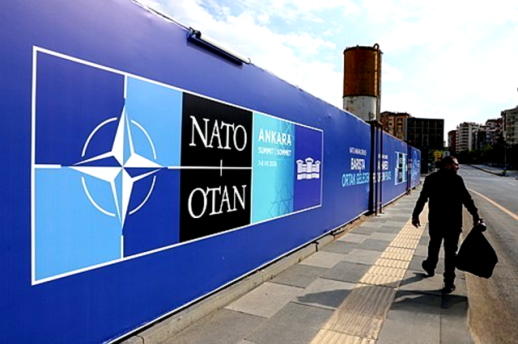 NATO Summit Focuses on Russia-Ukraine Conflict, China Discussions Take Backseat The NATO summit will take place on July 7-8 in Ankara, Turkey, with the Russia-Ukraine war emerging as a key agenda item. This renewed focus on peace discussions follows a series of calls between U.S. President Donald Trump, Russian President Vladimir Putin, and Ukrainian President Volodymyr Zelensky. Additionally, ongoing instability in the Middle East and pressures for increased defense spending are expected to push discussions on China and Indo-Pacific security issues to the background. Trump's Mediation Efforts Resurface According to CBS and the Associated Press on July 5, President Trump spoke with both President Putin and President Zelensky to discuss potential resolutions to the Ukraine conflict. Following their conversation, President Zelensky stated on X (formerly Twitter), "There is a realistic prospect of ending this war, and the U.S. decision is crucial." He added that he plans to meet with President Trump in Ankara for further discussions. Russia has also indicated a willingness to consider U.S. mediation. The Kremlin described the call between Trump and Putin as "constructive." Dmitry Peskov, a spokesperson for the Kremlin, noted that "Russia remains open to peace negotiations with Ukraine" and expressed hope for continued efforts by U.S. mediators. However, it remains uncertain whether these discussions will lead to a ceasefire or peace negotiations. While Russia has mentioned diplomatic solutions, it has attached conditions, insisting that its fundamental positions must be acknowledged. The two sides also have conflicting claims regarding the battlefield situation, with Russia asserting control over the eastern city of Kostiantynivka, which Ukrainian forces deny. Middle East and Defense Spending Overshadow China Agenda Middle East instability is another significant factor influencing the summit. The U.S. and Iran recently signed a memorandum of understanding to halt military clashes, but disagreements over maritime navigation in the Strait of Hormuz, the release of frozen assets, and nuclear program restrictions persist. Should the U.S.-Iran ceasefire falter, NATO's focus may shift towards managing the crisis in the Middle East. Increased defense spending and arms production are also critical issues on the agenda. NATO member states agreed last year in The Hague to allocate 5% of their GDP to defense by 2035. The U.S. plans to assess how well countries are adhering to this commitment during the summit. However, simply increasing budgets does not guarantee an immediate enhancement of military capabilities. NATO Secretary General Jens Stoltenberg stated in an interview with The Wall Street Journal, "Last year, the focus was on promises to increase defense spending; this year, it is about fulfilling those promises." This means that increased funding must translate into actual procurement of weapons and ammunition. The capacity for arms production has also become a concern due to high consumption rates resulting from the Ukraine conflict and U.S.-Iran tensions. Defense contractors are struggling to keep pace with the rising demand. A senior official from the Trump administration indicated that several billion dollars in U.S. arms sales contracts are expected to be announced during the summit. As discussions on the Ukraine conflict, Middle East instability, and defense spending take center stage, issues related to China and Indo-Pacific security are likely to be sidelined. The South China Morning Post reported that NATO views China's military expansion and cooperation among North Korea, China, Russia, and Iran as long-term threats. However, it is anticipated that Indo-Pacific cooperation will not be addressed as a separate key agenda item during this summit. NATO has also invited the so-called Indo-Pacific Four (IP4) partners, including South Korea, Japan, Australia, and New Zealand. Among the IP4 leaders, only President Yoon Suk Yeol of South Korea is expected to attend, while Japan and Australia plan to send ministerial representatives instead.* This article has been translated by AI. 2026-07-06 16:08:00
-
 CJ Olive Young Expands Same-Day Delivery Service in Jeju with New Logistics Center CJ Olive Young is set to enhance its same-day delivery service, "Today Dream," by opening an urban logistics center (MFC) in Jeju. This initiative aims to strengthen the logistics infrastructure in the region, reducing online order delivery times and expanding the range of products available. On July 6, CJ Olive Young announced the launch of its new urban logistics center, "MFC Jeju," which spans 1,702 square meters (approximately 515 pyeong) in Aewol-eup, Jeju. With this facility, the company will be able to process about 90% of online orders in Jeju through the Today Dream service. Previously, same-day delivery was limited to nearby areas around physical stores, but the service area will now cover most of Jeju Island. The logistics center will also allow for an increase in the number of products offered to 11,000. The delivery environment will see significant improvements. Previously, standard deliveries took an average of more than three days and incurred an additional delivery fee of 2,500 won for remote areas. Now, customers who place orders through Today Dream before 4 p.m. can receive their products by midnight on the same day without any extra delivery charges. To further support Jeju customers, Olive Young has launched a dedicated "Jeju Today Dream" page on its mobile app. Residents of Jeju can check the products eligible for same-day delivery and popular items in the region through this tab. To celebrate the page's launch, a 3,000 won discount coupon will be offered for purchases over 15,000 won. Looking ahead, Olive Young plans to expand the Today Dream service throughout Jeju in response to increasing demand and aims to increase the number of products offered to 16,000. The company also intends to continue investing in the region through specialized store openings and support for tourism initiatives. Since introducing the Today Dream service in 2018, Olive Young has been establishing urban logistics centers (MFCs) to meet the growing demand for online orders. Currently, the company operates a total of 25 MFCs across the country, starting from Gangnam in Seoul and extending to Busan, Gwangju, Gyeongju, Daejeon, Jeonju, and Jeju. Today Dream utilizes both offline stores and MFCs to deliver online orders on the same day.* This article has been translated by AI. 2026-07-06 16:08:00
-
 Indonesia Tightens Export Controls on Key Commodities, Raising Supply Chain Concerns for South Korea Indonesia has intensified export controls on key raw materials, including coal, palm oil, and ferro-nickel, raising concerns about potential risks to domestic supply chains in South Korea. With Indonesia accounting for a quarter of South Korea's total coal imports, experts are urging proactive supply chain assessments.According to foreign reports on July 6, Indonesia began implementing a first-phase measure last month to supervise and monitor the export of these three critical commodities.The Indonesian government plans to establish a dedicated agency for raw material exports, known as DSI, under the state-owned holding company Danareksa, to manage exports. Starting in January 2027, DSI will purchase export products directly before re-exporting them, transitioning from a structure where private companies export raw materials to a model that relies on state-run intermediaries.As the world's largest coal exporter, Indonesia accounts for half of global trade in thermal coal. It also dominates the global supply of ferro-nickel at 96% and palm oil at 48%. Analysts suggest that the second-phase measures could significantly impact global supply chains by increasing the Indonesian government's influence over export pricing.South Korea is expected to be affected by these tightened export controls. According to the POSCO Research Institute, South Korea imports 27 million tons of Indonesian coal, which represents about 25% of its total coal imports.If Indonesia expands its influence over export prices and supply, it could lead to increased costs for coal-fired power generation. The battery materials industry, which relies on Indonesian ferro-nickel, may also face higher production costs due to rising raw material prices.The backdrop to these measures includes economic challenges such as fiscal deterioration and the depreciation of the rupiah. President Prabowo Subianto has emphasized the need for stricter export oversight, citing significant losses due to price manipulation and underreporting in the raw material export process. He has also pointed out the issue of certain raw material prices being determined abroad, asserting that Indonesia must secure pricing power.However, interpretations suggest that this move is also aimed at strengthening resource nationalism and enhancing Indonesia's bargaining power in international negotiations, given that the country has maintained export restrictions since banning raw ore exports in 2014.This announcement comes amid ongoing tensions with China over high-speed rail debt, nickel pricing, and mining quotas. Approximately 95% of Indonesia's ferro-nickel exports and 43% of its coal exports are directed to China.The POSCO Research Institute has analyzed that the export restrictions on key raw materials could serve as leverage in various negotiations with China, including those related to high-speed rail debt. As Indonesia continues to reinforce its resource nationalism through export regulations, experts are calling for proactive assessments of domestic supply chains.Choi Boo-sik, a researcher at the POSCO Research Institute's Steel Research Center, stated, "There is a high likelihood of additional regulations on raw materials and products, and it is necessary to establish a monitoring system for this."* This article has been translated by AI. 2026-07-06 16:08:00
-
 Blue House Recommends Resignation of Lee Byung-tae Amid 5.18 Controversy On July 6, the Blue House announced that it has recommended the resignation of Lee Byung-tae, Vice Chairman of the President's Regulatory Reform Committee, amid controversy over comments he made regarding the May 18 Democratic Movement.A Blue House official stated in a media briefing that "as a key member appointed to a presidential committee with significant responsibilities and authority, it is essential to align with the government's policy direction," and that a warning had been issued.The official added, "Given the seriousness of the matter, we have recommended his resignation, and he is currently considering his position." The official emphasized that the Lee Jae-myung administration will continue efforts to expand inclusivity beyond conservative and progressive lines.Earlier that morning, Lee had posted a message titled 'The Cost of Upholding Beliefs' on his Facebook page, which he later deleted.In his post, he quoted the English lawyer and politician Thomas More, stating, "If honor (faith) were beneficial, everyone in the world would be honorable."Lee had previously claimed that the May 18 incident had become a taboo subject in relation to the disciplinary actions taken against the Baekje High School baseball team for their support slogan 'Starbucks, Let's Go.'He also referenced Thomas More's refusal to support King Henry VIII's break from the Catholic Church over divorce issues, stating, "Ultimately, he fell out of favor with the king and was imprisoned in the Tower of London, where he was executed in 1535."* This article has been translated by AI. 2026-07-06 16:04:00