


Latest by
-
 Large Online Platforms Strengthen Responsibility Against Misinformation The revised Information and Communications Network Act and its enforcement regulations have significantly strengthened the responsibilities of large online platforms in addressing misinformation. With the introduction of penalties of up to 1 billion won and punitive damages up to five times for repeat offenders of misinformation, platforms are now obligated to manage misinformation more systematically.The law applies to large information and communication service providers with an average daily user count of over 1 million in the past three months. Major domestic and international platforms, including Naver, Kakao, Daum, YouTube, Instagram, and Facebook, fall under this category.Under the new law, platforms must establish autonomous operational policies to address misinformation. These policies must specify criteria for identifying misinformation and procedures for reporting and taking action. When a user reports misinformation, the platform is required to notify them of the report.If a post is deleted, blocked, or its exposure is limited, the platform must inform both the reporter and the poster of the reasons for the action and the process for filing an appeal. Additionally, platforms are required to prepare and publicly disclose a report at least once every six months detailing the number of misinformation reports and their outcomes.In response to the law, domestic platforms are revising their operational policies. Naver has amended its existing terms of service to enhance user protection. It now restricts the posting of content that intentionally disseminates misinformation to infringe on the rights of others or the public interest, and it has specified that hate speech inciting violence or discrimination against individuals or groups is also prohibited.Kakao revised its service operational policy on June 30 to include a new prohibition against disseminating misinformation for the purpose of harming others or gaining unfair advantages, which infringes on public interest or the rights of others. The updated policy also states compliance with the KISO guidelines for autonomous misinformation policies, effective from July 7.While the previous operational policy broadly prohibited actions that disrupt the normal operation of services, the revision specifically delineates the prohibition of misinformation dissemination as a separate clause.However, private messaging services like KakaoTalk are not subject to these regulations. The Broadcasting and Communications Commission clarified that private messages exchanged between individuals are not regulated, while services that allow for public distribution of information, such as open chats, are included.AXZ, which operates the Daum service, has similarly incorporated the KISO guidelines into its operational policies and defines the dissemination of misinformation as prohibited activity during service use.In response to concerns that the government might be preemptively censoring online posts, officials emphasized that the determination of misinformation will be based on the platforms' autonomous operational policies, and this system is designed to prevent user harm and provide relief to victims.However, the response from foreign platforms has been lukewarm. Companies like Google, Meta, and X have not yet disclosed any changes to their terms of service or operational policies in relation to the new law. This raises concerns that only domestic platforms may bear significant administrative and financial burdens.For foreign platforms with local branches, applying domestic laws can be challenging if their servers are located abroad. Additionally, pressure from U.S. authorities favoring domestic platform companies complicates the situation. Furthermore, major tech companies operate under a regulatory relaxation trend in their home countries, making it difficult to align with domestic regulatory realities. 2026-07-06 17:12:00
-
Incheon Airport Becomes a Hub for K-Food as 200,000 Passengers Visit Daily On July 5, Incheon International Airport's Terminal 1 food street was bustling with travelers even before lunchtime. At 10 a.m., the food court 'Food Empire,' operated by Our Home, was crowded with both domestic and international visitors, making it hard to find an empty seat. After expanding its size by opening the eastern section in October last year, Food Empire now features a variety of dining options, including Hanokjip Kimchi Stew and Namsan King Pork Cutlet on the west side, and Cheongjindong Sundubu, Kontai (Thai), and Nimat (halal) on the east side.Navin, an Indian traveler who ordered halal dolsot bibimbap at Nimat, expressed his relief, saying, "It can be challenging to find strictly halal food at airports or in Korean cities, so I’m glad to enjoy familiar Korean cuisine with confidence." Nearby, a robot barista from Hanwha Robotics caught the attention of travelers as it prepared espresso at the 'AeroBot Bar.'Taking the escalator down to the first floor, the Lotte GRS-operated food court 'Plating' faced a Lotte리아 store across the aisle. Plating features popular Korean brands such as Sodam Bansang, Hyoja Gomtang, and Gongpyeongdong Donkatsu.Differentiating itself from regular stores, a Paris Baguette outlet in the Terminal 2 departure area prominently displayed gift items. The airport-exclusive 'Annyeong Sandwich' quickly gained popularity, selling over ten boxes in less than a minute to both local and international customers.Located in the basement of T2, Our Home's 'In the Box' store is filled with refrigerated and room-temperature items, offering easy-to-grab options like keto gimbap, sandwiches, and salads. A customer named Kim remarked, "I was looking for something quick to eat before my flight, and it’s convenient to buy without waiting."◆ Incheon Airport, with 70 million annual passengers, emerges as a K-Food hubThe surge in passenger numbers has prompted companies to invest in airport concessions. According to Incheon International Airport Corporation, the annual passenger count reached 74.07 million last year, surpassing pre-pandemic levels of 71.17 million in 2019. On February 14, during the Lunar New Year holiday, the airport recorded a daily high of 247,104 visitors. Projections suggest that this year's total passenger count could reach as high as 78.55 million.The bustling 'Incheon Airport commercial area' commands significant rental fees. In the bidding for the 2023 Incheon Airport food and beverage complex, Our Home offered an annual rent of 27.3 billion won, while Paris Croissant bid 18.9 billion won, and Lotte GRS proposed 11.1 billion won. The exclusive food court area for departing passengers was secured by Lotte GRS (10.5 billion won) and CJ Freshway (10.3 billion won), while the lounge operation rights went to Pulmuone Food & Culture (12.7 billion won).Following the acquisition of business rights, companies are aggressively expanding. CJ Freshway opened the 'Gourmet Bridge' food court in both T1 and T2 earlier this year, establishing a foundation with a total of four locations and 1,500 seats. Lotte GRS recently opened a new location in T1, completing its network of five food courts and 49 stores at Incheon Airport. SPC operates over 30 brands, including Paris Baguette and Pascucci, throughout the airport. Our Home also manages over 30 stores, including Food Empire and Hansik Sodamgil, in T1 and T2.While the airport concession business is now a vital growth engine for promoting K-Food, it faced a dark period just a few years ago during the COVID-19 pandemic. With passenger numbers plummeting, major food and beverage operators saw their revenues drop to one-tenth of normal levels, and store operating rates fell to around 30%.Thanks to the recovery in passenger numbers, the Incheon Airport concession business has become a significant revenue source for dining companies. Lotte GRS reported sales of 1.1189 trillion won last year, rejoining the 'trillion club' for the first time in eight years, driven by growth in the airport concession business. CJ Freshway also saw a 70.1% increase in concession sales in the fourth quarter of last year compared to the same period the previous year, while Our Home's airport concession sales rose by 7%. Notably, the influx of foreign tourists has positioned these companies as key players in promoting K-Food.An industry insider stated, "With the clear recovery of airport passengers post-COVID-19, concessions have firmly established themselves as a core business for large corporations. As they can naturally promote their brands to foreign visitors, the demand for store placements is high, making it a crucial foundation for stable future profits." 2026-07-06 17:12:00
-
Constitutional Court's Ruling on Unconstitutionality Leaves 25 Laws Unamended Despite the Constitutional Court's ruling on unconstitutionality and constitutional nonconformity, 25 laws remain unamended in the National Assembly. On July 6, the Constitutional Court announced that since its establishment in 1998, it has issued unconstitutionality and constitutional nonconformity decisions on a total of 623 laws as of last month, with 598 (96%) of those laws now amended. However, 25 laws (13 deemed unconstitutional and 12 found to be constitutionally nonconforming) have yet to be revised. This includes the criminal law on abortion, which restricts the self-determination rights of pregnant women, and the law on assembly and demonstration, which completely bans outdoor gatherings after sunset. The abortion law, specified in Articles 269-270 of the Criminal Code, was ruled unconstitutional by the Constitutional Court in 2019. The court set a legislative amendment deadline of December 31, 2020, but it has remained in a legislative vacuum for 2,013 days. Similarly, the Assembly Law was deemed overly broad in 2009, with the court ordering amendments by June 30 of the following year, yet no alternative legislation has been proposed for a staggering 5,850 days. Additionally, provisions in the Pharmacists Act that restrict the establishment of corporate pharmacies have been in a legislative vacuum for 24 years following a constitutional nonconformity ruling without a set amendment deadline. However, four laws deemed unconstitutional were amended in the second quarter of this year. In April, a revision to the Administrative Litigation Act, which removed Article 43 that prohibited provisional execution against the state, passed the National Assembly and took effect in May. Furthermore, the Public Election Act was amended to remove language that included 'those intending to become candidates' in the definition of defamation against candidates, as this was found to infringe on the political expression rights of prospective candidates, and the wording was revised to include 'pre-candidates.' Other amendments in Q2 included changes to the Infant and Toddler Care Act, ruled unconstitutional in 2022, and the Public Election Act, which was found constitutionally nonconforming in 2025. 2026-07-06 17:12:00
-
Starting Tomorrow, Distributing Fake News Will Result in Punitive Damages The responsibility for online misinformation is set to increase significantly. Content creators and the platforms distributing this content will now face punitive damages, enhancing the obligations of platform operators. On July 6, the government took its first step toward eradicating fake news. With the implementation of revised telecommunications laws and enforcement regulations, accountability for online misinformation has been greatly strengthened. The government has revised relevant laws in response to the growing harm caused by illegal and misleading information disseminated through information networks, which infringes on individual rights and causes social chaos. The changes aim to enhance the economic responsibility of those distributing misinformation while expanding the means for victims to seek redress. One of the most notable changes is the introduction of a fine system of up to 1 billion won (approximately $850,000). Information publishers who distribute content as a business and post three or more articles in the three months prior to distribution, earning revenue through advertisements, will face fines if they repeatedly distribute information deemed illegal or misleading by a court on two or more occasions. The fines will be determined based on the severity of the violation, following a process of aggravation or mitigation. Victim relief measures are also being strengthened. Users harmed by misinformation can file for damages, and if a publisher of a certain size intentionally or maliciously distributes misleading information causing harm, the court may award up to five times the amount of damages. In cases where harm has occurred but the victim finds it difficult to prove the exact amount of damages, the court can recognize damages up to 50 million won (approximately $42,500). The application of aggravated damages will be limited to publishers of a certain size. This includes those who have posted three or more articles in the three months prior to distribution, earning revenue through advertisements, and having over 100,000 subscribers or an average monthly view count of over 100,000 during the same period. Users can report misinformation to the platform, and victims can seek redress through damage lawsuits or dispute resolution procedures. The revised law focuses on strengthening post-distribution accountability for misinformation and curbing the repeated spread of false information. * This article has been translated by AI. 2026-07-06 17:12:00
-
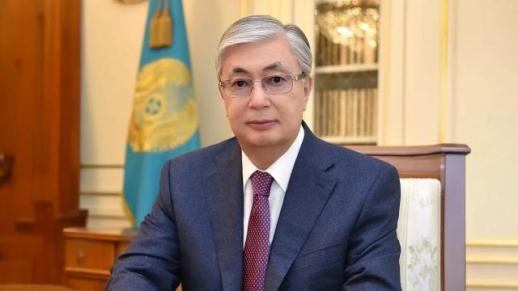 New constitution frames Kazakhstan's Capital City Day SEOUL, July 06 (AJP) - President Kassym-Jomart Tokayev congratulated Kazakhstanis on Capital City Day on Monday, using the holiday message to spotlight the country's new constitution, which entered into force on July 1 and marks the most sweeping overhaul of Kazakhstan's political system since independence. The new charter, which Tokayev calls the People's Constitution, was approved by 87.15 percent of voters in a national referendum on March 15, with turnout of about 73 percent, according to Kazakhstan's Central Referendum Commission. It replaces the 1995 constitution, abolishes the two-chamber parliament in favor of a single 145-seat legislature called the Kurultai, and restores the office of vice president. In his message, carried by the Kazakh state news agency Qazinform, Tokayev tied the constitutional milestone directly to the capital's holiday, calling Astana a symbol of the country's independence and the place where the decisions shaping the nation's destiny are made. "Astana has become a driving force behind major historical developments," Tokayev said. "Our capital has earned the status of a smart city, where advanced governance systems have been introduced." It was symbolic, the president said, that the People's Constitution entered into force on the eve of Capital City Day, an event he described as opening a new and historic chapter for the state and modernizing its key institutions of government and society. Tokayev also pointed to a new Constitutional Law on the Status of the Capital, which he said strengthened Astana's leading role as the country's political, administrative, economic, and cultural center. He noted that new parks, public squares, and children's playgrounds had been built for residents and visitors, and said the city's international standing was growing as it increasingly hosts talks on regional and global issues. The president said the capital was destined to become a vivid example of a new civic ethic built on responsible citizenship, the values of Law and Order, and the Taza Qazaqstan initiative, a nationwide cleanliness and public culture campaign he launched in 2024. He added that he was assured Astana would continue to prosper and remain at the forefront of building a Just Kazakhstan. Astana, formerly known as Akmola and briefly renamed Nur-Sultan between 2019 and 2022 after former president Nursultan Nazarbayev, became Kazakhstan's capital in 1997 when the government moved from Almaty. Capital City Day, marked every July 6, has been a national holiday since 2008. The constitutional transition now moves to its next stage. The outgoing bicameral parliament held its final session on June 30, and elections to the new Kurultai are scheduled for Aug. 23, ahead of a Sept. 1 deadline for the new legislature to convene. 2026-07-06 17:08:15
-
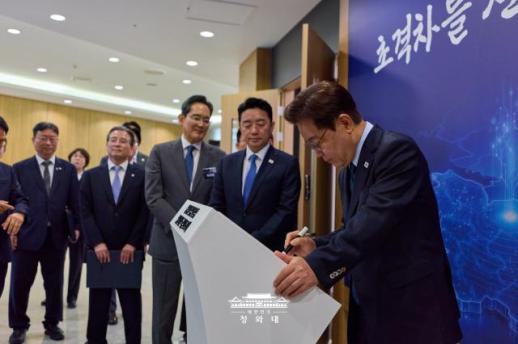 South Korea picks Gwangju military airport site for Honam chip cluster SEOUL, July 06 (AJP) - South Korea will build its planned Honam semiconductor cluster on the site of the Gwangju military airport after the government selected the location as the preferred site for the project, the presidential office said on Monday. The decision was reached during a public-private review meeting on the government's three flagship regional development projects chaired by President Lee Jae Myung, Presidential Chief of Staff Kang Hoon-sik said. The government will complete the site selection process through consultations among relevant ministries as quickly as possible, Kang said. According to the presidential office, companies participating in the discussions concluded that the Gwangju military airport site offers the best conditions for the project. The site can secure about 2.5 million pyeong of land, while its existing flat terrain, developed for airport operations, is expected to reduce construction time for the industrial complex. The location is also close to downtown Gwangju and a KTX high-speed rail station, providing favorable conditions for securing skilled workers and supporting residential infrastructure, Kang said. The site also offers efficient logistics access through road, airport and port networks. The presidential office said President Lee will hold monthly public-private review meetings to monitor progress on the semiconductor cluster and the government's three regional mega projects. Lee also plans to establish a dedicated task force within the presidential office to oversee implementation and coordinate relevant ministries, according to Kang. 2026-07-06 16:52:49
-
 Durability of Seoul's bull questioned as leverage exceeds retail trade SEOUL, July 06 (AJP) — As the KOSPI correction enters a third week, retail investors remain the primary buffer against relentless foreign selling, but much of their firepower is borrowed, raising questions about the durability of Seoul's record-setting bull market. Outstanding margin loans and stock-backed lending averaged a record 61.98 trillion won ($39.8 billion) per trading day during the April-June quarter, exceeding the combined average daily trading value of 52.5 trillion won on the KOSPI and KOSDAQ over the same period, according to Korea Exchange (KRX) data. Outstanding margin loans climbed 15.9 percent from the first quarter to a record 35.94 trillion won, while stock-backed loans — borrowing secured against shares investors already owned — remained virtually unchanged at 25.97 trillion won. The divergence suggests investors were increasingly borrowing to finance new stock purchases rather than tapping existing holdings for liquidity. The surge in leverage coincided with one of the most extraordinary rallies in the history of South Korea's equity market. The benchmark KOSPI surged past the 5,000 level for the first time in January, broke above 6,000 in February, raced through both 7,000 and 8,000 in May and surpassed 9,000 for the first time in June. The KOSPI has since retreated to just above the 8,000 mark as of Monday after weeks of record foreign selling. The first-half rally was fueled by optimism surrounding artificial intelligence and South Korea's memory-chip industry, led by Samsung Electronics and SK hynix. As prices climbed rapidly, fear of missing out drew more money into the market while early investors locked in profits, producing increasingly sharp swings in share prices. The Korea Exchange said volatility interruption mechanisms, or VIs — temporary two-minute auctions triggered when individual stocks move too sharply — were activated 29,357 times during the first half of the year, the highest number ever recorded for a six-month period. The previous record of 24,401 came during the first half of 2020, when markets were rattled by the COVID-19 pandemic. The KOSPI's average intraday volatility reached 3.30 percent during the first half, the second-highest level on record after 3.51 percent in the first half of 1998. Critics argue that retail trading has become increasingly speculative and selective since the launch of single-stock leveraged exchange-traded funds linked to Samsung Electronics and SK hynix, with the products' daily rebalancing amplifying market swings. In a written response to Park Sung-hoon of the main opposition People Power Party, the Bank of Korea said additional investment in single-stock leveraged ETFs could deepen market concentration because Samsung Electronics and SK hynix already account for more than half of the KOSPI's market capitalization. The central bank also warned that the daily rebalancing and arbitrage activities required by leveraged ETFs could intensify one-way trading and amplify price swings when investor sentiment shifts. The warning marked a notable shift from the Bank of Korea's June 24 Financial Stability Report, which had concluded that single-stock leveraged ETFs would likely have only a limited impact on overall market stability. Less than two weeks later, however, the central bank warned that the products could deepen market concentration and amplify volatility. Signs of overheating also appeared in regulatory data. The Korea Exchange designated 43 stocks as "investment risk" issues during the first half, compared with just two a year earlier. Investment warning designations rose to 379 from 35, while investment caution notices jumped to 2,944 from 271. The issue has also spilled into politics. Ahn Cheol-soo of the main opposition People Power Party on Sunday criticized single-stock leveraged ETFs linked to Samsung Electronics and SK hynix, saying their daily rebalancing had amplified market volatility and turned the KOSPI into a "casino." He called on regulators to consider delisting the products, noting that all 14 leveraged ETFs tied to the two chipmakers had posted negative returns over the past month, with losses reaching as much as 35.9 percent. He also urged President Lee Jae Myung to dismiss the country's top financial regulators over their approval of the products. For brokerages, however, the leverage boom has proved highly lucrative. Applying an assumed annual interest rate of 9 percent to average margin loans and 8.5 percent to stock-backed loans, securities firms are estimated to have generated about 1.36 trillion won in interest income from stock-related lending during the second quarter alone, up 8.7 percent from an estimated 1.25 trillion won in the first quarter. Nearly 60 percent of that increase came from the expansion of margin lending, underscoring that brokerages benefited primarily from investors taking on new debt. Outstanding margin balances have recently hovered around 38 trillion won as brokerages approach regulatory limits on total lending relative to their equity capital. Several major firms, including NH Investment & Securities and KB Securities, have recently raised capital to expand their lending capacity, suggesting margin financing could continue to grow if retail demand remains resilient. The figures point to a fundamental shift in Korea's bull market. It is no longer being driven solely by optimism over artificial intelligence or booming semiconductor earnings. Increasingly, it is being financed by borrowed money. 2026-07-06 16:52:09
-
 Samsung Electronics awards up to 100% bonus to chip division for first half SEOUL, July 06 (AJP) - Samsung Electronics said on Monday it will pay performance bonuses of up to 100 percent of monthly base salary to employees in its semiconductor division for the first half of the year, ahead of its second-quarter earnings announcement. The company said its Memory Business will receive the maximum Target Achievement Incentive (TAI) payout of 100 percent of monthly base salary for a second consecutive half, reflecting improved earnings driven by higher high bandwidth memory (HBM) shipments and rising conventional DRAM prices. Within the Device Solutions (DS) division, employees in the System LSI Business and Foundry Business will receive bonuses equivalent to 75 percent of monthly base salary, while the Semiconductor Research Center, Samsung Advanced Institute of Technology (SAIT) and other shared organizations will receive 100 percent. Under Samsung's TAI program, employees receive performance-based bonuses twice a year based on the performance of their business division and individual business unit, with payouts capped at 100 percent of monthly base salary. In the Device eXperience (DX) division, employees in the Mobile eXperience (MX) Business will receive bonuses equivalent to 50 percent of monthly base salary, down from 75 percent in the previous half despite solid sales of the Galaxy S26 series. Employees in the Visual Display (VD) Business and Digital Appliances (DA) Business will receive bonuses of 50 percent and 25 percent, respectively. The Medical Device Business and Korea Sales and Marketing Office will receive 75 percent, while the Networks Business, Corporate Management Office and other organizations will receive 50 percent. Samsung Electronics is scheduled to announce its preliminary second-quarter earnings on Tuesday. Separately, Samsung Display said employees in its small- and medium-sized display business will receive bonuses equivalent to 100 percent of monthly base salary, while those in its large-display business will receive 75 percent. Samsung Electro-Mechanics will award bonuses of 100 percent across all business divisions, while Samsung SDI set its first-half payout at 75 percent of monthly base salary. 2026-07-06 16:37:15
-
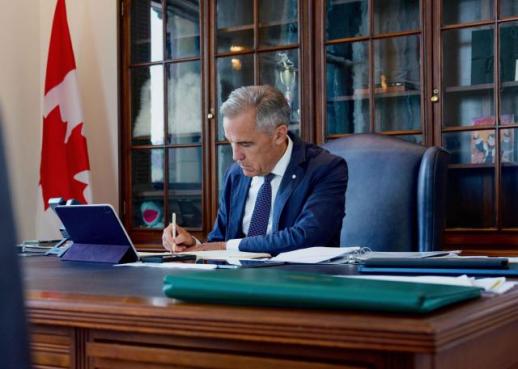 Hanwha Ocean stock flies ahead of imminent Canada announcement SEOUL, July 06 (AJP) - From Hanwha Ocean's share price, investors appear to believe its victory—or at least a sizable share—in Canada's multibillion-dollar submarine program is all but assured. Hanwha Ocean ended Monday up 7.3 percent at 114,700 won after surging as much as 15 percent earlier while the benchmark KOSPI remained in negative territory, on expectations that its name will be called out by Canadian Prime Minister Mark Carney when he announces the preferred bidder later Monday local time, or early Tuesday in Korea. As of Monday afternoon in Seoul, Hanwha Ocean said it had yet to receive any formal notification and was awaiting the government's announcement. Canada is expected to name the preferred bidder for its 12-submarine procurement program on Monday local time, bringing nearly a year of competition between South Korea's Hanwha Ocean and Germany's Thyssenkrupp Marine Systems (TKMS) to a decisive stage. The Canadian Patrol Submarine Project, estimated by South Korean industry officials to be worth up to 60 trillion won ($40 billion) including long-term maintenance and operational support, would rank among the largest conventional submarine contracts ever awarded. Carney is scheduled to make the announcement during a stop in Halifax before departing for the NATO summit in Türkiye. He is expected to identify a preferred bidder rather than immediately award the contract, with detailed negotiations likely to continue afterward. Canada launched the acquisition process in July 2024 and narrowed the competition in August 2025 to Hanwha Ocean's KSS-III Batch-II submarine and TKMS's Type 212CD, jointly backed by Germany and Norway. Despite months of public campaigning by both sides, the outcome remained closely guarded through the final weekend, with officials in Seoul and Berlin offering sharply contrasting signals. Germany mounted an aggressive final push. During a visit to TKMS's Wismar shipyard on Friday, German Vice Chancellor and Finance Minister Lars Klingbeil said the entire federal government was campaigning for closer defense cooperation with Canada. "The arguments are really on our side," Klingbeil said, citing Germany's production quality, industrial capacity and NATO interoperability. TKMS Chief Executive Oliver Burkhard also said the company remained confident of winning the contract. While Klingbeil stopped short of claiming the Type 212CD was technically superior to Hanwha Ocean's submarine, his remarks underscored Berlin's confidence that Germany's status as a core NATO ally and its longstanding defense relationship with Canada could strengthen TKMS's bid. Seoul, by contrast, remained measured. Kang Hoon-sik, South Korea's presidential chief of staff, last week described the race as "about 50-50," saying both contenders had clear strengths. He said Canada would have to weigh Germany's NATO ties and submarine expertise against South Korea's faster delivery schedule and broader industrial cooperation package. Kang added that South Korea had submitted a realistic proposal it was fully confident it could deliver. One major uncertainty remains: whether Ottawa could split the 12-submarine order between Hanwha Ocean and TKMS. A column published Sunday by the Toronto Sun raised the possibility of a divided award, although Carney has previously argued that the operational efficiencies of maintaining a single submarine class would be "overwhelming." A split fleet could ease production risks but would also require separate training, maintenance, spare-parts inventories and logistics systems. It would also complicate the industrial benefits pledged by both bidders. Hanwha Ocean has proposed more than C$70 billion in trade and investment in Canada, while the German-Norwegian consortium has said its proposal would contribute C$86 billion to the Canadian economy and create more than 650,000 job-years. Because those economic packages were designed around securing the broader submarine program, a split award would likely require Ottawa to renegotiate which investments, jobs and Canadian partnerships remain attached to each supplier. Many of those commitments are currently contained in memorandums of understanding and would need to be converted into binding contractual obligations during the next stage of negotiations. Monday’s announcement should reveal which side will enter the next stage of negotiations. But even for the nominal winner, it will mark the beginning of a lengthy contracting process rather than the final award. 2026-07-06 16:32:12
-
Homeplus Opposes Card Companies' Payment Suspension Amid Restructuring Efforts Homeplus has demanded the immediate withdrawal of a decision by some card companies to suspend payments to its offline stores, calling the move unjust. On July 6, Homeplus issued a statement revealing that it received notices from Hyundai Card and Samsung Card regarding the termination of their partnership for Homeplus online mall points and the suspension of payments to offline stores due to outstanding debts and canceled sales. Homeplus emphasized that the court's decision to terminate the restructuring process has not yet been finalized. The termination will only take effect once confirmed, and an appeal can be filed within 14 days from the announcement, meaning the restructuring process is still in place. The company argued that the card companies' notification to end the online mall points partnership based on the restructuring termination is ineffective as it does not meet the necessary conditions. Homeplus also strongly opposed the suspension of payments to offline stores, stating that purchases on credit are not possible at physical locations, and that the online mall has been unable to process orders for three days due to a halt in operations. In this context, it is difficult to understand the rationale for withholding payments to offline stores based on outstanding debts and canceled sales. A Homeplus representative stated, "If the card companies block payment collections, we cannot operate. While we continue to hold onto hope despite the court's decision to terminate the restructuring process, we must not allow such unreasonable actions to undermine our efforts to recover." The company has called on the card companies to immediately retract their decisions. Meanwhile, Homeplus must secure a funding plan of 200 billion won within approximately two weeks and file an appeal. If funding and the appeal are not completed by the deadline, the court's decision to terminate the restructuring process will be finalized, leading Homeplus to enter liquidation proceedings. * This article has been translated by AI. 2026-07-06 16:20:00