


Latest by
-
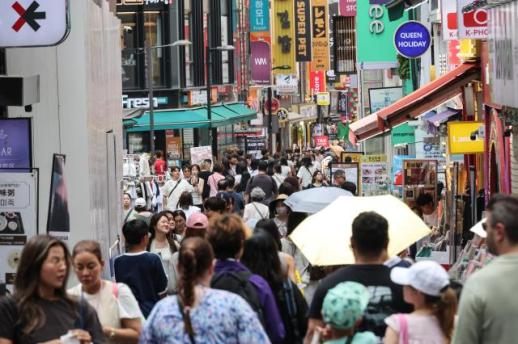 Service Sector Grows 4%, but Hospitality and Food Services Struggle Amid Consumer Uncertainty Overall industrial production has increased, driven by the semiconductor and financial markets, but the hospitality and food services sector continues to face challenges. Rising prices and interest rates have hindered a recovery in consumer sentiment. According to an analysis by Yonhap News based on data from the National Data Agency's national statistics portal and industrial activity trends, the average industrial production index from January to May this year rose by 2.7% compared to the same period last year. The production in the service sector increased by 4.2%, while the growth rate for accommodation and food services was only 0.9%. Accommodation services saw a 2.7% increase, but the restaurant and bar sector's growth was limited to just 0.6%. A representative from the data agency noted, "The recent increase in foreign tourists, along with domestic consumption stimulus policies such as recovery coupons and support for high fuel prices, have contributed to the growth in service sector production. However, the decline in food consumption due to population decrease and changes in drinking and dining culture have restricted the growth of the restaurant and bar sector." In contrast, high-value-added industries have shown growth rates nearing 10%. The financial and insurance sectors grew by 8.7%, while professional, scientific, and technical services saw a growth rate of 9.5%. However, from January to May this year, production in the accommodation and food services sector has emerged from a decline. Previously, it recorded negative growth rates of -1.9% in 2024 and -2.5% last year. Quarterly, after recording a -2.0% decline in the second quarter of 2023, the sector saw nine consecutive quarters of decline until the second quarter of last year (-1.9%), followed by a 1.4% increase in the third quarter of last year. The fourth quarter of last year saw a growth rate of 0.0%, and the first quarter of this year recorded a 0.3% increase. The government believes that while the accommodation and food services sector has entered a recovery phase, rising inflation in the second half of the year could hinder the recovery of consumer sentiment. Currently, the exchange rate of the won to the dollar is in the 1,500 range, which is expected to increase consumer prices with a lag. Additionally, seasonal factors such as high temperatures and heavy rainfall could lead to volatility in agricultural prices, affecting dining and grocery costs. High interest rates are hitting small business owners hard. As of the end of the first quarter, the outstanding loans of self-employed individuals exceeded 1,100 trillion won, marking a record high. The amount of overdue loans for self-employed individuals reached 22.3 trillion won, with a delinquency rate surpassing 2%. If benchmark interest rates continue to rise, the repayment burden for self-employed individuals will increase, potentially worsening financial stability indicators. According to national tax statistics, the number of business closures among operators who have been in business for more than five years reached an all-time high last year, with closures of restaurants in operation for over 20 years also reaching a peak. The Bank of Korea emphasized in its financial stability report last month that the proportion of self-employed individuals in South Korea is higher than in major countries, making them a crucial part of the economy. Therefore, it is essential to assess financial soundness and potential risks from a financial stability perspective. The Bank of Korea analyzed that self-employed loans accounted for 28.5% of total financial sector loans at the end of the first quarter. It also noted that financial stability risks in the self-employed sector are concentrated among small and micro businesses, older self-employed individuals, and vulnerable borrowers, indicating that they could be more significantly affected by interest rate conditions and changes in the service sector's economic climate. 2026-07-06 09:12:00
-
 Toss Bank Surpasses 10 Million Check Card Users with 3.1 Billion Transactions Toss Bank has announced that the number of customers holding its check card has surpassed 10 million. As of June 30, the bank reported that it exceeded 10 million active check card users, marking a milestone achieved in approximately 4 years and 8 months since its launch in October 2021. The total number of transactions reached 3.1 billion, with 89.5% of payments made offline and 10.5% online. In terms of transaction categories, transportation, including city buses, subways, and taxis, accounted for the largest share at 24.2%. This was followed by convenience stores at 18.3%, online shopping and mobile payments at 10.5%, full-service restaurants at 7.0%, and coffee shops at 5.1%. By age group, users in their 20s made up the largest segment at 25.1%, followed by those in their 30s at 20.7%, 40s at 20.3%, 50s at 15.4%, teenagers at 11.2%, and seniors aged 60 and above at 7.3%. The oldest user recorded was 106 years old. Toss Bank explained that it expanded the eligibility for check card issuance to individuals aged 7 and older last month, resulting in an increase in the conversion rate from child accounts to check cards from approximately 50% to over 71%. For international transactions, Japan represented the highest share at 31.3%, followed by the United States at 12.5%, the United Kingdom at 7.1%, Vietnam at 5.9%, and China at 5.3%. The K-Pass check card, launched in February, has seen cumulative issuances reach 360,000, with new issuances exceeding 50%. The total cash back distributed to customers through the check card has amounted to 160 billion won, while donations accumulated through cash back reached 4.7 billion won. 2026-07-06 09:12:00
-
 Trump Intensifies Anti-Communism Rhetoric Ahead of Midterm Elections President Donald Trump is ramping up his anti-communism and cultural campaign ahead of the November midterm elections. He has labeled the rise of democratic socialism within the Democratic Party as a communist threat and has criticized historical exhibitions at major U.S. museums, framing the electoral landscape as an ideological battle. On the evening of July 4, coinciding with the 250th anniversary of the founding of the United States, the White House Domestic Policy Council released a report titled "Saving American History." The report criticized the National Museum of American History, part of the Smithsonian Institution, for treating American history as a divisive political tool rather than a shared national heritage. The report claimed that the museum has focused excessively on themes such as white supremacy, slavery, conquest, exclusion, racism, misogyny, and structural injustice. It asserted that the museum is dominated by radical activist ideologies and emphasized that American history should be taught as a national narrative worthy of passing on to future generations. This report follows an executive order from President Trump directing a review of Smithsonian exhibitions and academic activities. Trump has previously criticized museums and cultural institutions for leaning towards a progressive agenda that emphasizes discrimination and oppression over American achievements. In his speeches, Trump has prominently featured anti-communist messages. During his July 4 address in Washington, D.C., he likened communism to a "cancer," asserting, "America will never become a communist country." The day before, in a speech at Mount Rushmore in South Dakota, he warned that "the threat of communists is rising on our land" and vowed not to allow them to prevail. These actions are seen as a strategy to shift the midterm election narrative from economic and foreign policy issues to ideological confrontations. As some democratic socialist candidates have gained traction in Democratic primaries, Trump aims to connect this trend to a broader radicalization of the party, sending a warning message to Republican supporters and moderate voters. However, some critics argue that equating democratic socialism with communism is misguided. Democratic socialism advocates for expanding welfare, increasing taxes on the wealthy, and enhancing corporate regulations within a framework of democracy and market economy, while communism fundamentally seeks to abolish private property and establish a centrally planned economy.* This article has been translated by AI. 2026-07-06 09:08:00
-
 Meta Introduces Korean Real-Time Translation for Ray-Ban and Oakley AI Glasses Meta has announced that its AI glasses, Ray-Ban Meta and Oakley Meta, now support real-time translation in Korean. The company revealed this update on July 6, along with plans to expand its online and offline distribution channels in South Korea. The two products were developed in collaboration with global eyewear company EssilorLuxottica. They feature capabilities for photo and video capture, as well as audio playback through built-in Bluetooth speakers, allowing users to interact with Meta AI via voice commands. Users can receive responses through open-ear speakers. Meta explained that its AI can understand the surrounding context in real-time, providing a personalized AI experience. In addition to Korean, Meta has introduced 14 new languages for its real-time translation feature, including Russian, Mandarin Chinese, Japanese, Thai, and Hindi. The range of supported languages has expanded from six to 20, reflecting Meta's commitment to facilitating communication across borders. The translations are delivered audibly through the open-ear speakers embedded in the glasses, while users can also view the text in the Meta AI app. The speakers are positioned on the arms of the glasses, allowing users to hear translations while still being aware of their surroundings. Both Ray-Ban Meta and Oakley Meta are equipped with a 12-megapixel ultra-wide camera and 3K ultra HD capabilities. When capturing images or videos, an LED indicator on the front of the glasses automatically lights up to signal that recording is in progress. A Meta representative stated, "AI glasses redefine the way we interact with artificial intelligence. We plan to continue updating the software to enhance convenience for more users through Meta AI glasses." Meanwhile, AI glasses are gaining attention as the next-generation form factor for interacting with artificial intelligence, following smartphones. The global competition in the AI glasses market is intensifying, with major tech companies like Google and Apple reportedly exploring the development of similar devices. AI glasses are evolving into an AI hardware platform that combines real-time translation, situational awareness, and personal assistant functionalities.* This article has been translated by AI. 2026-07-06 09:08:00
-
 Hyundai's Atlas Robot Surprises at World Cup with Futuristic Performance Hyundai Motor Group's humanoid robot, Atlas, made a striking appearance at the 2026 FIFA World Cup, showcasing a successful soccer performance. The company highlighted its status as a leader in advanced robotics while offering a glimpse into the future of mobility for soccer fans worldwide. On July 6, during halftime of the Round of 16 match at New Jersey's MetLife Stadium, Atlas successfully demonstrated a performance in which it delivered the match ball to the referee. Atlas made its entrance just before halftime ended, performing celebrations inspired by global soccer stars such as Harry Kane, Erling Haaland, Matheus Cunha, and Son Heung-min, energizing the crowd. Notably, it completed a symbolic moment by delivering the match ball to the referee, signaling the start of the second half. The Atlas showcased during this performance is a prototype of the next-generation electric model, first unveiled at CES 2026 in January, which sparked curiosity about its movements. At that time, Boston Dynamics revealed various movements of the initial research model before presenting the design of the prototype for the first time. The movements of the prototype have been introduced through brand videos, and this World Cup stage marked its first live demonstration to the public. The performance illustrated the practical application of Hyundai's envisioned future robotics technology, as Atlas executed complex movements stably in the variable environment of a sports arena. The entire process of Atlas delivering the official match ball involved 'retargeting technology,' which reconstructs human movements to fit the robot's physical structure, reinforcement learning based on thousands of simulations, and full-body control technology that allows all joints to respond as a single system, resulting in balanced and natural movements. The movements showcased by Atlas were developed based on core competencies intended for real-world industrial applications, demonstrating that robotics can create new experiences beyond mere technical demonstrations, including in sports, entertainment, and operational settings. This performance is part of Hyundai's global brand campaign, 'Next Starts Now,' which has been active as a FIFA partner since 1999. In a campaign video released before the World Cup, titled 'School of Football,' Atlas learns soccer movements, intuitively showcasing the core technological capabilities of robotics and generating public interest. The main video of the 'Next Starts Now' campaign, released on June 1, featured Atlas entering the stadium with a ball, heightening expectations for Hyundai's vision of future mobility on the World Cup stage. Additionally, Hyundai plans to release a branded film titled 'Training Ground' in collaboration with the BBC on July 7, documenting the preparation and technical challenges of the World Cup robotics campaign, showcasing its ongoing journey toward realizing its vision for future robotics. Jisung Won, Vice President of Hyundai Motor's Brand Marketing Division, stated, "We aimed to show that the future is not just something to imagine, but is already beginning, through the Atlas performance on the World Cup stage watched by soccer fans worldwide. We will continue to connect human-centered technology with everyday life and present a new vision for future mobility that expands through robotics, showcasing how robotics can be a partner in human progress through diverse and creative brand experiences." Alberto Rodriguez, Head of Behavior Policy at Boston Dynamics Atlas, remarked, "It is meaningful that Boston Dynamics, Hyundai, and FIFA can collaborate to provide a new experience for soccer fans worldwide, drawing inspiration from the diverse dynamic movements of humans to expand the possibilities of robot technology. The performance by Atlas was implemented based on AI learning technologies applicable in real industrial settings, and we will continue to innovate so that more people can experience the potential and value of advanced robotics." 2026-07-06 09:08:00
-
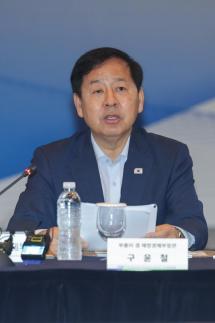 Service Industry Faces AI and Convergence Era; Deputy Prime Minister Calls for Urgent Legislation Deputy Prime Minister and Minister of Economy and Finance Koo Yun-cheol emphasized the need for a new institutional framework to foster the development of the service industry in the age of artificial intelligence (AI) and convergence. The government plans to swiftly implement regulatory improvements to seize the AI agent commerce market and accelerate the establishment of a basic law for service industry development. The Ministry of Economy and Finance held the second meeting of the public-private Task Force for Strengthening Competitiveness in the Service Industry, chaired by Koo, at the Westin Chosun Seoul on July 6. The meeting addressed strategies for the development of the K-service industry in the AI and convergence era, the industrial growth and global expansion of K-culture, and policy recommendations to invigorate the service sector. Attendees included representatives from various government ministries, including the Financial Services Commission, the Ministry of Culture, Sports and Tourism, the Ministry of Agriculture, Food and Rural Affairs, and the Ministry of Trade, Industry and Energy, as well as organizations such as the Korea Economic Association, the Korea Chamber of Commerce and Industry, the Korea Federation of Small and Medium Enterprises, the Korea International Trade Association, the Federation of Korean Service Industries, the Korea Institute for Industrial Economics and Trade, the Korea Culture and Tourism Institute, and the Korea Tourism Organization. In his opening remarks, Koo stated, "The world is entering a critical national effort to adapt to the AI revolution, which is set to change the economic and industrial paradigm." He continued, "The Yoon Suk-yeol administration is actively promoting three mega projects centered on semiconductors, AI data centers, and physical AI to create an unparalleled and irreplaceable South Korea. Enhancing the competitiveness of the service industry, which accounts for 60% of the gross domestic product (GDP), is crucial for the next phase of economic leap forward." Koo assessed that the service industry is at a transformative juncture where it intersects with AI, leading to innovations in manufacturing, public services, and everyday life, particularly noting that changes in AI-based services are already emerging in the shopping sector. He remarked, "We must take the lead in the new AI agent commerce market, where AI goes beyond product recommendations to autonomously compare products, place orders, and handle payments. We will swiftly prepare regulatory improvements to demonstrate the entire shopping process with AI agents." The government also plans to proactively establish a regulatory framework for new mobility services that combine AI autonomous driving with automobiles and urban air mobility (UAM). Additionally, it aims to accelerate public service innovations by integrating AI into tax collection, treasury management, new drug evaluations, and civil complaints. Koo stressed the importance of establishing a legal foundation for the development of the service industry. He stated, "It is time to reshape the framework for service industry development. We urgently need to enact a basic law for service industry development that boldly opens up inter-industry barriers and focuses on support for research and development (R&D), tax incentives, and financing." He cited examples such as autonomous delivery robots, fractional investments in real estate and copyrights, the integration of content and distribution, and subscription services for home appliances, explaining that there is an increasing trend of converged services across multiple ministries. He called for bold regulatory rationalization through non-action opinions to assess the feasibility of new business initiatives in advance. On the same day, the Korea Institute for Industrial Economics and Trade presented a strategy for the development of the K-service industry in the AI and convergence era. The institute noted that the service industry accounts for 70% of domestic employment and 60% of added value, with service trade growing faster than goods trade. The three main strategies proposed for service industry development include boosting exports, rationalizing domestic value, and leading global new services. The importance of a cross-ministerial policy coordination and support body to address gaps in policy support during this era of industrial convergence between manufacturing and services, as well as among services, was also emphasized. During discussions on the industrial growth and global expansion strategy for K-culture, Professor Shim Sang-min from Sungshin Women's University noted that K-culture is entering a phase of expansion into K-everything. He suggested that for sustainable growth, innovations in production, investment, and distribution, along with integrated policy initiatives and a cultural shift in perception, are necessary. On this day, the Korea Economic Association delivered policy recommendations identified in the service industry to the government. Participating companies presented 20 policy proposals and issues faced in areas such as content and beauty, and government and private attendees discussed problems and solutions. The government plans to reflect the discussions from this meeting in future policy initiatives related to the service industry.* This article has been translated by AI. 2026-07-06 09:04:00
-
 Market Preview: Semiconductor Stocks Show Signs of Recovery Ahead of Key Earnings On July 6, the domestic stock market is expected to attempt a rebound, particularly in semiconductor stocks, as overseas factors are limited due to the U.S. market being closed the previous night. This week, significant events are on the horizon, including Samsung Electronics' preliminary second-quarter earnings and the listing of SK Hynix's American Depositary Receipts (ADR), which are anticipated to influence investor sentiment in the semiconductor sector. As of 8:43 a.m., Samsung Electronics is up 3.3% and SK Hynix is up 1.2% in the NXT pre-market. Other notable movements include SK Square rising by 0.3%, Hyundai Motor by 0.2%, Hanwha Ocean by 4.7%, Doosan Enerbility by 2.0%, and Mirae Asset Securities by 7.3%. Conversely, Samsung Electro-Mechanics is down by 0.2%. Analysts are watching to see if the investor sentiment, which was negatively impacted by last week's sharp decline in semiconductor stocks, will recover during this week's major events. They believe that the preliminary earnings report from Samsung Electronics and the SK Hynix ADR listing will have a more significant impact on market volatility than external factors such as the June Federal Open Market Committee (FOMC) minutes and key statements from Federal Reserve officials, as well as the U.S. ISM Services Purchasing Managers' Index (PMI) for June. Han Ji-young, a researcher at Kiwoom Securities, stated, "This week, we expect the KOSPI to range between 7400 and 8600, with changes in semiconductor investment sentiment and sector rotation being key variables. Recently, trading volumes in single-stock leveraged products have exceeded 20% of KOSPI trading volumes, which could increase supply volatility. However, the KOSPI's price-to-earnings ratio (PER) has fallen below 7 for the first time since the financial crisis, indicating that valuation pressures are easing, which should limit downside risks for the index." He added that while the market has high expectations for Samsung Electronics' preliminary earnings, there could be short-term volatility following the announcement. However, given that recent stock price adjustments have largely reflected these expectations and uncertainties, there is a possibility that investor sentiment may stabilize afterward. The SK Hynix ADR is expected to have a limited supply burden, as the new share issuance will account for only about 2.5% of the total shares, with the success of its debut in the U.S. market being a more critical factor for investor sentiment. Han also noted, "This week, the changes in semiconductor investment sentiment and the sustainability of sector rotation will be the market's primary focus. Although macro events such as the June FOMC minutes are scheduled, the events that will influence market direction and volatility will be Samsung Electronics' preliminary earnings and the SK Hynix ADR listing." He concluded, "While volatility may increase during the week, the KOSPI's valuation burden has dropped to its lowest level since the financial crisis, making it more appropriate to approach the market from a perspective of gradual buying during corrections rather than increasing cash holdings after selling." Market experts also advise adopting an investment strategy that considers both short-term volatility and long-term growth potential. Cha Eun-young, head of the Hana Bank Gold Club Yeouido PB Center, remarked, "The long-term growth potential of the semiconductor industry remains valid, but we must also consider the possibility of increased volatility following a short-term surge. It is essential to diversify across asset classes and investment timing rather than concentrating on specific stocks, while maintaining a long-term investment principle."* This article has been translated by AI. 2026-07-06 09:04:00
-
 Government Expands Labor Law Training for Local Officials to Prevent Violations 28 out of 30 local governments were found to have violated labor laws, prompting the government to expand labor law training for public sector HR personnel. The Ministry of Employment and Labor and the Korea Employment and Labor Education Institute announced on July 6 that they will revise and expand related training programs starting this month to improve unreasonable employment practices and enhance HR management capabilities in the public sector. The institute has been conducting labor law training for HR personnel of public sector workers, including those in central ministries and local governments. Last year, 240 individuals participated in 12 training sessions, but participation from local governments was low. The expansion of training comes after a recent inspection revealed the need to strengthen HR management capabilities in local governments. In a 'Compliance Inspection of Labor Conditions for Non-Regular Workers in Local Governments' conducted by the ministry, 113 violations of labor laws were identified across 28 out of 30 basic local governments. Common violations included errors in wage and severance pay calculations and discriminatory allowances. The ministry identified a lack of understanding of the latest labor laws and changes in case law as a major cause of these violations. In response, the ministry has restructured the training program to focus on the violations identified during inspections. The revised training program will cover topics such as management of employment contracts, changes in employment relationships, termination management, work hours, breaks, holidays, and vacation management, as well as wage and severance pay management. It will also include case studies and practical training based on different employment types, including fixed-term and indefinite-term contracts. The training will be conducted in both in-person and virtual formats, divided into basic and advanced courses, with a total of 11 sessions running until the end of November. This year's training program has been expanded from the initial plan of 17 sessions for 510 participants to 23 sessions for 690 participants. Lee Hyun-ok, head of the Labor Policy Office at the Ministry of Employment and Labor, expressed regret and a sense of responsibility, stating, "It is disappointing that the public sector, which should set an example, has not fulfilled its responsibilities. We will work to improve awareness and expand training so that the public sector can lead in complying with the law and fostering a culture that respects labor." Lee Jong-seon, head of the Korea Employment and Labor Education Institute, emphasized the importance of systematic labor education for HR personnel to protect the labor rights of non-regular workers in the public sector, stating, "We will continue to expand labor education to enhance the capacity of local governments to comply with labor laws and foster a healthy labor culture."* This article has been translated by AI. 2026-07-06 09:04:00
-
 New Art Service Registration System to Launch on July 26 Starting July 26, individuals or businesses wishing to engage in art-related activities, such as buying and selling paintings or conducting art auctions, must register with their local government. The Ministry of Culture, Sports and Tourism announced on July 6 that it will hold regional briefings to help businesses understand the new system. These sessions will take place in Seoul on July 9 at Art Korea Lab, in Busan on July 10 at Busan Cultural Center, and in Gwangju on July 15 at Kim Dae-jung Convention Center. The art service registration system aims to create a transparent art market. Under this new regulation, individuals or companies involved in gallery operations, art auctions, art consulting, art rental and sales, art appraisal, and art exhibitions must notify the relevant local government before commencing their business activities. The briefings will cover who is required to register, how to complete the registration process, and what documents are needed. They will also explain the administrative penalties and fines for failing to register. Anyone involved in the art service industry, as well as representatives from related organizations, are welcome to attend. Participants can register through the QR code provided in the informational materials.* This article has been translated by AI. 2026-07-06 09:04:00
-
 iM Securities Raises Doosan's Target Price to 2 Million Won Amid AI Data Center Demand On July 6, iM Securities announced it has raised its target price for Doosan from 1.2 million won to 2 million won, reflecting improved performance due to increased demand for artificial intelligence (AI) data centers and the launch of next-generation products. The investment opinion remains a 'buy.' Jang Ho, a researcher at iM Securities, stated, "The Electronics BG maintains a unique position based on robust demand for AI data centers. With the supply of next-generation products to North American clients starting in June, profitability is expected to improve significantly." He added, "For the second quarter, we anticipate standalone sales of 735.3 billion won and operating profit of 205.1 billion won, representing increases of 31.6% and 44.4%, respectively, compared to the same period last year. The expansion of AI accelerators and 800G supply, along with favorable semiconductor market conditions, will drive this performance improvement." Jang also noted, "The average selling price (ASP) is expected to rise due to the expansion of next-generation product supply, leading to further profitability improvements. We project standalone sales for the year to reach 3.0226 trillion won and operating profit to hit 838.5 billion won, marking increases of 36.1% and 66.5%, respectively." He mentioned that sales of optical modules are also rapidly increasing, supported by growing demand for network infrastructure. "Optical module products tend to have relatively high profitability, which will contribute to the improvement of low-end product profitability," he said. Furthermore, he indicated that the demand for copper-clad laminate (CCL) due to the expansion of AI data centers is expected to lead to significant increases in production capacity for network use (NWB). Plans are in place to expand production capacity by two lines each this year and next, along with a gradual increase in a new production base in Thailand.* This article has been translated by AI. 2026-07-06 08:48:00