


Latest by
-
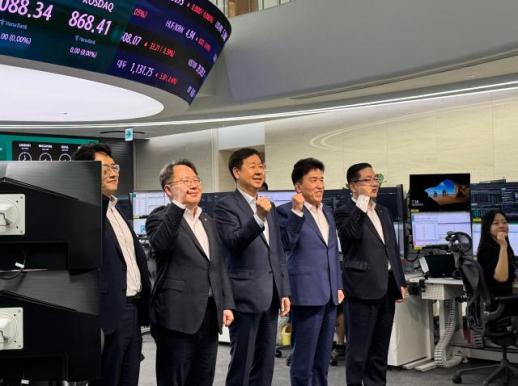 Korea Launches 24-Hour Foreign Exchange Market to Boost Won's Global Standing Finance Minister Koo Yun-cheol visited Hana Bank's foreign exchange dealing room on July 6, the first day of the 24-hour foreign exchange market, stating it marks a "starting point for the global leap of the won." He emphasized the government's commitment to advancing the foreign exchange market and internationalizing the won without delay. On this day, Koo inspected the market's operations and gathered feedback from domestic banks, overseas branches, and export companies. He was accompanied by Kwon Min-soo, Deputy Governor of the Bank of Korea, Kwon Young-joo, Chairman of Hana Financial Group, and Lee Ho-sung, President of Hana Bank. Starting from this day, the won-dollar foreign exchange market will operate 24 hours a day from 6 a.m. on Monday to 6 a.m. on Saturday, excluding weekends and January 1. The government explained that this measure is a key task in modernizing the foreign exchange market to enhance accessibility and promote the internationalization of the won. Koo highlighted that the 24-hour foreign exchange market is a reform measure reflecting the fundamentals of the Korean economy, confirmed by robust external soundness, record-high current account surpluses, and inclusion in the World Government Bond Index (WGBI), as well as high demand from foreign investors. He added, "The 24-hour operation is not just an extension of trading hours; it is a core infrastructure to achieve accessibility and convenience at the level of advanced markets. Ultimately, this will enhance the attractiveness of our capital market and the won." Koo connected via video with the finance team of Samsung Electronics, the country's largest exporter, and foreign exchange dealers at Hana Bank's London branch to hear their insights. Joo Min-kyung, a member of Samsung Electronics' finance team, noted, "From 2 a.m. to 9 a.m., it was impossible to manage global risks in the foreign exchange market. Now, export companies like Samsung Electronics can respond immediately to global geopolitical risks, which will significantly aid in currency risk management." Lee Sung-pil, head of Hana Bank's London branch, expressed satisfaction that the time zone constraints in the won-dollar market have been completely resolved and pledged to aggressively explore local demand for won FX trading. In response, Kwon Min-soo, Deputy Governor of the Bank of Korea, predicted that the 24-hour operation would significantly broaden the depth and breadth of the foreign exchange market. He urged that efforts be made to enhance won liquidity at companies like Samsung Electronics and Hana Bank. He added that the Bank of Korea would actively address any institutional improvements needed in collaboration with the government, companies, and banks. During a demonstration, Lee Seok-jin, head of the won-dollar trading team at Hana Bank, explained the current market situation, stating, "The won-dollar exchange rate is currently forming at 1,528 won. As it is the first day of market expansion, trading is not yet active, but we expect it to gradually increase." Koo encouraged stakeholders, including the government, the Bank of Korea, banks, securities firms, foreign exchange brokerage companies, and export-import businesses, to prepare for the 24-hour operation through regulatory and internal rule adjustments, workforce enhancements, and pilot trading. He assessed that the 24-hour trading would provide new benefits and opportunities for market participants, allowing export-import companies to respond to real-time currency risks and financial institutions and brokers to expand their business opportunities. He also emphasized that ensuring the stability of the foreign exchange market and the successful implementation of the system is the most important task, stating that the government would maintain thorough market monitoring and trading support systems while advancing follow-up foreign exchange market reform tasks, including the establishment of an offshore won payment system aimed for full operation by January 2027.* This article has been translated by AI. 2026-07-06 08:40:00
-
 Go Jun Signs Exclusive Contract with Management Dream Actor Go Jun has signed an exclusive contract with Management Dream. Management Dream announced on July 6 that "Go Jun is an actor who freely navigates the boundaries of good and evil, establishing his own domain with a heavy presence and a flexible atmosphere. We will support all his activities to ensure that the potential of the name Go Jun is revealed anew in each project." Go Jun made his debut in 2001 with the film 'Wani and Junha.' He has since appeared in films such as 'Tazza,' 'The Age of Shadows,' 'Lucky,' 'Midnight Runners,' 'Beonsan,' and 'Wind Wind Wind.' In television dramas, he has worked across various genres in shows like 'Misty,' 'The Fiery Priest,' 'Oh My Baby,' 'If You Cheat, You Die,' 'Death to Snow White - Black Out,' and 'Good Boy.' Notably, he received the Best Supporting Actor award at the 2019 SBS Drama Awards for his distinctive character in 'The Fiery Priest.' In 'Death to Snow White - Black Out,' he led the narrative by portraying the complex emotions of a tangled character.* This article has been translated by AI. 2026-07-06 08:40:00
-
 Economic Downturn Forces Over 310,000 Long-Standing Businesses to Close As high interest rates, rising prices, and sluggish domestic demand persist, even long-standing business owners are being forced to close their doors. Last year, the number of businesses that shut down after operating for more than five years exceeded 310,000, marking the highest figure since relevant statistics began being tracked. According to data from the National Tax Service released on July 6, the number of active businesses at the end of last year stood at 10,321,407, a 1.7% increase from the previous year. However, this growth rate is the lowest since 2005, when such statistics became available. The growth rate of active businesses peaked at 7.5% in 2020, then declined to 6.4% in 2021, 5.1% in 2022, 2.8% in 2023, and 2.0% in 2024. Last year, the growth rate fell to the 1% range, indicating a significant slowdown in the increase of businesses. A major factor contributing to this decline is the decrease in new business startups. Last year, 1,168,273 new businesses were established, a 4.1% drop from the previous year. This marks the fifth consecutive year of decline in new startups, the lowest number since 2014. The total number of business closures reached 975,681. Although this figure is down 3.2% from the record high of over 1 million closures in 2024, the significant drop in new startups did not prevent the overall slowdown in the growth rate of active businesses. The ratio of closures to new startups rose to 83.5%, meaning that for every 100 new businesses opened, more than 83 closed. This is the highest ratio recorded since 2013. Notably, the increase in closures among long-standing businesses is particularly concerning. Last year, 317,406 businesses that had been operating for more than five years closed, the highest number since 2005. Among all closures, 32.5% were businesses that had been in operation for over five years. This means that one in three closed businesses had been running for at least five years, a figure that has risen from 27.1% in 2020 over five consecutive years. The primary reason for closures was poor business performance. Last year, 491,966 businesses closed due to poor performance, accounting for 50.4% of all closures. More than half of the closures were attributed to insufficient sales. The food service industry, a key sector for self-employment, also experienced significant downturns. Last year, the number of active food service businesses fell by 1.9% to 798,969, dropping below 800,000. New food service startups decreased by 13.6% to 130,114, marking the largest decline since comparable statistics began in 2011. Conversely, food service closures outnumbered new startups, with 142,557 businesses shutting down, resulting in a net loss of 12,443 food service businesses. This figure is approximately five times larger than the previous year's net loss. Long-established restaurants were not immune to the economic downturn. Last year, 41,659 restaurants that had been in operation for over five years closed, the highest number since 2007. Additionally, 2,797 restaurants that had been operating for over 20 years also shut down, setting a record. The recent decision by Homeplus to terminate its rehabilitation process has also placed additional pressure on the self-employment sector. The closure of large supermarket stores could have a ripple effect on suppliers and surrounding businesses. In response, the government has decided to provide emergency liquidity support totaling 440 billion won to small partner companies that rely on Homeplus. This includes 90 billion won in emergency management stabilization funds and 350 billion won in special guarantees from the Credit Guarantee Fund and the Technology Guarantee Fund.* This article has been translated by AI. 2026-07-06 08:36:00
-
 AhnLab K-STAR Validates Blockchain-Based Digital Local Currency with BNK Busan Bank AhnLab announced that the K-STAR (KRW Stablecoin Tech Alliance for Revolution) has completed a proof of concept (PoC) for a blockchain-based payment and settlement infrastructure for the digital transformation of local currency in collaboration with BNK Busan Bank. K-STAR is a technology alliance focused on digital currency infrastructure based on the Korean won stablecoin, which includes AhnLab's blockchain subsidiary, AhnLab Blockchain Company. According to the company, the project aims to comprehensively implement the entire process of issuing, distributing, paying, and settling a "policy-based local currency" that incorporates policy conditions such as usage locations and expiration dates, while verifying its operational feasibility in a real financial environment. The project involved BNK Busan Bank, AhnLab Blockchain Company, Open Asset, Kaia, and Lambda256. Each participating organization contributed their expertise to validate interoperability. AhnLab Blockchain Company was responsible for the project design and the implementation of user wallets, transactions, and settlement structures. Open Asset managed the issuance of stablecoins and asset integrity. Kaia provided the mainnet environment, while Lambda256 supported node infrastructure operations and transaction flow monitoring. The project confirmed the feasibility of a digital local currency operating system that integrates issuance, infrastructure, settlement, and security. BNK Busan Bank designed a policy-based local currency model based on the current local currency operational structure and conducted validations of key functions such as charging, payment, and settlement. The company stated that this PoC achieved the implementation of "programmable money" rather than simple token transfers. It demonstrated the ability to embed policy conditions into the currency, such as restrictions on specific merchant usage, automatic expiration, and differential settlement based on usage locations, all processed reliably on the mainnet. This validates the potential for future expansion into policy funds, digital vouchers, central bank digital currencies (CBDCs), and services based on the Korean won stablecoin. In performance validation of the Kaia mainnet, tests were conducted under four scenarios—normal, congested, maximum, and complex irregular conditions—over a continuous 24-hour period, achieving a 100% transaction success rate and processing within one second across all scenarios. The performance validation was based on load scenarios reflecting BNK Busan Bank's payment operation data. The tests also verified low transaction costs, user experience based on fee waivers, and real-time monitoring capabilities. Lim Joo-young, head of AhnLab Blockchain Company, stated, "This project is significant as it verifies that local currency services based on digital currency can operate stably in real environments. Each participating company is laying the groundwork for expanding into next-generation financial ecosystems, including digital currency transformation, stablecoins, digital assets, and cross-border payments and settlements." K-STAR is a technology collaboration formed to promote innovation in digital currency infrastructure centered on Korean won stablecoin technology. It includes specialized companies in the domestic blockchain sector. This project is seen as a demonstration of the synergy achieved when K-STAR's technical capabilities are combined with actual financial infrastructure.* This article has been translated by AI. 2026-07-06 08:36:00
-
 Hanwha Q CELLS Secures 200MW Solar Project to Supply Power to Meta Hanwha Solutions' Q CELLS division has demonstrated its capability to provide integrated renewable energy solutions by securing a contract to supply solar modules and undertake EPC (engineering, procurement, and construction) services for a solar project that will supply renewable energy to Meta. On July 6, Hanwha Q CELLS announced it has signed a contract with U.S. renewable energy developer Zelestra Energy to supply approximately 320,000 modules for a 200MW solar power plant in Gibson County, Indiana, and to manage the EPC services for the project. The 200MW solar facility is expected to generate enough electricity to power about 36,000 homes for a year. The plant is scheduled for completion by the end of 2027, and under a power purchase agreement (PPA) with the developer, the electricity produced will be used by Meta. The solar plant will be built on a site that was previously a coal mining area. The project is named 'Reclamation,' reflecting its goal to restore a former industrial site into a hub for green energy production. After completion, the facility is also expected to contribute to biodiversity recovery and local ecosystem improvement through soil stabilization and green space restoration. This contract is significant as it encompasses not just the supply of solar modules but also the full EPC services, showcasing Hanwha Q CELLS' integrated solution capabilities. Since launching its 'Solar Hub' in June, the company has been accelerating its efforts to combine local production with EPC services to penetrate the North American solar market. In response to the surging electricity demand driven by the expansion of data centers and artificial intelligence (AI), major tech companies are actively seeking renewable energy sources like solar power. According to BloombergNEF, four major tech firms, including Meta, accounted for approximately 49% of global corporate renewable energy purchases as of 2025. Hanwha Q CELLS is also actively seeking collaboration opportunities with renewable energy demand companies, including hyperscalers. Chris Hodrick, head of the EPC division at Hanwha Q CELLS, stated, "We will support global tech companies in achieving their clean energy goals by providing stable and economical power based on our manufacturing capabilities and proven EPC execution in the U.S."* This article has been translated by AI. 2026-07-06 08:36:00
-
 Samsung Securities Raises Celltrion's Target Price Amid Expected Profit Growth Samsung Securities reported on July 6 that it expects Celltrion to continue its profit improvement in the second half of the year, driven by increased bidding volumes and rising demand for inventory as the seasonal peak approaches. The firm raised its target price for Celltrion to 260,000 won while maintaining a "buy" rating. In a report, analyst Seo Geun-hee noted that the proportion of high-margin new products, including Jimpenda, Stekima, and Uplyma, has increased by 65%, leading to a rapid improvement in the product mix. He highlighted that cost improvements from depleting existing inventory, the end of development cost amortization, and enhanced production yields have contributed to margin growth. Seo added that starting in the second quarter, revenue from contract manufacturing operations (CMO) at the company’s Bridgewater, New Jersey facility began to be reflected in the financials. He stated that since the second-quarter results exceeded the company’s guidance, the likelihood of achieving guidance in the second half remains high, considering the seasonal peak and increased demand for inventory. The analyst further indicated that the downside risk to annual performance estimates is easing. He pointed out that structural performance improvements from the increased share of new products, the recognition of CMO revenue in the U.S., and the potential for expanded listings with pharmacy benefit managers (PBMs) create a favorable policy environment that could allow for further upside potential.* This article has been translated by AI. 2026-07-06 08:32:00
-
 Canada's Prime Minister to Announce Submarine Contractor on July 7 Canadian Prime Minister Mark Carney is expected to announce the preferred contractor for the next submarine project on July 7 around 5 AM KST. According to the schedule posted on the Prime Minister's website on July 5, Carney will arrive at the Canadian naval base in Halifax, Nova Scotia, at 4:50 PM local time (5:50 AM KST on July 7). Following his arrival, Carney will unveil new measures to enhance Canada's security, vitality, and prosperity at 5:10 PM local time (6:10 AM KST). The announcement regarding the preferred contractor for the Canadian submarine project is also anticipated at this time. Earlier, major Canadian media outlets, including CTV and The Globe and Mail, reported that Carney would announce the preferred contractor for the next submarine project in Halifax, citing multiple sources. After the announcement, Carney is scheduled to depart for Ankara, Turkey, at 5:50 PM local time (6:50 AM KST) to attend a NATO summit. The Canadian submarine project, which involves the construction of up to 12 new submarines, is currently in competition between South Korea's Hanwha Ocean and Germany's TKMS. 2026-07-06 08:32:00
-
 Korea Tourism Organization Accelerates International Tourism Hub Development at Regional Airports The Ministry of Culture, Sports and Tourism and the Korea Tourism Organization are accelerating efforts to transform regional airports into international tourism hubs, aiming to diversify the influx of foreign visitors currently concentrated at Incheon International Airport and to revitalize local tourism. This initiative seeks to address the concentration of tourism in the metropolitan area and improve the tourism ecosystem in regions facing decline. On July 6, the Korea Tourism Organization announced that it has achieved visible results in expanding flight routes and discovering regional tourism content through its 'Regional Airport International Tourism Hub Task Force,' which was launched in April. By May of this year, over 50,000 foreign tourists had arrived at Cheongju Airport, marking an increase of more than 114% compared to the same period last year. Daegu Airport also attracted approximately 46,000 foreign visitors during the same timeframe, emerging as a new pillar in the inbound tourism market due to active overseas marketing efforts. To enhance the activation of Cheongju and Daegu airports, the Korea Tourism Organization has diversified partnerships with global travel channels, including China Airlines and Japan's HIS. Notably, agreements have been established with Aero K Airlines, based at Cheongju Airport, and T'way Airlines, based at Daegu Airport, securing a total of 356 charter flights by the end of the year, exceeding the initial target by more than double. This achievement lays the groundwork for tapping into potential demand from 11 regions, including Kunming in China and Matsumoto in Japan. A total of approximately 333 local specialized content options have been identified, linking airport infrastructure with regional tourist attractions. Additionally, 35 new regional and super-regional tourism courses have been designed, with dedicated toolkits distributed to overseas branches for immediate commercialization. Key routes include itineraries for Cheongju Airport arrivals to visit Daejeon’s Seongshim Bakery, the Boryeong Mud Festival, and the Taean Marine Healing Center, as well as K-traditional culture tours for Daegu Airport arrivals to pilgrimage sites such as Haeinsa Temple in Hapcheon, the Jinju Lantern Festival, and Haedong Yonggungsa Temple in Busan. Infrastructure improvements to enhance the mobility of foreign tourists are also underway. Over 7,000 passengers have utilized the regional circular bus and demand-responsive transport (DRT) services linked to Cheongju Airport in the first half of the year. Plans for the second half include expanding cashless payment services (QR/NFC) within the airport commercial area, as well as implementing luggage delivery services between hotels and the airport, and introducing unmanned currency exchange and post-tax refund kiosks. A regional tourism governance council, involving local governments, Korea Airports Corporation, and military authorities, is also a key factor in enhancing execution. This collaborative body addresses challenges such as establishing international routes and regulatory easing, which individual agencies find difficult to tackle alone. Park Seong-hyeok, President of the Korea Tourism Organization, stated, "Establishing regional airports as hubs for local tourism is the key to diversifying foreign visitor attraction and alleviating the concentration of tourism in the metropolitan area. Based on the successful model verified in Cheongju and Daegu this year, we plan to gradually expand the initiative to other regional airports starting in 2027."* This article has been translated by AI. 2026-07-06 08:28:00
-
 Game Industry Targets Summer Market with New Releases and Updates The domestic gaming industry is ramping up new releases and major updates for the summer season. This strategy aims to capitalize on the peak vacation period coinciding with school breaks. According to industry sources on July 5, companies such as Nexon, Netmarble, Com2uS Holdings, and Devsisters have begun launching new titles and opening pre-registrations. The offerings range from large-scale multiplayer online role-playing games (MMORPGs) to collectible and idle role-playing games (RPGs), as well as subculture genres. Summer is traditionally a peak season for gaming, with increased playtime. It is a prime opportunity for attracting new users while encouraging existing players to return, prompting major gaming companies to release new titles and initiate pre-registrations at the start of the season. Com2uS Holdings launched its mobile collectible RPG 'Star Sailor' globally on June 30. The game features fairy-tale fantasy graphics and turn-based combat, emphasizing strategic combinations of five-member parties, summons, and equipment. Devsisters began global pre-registration for its new idle RPG 'Cookie Run: Crumble' on June 29. This title expands on the Cookie Run intellectual property (IP) by combining elements from the social RPG 'Cookie Run: Kingdom' and the puzzle adventure 'Cookie Run: Witch's Castle.' Devsisters aims to challenge the idle RPG genre with 'Cookie Run: Crumble' while continuing to expand the Cookie Run IP. Netmarble officially launched its new MMORPG 'Soul: Enchant' in South Korea on June 18. The game introduces a 'Divine Authority' system that incorporates user feedback into server operations, content decisions, and updates, setting it apart from competitors. Nexon has started pre-registration for its 3D collectible RPG 'Higan: Irushil,' which will be the first title released under its new publishing brand 'Select All.' The competition for updates to existing titles is also fierce. During the summer season, updates featuring new characters, limited-time events, new servers, and seasonal content often lead to a rebound in app market revenue rankings. Shift Up's 'Goddess of Victory: Nikke' has seen a surge in revenue, ranking first in the South Korean Apple App Store and second in Japan and Taiwan following an update that began on July 2. The introduction of a new character with a swimsuit concept, a fully voiced story event, mini-games, and special animation previews have drawn positive responses from users. Netmarble plans to open a new server, 'New World,' for its MMORPG 'Asdal Chronicle' on July 14. This new server aims to change gameplay dynamics and attract new users while encouraging existing players to return. All growth elements in the new server can be acquired through gameplay and farming, and it notably lacks four types of paid summon draws. The server will operate without separate paid package products, focusing instead on pass-based offerings. * This article has been translated by AI. 2026-07-06 08:28:00
-
 Bitcoin Recovers to $63,000 Amid Inflows from U.S. Spot ETF Bitcoin has rebounded to the $63,000 range after falling below $60,000, driven by significant inflows into U.S. Bitcoin spot exchange-traded funds (ETFs) and easing concerns over U.S. interest rates. As of 8 a.m. on July 6, Bitcoin was trading at $63,694, up 0.89% from the previous day, according to global cryptocurrency market site CoinMarketCap. Major altcoins also showed strength. Ethereum rose 0.34% to $1,788.64, while Binance Coin (BNB) increased by 2.54% to $590.84. However, Ripple (XRP) saw a slight decline of 0.39% to $1.15, and Solana (SOL) fell 0.08% to $81.74. Market analysts believe that the inflow of funds into U.S. Bitcoin spot ETFs is a key factor driving the price rebound. On July 3, it was reported that the U.S. listed Bitcoin spot ETF experienced its largest net inflow in two months, totaling $221.7 million. Additionally, the slowdown in U.S. employment indicators has eased concerns about further interest rate hikes, which has contributed to a renewed appetite for riskier assets. Meanwhile, at the same time, Bitcoin was trading at 95,775,000 won ($62,638) on the domestic exchange Bithumb, reflecting a 1.28% increase from the previous day. The 'Kimchi Premium' was recorded at -1.730%, indicating that the price of Bitcoin traded domestically is lower than that in overseas markets.* This article has been translated by AI. 2026-07-06 08:24:00