


Latest by
-
 Jang Dong-hyuk Proposes Dialogue with Kim Min-seok on Agricultural Land Survey Jang Dong-hyuk, the leader of the People Power Party, proposed on September 11 that Kim Min-seok, the leader of the Democratic Party, meet to discuss the agricultural land survey issue.In a post on his Facebook page, Jang formally requested, "I hope we can create a first example of cooperation between the ruling and opposition parties."Referring to a notebook belonging to Kim that was captured by the media on September 9, Jang noted, "The phrase 'agricultural land survey' was written in Kim's notebook. It seems he is aware of the farmers' concerns." He criticized the government for making excuses rather than addressing the issue, while the ruling party and leftist civic groups claim it is an ideological offensive.Jang stated, "The agricultural land transactions have effectively come to a standstill, and land prices have plummeted," adding that both landowners and tenants are engulfed in anxiety and anger.He directed his criticism at President Lee Jae-myung, saying, "This situation was created by this administration. Without proper explanations, they treated ordinary farmers as speculators," and emphasized that the agricultural land survey was initiated by a single remark from the president.Jang expressed optimism, saying, "Since Kim has noted this in his notebook, it seems he is willing to resolve the issue. I hope we can tackle this matter together, even if we set aside other issues for now." He concluded by stating, "I am waiting for your response, in any form you prefer."* This article has been translated by AI. 2026-09-11 16:00:00
 -
Calls for Urgent Action to Revive Emergency Services in Busan's Geumjeong District Concerns have been raised in the Busan City Council regarding the lack of a general hospital with an emergency room in Geumjeong District, urging swift action to revive the former Baptist Hospital.Lee Jun-ho, a city councilor from the People Power Party representing Geumjeong District 2, called on Busan Mayor Jeon Jae-soo during a five-minute speech at the fourth plenary session of the 339th extraordinary meeting to take immediate action regarding the long-delayed revival project of the Baptist Hospital.During his remarks, Lee pointed out the absence of a general hospital with an emergency room for the district's 210,000 residents and criticized the former mayor for not visiting the hospital site since taking office.He particularly condemned the political failure to fulfill promises surrounding the revival of the Baptist Hospital. Lee stated, "President Lee Jae-myung promised to revive the hospital during his presidential campaign, and former Democratic Party Busan chairman Byeon Seong-wan also expressed intentions to push for it ahead of local elections, but no concrete results have followed."Lee added, "Mayor Jeon Jae-soo must take responsibility for the unfulfilled promises of President Lee and former chairman Byeon," emphasizing the need for accountability from his own party member. He also referenced an incident involving President Lee during his tenure as the Democratic Party leader, highlighting the public's distrust in Busan's emergency medical system following a helicopter transfer to Seoul National University Hospital.However, Lee did not solely blame the Democratic Party for the delays in the revival of the Baptist Hospital. He acknowledged, "The People Power Party also shares some responsibility," making it clear that both parties must address this critical local issue together.Additionally, Lee expressed his willingness to accompany the mayor on a site visit, stating, "If the mayor expresses a desire to visit, whether officially or unofficially, I will personally guide him to the site."The focus of Lee's remarks was primarily on urging the mayor's political commitment and site visit rather than detailing specific funding or project methods for the revival.The official stance of Busan City regarding the project and future roadmap remains to be confirmed.* This article has been translated by AI. 2026-09-11 15:52:00
-
 Central Asian leaders to gather in Seoul for inaugural summit SEOUL, September 11 (AJP) - President Lee Jae Myung will host the inaugural South Korea-Central Asia Summit in Seoul next week, bringing together the leaders of Kazakhstan, Kyrgyzstan, Tajikistan, Turkmenistan and Uzbekistan to discuss critical minerals, energy, artificial intelligence (AI), digital technology and infrastructure cooperation, Cheong Wa Dae said on Friday. In a written statement, presidential spokesperson Kang Yu-jung said the three-day summit will kick off next Wednesday, marking South Korea's first multilateral summit with the five Central Asian nations. She added that the summit would elevate South Korea's cooperation with Central Asia to a "new level." Among the main topics of discussion will be efforts to diversify supply chains by combining Central Asia's critical minerals and energy resources with South Korea's technology and expertise in development and processing. The leaders will also discuss cooperation in future industries including AI, science and technology to explore opportunities for South Korean companies to make inroads into Central Asian markets. They will also address global challenges such as climate change, water management, disaster response and transnational crime. On the sidelines of the summit, Lee will hold bilateral talks with the Central Asian leaders, starting with a one-on-one meeting with Uzbek President Shavkat Mirziyoyev next Monday, followed by meetings with the leaders of Turkmenistan and Kazakhstan the following day. The leaders will also attend a forum as part of the summit, where about 500 government and industry representatives are expected to gather to discuss investment opportunities and build business networks. AJP Takeaways - President Lee Jae Myung will host the inaugural South Korea-Central Asia Summit in Seoul next week, bringing together the leaders of Kazakhstan, Kyrgyzstan, Tajikistan, Turkmenistan and Uzbekistan for South Korea's first multilateral summit with the five Central Asian nations. - Supply-chain diversification will be a major focus, with South Korea seeking to link Central Asia's critical minerals and energy resources with its technology and expertise in resource development and processing. - The summit will also expand cooperation in AI, science and technology and address shared challenges, including climate change, water management, disaster response and transnational crime, while creating opportunities for South Korean companies to enter Central Asian markets. 2026-09-11 15:49:30
 -
South Korean Prime Minister Seeks Economic Cooperation with U.S. Chamber of Commerce South Korean Prime Minister Han Seung-sook emphasized on September 11 that the country does not discriminate against companies based on nationality while expressing a commitment to seek economic cooperation with the U.S. Chamber of Commerce (AmCham).During a meeting at the Shilla Hotel in central Seoul, attended by around 200 representatives from foreign companies, including U.S. businesses, Han discussed ways to enhance economic collaboration between South Korea and the United States and listened to the concerns of American companies.Han noted that the direction of South Korea-U.S. economic cooperation is moving towards a closer partnership in areas such as artificial intelligence, advanced technology, supply chains, energy, and strategic investments. She pledged that the government would support companies in making bolder investments, fostering innovation, and achieving greater success in South Korea.In a discussion with AmCham Chairman James Kim, Han addressed concerns regarding potential discrimination against U.S. companies in trade and investment environments, stating, "South Korea does not discriminate against companies based on nationality," and committed to ongoing communication with the U.S. industry and AmCham to actively resolve issues.Regarding inquiries about strategic investments between the two countries, she responded that it is essential to maintain commercial rationality while ensuring tangible benefits for both nations, emphasizing the importance of creating a successful model from the first project.Han also encouraged AmCham members, many of whom possess proven capabilities in the global market, to actively identify and propose projects that both South Korean and U.S. companies can participate in together.Following the discussion, Han had lunch with representatives from major companies to hear about the challenges they face in operating in South Korea and to discuss regulatory rationalization and institutional improvements to support long-term investment and innovation.In the aviation and tourism sectors, there were suggestions to improve regulations that hinder attracting foreign tourists, given the growing global interest in South Korea. The biopharmaceutical industry requested fair and prompt evaluations and support for the market launch of innovative new drugs. The AI and semiconductor sectors discussed challenges in talent acquisition, rapid approvals for new technology development, strengthening security systems, and expediting manufacturing AI, agreeing on the importance of public-private cooperation to address these issues.In response, Han stated, "We will continue to listen to voices from the field and examine regulations that do not align with the changing times across various sectors, coordinating well between domestic and foreign companies and the government." The government plans to continue supporting the development of economic cooperation between South Korea and the U.S., maintaining communication with American companies and fostering an environment for increased foreign investment.* This article has been translated by AI. 2026-09-11 15:48:00
-
 In Korea's delivery republic, gratitude comes without the tip SEOUL, September 11 (AJP) - Any homebody knows the small thrill — the doorbell, footsteps outside and finally the arrival of dinner, groceries or the sneakers you have been waiting weeks for. In South Korea's delivery republic, that moment is woven deeply into everyday life. Increasingly, some customers are finding small ways to acknowledge the people who make it possible, whether through an iced drink, a snack, an extra meal or simply a note saying thank you and ride safely. The gestures stand out precisely because Korea does not have a tipping culture. A delivery rider is expected to bring the order, not to wait for an extra percentage on the bill. That can make an unexpected thank-you feel more personal. On Tuesday night, Seong YH, a delivery rider in his 30s, arrived at an apartment complex in Seoul's eastern Seongdong District during a blackout. Near the lobby, he stood with a bottle of soda in one hand and a bag of fried chicken in the other, illuminated only by nearby phone flashlights. He had come to drop off an order. The power had been out for some time, and the couple who placed it told him they were unlikely to eat the food. Instead, they asked him to take it. "They even gave me this drink and told me to take care of myself," he told AJP. The small gesture stayed with him. "I started doing delivery work because things were financially difficult," he said with a smile. "Moments like this make me feel that the world is still a warm place." Seong had been thinking about going abroad on a working holiday. Encounters like this, he said, had made him want to stay a little longer. For Korean delivery riders, gratitude rarely arrives as a percentage added to an app bill. Several similar stories have circulated online through a summer when heat and rain kept many Koreans indoors and made food and grocery delivery an even more familiar part of daily life. Earlier this month, a customer deliberately ordered two of the same meal and left one for the rider. According to an order slip posted by a delivery rider and later reported by several Korean news outlets, the customer wrote: "One set is for you. I ordered two of the same meal on purpose. Please leave mine at the door. Drive safely." The receipt also showed a separate 500 won surcharge for the rider, the type of additional payment platforms may offer depending on weather or delivery conditions. The distinction mattered. The 500 won was part of the delivery system. The second meal was not. Days earlier, another rider wrote in a Sept. 1 Threads post under the account mister.clothing_ that he had fallen on a wet road while making a delivery and damaged about a third of the food he was carrying. He went to the customer to apologize and offered to pay for the damaged food. Instead, she told him he reminded her of her son and handed him a 10,000 won bill. The rider wrote that he rode away with a sense of gratitude he would never forget, unsure whether the water on his face was rain or tears. The story was later picked up by Korean media and drew supportive reactions online. Commenters praised the rider for offering to make amends and the customer for responding with kindness. When gratitude becomes part of the bill The element of surprise helps distinguish Korea from countries where tipping has become part of the economics — and sometimes the friction — of ordering food. In the United States, major delivery apps such as DoorDash and Uber Eats allow customers to tip through the app, and tipping is widely expected. Bankrate's 2025 tipping survey found that 52 percent of Americans who use food delivery services said they always tipped. Yet the same survey captured growing frustration with tipping more broadly: 63 percent of U.S. adults held at least one negative view of tipping, 41 percent said tipping culture had gotten "out of control," and 38 percent said they were annoyed by pre-set tipping screens. The contradiction is increasingly familiar. A tip can remain a genuine expression of gratitude toward a worker while also feeling, to the customer, like another mandatory charge. Digital payment systems have amplified that tension by bringing tip prompts into coffee shops, takeout counters and other settings where they were once uncommon, a phenomenon widely described as "tip creep." Korea largely avoids that ambiguity because the customer is generally not expected to calculate an additional payment for the rider. Other countries fall somewhere between the two models. In Britain, tipping food-delivery riders remains far less routine than in the United States. A March 2025 survey by consumer group Which? found that 46 percent of people who had used food-delivery services had not tipped a driver or courier at all over the previous year, while only 11 percent said they tipped every time. Australia also largely treats delivery tipping as optional despite the spread of tip prompts on digital payment screens. Japan sits even closer to Korea. Tipping is generally not expected in restaurants, hotels or taxis, although delivery platforms such as Uber Eats Japan allow customers to leave one voluntarily. The comparison helps put Korea's small acts of generosity in perspective. A Korean rider may receive extra compensation from a platform because of distance, demand, weather or a promotion. But that is fundamentally different from a customer deciding to buy an extra meal, hand over a cold drink or write a note asking a stranger to ride safely. Without an established tipping custom, gratitude tends to take a less standardized form. AJP Takeaways: - A 2025 Bankrate survey found that 52 percent of U.S. food-delivery users always tip, while 63 percent of U.S. adults expressed at least one negative view of tipping as “tip creep” spread to more services. - Food-delivery tipping remains more optional in Britain, Australia and Japan, where customers may be given the choice to tip but generally face less social pressure than in the United States. - In South Korea, delivery platforms may provide riders with extra pay for distance, demand or bad weather, but recent cases show customer appreciation often taking more personal forms, including food, cash, drinks and messages encouraging riders to stay safe. 2026-09-11 15:39:52
 -
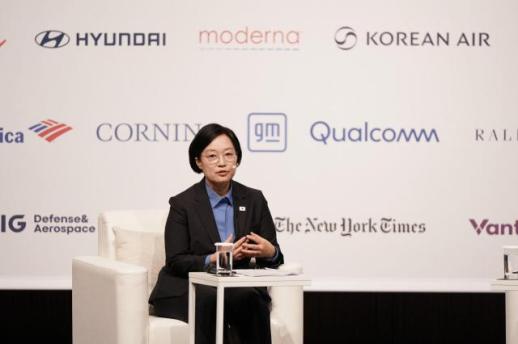 PM Han rejects claims Korea discriminates against U.S. firms SEOUL, September 11 (AJP) - Prime Minister Han Seong-sook on Friday rejected claims that South Korea discriminates against U.S. companies, saying the country's laws and regulations apply equally to domestic and foreign businesses. “I can say clearly that we do not discriminate against companies based on nationality,” Han told foreign business executives in her first appearance as prime minister at an American Chamber of Commerce in Korea event at The Shilla Seoul. Han cited enforcement actions against some of Korea's biggest companies to argue that regulators do not distinguish between Korean and foreign businesses when applying the law. She reached back to her years at Naver, where she served as chief executive. “When I was at Naver, eBay Korea, which was an American company, filed a complaint against Naver with the Fair Trade Commission, and we ended up facing a hefty fine,” Han said. The case dates to 2018, when eBay Korea, then owned by U.S.-based eBay, complained to the Korea Fair Trade Commission that Naver's shopping search system favored products sold through its own platform or linked to Naver Pay. The antitrust watchdog imposed penalties totaling about 26.7 billion won on Naver in 2020 over its shopping and video search algorithms. The case remains legally unsettled, however, after the Supreme Court last October overturned a lower-court ruling that had upheld the shopping-related sanction and sent it back for reconsideration. Han also pointed to SK Telecom, South Korea's largest mobile carrier. The Personal Information Protection Commission last year imposed a 134.79 billion won penalty on SK Telecom after concluding that inadequate security measures contributed to a massive leak of subscriber information. SK Telecom separately offered a 50 percent discount on one month's mobile bill to its customers as part of a compensation package. Han stressed that the measure was taken voluntarily by the company rather than ordered by the government. Han's lengthy defense underscored how sensitive the question of regulatory discrimination has become as Coupang emerges as a new source of friction between Seoul and Washington. Korea's privacy regulator in June imposed a record 625 billion won ($464 million) fine on Coupang over a massive data breach and unauthorized collection of customer information. The following month, a U.S. House Judiciary Committee report accused South Korean authorities of discriminating against Coupang and other foreign companies. Seoul rejected the allegations, saying its regulatory actions were based on Korean law rather than the nationality of the company. During an onstage conversation, AMCHAM Chairman and CEO James Kim said he frequently encounters concerns in Washington that U.S. companies are being treated unfairly in Korea. "Korea's laws and regulations protect free and fair business activity and apply equally to Korean and foreign companies," Han said. Han acknowledged, however, that Seoul needs to do a better job explaining its policies when foreign companies perceive Korean regulations as unfair. She also said regulations must keep pace with artificial intelligence and other emerging technologies without unnecessarily hindering innovation. AI is becoming infrastructure for virtually every industry, Han said, adding that Korea's manufacturing and digital strengths could complement U.S. leadership in AI, semiconductors and advanced technology. The discussion also turned to South Korea's $350 billion investment commitment in the United States. A special law governing the program took effect June 18, when Seoul launched the state-backed Korea-U.S. Strategic Investment Corp. Of the total commitment, $200 billion is earmarked for strategic investment and $150 billion for shipbuilding cooperation. Han said negotiations were progressing but emphasized that investment projects must deliver clear benefits to both countries. "Since it is an investment, profitability has to be properly secured," she said. Kim also raised Korea's longstanding struggle to attract the Asia-Pacific headquarters of multinational companies. AMCHAM has estimated that Singapore hosts more than 5,000 multinational regional headquarters and Hong Kong about 1,400, compared with fewer than 100 in Korea. Han said Korea needs to give foreign investors greater opportunities to participate in major projects, offer more competitive incentives and make the country easier for foreign executives and their families to live in. Foreign direct investment pledges in Korea reached $14.3 billion in the first half of 2026, up 9.1 percent from a year earlier, while actual inflows surged 42.6 percent to $10.7 billion. Han closed by saying the government's role should increasingly be to help businesses invest, innovate and take risks rather than stand in their way. "We will stand with companies so they can invest more boldly, innovate more freely and achieve even greater success in Korea," she said. AJP Takeaways - Prime Minister Han Seong-sook rejected claims that South Korea discriminates against U.S. companies, saying regulations apply equally to domestic and foreign businesses. - Han cited penalties against Naver and SK Telecom as evidence of equal enforcement as Seoul faces U.S. criticism over its regulatory actions against Coupang. - Han stressed profitability in South Korea's $350 billion U.S. investment commitment and pledged stronger incentives to attract multinational regional headquarters. 2026-09-11 15:37:29
 -
Jang Dong-hyuk Opposes Merger of Military Academies, Vows to Prevent It Jang Dong-hyuk, leader of the People Power Party, visited the Naval Academy in Jinhae, South Gyeongsang Province, on September 11, continuing his opposition to the government's plan to merge the Army, Navy, and Air Force academies. This visit follows his trip to the Air Force Academy on September 7.During a local meeting against the proposed closure of the Naval Academy, Jang criticized the government, stating, "The government is trying to close the Naval Academy without any justification and merge the three military academies into one. This merger attempt undermines the foundation of our military and is a move toward a collapse of national defense."He further commented on the government's defense policy, saying, "The issue of merging the military academies seems to be something that even elementary school students could understand. Otherwise, it appears that our defense policy is being dictated by North Korea."Jang also expressed concerns about Defense Minister nominee Kang Shin-cheol, asserting, "Kang's position on the merger ultimately indicates a willingness to proceed with it. The public will not accept a defense minister nominee who lacks conviction in addressing the merger of military academies."He reiterated, "The merger of military academies lacks both justification and practicality. The People Power Party will work with the public to ensure that this hasty and unilateral merger does not happen."The party's efforts to block the merger are expected to extend to the National Assembly, with the issue likely to be a key topic during Kang's confirmation hearing scheduled for September 15. Jang had previously stated on September 7, "We will thoroughly examine the problems associated with the merger during the upcoming regular session of the National Assembly."The proposed merger of military academies is part of President Yoon Suk-yeol's campaign promise and a national agenda. The Ministry of National Defense announced a basic plan on July 16 to establish a four-year 'National Military Academy' in Daejeon, merging the Army, Navy, and Air Force academies.Following a public hearing held on August 26 to gather opinions, the Ministry plans to prepare detailed plans by October.* This article has been translated by AI. 2026-09-11 15:32:00
-
SM Bexel Partners with U.S. Auto Company to Develop LMR Battery SM Bexel, a manufacturing subsidiary of the SM Group, announced on September 11 that it is collaborating with a U.S.-based global automotive company to develop technologies for the design, production, and evaluation of cylindrical lithium batteries using lithium manganese rich (LMR) cathode materials. The project aims to establish a system for verifying the performance of new materials.The core of this project is to apply LMR in actual batteries to validate its performance and applicability. SM Bexel will utilize its semi-mass production line for cylindrical batteries to carry out the entire process, including electrode design, battery production, formation tailored to material characteristics, and initial performance and reliability evaluations.The U.S. automotive company will be responsible for designing cylindrical batteries considering LMR characteristics, optimizing manufacturing conditions, and analyzing performance changes due to material modifications. SM Bexel will review electrode design conditions, manufacture electrodes, apply semi-mass production assembly lines, and evaluate initial charge/discharge and electrochemical properties, while also accumulating data and establishing evaluation criteria for the new materials.Based on this collaboration, the two companies have established a system that connects 'material development → battery design → battery production → performance evaluation → result analysis → design improvement.' This approach allows for comprehensive verification of key performance metrics such as capacity, output, lifespan, and stability in actual cells, rather than just evaluating the material properties.Through this project, SM Bexel has significantly enhanced its capabilities in full-cycle development, linking electrode design, manufacturing process conditions, battery production, and performance evaluation based on LMR characteristics. The evaluation technology acquired can also be applied to verify the practical applicability of various cathode materials, including high-nickel cathodes and LFP/LMFP, as well as new battery materials such as silicon-based anodes, electrolytes, and additives. In the future, the company plans to expand the application range to various sizes and specifications of cylindrical battery platforms based on customer requirements.Choi Se-hwan, CEO of SM Bexel's battery division, stated, 'This project signifies that SM Bexel has advanced its battery material, electrode, and battery design and manufacturing technologies in line with the actual development requirements of global automakers. We will strengthen our capabilities for the practical application and performance verification of various next-generation battery materials and expand technological collaboration with global automakers, battery, and material companies.'Meanwhile, SM Bexel has expanded its secondary battery business by establishing a battery pack solution team within its technology research institute in July, focusing on developing high-performance battery packs and battery management systems (BMS) for applications in industrial drones and humanoid robots. 2026-09-11 15:32:00
-
KDRT Second Team Arrives in Nepal Amid Ongoing Search Challenges The second team of the Korea Disaster Relief Team (KDRT) arrived in Nepal on September 11. Following complaints from some families of missing persons about the first team's activities, attention is focused on how the second team will operate. However, the second team's scale is smaller, and advanced rescue equipment is expected to return to Korea with the first team, making the search for nine missing South Koreans challenging.The KDRT second team reportedly landed at Tribhuvan International Airport in Kathmandu at 8:44 a.m. local time. They will continue their activities for seven days. The military transport aircraft carrying the second team also brought approximately 4 tons of relief supplies, valued at around 180 million won.A government official explained to reporters at the Ministry of Foreign Affairs in Seoul the day before that the second team consists of two members each from the Ministry of Foreign Affairs, the National Fire Agency, the Korea International Cooperation Agency (KOICA), and a medical team. Unlike the first team, which focused on search and rescue, the second team is organized as a reconstruction and recovery team, following the Nepalese government's shift in focus from search efforts to reconstruction.With the KDRT's reduced scale and the return of advanced equipment to Korea, there are concerns about difficulties in the search efforts. The first team, equipped with more personnel and advanced equipment, managed to rescue one Chinese survivor ten days after the flood but was unable to locate any of the missing South Koreans, who still number nine.In response, some families of the missing persons have expressed their dissatisfaction. They held a press conference on September 9, criticizing the KDRT for declaring 'no significant findings' without conducting a substantial ground search and for now announcing the end of search efforts citing safety concerns.In this context, President Lee Jae-myung reportedly instructed the government to listen to and respect the wishes of the families of the missing South Koreans after being briefed on their difficulties.Meanwhile, the first team members are scheduled to return to Korea on a flight from Nepal later in the afternoon. Authorities expect them to arrive in Korea early on September 12. They were dispatched on September 2 for a ten-day mission. Although an extension was considered, it was ultimately rejected by the joint public-private emergency relief council.* This article has been translated by AI. 2026-09-11 15:28:10
-
iPhone 18 Pro Pre-Orders Start Tomorrow as Carriers Compete for Customers The three major telecommunications companies in South Korea—SK Telecom, KT, and LG Uplus—are gearing up to attract customers ahead of the pre-order launch for the new iPhone models on September 12. The official release date is set for September 18. SKT Enhances Discounts and Trade-In OffersSK Telecom is ramping up its discount offerings to ease the financial burden of purchasing the new iPhone.Until September 18, customers can participate in a 'Lucky Roulette Event' to win vouchers for purchasing the new iPhone. Customers buying the 256GB or 512GB models can receive vouchers worth up to 200,000 won, while those purchasing the 1TB or 2TB models can get vouchers worth up to 300,000 won. These vouchers can be used during the pre-order period and until September 30.Customers can also benefit from trade-in offers. For a used iPhone 17 Pro 256GB in good condition, a maximum compensation of 1.22 million won is available, along with additional rewards of up to 150,000 won through the 'Mint All Compensation' and 'Additional Compensation for Used Phones' programs.There are also card benefits. Customers purchasing through the T Direct Shop with a Hyundai Card can take advantage of a 36-month interest-free installment plan. If they meet certain conditions, they can receive up to 1.18 million won in benefits, including a popular coupon pack worth 34,000 won from stores like Daiso and Olive Young.Customers who complete their activation by September 18 will receive a two-month subscription to T Universe's Google AI Plus (400GB) and a four-month subscription to Tving's ad-supported standard plan.Customers purchasing the new iPhone along with the latest AirPods, Apple Watch, or iPad can also reduce their installment burden by utilizing discounts on smart device installment payments. KT Offers Diverse Plans and Same-Day Delivery ServiceKT is focusing on customer acquisition through various plans and a same-day delivery guarantee service.KT's 'Choice Double' plan includes options like 'Choice Double YouTube Premium + Netflix', 'Choice Double YouTube Premium + Google AI Plus', and 'Choice Double Disney+ + Phone Care', allowing customers to select benefits based on their preferences.The Phone Care service offers protection against device loss, theft, and damage. The Phone Change_i18 service provides up to 50% coverage of the original price if customers return their old phones after two years for a monthly fee of 5,000 won.In celebration of the 10th anniversary of KT's youth brand 'Y', customers who purchase the new iPhone and enter a draw at the KT Direct Shop will have a chance to win a limited edition 'Y Birthday Gift' package.Using partnership cards can yield benefits of up to 1.44 million won. By applying double discounts with the KT Installment Plus KB Kookmin Card and KT Family Satisfaction Installment Shinhan Card, customers can receive a maximum of 1.29 million won in bill discounts over 24 months, along with an additional 150,000 won in cashback.The KT Direct Shop also offers a 'Same-Day Delivery Guarantee Service'. Customers who pre-order will receive their iPhones on the official launch day. KT Direct Shop provides various discounts. Customers can receive a maximum of 32% off their bills by combining a 25% discount with an additional 7% discount exclusive to the Direct Shop.Customers who purchase the new iPhone and the new Apple Watch together and sign up for a plan costing over 90,000 won will receive an additional 200,000 won in support for the new Apple Watch, limited to the first 1,000 customers. LG Uplus Introduces AI Exio Roaming Call and Voice Phishing ProtectionLG Uplus is launching new AI-based services.Customers activating the iPhone 18 Pro series will have access to the AI calling app Exio, which offers call recording and a 'Roaming Call' feature for international voice calls. Additionally, a new 'Voice Phishing Financial Safety' feature will detect phishing risks in real-time during calls.The 'AI Call Answering' feature uses the actual voices of members from the global K-POP group 'Boy Next Door', who will answer calls on behalf of customers who are unable to pick up, relaying the caller's message in real-time text for easy response.Partnership card rewards are also available. Customers paying with Samsung Card or Hyundai Card can benefit from up to 36 months of interest-free installments, and Samsung Card users may receive cashback of up to 100,000 won based on certain conditions.Additionally, customers who pre-order and purchase will have a chance to win prizes like the LG Standby ME2 MAX through a lottery. Customers who pre-order through the U+ official online store can utilize the 'Morning Delivery' service to receive their devices on the morning of the official launch date.Customers subscribing to plans of 'Plus Plan 115' or higher and using 'U+ Mobile Payment' for iCloud 200GB will have their fees waived for 24 months.A device management program is also available to reduce the burden of repairs and replacements for the iPhone 18. From September 12 to October 6, customers who pre-order the iPhone 18 and activate it while signing up for the 'Phone Replacement Pass' will receive a MagSafe-compatible mini power bank (5,000mAh).Customers who purchase the iPhone 18 and switch to a new iPhone from LG Uplus after 24 months can receive compensation of up to 50% of the original price of their previous device when returning it.Meanwhile, the domestic retail price for the iPhone 18 Pro starts at 1.99 million won, while the Pro Max starts at 2.19 million won. Apple's first foldable phone, the iPhone Duo, will be released in the country on October 23, starting at 3.29 million won.* This article has been translated by AI. 2026-09-11 15:28:00