


Latest by
-
 Hansem MK Opens PlayKiz Club, Launches Abercrombie Kids' First Offline Store Hansem MK has opened a kids lifestyle curation store, 'PlayKiz Club,' at Lotte Department Store Gimpo Airport, marking the first offline sales of 'Abercrombie Kids' in South Korea.On September 9, Hansem MK announced the opening of PlayKiz Club at Lotte Department Store Gimpo Airport, which is the first store to introduce Abercrombie Kids offline in the domestic market.Abercrombie Kids is a children's brand that originated from Abercrombie & Fitch, founded in New York City in 1892. The brand is known for its modern reinterpretation of preppy style based on American casual wear.Preppy style, which derives from the uniforms of prestigious private schools in the West, emphasizes a neat and sophisticated look. The company noted that many family customers were eager to try on items before purchasing, especially with the fall school season and weekend outings approaching.PlayKiz Club is a kids lifestyle store that expands its product range from the existing sportswear-focused PlayKiz Pro to include preppy, denim, and casual styles. Customers can find six global kids brands in one location, including Abercrombie Kids, Nike Kids, Jordan Kids, Converse Kids, Levi's Kids, and Lacoste Kids.To celebrate the store opening, the company is offering discounts and gifts based on purchase amounts until September 27. Additionally, a membership event will run until October 31, where customers who spend over 350,000 won across four or more brands will receive a Jordan wallet.Starting from the Gimpo Airport location, PlayKiz Club plans to open new stores at Hyundai Outlet Dongdaemun on September 12 and LF Square Yangju on September 18.A representative from Hansem MK stated, 'We are excited to introduce Abercrombie Kids offline in South Korea for the first time and aim to develop a differentiated curation platform that suggests styles suitable for children's daily lives.'Hansem MK is a clothing manufacturing and sales company under Hansem Yes24 Holdings. The company is strengthening its capabilities in AI and data-driven product planning and operations to build a foundation for future growth.* This article has been translated by AI. 2026-09-10 17:28:00
 -
Kang Shin-cheol Addresses Allegations of Special Housing Supply for Evictees Kang Shin-cheol, the nominee for Minister of National Defense, addressed allegations regarding special housing supply for evictees, stating that while he acknowledges negligence in managing his address, there was no intent to conceal his residence or any illegality in the application process. In a statement on September 10, Kang asserted, "The nominee, along with his father, brother, and aunt, are actual beneficiaries of housing compensation for evictees in Cheonwang-dong, Seoul, and the application for special supply was conducted through normal procedures." He refuted claims that his primary residence was in Yangji Village, Bundang, stating, "I was deployed to Iraq, and my spouse lived with our children at her parents' home. I have never lived in Bundang." Kang also denied allegations that his brother and aunt similarly concealed their residences to receive evictee compensation. He explained, "My brother was born in Cheonwang-dong and has lived there his entire life, and my aunt has also continuously resided there. Cheonwang-dong has been our family's home for decades, where we have farmed and raised livestock." While acknowledging his oversight in managing his address during his work relocation, Kang expressed strong regret over the suspicion that his entire family acted with the intent to benefit from the special housing supply. He stated, "I will humbly accept responsibility for my negligence, but there should be no further attacks on my family's life that cause harm." Meanwhile, the National Assembly's Defense Committee held a meeting on the same day and approved the plan to conduct Kang's confirmation hearing on the 16th. However, the selection of witnesses and reference persons was not finalized due to disagreements between the ruling and opposition parties.* This article has been translated by AI. 2026-09-10 17:28:00
-
Korea's AI Innovation Team Hosts 3rd Vietnam Smart Factory Expo The Korea Institute of Startup & Entrepreneurship Development's AI Innovation Team, in collaboration with the Korea Federation of Small and Medium Businesses, is hosting the 3rd Vietnam Smart Factory Expo at the Vietnam Exhibition Center (VEC) in Hanoi until September 11.The event aims to facilitate the entry of domestic smart manufacturing technology companies into Vietnam and expand export opportunities while generating local business outcomes. This expo is being held concurrently with the Vietnam International Industry Fair (VIIF 2026) and the Hanoi Major Industry Products Fair (Hanoi MIP Fair 2026), marking the first time these government events have been combined.A total of 114 smart manufacturing companies from both domestic and international markets are participating, with 218 booths set up. Domestic exhibitors will showcase smart manufacturing products and technologies at their booths, introducing them to local buyers and visitors. Additionally, manufacturing AI centers from Daegu, Ulsan, and Chungbuk are jointly operating exhibition booths to present their regional AI achievements and outstanding technologies.On the first day, September 9, a 'Korea-Vietnam Smart Manufacturing Innovation Cooperation Forum' was held on the main stage, where participants shared insights on smart manufacturing policies, global technology trends, and exemplary cases of smart factory implementation in Korea. On September 10, a briefing on the 'Vietnam ODA Smart Factory Process Improvement Consulting Project' will be conducted for local manufacturers and participating companies.Ahn Kwang-hyun, head of the AI Innovation Team, stated, "Vietnam has formed a manufacturing cluster with a concentration of global manufacturers and their partners, making it a promising market for domestic smart manufacturing technology companies to expand overseas. We will actively support this expo to ensure that domestic companies not only showcase their technologies locally but also achieve actual exports and business outcomes."* This article has been translated by AI. 2026-09-10 17:24:00
-
Nexters Secures $38 Million Capital Increase from KT, LG Uplus, and Certic Nexters is accelerating its platform expansion following the integration of its store by securing strategic partners in the telecom and security sectors, including KT, LG Uplus, and Certic (HCIC LLC).On September 10, Nexters announced that its board of directors approved a third-party allocation of new shares to KT, LG Uplus, and Certic. The capital increase will raise approximately 3.8 billion won (about $38 million) through the issuance of 2,151,443 shares, representing 2.51% of the total shares outstanding.This capital increase is linked to Nexters' acquisition of shares in One Store. On the same day, KT and LG Uplus signed a stock purchase agreement for One Store, with the transaction expected to close on September 14.Earlier, Nexters acquired 89.03% of One Store shares from SK Square and Naver, during which SK Square and Naver also participated as investors in Nexters. Once this transaction is completed, Nexters' stake in One Store will increase to 95.88%.The newly allocated shares will be subject to a one-year lock-up period, with payment for the capital increase scheduled for September 18.* This article has been translated by AI. 2026-09-10 17:24:00
-
 Lee reshuffle reignites South Korea election reform debate SEOUL, September 10 (AJP) - President Lee Jae Myung's second Cabinet reshuffle is spilling into a broader debate over electoral reform in South Korea, as controversy surrounding a ministerial nominee has revived calls across the political spectrum to overhaul a voting system blamed for encouraging satellite parties and distorting voter choice. People Power Party (PPP) floor leader Jeong Jeom-sig on Thursday formally proposed that the ruling Democratic Party (DP) begin negotiations to abolish the country's semi-linked proportional representation system, seizing on the controversy surrounding Gender Equality and Family Minister nominee Yong Hye-in. "The fundamental cause of all this is the fundamentally flawed semi-linked proportional representation system," Jeong said at a PPP Supreme Council meeting at the National Assembly. Jeong argued that the DP bore responsibility for Yong's political rise, saying the party had effectively enabled her to win proportional representation seats twice and helped keep her minor Basic Income Party represented in parliament. Yong, currently the Basic Income Party's sole lawmaker, won proportional representation seats in both 2020 and 2024 through electoral alliances led by the DP. In 2024, she entered parliament through the Democratic Alliance of Korea, a DP-led satellite party, before returning to her own party after the election. The controversy intensified after Yong indicated that she intended to retain her parliamentary seat if appointed minister. South Korean law permits lawmakers to concurrently serve as Cabinet ministers, but proportional representation lawmakers have traditionally resigned their parliamentary seats upon joining the Cabinet so the next candidate on their party list can take over. Yong has said her resignation would leave the Basic Income Party without parliamentary representation. Yong defended her position at a press conference Thursday, saying lawmakers are legally permitted to serve concurrently as Cabinet ministers and arguing that proportional representation lawmakers should not be held to a different standard. She added that she was open to a broader legislative debate over whether lawmakers should be allowed to hold Cabinet posts at all. "If left-wing parties that fall short of the necessary standards gather around the DP, their 'host party,' like pop-up parties whenever an election approaches, they enter the National Assembly after receiving proportional representation rankings through the DP's choice rather than the people's choice and then act as the DP's front line," Jeong said. "It is time to get rid of such a low-quality system." Jeong also attacked the circumstances under which the semi-linked system was introduced, calling it "an evil law born from a backroom trade over the establishment of the Corruption Investigation Office for High-ranking Officials" after breaking what he described as the longstanding practice of changing electoral rules through bipartisan agreement. The electoral reform bill and legislation creating the anti-corruption agency were in fact placed together on a legislative fast track in April 2019 by a DP-led bloc. The election bill passed on Dec. 27, 2019, over fierce resistance from the then-main opposition Liberty Korea Party, the predecessor of today's PPP, while legislation establishing the corruption investigation agency passed three days later. Whether the measures amounted to a political "trade" is a partisan characterization by the PPP. Jeong's proposal has opened a wider debate that extends well beyond whether the current semi-linked formula should simply be abolished. South Korea's 300-member National Assembly currently combines two electoral systems. Of the total, 254 lawmakers are elected from single-member constituencies under a simple plurality system, meaning the candidate with the most votes wins the seat. The remaining 46 lawmakers are elected through closed party lists using proportional representation. Voters therefore cast one ballot for a constituency candidate and another for a political party. Under the semi-linked proportional system, the number of constituency seats a party has already won is taken into account when allocating proportional seats. In simplified terms, if a party's share of seats won in constituencies falls short of what its nationwide party vote would justify, the system attempts to compensate for part of that gap, with a 50 percent linkage rate. Parties generally qualify for proportional seats by winning at least 3 percent of the nationwide party-list vote or at least five constituency seats. The mechanism was intended to reduce the gap between parties' nationwide vote shares and their representation in parliament, particularly benefiting smaller parties that struggle to win first place in individual constituencies. Instead, critics say it gave the two major parties an incentive to create separate satellite parties devoted to contesting proportional seats. A major party expecting to win many constituencies could place its proportional candidates in an allied party, allowing the allied list to compete for proportional seats without being penalized for constituency victories by the parent party. Both major political camps used such arrangements in the 2020 and 2024 general elections, one of the central reasons the system has remained controversial. But lawmakers interviewed by AJP showed that there is little agreement over what should replace it. Rep. Jin Seong-joon, a three-term DP lawmaker, advocated the most fundamental departure from the present system. "There are various practical difficulties, but I believe that abolishing constituency-based representation and completely shifting to a regional party-list proportional representation system would be consistent with the principle of proportionality," Jin said. Under a regional party-list proportional representation system, the country would be divided into several large electoral regions, with parties presenting lists of candidates for each region and seats distributed largely according to each party's vote share within that region. Unlike South Korea's current system, which elects most lawmakers individually from single-member districts and uses a single nationwide proportional ballot to fill a much smaller number of seats, such a model could make party vote shares much more directly reflected in parliamentary representation. Regional proportional representation is not a new idea in South Korea. The National Election Commission proposed a six-region model in 2015, while a reform debate under former National Assembly Speaker Kim Jin-pyo in 2023 also considered various combinations of regional proportional representation and single- or multi-member constituencies. PPP Rep. Yoon Sang-hyun, a five-term lawmaker, agreed that the semi-linked system should go but cautioned against eliminating proportional representation itself. "I believe the semi-linked proportional representation system should be abolished. But eliminating proportional representation itself is not the answer," Yoon said. "We must not close off the channel through which regional representation and the diverse voices of the people can be reflected in the National Assembly," he said. "Although further social discussion and careful institutional design are still necessary, the alternative I am considering is a regional parallel proportional representation system." A parallel system, unlike the semi-linked model, would allocate proportional seats independently of how many constituency seats a party had already won. Yoon said that would eliminate both the complicated linkage formula and much of the incentive to create satellite parties. "Constituency election results should stand on their own, while proportional seats should be allocated honestly according to each party's share of the party vote," Yoon said. He also called for changing how candidates are selected for proportional lists. "We also need to move away from a closed-list system in which party leadership effectively distributes the rankings," Yoon said. "We should move toward open or semi-open lists that substantially reflect the choices of voters and party members, so proportional representation candidates themselves are subject to public scrutiny and evaluation." Yoon said legislation should explicitly prohibit arrangements between parent parties and satellite parties involving joint nominations, exchanges of candidate-list positions, shared organizations or accounting, joint command of campaigns and payment of campaign expenses. He also floated an urban-rural hybrid model under which larger cities could gradually introduce multi-member constituencies while sparsely populated rural areas retained single-member districts to protect local representation. PPP Rep. Yoo Sang-bum, a two-term lawmaker, also pointed to regional proportional representation as a possible alternative. "We must not see any more 'satellite parasite parties' like the Basic Income Party," Yoo said. “Regional proportional representation was discussed during National Assembly Speaker Kim Jin-pyo's term, but the talks were suspended. I think it could be considered an alternative.” PPP Rep. Ahn Sang-hoon went further, calling for an overhaul of the constituency system itself. "We should use this opportunity to completely change the National Assembly election system," Ahn said. "I think large multi-member districts are the answer. Satellite parties are nothing more than a trick." "The current single-member district system also ties lawmakers to local constituent demands and makes them indifferent to the country's bigger issues," he said. "If we elected 10 lawmakers from each of 30 districts nationwide, lawmakers would be able to devote themselves to the major affairs of state." "If the single-member district system is retained, another option would be to establish a separate upper house that could filter legislation passed by the lower house from the perspective of the country as a whole," Ahn said. South Korea's current semi-linked system dates to the most significant recent overhaul of parliamentary election rules, passed by the National Assembly on Dec. 27, 2019 and promulgated in January 2020. It was first used in the April 2020 general election. For that election alone, the 50 percent linkage formula was limited to 30 of the then-47 proportional seats, with the remaining 17 distributed under the old parallel method. That temporary "30-seat cap" expired afterward. The 2024 election retained the semi-linked system without the cap, meaning the linkage formula applied across the proportional allocation. The most recent statutory adjustment came on Feb. 29, 2024, just 41 days before that year's general election. Parliament increased constituency seats from 253 to 254 and reduced proportional seats from 47 to 46 while keeping the total number of lawmakers at 300. It did not replace the underlying semi-linked proportional formula. The latest debate therefore amounts to something potentially far larger than another redrawing of constituency boundaries. The proposals now range from returning to a simpler parallel proportional system to introducing regional party lists, opening proportional candidate lists to voters, creating large multi-member constituencies or even eliminating the existing constituency-based structure altogether. Yong's Cabinet nomination may have provided the immediate trigger, but the differences among lawmakers suggest that agreeing that the current system is flawed could prove far easier than agreeing on what should replace it. 2026-09-10 17:20:28
 -
Three Mortars Found at Gwangju Apartment Construction Site Three mortars were discovered at an apartment construction site in Buk-gu, Gwangju, prompting police and military authorities to implement safety measures.According to Yonhap News Agency, police reported that the 81mm mortars were found around noon on September 10 near a hillside close to the construction site in Maegok-dong.After receiving the report, police and an Explosive Ordnance Disposal (EOD) team secured the area and safely disposed of the munitions. No injuries were reported as a result of the discovery.This is not the first time old munitions have been found at the site. In July, both 81mm and 60mm mortars were discovered at a nearby construction site in the Jungwoo Park area, which were also collected by the military EOD team. The previously found munitions were reported to be in a severely corroded condition.The area where the mortars were found is known to have been used as a military firing range in the past. Consequently, the construction company is conducting explosive detection operations across the approximately 70,000 square meters of the construction site.Authorities are investigating the origins of the discovered mortars, considering the possibility that they were used during the Korean War, and are assessing the likelihood of further discoveries.* This article has been translated by AI. 2026-09-10 17:20:10
-
South Korea's Delayed Investment in the U.S. Raises Concerns Amid Trump Administration's Frustration More than a year after South Korea agreed to invest $350 billion in the United States, concerns are growing within the Trump administration over the slow pace of this investment, according to a report by the Financial Times on September 9, citing multiple sources. One U.S. source warned that South Korea needs to "hurry up" or risk inciting President Trump's anger. Another source noted that Trump's criticism of South Korea for not cooperating in the U.S. war against Iran last month was also rooted in frustrations over the investment delays. Jennifer Lee, a partner at the Washington-based consulting firm Asia Group, stated, "There has been significant accumulation of dissatisfaction within the U.S. government," particularly in comparison to Japan, which has made a series of investment announcements. Last year, on July 31, the U.S. and South Korea agreed to lower mutual tariffs from 25% to 15%, with South Korea committing to invest $350 billion, including $150 billion in shipbuilding and $200 billion in key industries. In contrast, Japan promised a $550 billion investment in the U.S. in July, following its own tariff reduction. Japan has since accelerated its investment plans, announcing specific projects such as a gas power plant in Ohio and small modular reactors in Tennessee and Alabama. However, South Korea has yet to announce any significant investment projects, leading to increasing dissatisfaction from the U.S. Reports indicated that a Texas gas power plant was selected as the first investment project, but the presidential office has not confirmed details regarding the investment location, announcement timing, or initial funding amounts. President Yoon Suk Yeol previously stated in November that investments would only be made in commercially viable projects. Professor Min Jeong-hoon of the Korea National Diplomatic Academy remarked, "Companies will not invest if there is no business viability. South Korea has to be cautious," adding that while Trump desires quick results, the positions of both sides differ. Additionally, the U.S. Immigration and Customs Enforcement's (ICE) raid on the Hyundai Motor and LG Energy Solution battery plant in Georgia last September has also contributed to hesitance among South Korean companies regarding U.S. investments. President Yoon expressed concern that this incident could make South Korean firms "very hesitant" to invest in the U.S. Jennifer Lee noted that there is a "substantial gap" in the interpretation of the agreement between the two governments, with the U.S. seeking greater influence over the investment and selection process for individual projects. The U.S. is also pressuring Samsung Electronics and SK Hynix regarding their investments in advanced memory production in the U.S., a sensitive issue for South Korea given its strategic importance. On the other hand, shipbuilding is seen as an area where South Korea can leverage its negotiating power. While the U.S. accounts for only 0.2% of the global shipping market, South Korea is the world's second-largest shipbuilding nation after China. Trump's plan to revitalize the U.S. shipbuilding industry aligns with South Korea's "Make American Shipbuilding Great Again" initiative, which aims to integrate South Korean technology and expertise into the U.S. shipbuilding sector. Some analysts argue that South Korea's delay is worsening its situation. With low approval ratings ahead of the November midterm elections, Trump may be seeking a "trophy" to present to Americans, and the delay in South Korean investments is fueling dissatisfaction. Troy Stangarone, senior director at the Korea Economic Institute, emphasized the urgency for South Korea to announce initial investment projects, warning that the longer the delay, the greater the risk of being perceived as avoiding commitments to the Trump administration. He also suggested that Trump's recent mention of South Korea's deployment to the Strait of Hormuz could be aimed at promoting U.S. investment, although actual deployment may not resolve investment issues.* This article has been translated by AI. 2026-09-10 17:16:10
-
High-Risk Funds Show Strong Long-Term Returns 위험도가 높은 펀드일수록 장기 수익률이 월등히 높은 것으로 나타났다. 위험등급이 ‘매우높음’인 펀드는 5년 수익률이 140%를 넘어 ‘낮음’ 등급과 10배 가까운 격차를 보였다. 높은 변동성을 감수하고 투자 기간을 길게 가져갈수록 수익률 측면에서 유리한 모습을 보인 셈이다. 10일 에프앤가이드에 따르면 지난달 31일 기준 설정액 1000억원 이상인 펀드 975개의 위험등급별 기간 수익률을 비교한 결과 ‘매우높음’ 등급 펀드의 5년 수익률은 141.78%로 집계됐다. 반면 ‘낮음’ 등급 펀드의 5년 수익률은 14.81%에 그쳤다. 펀드의 위험등급은 투자 대상 자산의 종류와 비중, 가격 변동성 등을 종합적으로 고려해 해당 펀드의 위험 수준을 나타내는 지표다. 일반적으로 위험등급이 높을수록 주식 등 가격 변동성이 큰 자산에 대한 투자 비중이 높아 수익률이 크게 움직일 가능성이 있다. 시장이 상승할 경우 높은 수익을 기대할 수 있지만 반대로 하락할 경우 손실폭도 커질 수 있다. 장기 수익률을 보면 위험등급별 격차는 더욱 뚜렷했다. ‘높음’ 등급 펀드의 5년 수익률은 133.90%로 ‘매우높음’ 등급에 이어 두 번째로 높았다. ‘다소높음’은 61.16%, ‘보통’은 48.11%를 기록했다. 반면 ‘다소 낮음’은 16.02%, ‘낮음’은 14.81%로 상대적으로 낮은 수준에 머물렀다. 투자 기간을 3년으로 좁혀도 위험등급이 높은 펀드의 수익률이 상대적으로 높게 나타났다. ‘매우높음’ 등급의 3년 수익률은 185.94%로 집계됐으며 ‘높음’은 151.05%였다. 이어 ‘다소높음’ 68.14%, ‘보통’ 49.64%, ‘다소 낮음’ 10.69%, ‘낮음’ 14.05% 순이었다. 위험도가 높은 펀드와 낮은 펀드 사이의 장기 성과 차이가 상당했던 셈이다. 최근 수익률에서도 고위험 펀드의 강한 성과가 두드러졌다. ‘매우높음’ 등급의 연초 이후 수익률은 37.59%로 ‘낮음’ 등급의 0.01%를 크게 웃돌았다. 1년 수익률 역시 ‘매우높음’이 100.21%를 기록한 반면 ‘낮음’은 0.14%에 그쳤다. 다만 단기 구간에서는 고위험 펀드의 높은 수익률이 그대로 이어지지 않았다. ‘매우높음’ 등급의 1개월 수익률은 21.16%를 기록했지만 3개월 수익률은 -21.31%로 집계됐다. 불과 몇 개월의 기간 차이로 수익률이 크게 엇갈린 것이다. ‘높음’ 등급 역시 1개월 수익률은 15.79%였지만 3개월 수익률은 -15.53%로 집계됐다. 반면 ‘낮음’ 등급 펀드는 단기 수익률 변동폭이 상대적으로 작았다. 1개월 수익률은 -0.02%, 3개월 -0.61%, 6개월 -0.89%, 연초 이후 0.01%를 기록했다. 높은 수익률을 기대하기 어려운 대신 시장 상황에 따른 손익 변동도 상대적으로 크지 않은 모습이다. 자산운용업계 관계자는 “위험등급이 높은 상품은 시장이 상승할 때 수익률을 크게 끌어올릴 수 있지만 반대로 조정장에서는 손실폭도 커질 수 있다”며 “투자 기간과 감내할 수 있는 손실 수준을 함께 고려해야 한다”고 말했다. 2026-09-10 17:16:10
-
Government Considers Raising SOC Project Feasibility Study Threshold The government is considering raising the threshold amount for preliminary feasibility studies of social overhead capital (SOC) projects. It also discussed improving the system for integrated public disclosure of financial information and adjusting the legal distribution ratio of lottery funds.The Ministry of Economy and Finance held the third meeting of the 'Financial Management Normalization Task Force' on September 10, chaired by Deputy Minister Cho Yong-beom, to review the progress of existing tasks and discuss directions for identifying secondary tasks.The Financial Management Normalization Task Force was launched in May as part of a government-wide 'National Normalization Project.' Its role is to identify and improve unreasonable systems and practices remaining in the financial management process.During this meeting, candidates for secondary tasks included rationalizing the feasibility study system by raising the threshold amount for SOC projects, integrating public disclosure of financial information centered on users, and improving the legal distribution ratio of lottery funds.Raising the threshold for SOC feasibility studies could change the scope of projects that require such studies based on financial criteria. The government plans to finalize the secondary normalization tasks after consultations with relevant agencies, including the Office for Government Policy Coordination.All five existing primary normalization tasks are reportedly being carried out as planned. These tasks include eradicating subsidy fraud, strengthening management of unaccounted and uncollected government subsidies, establishing a public interest reporting fund, normalizing and restoring trust in research and development (R&D) investments, and improving the payment of unclaimed lottery winnings.Participants agreed to actively pursue legislation to eradicate subsidy fraud and promote reporting of irregularities. They aim to complete amendments to the 'Subsidy Management Act' and the establishment of the 'Public Interest Reporting Fund Act' within the year.Deputy Minister Cho stated, "The process of normalizing the abnormal is a great opportunity to enhance public trust in the financial authorities," adding, "We will continue to push forward with the normalization of financial management and communicate our commitment to the public until they feel it." The Ministry of Economy and Finance plans to implement follow-up measures after finalizing the secondary normalization tasks and will review the progress at the fourth meeting scheduled for October. They also plan to disclose the status and outcomes of each task.* This article has been translated by AI. 2026-09-10 17:16:00
-
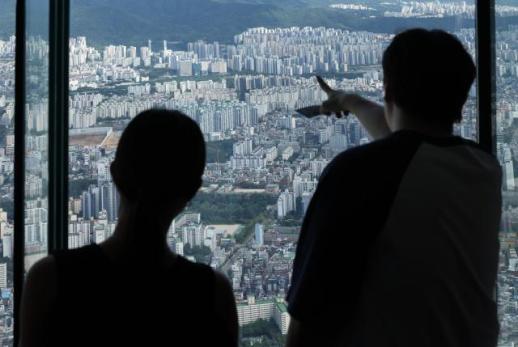 Chip boom: boon or curse for Korea's household debt? SEOUL, September 10 (AJP) - The chip bonanza is not just lifting South Korea's nominal growth to levels unseen in decades. It is also pushing the household debt ratio toward an 11-year low as gross domestic product expands much faster than borrowing. The household debt-to-GDP ratio could fall toward 80 percent this year - or the lowest level since 79.2 percent in 2015 - if double-digit nominal growth of 15 to 20 percent is sustained in the second half. The ratio had already fallen to 85.3 percent in the first quarter from 89.1 percent a year earlier and 88.1 percent at the end of 2025. It has dropped sharply from its pandemic-era peak of 99.2 percent in the third quarter of 2021. The lower ratio, however, does not mean Korean households have begun deleveraging with the extra income generated by the economic boom. Household credit remains swelling to historic level, reaching KRW 2,019.8 trillion ($1.50 trillion) at the end of June, breaching the KRW 2,000 trillion mark for the first time. Household loans accounted for KRW 1,891.3 trillion, including KRW 1,190.8 trillion in housing-related loans – all record highs. At a financial stability briefing in June, BOK Deputy Governor Chang Jung-soo said stronger nominal GDP growth helps lower the relative household debt burden and ease aggregate debt risks. Vulnerabilities nevertheless remain as the absolute level of debt is still high by international standards and debt-service burdens persist among vulnerable borrowers, he said. Moreover, gains from the current boom are concentrated in semiconductors, making it difficult to conclude that indebted households have seen a broad improvement in income. Rising property prices and renewed household borrowing also warrant continued vigilance, Chang said. The distinction has become increasingly important as the semiconductor boom drives an unusually wide gap between nominal and real growth. Nominal GDP grew about 22 percent in the first half, with improved terms of trade contributing roughly 15 percentage points to the increase, compared with 3.8 percentage points from real growth. Since the household debt ratio measures outstanding debt against nominal GDP, a surge in the denominator can drive the ratio lower even without a comparable reduction in what households owe. The effect is not purely statistical. Higher nominal income can improve borrowers' capacity to service debt. But the same income gains could eventually work in the opposite direction by increasing purchasing power, housing demand and the capacity to borrow. The BOK estimated that bonuses at major semiconductor companies could lift overall nominal wage growth by about 3 percentage points next year if the current earnings boom continues. Stronger income could increase home-buying demand in areas benefiting directly from the chip boom and add upward pressure to housing prices in the Seoul metropolitan area, the central bank said. The report pointed to Hwaseong's Dongtan district and other areas in the country's "semiconductor belt," where expectations for large bonuses and expanded employee housing loans have coincided with sharp gains in home prices. The latest lending figures show housing-related credit is still expanding even as overall household-loan growth slows. Household loans across South Korea's financial sector increased by KRW 2.6 trillion in August, down from KRW 6.4 trillion in July, according to the Financial Services Commission (FSC). Mortgage lending, however, accelerated to KRW 4.3 trillion from KRW 3.6 trillion, while other household loans declined by KRW 1.7 trillion. Bank mortgage lending alone increased to KRW 4.0 trillion from KRW 3.5 trillion. The FSC attributed the increase in mortgages partly to settlements on earlier housing transactions and increased apartment completions in July and August rather than to the semiconductor boom itself. The risks are also unevenly distributed. The BOK said gains from the semiconductor boom could remain concentrated among large exporters, related companies and households directly benefiting from the industry, limiting how widely the improvement spreads through household income and consumption. A falling household debt-to-GDP ratio could therefore coexist with borrowers whose incomes and debt-service capacity have improved little. Korea also remained sixth-highest among 44 economies tracked by the Bank for International Settlements in household debt relative to GDP at the end of 2025. The FSC said Wednesday that financial institutions should continue meeting household-loan management targets despite the slowdown in overall lending growth and called for stronger safeguards against future interest-rate risks. The semiconductor boom may make Korea's headline household leverage ratio healthier by rapidly expanding the economy's nominal income base. Whether that improvement lasts will partly depend on how much of the windfall ultimately flows back into housing and credit markets. AJP Takeaways - South Korea's household debt-to-GDP ratio fell to 85.3 percent in the first quarter from 89.1 percent a year earlier, helped by the chip-driven surge in nominal GDP. - Household credit still reached a record KRW 2,019.8 trillion at the end of June, showing the lower ratio reflects a bigger economy rather than outright deleveraging. - Chip-sector bonuses could lift nominal wage growth by about 3 percentage points next year, supporting repayment capacity but also potentially fueling housing demand and fresh borrowing. 2026-09-10 17:14:34