


Latest by
-
 OurBio Hits Upper Limit on First Trading Day After Stock Consolidation OurBio recorded an upper limit increase on its first trading day following a stock consolidation on September 7.According to the Korea Exchange, as of 2:15 PM, OurBio's shares were trading at 5,830 won, up 29.99% from the previous trading day on September 4.The company has shown strong performance throughout the day, reaching the maximum price limit shortly after the market opened.The Korea Exchange noted that trading was suspended due to the change in the stock's face value following the consolidation, but was lifted on this day.Stock consolidation involves merging multiple shares into one, which increases the face value per share. While it does not change the company's overall value, it reduces the number of shares in circulation and adjusts the stock price unit. OurBio consolidated five common shares into one, changing the face value from 500 won to 2,500 won.* This article has been translated by AI. 2026-09-07 14:24:20
 -
Government Announces Additional Measures to Stabilize Prices Ahead of Chuseok The government will introduce additional measures this week to alleviate the burden of grocery prices ahead of Chuseok, including discounts on agricultural and livestock products and an increase in seafood supply.On September 7, the Ministry of Economy and Finance reported that Deputy Minister Lee Hyung-il visited the Gatchisan Market in Seoul to assess the supply trends of Chuseok essential goods and to review the implementation of the 'Chuseok Livelihood Stabilization Measures' announced on September 1.Previously, the government decided to supply a record 183,000 tons of essential goods for Chuseok and to provide 103 billion won in government discounts. The supply of essential goods will be 1.6 times the normal level.From September 16 to 20, a program will be held at traditional markets where customers can receive a refund of approximately 30% of their purchase amount in Onnuri gift certificates for 300 items of agricultural and livestock products and seafood. The refund limit is set at 20,000 won per person.The government has also increased the supply of vegetables and fruits to more than three times the normal level. For popular fish species such as mackerel and pollock, the government is supplying 20,000 tons from its reserves at prices up to 40% lower than market rates.Deputy Minister Lee emphasized, “The government will do its utmost to reduce the burden of grocery prices through the expanded supply of essential goods and discount support,” adding that additional measures for the 'Chuseok Livelihood Stabilization Measures,' including discounts on agricultural and livestock products and increased seafood supply, will be finalized and announced this week.Before visiting the market, Deputy Minister Lee held a meeting with leaders of various small business organizations, including the Small Business Association and the Korea Restaurant Association, at a digital education center for small business owners to discuss management challenges and policy suggestions.During the meeting, he stressed the importance of supporting the stability and growth of small businesses to alleviate economic polarization, stating, “We will make every effort to ensure that the warmth of growth reaches all small business owners.”* This article has been translated by AI. 2026-09-07 14:24:10
-
Gunpo City Council Reviews Financial Management, Integrity, and Public Relations The Gunpo City Council conducted an administrative audit to examine key issues such as the city's financial management, integrity, and public relations, and called for specific improvement measures. According to the council on September 7, the Special Committee on Administrative Audits held its 289th regular session on September 4, reviewing major projects and overall administrative operations in the Planning and Budget Office, Public Relations Office, and Audit Office. This audit focused on the financial management strategies in light of the anticipated decrease in the Financial Stabilization Fund. The fund is projected to decline from approximately 91.6 billion won in 2022 to about 9.7 billion won by the end of 2026. In response, council members emphasized the need for a more detailed plan for fund management and restoration to prepare for large-scale projects and unexpected financial demands. Council member Lee Dong-han called for the establishment of a restoration plan for future financial needs, while member Lee Hye-seung stressed that both the appropriateness of fund usage and long-term management strategies should be reviewed. The council members unanimously agreed that during the budget preparation process for 2027, it is essential to reassess the necessity and effectiveness of existing projects and to streamline similar or redundant initiatives. They also called for the establishment of internal financial management standards that include appropriate sizes for the Financial Stabilization Fund and criteria for accumulation and restoration. Regarding the 20 billion won investment in the city corporation, there were suggestions to comprehensively review the timing of investment, project viability, and potential future financial burdens. In terms of public relations, the effectiveness of facilities and the performance management of public relations ambassadors were key areas of focus. Council member Lee Dong-han and committee chair Shin Kyung-won pointed out the need to assess the size, readability, and visibility of the promotional electronic billboard at the Sanbon Rodeo Street parking tower, and suggested that any future installations should be evaluated for their actual promotional impact. There was also a call for systematic management criteria for the activities and performance of public relations ambassadors. The council proposed reviewing the standards for appointment, terms, and dismissal, as well as exploring ways to connect their participation in events with various promotional content. During the audit of the Audit Office, discussions included the results of the Anti-Corruption and Civil Rights Commission's comprehensive integrity evaluation and strategies for improving organizational culture. The council members urged that the integrity evaluation results should not be approached merely as a matter of improving ratings, but rather as a comprehensive review of issues that may arise in personnel, work directives, and internal communication, and that tangible improvement measures should be developed that can be felt by both members and citizens. Additionally, there were calls to strengthen the role and independence of the Citizen Grievance Handling Committee. It was suggested that the results of grievance handling should be reported to the council regularly and that a system should be established to inform citizens of related matters, alongside the need for a dedicated office space and operational foundation. Chairman Shin Kyung-won emphasized the importance of transparently explaining the financial situation to citizens and the council, and developing concrete plans for stable financial management. He added that the issues raised in the areas of public relations and auditing should not be treated as one-time checks, but should lead to the establishment of improvement plans that are continuously monitored for implementation.* This article has been translated by AI. 2026-09-07 14:24:10
-
Amorepacific Chairman Seo Kyung-bae Advocates New Global Beauty Standards Seo Kyung-bae, Chairman of Amorepacific Group, emphasized the company's commitment to presenting new beauty standards to customers worldwide through its 'New Beauty' vision. According to Amorepacific Group, Seo made these remarks during the company's 81st anniversary celebration held on September 4 at its headquarters in Yongsan, Seoul. He stated, "The driving force behind Amorepacific's 81-year history has been our customer-centric approach and pioneering spirit." Seo added, "Our pursuit of New Beauty involves anticipating customer changes, exploring new areas, and creating unprecedented beauty cultures." He noted that the retail landscape has been reshaped around digital and platform strategies, leading to intensified competition and rapid changes fueled by the growing interest in K-culture. He urged, "Let us swiftly execute tasks that align with the times and lead the creation of new products, routines, and cultures that transform customers' daily lives." Last year, Amorepacific celebrated its 80th anniversary by announcing the 'Create New Beauty' vision, which includes five strategic initiatives: focusing on key global markets, enhancing integrated beauty solutions, developing bio-technology-based anti-aging products, fostering agile organizational innovation, and transitioning to AI-driven operations. This year, the company is accelerating its global market challenges and promoting beauty creation that encompasses both internal and external aspects, as part of its core objectives to realize the New Beauty vision. In particular, Amorepacific plans to expand its business scope from skincare to haircare and overall wellness, building its unique bio-beauty competitiveness based on a 'Holistic Longevity' technology vision. Additionally, the company aims to enhance execution speed and productivity across its operations through AI transformation. Seo emphasized, "We must read customer changes faster than anyone else, execute swiftly, and persistently fulfill our commitments. Let us create our own New Beauty with the customer-centric and pioneering spirit that has defined us for 81 years and move forward with strength toward the world." The anniversary celebration was broadcast live online in Korean, English, and Chinese to global subsidiaries. The event featured a keynote address by Chairman Seo and a ceremony honoring 655 long-serving employees, hosted by the AI show host 'Ara.' Founded in 1945, Amorepacific Group is accelerating its vision to achieve 15 trillion won in sales by 2035 and to become a leading global beauty and wellness company. Additionally, as the Chairman of the Korea Cosmetic Association, Seo expressed during a speech at the '2026 Cosmetics Day' ceremony held at the Plaza Hotel in Jung-gu, Seoul, "I will do my utmost, along with industry colleagues, to ensure that K-beauty continues to make significant strides in the global market and leads the beauty industry worldwide."* This article has been translated by AI. 2026-09-07 14:24:10
-
Park Gi-hong Elected as Highest Committee Member of Basic Income Party Park Gi-hong, the husband of Minister of Gender Equality and Family nominee Yong Hye-in, has been elected as a member of the highest committee of the Basic Income Party. As controversies surrounding the 'family party' and allegations of an informal organization arise, the inclusion of his spouse in the party leadership is expected to intensify the debate.On September 7, the Basic Income Party announced the results of its nationwide party leadership election for the second half of the year, electing Oh Jun-ho, a former co-chair, as the new party leader. Oh, who ran unopposed, received 93.89% of the final vote.In the highest committee election, party spokesperson Noh Seo-young secured first place with 35.16%, followed by current committee member Shin Ji-hye with 28.50%. Park Gi-hong was elected as a committee member with 20.85%, placing third.According to Yonhap News, Oh stated during the committee meeting, "We will work together with Minister Yong Hye-in and the Basic Income Party to ensure that the Gender Equality and Family Ministry under the Lee Jae-myung government achieves results. We will do our utmost to make the gender equality policies of the Lee Jae-myung government the most successful in history."Oh served as co-chair with Yong from 2022 to 2024 and currently heads the Basic Income Policy Research Institute. He also has experience working as an aide in Yong's office.As Park Gi-hong joins the party leadership alongside individuals close to Yong, concerns about the appropriateness of these appointments have emerged. Oh responded to the so-called 'under-organization' controversy, stating, "This is completely untrue," and announced plans to take legal action against the spread of false information.Meanwhile, Yong did not provide specific answers regarding various allegations surrounding her. According to Yonhap, when asked by reporters on her way to the confirmation hearing preparation office whether she would maintain her proportional representation seat or proceed with the hearing, she replied, "I will address that during the hearing."Under National Assembly law, government officials can hold a parliamentary seat. However, it has become customary for proportional representatives to resign to allow subsequent candidates to take over, minimizing legislative gaps.Additionally, allegations have surfaced regarding the appointment of her spouse to a key party position without democratic procedures and claims of tax evasion through party fee payments. Yong's camp has countered that the payment of party fees is a standard political activity carried out with a sense of responsibility as the only member of the National Assembly from her party.Further controversies surrounding Park Gi-hong have also emerged. Kim Yoon-young, former chair of the Women's Committee of the Labor Party, claimed on JTBC on September 4 that Park suggested using Yong as a figurehead during the silent march for the Sewol ferry disaster.As Yong's confirmation hearing approaches, there is growing interest in how the related allegations will be addressed in light of Park's entry into the party leadership.* This article has been translated by AI. 2026-09-07 14:16:00
-
President Lee Jae-myung and Representative Kim Min-seok Advocate for Constitutional Reform President Lee Jae-myung and Representative Kim Min-seok of the Democratic Party have both recently brought up the topic of constitutional reform. President Lee highlighted the necessity of amending the constitution to strengthen presidential accountability and distribute power more evenly. Meanwhile, Representative Kim officially announced plans for constitutional reform, starting with the inclusion of the May 18 Democratic Movement and the Busan Democratic Uprising in the constitutional preamble, and extending to a revision of the power structure. Particularly, President Lee's remarks on the need for constitutional reform and institutional improvements, followed by the ruling party leader's formal announcement in the National Assembly, have drawn attention to whether the discussion of constitutional reform will become a major political agenda. In a written interview with Le Monde, published during his state visit to France, President Lee stated, "Constitutional amendments are necessary to enhance presidential accountability and to distribute power more equitably." He explained that discussions are underway regarding measures to prevent a recurrence of the political crisis triggered by the previous government's attempt to declare martial law, including stricter controls on martial law declarations and incorporating the spirit of the May 18 Democratic Movement into the constitutional preamble. President Lee also mentioned the need for judicial and military reforms. He emphasized, "Judicial reform is necessary to prevent excessive concentration and abuse of power," and added that military reform is essential to ensure that the military does not threaten constitutional order and can actively prepare for current and future warfare. He concluded by stating, "I will ensure that the democracy achieved through countless sacrifices is never again undermined." On the same day, Representative Kim formalized the push for constitutional reform during his first speech as the leader of the negotiating group in the National Assembly. Kim stated, "Along with discussions on easing the number of negotiating group members, we will also pursue constitutional reform. We will aim for feasible amendments that reflect the changes of the times and the demands of the people while adhering to the procedural spirit of the current constitution and laws." He added, "The inclusion of the May 18 and Busan Uprisings in the constitutional preamble is the starting point for reform, and the revision of the power structure should go as far as the public desires." Kim also urged the People Power Party to join in the constitutional reform efforts. He remarked, "The People Power Party, which has hung photos of former Presidents Chun Doo-hwan and Roh Tae-woo, must ultimately make a choice. I hope they will reflect on history and join us on the path to constitutional reform." 2026-09-07 14:16:00
-
 Hanwha foots full bill for Seoul fireworks festival SEOUL, September 07 (AJP) - South Korea's Hanwha Group has footed the entire 13 billion won ($9.7 million) bill for this year's Seoul International Fireworks Festival, keeping alive a tradition spanning more than two decades as the explosives-rooted conglomerate rises as one of the world's fastest-growing defense suppliers. About 1 million spectators packed Yeouido Hangang Park and surrounding stretches of the Han River on Saturday for the 22nd festival, according to Hanwha. Teams from South Korea, the United States and Britain filled the night sky with displays ranging from fireworks mounted around Wonhyo Bridge to symmetrical bursts launched from both sides of the river. Hanwha covered the entire cost rather than charging admission or relying on ticket revenue. Of the 13 billion won spent this year, 4.5 billion won went to safety management, up about 17 percent from 3.85 billion won last year. About 5,000 safety and crowd-control personnel were deployed, the largest number for the event, including some 1,200 Hanwha employees volunteering at the site. The group has maintained the festival since its first edition in 2000, apart from years when events were suspended because of unavoidable circumstances including the COVID-19 pandemic. What began as a corporate-sponsored fireworks show has grown into one of Seoul's largest annual public gatherings. Hanwha Group Chairman Kim Seung-youn has tied the continued spending to his management philosophy of "Together, Further." "The reason Hanwha sends fireworks into the sky is because the happiness can be shared by everyone looking up at it," Kim said ahead of this year's event. The event also carries a historical link to Hanwha itself. The conglomerate was founded in 1952 as Korea Explosives Co. and built its early business around industrial explosives before expanding into chemicals, energy, finance, aerospace, shipbuilding and defense. Hanwha says it became the first South Korean company to manufacture dynamite using domestic technology in 1959. The same expertise in explosives and energetic materials that underpinned the group's origins eventually became part of a much broader defense business. Hanwha Aerospace today produces some of South Korea's best-known weapons systems, including the K9 self-propelled howitzer, K239 Chunmoo multiple rocket launcher and Redback infantry fighting vehicle, alongside ammunition, air-defense systems and unmanned military platforms. Those businesses have gained traction as governments increase military spending and rebuild weapons inventories amid the war in Ukraine and wider geopolitical tensions. Poland has emerged as a particularly important customer for South Korean weapons, while Hanwha has also secured K9 contracts in countries including Finland, Romania, Australia and India. Hanwha Aerospace's European land-arms order backlog had surged to 30.3 trillion won by mid-2024 from 3.1 trillion won in 2020 as demand accelerated after Russia's invasion of Ukraine. Hanwha ranked 16th in Defense News' 2026 list of the world's 100 largest defense companies, up six places from the previous year. Its defense revenue reached $10.44 billion in 2025, compared with $6.82 billion a year earlier. Hanwha Aerospace also broke into the U.S. arms market in August with a contract to supply six prototypes of its wheeled K9 Mobile Howitzer to the U.S. Army, which the company described as the first contract between the U.S. military and a South Korean company for a domestically developed weapons system. This year's fireworks drew inspiration from Vincent van Gogh's "The Starry Night," while displays formed words including "SEOUL" across the sky. Hanwha also invited about 300 veterans and their families and streamed the event online, drawing 2.68 million views and a peak concurrent audience of 260,000. Safety operations included real-time crowd-density monitoring through Hanwha's Orange Safety app and CCTV feeds supported by KT's 5G network-slicing technology. AJP Takeaways - Hanwha Group paid the full 13 billion won cost of this year’s Seoul International Fireworks Festival, which drew about 1 million spectators. - The conglomerate has kept the festival running for more than two decades since launching it in 2000, aside from unavoidable cancellations including during the COVID-19 pandemic. - The tradition reflects Hanwha’s explosives roots even as the group expands globally in defense and aerospace, with exports of systems such as the K9 howitzer and Chunmoo gaining traction amid rising geopolitical risks. 2026-09-07 14:14:58
 -
Kim Min-seok Advocates for Constitutional Reform and Political Cooperation Kim Min-seok, leader of the Democratic Party, expressed his commitment to constitutional reform on September 7, stating, "The restructuring of power should go as far as the public desires." His remarks come amid controversy surrounding President Lee Jae-myung's potential re-election, suggesting that the scope of reform should reflect public consensus.During his address at the National Assembly, Kim stated, "We will pursue a feasible constitutional amendment that reflects the changes of the times and the demands of the people while adhering to the procedural spirit of the current constitution and laws." He called for the inclusion of the May 18 Democratic Uprising and the Busan-Masan Protests in the constitutional preamble, urging the People Power Party to join in the reform efforts.Kim also announced plans for political reform to promote cooperation between the ruling and opposition parties. Specifically, he proposed easing the requirements for forming negotiation groups and suggested mixed seating arrangements in the National Assembly. He remarked, "What if we sit in alphabetical order instead of by party? Each party can hold its meetings outside, and we can engage in constructive discussions in the assembly. Mixing seats could foster dialogue and mutual understanding among members of different parties."He emphasized the need to create collaborative spaces for both parties, advocating for the revitalization of the bipartisan Economic Council and cooperation on youth and housing policies.Among the key challenges he identified were police reform, the advancement of three major mega projects, and the development of cooperative relations between politics and business. He stated, "Following the reform of the prosecution, we will push for police reform, ensuring that there is no negligence in investigating serious crimes and offenses against vulnerable populations."Regarding the three major mega projects, which are central to the Lee Jae-myung administration's agenda, he described them as a "project to revitalize the nation by expanding semiconductor production beyond the metropolitan area." He proposed a 'democratic octagonal consultation' involving the government, the National Assembly, and civil society. He also highlighted the need to utilize surplus tax revenue from the semiconductor boom to establish a future response fund, stressing the importance of community awareness for coexistence.Additionally, he pledged to pursue market system innovations, including strengthening public disclosure and introducing a discovery system, as well as addressing housing issues and enhancing cybersecurity capabilities.During Kim's speech, Democratic Party lawmakers responded with applause, while members of the People Power Party remained largely unresponsive.* This article has been translated by AI. 2026-09-07 14:12:00
-
Hanssem Proposes Unique Space Value Through Advanced Kitchen Design and Consultation Hanssem announced on September 7 that it held the 'Second Hanssem Euro Layout Festival' on September 2 for its nationwide rehousing designers (RDs). This year's event, following its inaugural festival in 2024, aimed to discover outstanding design and consultation cases utilizing Hanssem's kitchen brand 'Euro.' Participants were tasked with selecting an apartment blueprint based on actual living spaces and a customer persona to solve. Judging was divided into two categories: design and consultation. In the design category, evaluations focused on customer understanding, budget adherence, convenience of movement and storage, and overall design. The consultation category assessed persuasiveness, communication skills, and expertise in materials and appliances. Out of over 2,000 Hanssem RDs nationwide, 205 advanced to the finals, with seven reaching the final round. The winner was Jeong Yeong-hak, an RD from the Hanssem Rehouse Busan Central Agency, who designed a kitchen for a couple in their late 60s. He meticulously analyzed the lifestyle of the wife, who has knee and back issues, cooks Korean meals for over three hours daily, and enjoys tea ceremonies and gardening. Jeong restructured the existing long, linear layout and wall-facing design to present a kitchen concept focused on 'moving less and enjoying comfort together.' Jeong stated, “I believe the success came from deeply considering the customer's actual life and the necessary space, not just creating a beautiful kitchen. I will continue to design unique kitchens that perfectly capture the hearts of our customers.” Kim Yu-jin, CEO of Hanssem, remarked, “Thanks to the sincere responses and meticulous designs from our RDs towards each customer, Hanssem has been able to grow together. I would like to take this opportunity to thank all the RDs for their hard work.” Meanwhile, Hanssem plans to incorporate the high-quality blueprints and consultation know-how discovered during this festival into its nationwide RD training system. * This article has been translated by AI. 2026-09-07 14:12:00
-
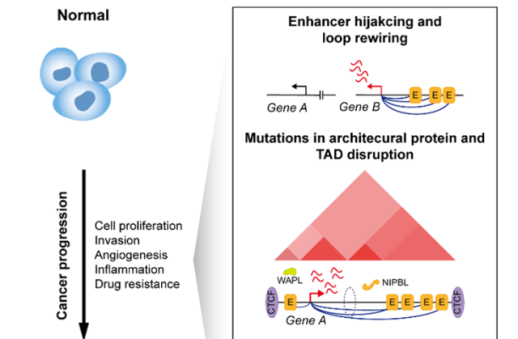 Researchers propose treating cancer by refolding genome SEOUL, September 07 (AJP) - How the genome is folded inside a cell can drive cancer without any change to the DNA sequence itself, and a review by two South Korean researchers argues that the folding should be treated as a target for cancer drugs. The review appeared in June in Experimental & Molecular Medicine, a journal published by the Korean Society for Biochemistry and Molecular Biology. Its authors, Jang Sun-young and Yoo Kyung-hyun, work in the Laboratory of Biomedical Genomics at Sookmyung Women's University. The paper reports no new experiments. It surveys what the field has established about the shape of the genome in tumors and proposes what might be done with that knowledge. The proposal rests partly on the same laboratory's earlier results. Working with liver cancer cells, the Sookmyung group reported in July last year in the journal Cancer Communications that an activated form of the protein STAT3 pulls distant stretches of DNA into new points of contact, switching on genes that drive invasion and the growth of blood vessels that feed a tumor. When STAT3 inhibitors were applied, the drug reached its target, but the rearranged structure stayed where it was. A tumor whose architecture outlasts the drug can keep the same genes running. That is one reason a treatment can work on paper and fail in a patient. Folding matters because there is so much DNA and so little room for it. A human cell carries roughly two meters of DNA inside a nucleus about six micrometers wide, less than a tenth the width of a human hair. The molecule is more than 300,000 times longer than the space that holds it, and the way it is packed determines which genes a cell can read. That packing follows a rough order. At the largest scale the genome sorts itself into two broad territories, one where active genes cluster together and one where silenced regions do. Within those territories the DNA is divided into neighborhoods, called topologically associating domains, that behave something like walled blocks. A gene inside a block can be reached by the control switches inside the same block and is largely shielded from switches next door. Inside the blocks, the strand loops back on itself to bring particular switches into contact with particular genes. Two proteins do much of the building. CCCTC-binding factor, usually written as CTCF, marks the boundaries, and a ring-shaped protein complex called cohesin draws the strand through itself to form the loops. When either is damaged or lost, walls come down. What follows is the part that makes the folding a cancer problem. A broken boundary lets a control switch from one neighborhood reach a gene in the next, a process researchers call enhancer hijacking. Some of these switches are unusually powerful stretches of DNA known as super-enhancers, and when one of them is redirected onto a gene that promotes cell growth, the gene can be driven hard without a single letter of its sequence changing. Seeing any of this required instruments that did not exist a generation ago. Hi-C, the technique that opened the field, chemically locks together pieces of DNA that are physically touching, then sequences them to build a map of which parts of the genome are in contact with which others. HiChIP narrows that map to contacts involving a particular protein. Single-cell methods apply the same logic one cell at a time, which matters in tumors, where no two cells are quite alike. Applied across tumor types, these tools have found spatial reorganization to be widespread rather than exceptional. The review's therapeutic argument turns on plasticity. Structure, unlike a mutation, is not fixed. Boundaries that have collapsed in a cancer cell might be restored, and the review points to CRISPR-based tools that can already move or rebuild specific contacts in the laboratory. A second proposed lever is phase separation, the tendency of certain proteins to gather into dense liquid droplets inside the nucleus, much as oil separates from water. Those droplets concentrate the machinery that switches genes on, and in some cancers they form where they should not. Dissolving or restraining them is one way the review suggests the architecture might be pushed back toward normal. Jang, who took her undergraduate degree at Sookmyung and then completed a master's and doctorate there under Yoo's supervision, said understanding three-dimensional genome structure "explains the mechanism of cancer in a new way and will be an important foundation for patient-tailored precision medicine and the development of next-generation cancer treatments." None of it has been tried as a treatment. Restoring a collapsed boundary and controlling phase separation are proposals, not results. CRISPR tools that edit genome architecture are laboratory instruments used on cells in a dish, and neither the review nor the work it draws on identifies a compound that could do the same thing in a person. No drug designed to target the shape of the genome rather than its sequence has entered a clinical trial. Journal/Source: Experimental & Molecular Medicine (IF=17.5, JCR 2.9%) Title: 3D chromatin architecture in cancer: mechanisms of dysregulation and emerging therapeutic strategies Link/DOI: https://pubmed.ncbi.nlm.nih.gov/42249089/ AJP Takeaways - Sookmyung Women's University researchers Jang Sun-young and Yoo Kyung-hyun argue in Experimental & Molecular Medicine that the folded shape of the genome inside a cell nucleus drives cancer independently of mutations in the DNA sequence, and that the folding itself should be treated as a drug target. - The same laboratory reported in Cancer Communications in July last year that in liver cancer cells, structural rearrangements caused by the protein STAT3 persisted after STAT3 inhibitors were applied, a possible mechanism for why a targeted drug can reach its target and still fail. - The June paper is a review rather than original research, and the strategies it proposes, restoring collapsed structural boundaries and controlling the formation of protein droplets in the nucleus, have not been tested as treatments in patients. - No drug designed to target genome architecture rather than genetic sequence has entered a clinical trial. 2026-09-07 14:10:46