


Latest by
-
 Kangjin County Unveils New Strawberry Propagation Technique to Boost Seedling Production Kangjin County has unveiled a new strawberry propagation technique called the 'cup propagation method' and is conducting field tests for distribution to local farmers. On September 22, the Kangjin Agricultural Technology Center introduced the cup propagation method to local strawberry seedling farmers and held a field meeting. The quality of seedlings is crucial for strawberry cultivation, directly impacting productivity. The propagation period typically lasts about six months, from March to the planting season in September, during which farmers face increased workload and risks of disease due to extreme weather conditions like heatwaves and monsoons. According to the Kangjin Agricultural Technology Center, strawberry propagation methods are mainly divided into two categories: the conventional method and the propagation method. Recently, more farmers have been adopting the propagation method to address labor shortages in rural areas. However, the traditional propagation method requires continuous moisture supply until roots are established, increasing the risk of fungal diseases during hot and humid periods. Prolonged rooting times can also affect seedling growth, the center explained. The cup propagation method developed by Kangjin County addresses these issues by utilizing specially designed propagation cups and trays. The key is to attach the propagation cup to young seedlings to secure roots before transferring them to a dedicated propagation tray for growth. Unlike the traditional method, this approach reduces the need for continuous watering during the rooting process, thereby lowering the risk of disease and stabilizing initial growth, according to the county. Eight local seedling farmers attended the field meeting, where they learned about the principles and application methods of the cup propagation method and assessed the growth status of strawberry seedlings currently in propagation. Farmers expressed interest in the technology, stating, "It seems to address the shortcomings of the existing propagation methods while enhancing their advantages," indicating potential for practical application. Kim Soon-ok, head of the Kangjin Agricultural Technology Center, stated, "This meeting was an opportunity to confirm the feasibility of applying the technology developed by the Agricultural Technology Center in actual farming settings. We will continue to focus on technology development and support to help strawberry farmers maintain stable operations." Kangjin County plans to assess any improvements needed during the field application of the cup propagation method and expand technology distribution to local strawberry seedling farms. Meanwhile, Kangjin County aims to enhance the foundation for producing high-quality strawberry seedlings through the dissemination of the cup propagation method, reducing farmers' reliance on external seedling purchases. The county plans to establish a stable self-sufficiency system for seedlings while also linking the sale of high-quality seedlings to develop strawberry propagation as a new source of income for farmers.* This article has been translated by AI. 2026-09-06 10:48:00
 -
President Lee Departs for State Visit to France to Enhance Cultural Cooperation President Lee Jae-myung departed for a five-day state visit to France on September 6. This trip follows an invitation from French President Emmanuel Macron, who asked Lee to co-chair the upcoming international film and video summit, the 'Lumière Summit,' during his visit to South Korea in April.According to the Blue House, President Lee took off for France aboard Air Force One on the morning of his departure. Kim Min-seok, the leader of the Democratic Party, was present at the farewell.Before leaving, President Lee posted on X (formerly Twitter), stating, "This state visit to France marks the 140th anniversary of diplomatic relations between Korea and France, following President Macron's invitation during his visit in April. I aim to make this a starting point for the next 140 years of trust and friendship built over the past 140 years between our two nations."He added, "As co-chairs of the 'Lumière Summit,' we will explore the future of the film and video industry and further expand cultural and content cooperation between our countries." He emphasized, "In France, the birthplace of cinema, we will write a new chapter in K-culture and the global film and video industry together."Meanwhile, in light of the recent devastating floods in Nepal, which have left nine South Koreans unaccounted for, President Lee expressed his condolences, saying, "It is truly heartbreaking to think of the families who have been anxiously waiting for news for over ten days since the disaster occurred. Our embassy and rapid response team will work closely with the Nepalese authorities to make every effort to locate the nine individuals."Foreign Minister Park Jin is also in Nepal, leading efforts to support the search for the missing individuals. He is scheduled to meet with Nepalese Foreign Minister Bishwa Bandhu Thapa. 2026-09-06 10:48:00
-
Hyundai Department Store Group to Advance Payments to Partners Ahead of Chuseok Hyundai Department Store Group is taking steps to alleviate the financial burden on its small and medium-sized partners ahead of the Chuseok holiday. On September 6, the group announced that it will advance payments totaling 273.8 billion won (approximately $230 million) to over 10,000 small and medium-sized partners by September 21, nine days earlier than the original payment date. The early payment will benefit more than 3,000 partners working with Hyundai Department Store, as well as small and medium-sized partners from 15 affiliates, including Hyundai GF Holdings, Hyundai Home Shopping, Hyundai Green Food, Hyundai Livart, Hanssem, Hyundai Duty Free, Zinus, and Hyundai Easywell. This marks an increase of about 1,000 partners compared to last year's Chuseok, which included around 9,000 partners. The payment amount has also increased. Last year, Hyundai Department Store Group advanced 210.7 billion won to over 9,000 partners before Chuseok. This year's amount is up by 63.1 billion won (about 30%). Compared to the 233.2 billion won advanced during the Lunar New Year earlier this year, this amount is approximately 40.6 billion won higher. During that period, payments were also made in advance to about 9,000 partners. In addition to early holiday payments, Hyundai Department Store Group operates programs to support the financial management of its partners. Since 2014, Hyundai Department Store has provided an annual interest-free loan program worth 6 billion won for small and medium-sized partners. Hyundai Home Shopping has also been offering financial support for product and technology development to small businesses since 2013. A representative from Hyundai Department Store Group stated, “We will continue to develop various support programs to grow together with our long-term partners, the small and medium-sized enterprises.” * This article has been translated by AI. 2026-09-06 10:44:00
-
2026 Yeosu World Island Expo Kicks Off with Two-Month Celebration The 2026 Yeosu World Island Expo officially opened on September 5 in Yeosu, South Jeolla Province, marking the start of a two-month event. The opening ceremony was held at the main venue in Yeosu, organized by the South Jeolla-Gwangju Integrated Special City, Yeosu City, and the 2026 Yeosu World Island Expo Organizing Committee, and will run until November 4. More than 5,000 attendees were present, including Min Hyung-bae, the mayor of South Jeolla-Gwangju Integrated Special City, Yoon Ho-jung, Minister of the Interior and Safety, Kim Kyung-soo, Special Advisor to the President, Seo Young-hak, the mayor of Yeosu, and Park Soo-kwan, the private committee chair, along with members of the National Assembly, island residents, and visitors. The ceremony began with performances by the Yeosu Municipal Traditional Music Group and the Yeosu Municipal Choir, followed by the opening declaration, welcoming speeches, congratulatory videos, and a musical performance. The opening theme performance, a musical titled 'The Last Mermaid,' was inspired by the 'Sinjiggi Legend' from Geomundo, showcasing stories held by the islands and the sea. The ceremony concluded with a symbolic opening event where distinguished guests and citizens raised a 'Sphere of Light,' followed by a drone show lighting up the night sky. Performances by singers Park Ji-hyun, Kiki, and Jeon Yu-jin also entertained the crowd. Notably, the opening declaration included participation from Seo Young-hak, the mayor of Yeosu, as well as children, youth, and foreign residents, emphasizing community involvement in the event. In his welcoming speech, Mayor Min Hyung-bae stated, "Each island embodies the ancient wisdom of humanity's relationship with nature. Through the 2026 Yeosu World Island Expo, which is the first of its kind to feature islands as the main focus, we look forward to new possibilities unfolding over the next two months in Yeosu's islands and sea." Earlier that morning, a ceremony was held in front of the theme island at the main venue, attended by about 100 people, including Hwang Gi-yeon, the Deputy Mayor of South Jeolla-Gwangju Integrated Special City, Seo Young-hak, Mayor of Yeosu, Park Soo-kwan, the private committee chair, members of the National Assembly, island residents, and visitors. The opening festivities began with a welcoming parade featuring the expo character 'Dasami,' followed by photo opportunities, a ribbon-cutting ceremony, and commemorative photos. The first ticket purchasers and volunteers also participated in the opening event. The expo, themed 'Connecting Islands, Sea, and Future,' will showcase various programs centered around the main venue in the Dolsan Jinmo area, as well as Geodo and Geumo Island, and the Yeosu World Expo site. At the main venue, exhibitions and cultural performances will explore the current value and future vision of islands, while Geodo and Geumo Island will offer programs such as camping, trekking, and local food experiences, allowing visitors to enjoy the islands firsthand. The South Jeolla-Gwangju Integrated Special City, Yeosu City, and the organizing committee plan to operate the expo as an event that goes beyond mere observation, allowing participants to directly experience the nature, culture, and lifestyle of the islands and explore their future value. The 2026 Yeosu World Island Expo will continue until November 4, featuring programs that introduce the ecological, cultural, and tourism resources of the islands, showcasing the diverse attractions of Yeosu's islands to both domestic and international visitors.* This article has been translated by AI. 2026-09-06 10:44:00
-
Iran Warns South Korea Against U.S. Military Operations in Hormuz An Iranian official has warned South Korea that participating in U.S. military operations in the Strait of Hormuz would be considered an act of aggression against Iran. In an interview with the Lebanese pro-Hezbollah media outlet Al-Mayadeen on September 4, the senior political and security official stated, "South Korea should not yield to U.S. pressure to cooperate in its illegal military operations." The unnamed official noted, "The situation is worsening as the U.S. pressures South Korea to assist in its illegal military operations," adding, "I hope South Korea does not sacrifice its own interests and reputation due to U.S. aggressive policies." He further urged, "South Korea is aware that the instability in the Strait of Hormuz is caused by the attacks from the U.S. and Israel, and it should not ignore this fact." He claimed, "As long as U.S. interventions that violate international law continue, restoring security in the region will be impossible." He emphasized that Iran will never tolerate any actions that conspire against the Iranian people and their rights. This warning comes amid increasing pressure from the Trump administration for South Korea to expand its contributions in the Strait of Hormuz. President Trump has demanded that key oil-importing countries, including South Korea and Japan, take direct action to ensure the safety of the Strait of Hormuz since the onset of military tensions with Iran. Last month, he publicly expressed dissatisfaction after South Korea rejected a request to support U.S. military operations against Iran. Recently, the South Korean government has been cautiously reviewing plans to deploy military assets to the Strait of Hormuz. A Blue House official stated during a briefing on September 4 that South Korea has been discussing practical contributions to ensure the free passage in the Strait of Hormuz with relevant countries, suggesting that South Korea might act within limits that do not significantly harm its readiness for the Korean Peninsula. The government is reportedly considering the deployment of maritime patrol aircraft and supply ships. However, any overseas deployment will require domestic legal procedures and parliamentary approval, indicating that further discussions on the actual deployment and its scale are expected. 2026-09-06 10:36:10
-
Top 10 Korean Brands Reach $272 Billion in Value, Samsung Leads The brand valuations of South Korea's leading companies have surged, driven by a boom in semiconductor demand due to the global expansion of the artificial intelligence (AI) industry. Samsung Electronics and SK Hynix, the top two semiconductor firms, have led this growth with strong performances, while key sectors such as defense and finance have also shown solid results, enhancing the status of domestic brands.According to the '2026 Top 150 Korean Brands' report released by the UK-based brand valuation consultancy Brand Finance, the combined valuation of the top 10 domestic brands reached $196.77 billion (approximately 272.3 trillion won).This figure represents an increase of about 6% compared to the previous year’s total for the top 10 brands. The overall combined value of all 150 brands surveyed also grew by 4.3% to $357 billion.In the rankings, Samsung Electronics maintained its dominant position at number one. The company's brand value was estimated at $97.415 billion (approximately 134.8 trillion won), an increase of 8.9% from the previous year. This growth is attributed to the recovery of the global IT market and the competitiveness of its AI appliances and smartphone lineup.SK Hynix exhibited the most significant growth, leading the high-bandwidth memory (HBM) market, a key component in AI infrastructure. The company's brand value surged by 15.2% to $15.76 billion, securing the third spot overall. This increase reflects substantial HBM supply contracts and a rebound in performance that positively impacted its brand reputation.In addition, companies in the mobility sector, such as Hyundai Motor and Kia, along with K-defense firms that have recently increased global orders, have also positioned themselves among the top brands, broadening the overall national brand landscape.Brand Finance noted, "South Korea is rapidly establishing itself as a central hub for AI and advanced technology ecosystems." The firm anticipates that major domestic corporations, equipped with advanced manufacturing capabilities and a robust export base, will continue to enhance their brand value in the future global market.* This article has been translated by AI. 2026-09-06 10:36:00
-
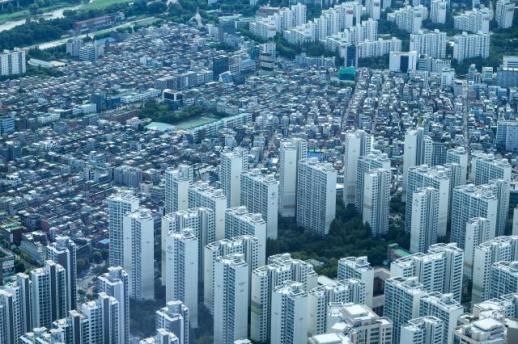 High-priced Seoul apartments face broader property tax reach by 2030 SEOUL, September 06 (AJP) - South Korea's comprehensive real estate holding tax could apply to high-priced apartments in nearly every Seoul district by 2030 if the recent pace of home price increases continues, according to a new simulation. The analysis, based on data from KB Kookmin Bank, examined 125 apartment complexes, selecting the five highest-priced complexes in each of Seoul's 25 districts. It was provided to Rep. Shin Dong-wook of the main opposition People Power Party. Under a scenario in which Seoul apartment prices continue rising by 11 percent a year, the same pace recorded between June 2025 and May 2026, apartments subject to the comprehensive real estate holding tax would be found in 22 of Seoul's 25 districts by 2030. Only Gangbuk, Geumcheon and Dobong districts would have none among the complexes examined. The number of taxable complexes in the sample would rise from 78 this year to 101 by 2030. The comprehensive real estate holding tax is imposed on owners of high-value real estate above a specified deduction threshold, in addition to the ordinary property tax charged by local governments. The simulation reflects the government's proposed tax changes from 2027, including a basic deduction of 1.4 billion won for owner-occupied homes and 1.2 billion won for properties where the owner does not live. The tax burden could also rise sharply if home prices maintain their current trajectory. For the 125 complexes studied, the combined tax burden for owners who do not live in their properties is estimated to increase from 58.9 billion won this year to 526.2 billion won in 2030, nearly nine times the current level. For owner-occupied homes, the figure is projected at 334.7 billion won. Even if annual home price growth slows to 5.5 percent, half the recent pace of 11 percent, the tax burden would still increase substantially. Under that scenario, 82 of the 125 complexes across 19 districts would be subject to the tax by 2030, while the combined tax bill for non-owner-occupied properties would reach 292.6 billion won, about five times this year's level. “If housing prices continue rising, the tax could increasingly affect ordinary homeowners across Seoul rather than only owners of the city's most expensive properties,” Shin said. AJP Takeaways - Seoul’s comprehensive real estate holding tax could reach 22 of 25 districts by 2030. - The number of taxable apartment complexes could rise from 78 this year to 101 by 2030. - Tax bills could climb sharply even if annual home price growth slows to 5.5 percent. 2026-09-06 10:28:35
 -
July Current Account Surplus Reaches Record High, Caution Advised On September 4, the Bank of Korea announced the international balance of payments statistics for July, revealing an exceptionally positive performance. The current account surplus for July reached $42.08 billion, marking the highest level for that month on record. This figure is the second largest monthly surplus, following June's $49.73 billion. The cumulative current account surplus from January to July has also reached $233.09 billion, surpassing last year's record annual surplus of $123.05 billion by 1.9 times. In the first half of the year, South Korea has become the second-largest surplus country in the world, following China, overtaking Germany, Japan, and Taiwan.However, it is crucial not to become overly enamored with these impressive numbers. Attention should be directed to the underlying factors. A significant portion of the current account surplus expansion is attributed to semiconductors. In July, merchandise exports surged to $100.45 billion, a 65.3% increase compared to the same month last year, with semiconductor exports skyrocketing by 176.3% and solid-state drive (SSD) exports soaring by 344.5%. While other categories, such as chemicals and petroleum products, also performed well, the overall export trend is ultimately driven by the semiconductor market.While strong semiconductor exports are beneficial for the economy, excessive reliance on this sector could solidify structural vulnerabilities. The Bank of Korea has raised its annual current account surplus forecast to $450 billion, but noted that achieving this target depends on the semiconductor market's performance. Conversely, if the semiconductor supercycle falters, the entire current account could be jeopardized. In fact, the growth rate of merchandise exports in July slowed to 65.3% from 84.5% the previous month, marking the largest decline since the onset of the COVID-19 pandemic.It is also important to note the increase in primary income surplus due to rising dividends from overseas subsidiaries of semiconductor companies. While the expansion of the current account surplus is undoubtedly positive, whether these profits are evenly distributed across the domestic economy remains a separate issue. If the macroeconomic performance is heavily influenced by the results of a few large corporations and the semiconductor industry, it is difficult to assert that the overall industrial structure has strengthened. Despite a record current account surplus, households may still feel economic strain, highlighting the growing disparity between statistical data and actual economic sentiment. The decline in consumer goods imports, particularly automobiles, after 15 months can also be seen as a reflection of domestic economic weakness.The government and monetary authorities must critically assess what is driving the surplus and the sustainability of that structure. No one can guarantee how long the semiconductor supercycle will last. There is a possibility that a slowdown in AI investment or a decline in global information technology demand could simultaneously impact exports and the current account.Industrial diversification must move beyond mere rhetoric. It is essential to cultivate competitive industries such as secondary batteries, biotechnology, shipbuilding, and defense as secondary and tertiary export powerhouses, while strengthening the industrial ecosystem to ensure that the benefits of export booms reach small and medium-sized enterprises. Efforts to diversify export markets and supply chains must also be accelerated to mitigate the impact of changes in U.S. trade policy, currency fluctuations, and supply chain restructuring.A record current account surplus is certainly welcome news, reducing the likelihood of a foreign exchange crisis and enhancing external soundness. However, the inherent risks have not disappeared. The economy's heavy reliance on semiconductors for exports remains a long-standing challenge. If the current boom is not leveraged as an opportunity for industrial restructuring, the risks may continue to accumulate behind the impressive numbers. 2026-09-06 10:28:20
-
[[IFA 2026]] Baek Seung-tae of LG Electronics: 'We Aim to Become a Global Top-Tier B2B Company with Robotics and AI Home Solutions' LG Electronics is accelerating its global market strategy by focusing on built-in and commercial laundry appliances in the B2B sector. The company plans to significantly expand its B2B operations by leveraging robotics components and AI home solutions as future growth drivers.Baek Seung-tae, Vice President of LG Electronics' Home Solutions Division, stated on September 5 during a press conference at IFA 2026 in Berlin, Germany, "We will expand our proven business competitiveness in North America to global markets, including Europe, and develop robotics actuators and AI home solutions as new growth engines to create specialized B2B solutions across residential, commercial, and industrial sectors."According to LG Electronics, its built-in and commercial laundry appliance business for construction companies has recorded an average annual revenue growth rate of over 40% in the past three years, emerging as a key driver for B2B operations. Notably, in the North American builder market, the growth rate has averaged around 45% over the same period.Building on its success in North America, LG Electronics is also ramping up its efforts in the European market. The company plans to double its specialized sales workforce for builders in Europe and increase the number of display stores for its ultra-premium brand 'SKS' to over 3,000 across the continent.The commercial laundry appliance sector, which has seen an average annual growth of 41% in North America, is also set to introduce large-capacity products in Europe and expand its supply chain to global South regions.For future growth, LG Electronics is focusing on developing robotics actuators and AI home solutions. The company aims to complete the mass production system for its robotics actuator brand 'LG Axiom' within this year and will actively pursue contracts with global manufacturing and logistics companies.Baek emphasized, "We are in discussions with global clients across various sectors, including robotics manufacturers, logistics, and traditional manufacturing, regarding product supply. Through continuous investment, we aim to become a top-tier global actuator supplier."In the AI home sector, LG plans to enhance its B2B competitiveness by expanding region-specific models, including customized solutions for multi-family housing in South Korea, the 'LG ThinQ Pro' building management solution in North America, and an energy management system based on the smart home platform 'Home' in Europe.Baek concluded, "We will leverage the technology and customer experience data accumulated in our home appliance sector to accelerate growth in the B2B space, encompassing residential, commercial, and industrial areas."* This article has been translated by AI. 2026-09-06 10:28:00
-
U.S. Urges South Korea to Play Active Role in Hormuz Strait Security The United States is urging South Korea to take a more active role in ensuring the stability of the Hormuz Strait. A senior U.S. official highlighted that South Korea is a major importer of Middle Eastern oil, stating, "South Korea is waiting to deploy resources in the region." This marks an expansion of U.S. demands for security contributions to include the Hormuz Strait.The South Korean government is understandably concerned. Iran has warned that it would consider any actions by South Korea against its interests in the Hormuz Strait as direct military involvement. In this context, it is crucial not to hastily conclude based solely on the pressures from either the U.S. or Iran.However, the issue of the Hormuz Strait cannot be viewed merely as a U.S. demand. The stability of this strait is directly linked to South Korea's energy security. As a key importer of Middle Eastern crude oil, South Korea relies on the Hormuz Strait as a vital shipping route. Any disruption in the safety of the strait could impact oil transportation, shipping costs, and international oil prices, which would, in turn, burden domestic prices and industries. Thus, the stability of the Hormuz Strait is not only a U.S. concern but also a matter of economic and energy security for South Korea.In this regard, South Korea should consider its role as a responsible member of the international community. It is not advisable to leave the burden of ensuring the strait's safety solely to other countries, especially when South Korea is a direct stakeholder. The Korea-U.S. alliance cannot be maintained solely on the basis of receiving security; it is essential to contribute where national interests and international responsibilities intersect.However, any participation must come with clear conditions.First, the objective should be limited to ensuring "safe navigation in the Hormuz Strait and the protection of our vessels and shipping routes." Participation in operations aimed at attacking or blockading specific countries should be avoided. Second, non-combat missions should be prioritized whenever possible. The focus should be on options that minimize direct engagement, such as information sharing, surveillance, vessel protection, transportation support, and medical assistance. Third, the operational area, command structure, and rules of engagement must be clearly defined in advance. Troops or military assets should not be deployed without clarity on where and what missions will be conducted, and under what circumstances self-defense will be exercised. Fourth, there must be concrete measures to ensure the safety of personnel. Given Iran's warning that it could interpret South Korea's involvement as participation in military aggression, the potential for accidental conflict and response strategies must be carefully considered. Fifth, there should be no gaps in South Korea's defense posture on the Korean Peninsula. Even if forces are deployed to the Middle East, it should not hinder the ability to respond to military threats from North Korea. Sixth, the government must adequately explain the purpose, scope, and anticipated risks of participation to the public and the National Assembly. Military contributions are not just diplomatic signals; they involve the lives of service members and national security. Sufficient explanation and procedural legitimacy are essential.A foreign policy centered on national interests does not mean evading responsibility or unconditionally accepting the demands of allies. It is essential to share responsibilities where necessary while clearly defining the objectives and limits of participation.The Hormuz Strait is a crucial energy transportation route for the South Korean economy. The government should consider necessary contributions not because of U.S. demands, but in the context of protecting our energy security. However, the conditions of prioritizing non-combat missions, clarifying operational scope, ensuring personnel safety, and maintaining readiness on the Korean Peninsula must remain steadfast. Responsible participation without becoming embroiled in unnecessary military conflicts is the pragmatic choice for safeguarding national interests.* This article has been translated by AI. 2026-09-06 10:20:20