


Latest by
-
 Korea's Fair Trade Commission Approves TPG's Acquisition of Lotte Rental Shares The Fair Trade Commission has approved the acquisition of shares in Lotte Rental by the U.S.-based private equity firm Texas Pacific Group (TPG).The commission announced on September 1 that it has granted approval for the acquisition by Lexicon Korea Holdings, a company affiliated with TPG.TPG has entered the South Korean private equity market and the infant nutrition sector, with its local subsidiary HB F&B operating in the latter. Lotte Rental primarily focuses on the vehicle rental market in South Korea.In July, Lotte signed a contract with TPG for the sale of management rights in Lotte Rental.The sale involves the complete transfer of a 61.2% stake in Lotte Rental held by Hotel Lotte and Busan Lotte Hotel, with Hotel Lotte owning 38.1% and Busan Lotte Hotel holding 23.0%. The transaction is valued at 5,900 won per share, totaling 1.31 trillion won.The Fair Trade Commission determined that the merger would not raise concerns about market competition, considering the business areas of TPG and Lotte Rental. The commission concluded that there is no complementarity or substitutability between the two companies' operations, categorizing the share acquisition as a 'mixed merger.'A mixed merger refers to a combination of companies that are not in direct competition or do not have supplier-buyer relationships.* This article has been translated by AI. 2026-09-01 14:32:00
 -
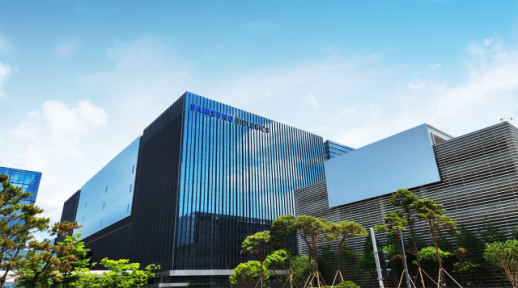 Samsung Biologics, union to resume mediation SEOUL, September 01 (AJP) - Samsung Biologics and its labor union will resume mediation as early as Sept. 8 in a fresh attempt to settle a wage dispute that prompted the first strike in the South Korean contract drug manufacturer's history. The union said Tuesday it expected the talks to "pick up speed" once mediation opens, as the company has agreed to submit its own proposal after the process begins. The Incheon Regional Labor Relations Commission has agreed to bring the schedule forward, the union said, following a meeting a day earlier between management and the Jungbu regional employment and labor office. The date remains provisional while the panel's members are confirmed. Under South Korean labor law, post-mediation lets a labor board step back in after a formal mediation has ended, provided both sides consent. The two sides applied for the procedure on Aug. 14, about a month before the talks are due to begin. The dispute centers on pay increases and changes to the company's personnel system. After mediation collapsed on March 23, the union staged a partial strike in late April and a full walkout from May 1 to 5. The union has since waged a work-to-rule campaign, refusing overtime and holiday shifts, and has kept it up in the months since. AJP Takeaways • Samsung Biologics and its labor union will resume mediation on Sept. 8, 2026, seeking to resolve a wage and personnel dispute at the South Korean contract drug manufacturer. • The two sides applied for the renewed mediation on Aug. 14, 2026, after an earlier round collapsed on March 23 and led to the company's first-ever strike, a full walkout from May 1 to 5. • The union has maintained a work-to-rule campaign refusing overtime and holiday work, while the company has agreed to submit a proposal once the Sept. 8 mediation begins. 2026-09-01 14:28:55
 -
NH Nonghyup Financial Launches 'NH Financial Hub' in Jeonbuk NH Nonghyup Financial Group has established a financial hub in Jeonbuk Province, consolidating the financial capabilities of its affiliates.On September 1, NH Nonghyup Financial held an opening ceremony for the 'NH Financial Hub' at the NH Nonghyup Jeonbuk Headquarters in Jeonju. The event was attended by Lee Won-taek, Governor of Jeonbuk Province; Kim Sung-joo, Chairman of the National Pension Service; Yang O-bong, President of Jeonbuk National University; Jo Ji-hoon, Mayor of Jeonju; Han Jong-kwan, Chairman of the Jeonbuk Credit Guarantee Foundation; Lee Chan-woo, Chairman of NH Nonghyup Financial; and Gil Jeong-seop, CEO of NH-Amundi Asset Management.The NH Financial Hub will house various NH Nonghyup affiliates, including Nonghyup Bank, insurance, securities, asset management, capital, and venture investment companies. Nonghyup Bank will focus on corporate loans and investments and consulting for agricultural and food companies, while the insurance affiliate will support corporate insurance. NH Investment & Securities will handle corporate finance, and NH Venture Investment will be responsible for discovering and investing in innovative companies. NH-Amundi Asset Management will open an office in Jeonju to strengthen collaboration with the National Pension Service.Additionally, to mark the launch of the NH Financial Hub, Nonghyup Bank plans to make special contributions of 1.7 billion won to the Jeonbuk Credit Guarantee Foundation and 1 billion won to the Technology Guarantee Fund to support small and medium-sized enterprises and small business owners in the region.Lee Chan-woo, Chairman of NH Nonghyup Financial, stated, "The NH Financial Hub will serve as a comprehensive infrastructure providing financial solutions necessary for the future strategic industries of Jeonbuk. We will do our best to be a partner for strategic industries and a supporter of the dreams of local youth." 2026-09-01 14:28:00
-
62% of Foreign Tourists from Daegu Head to Busan, Study Suggests Redefining Airport Roles To alleviate the concentration of foreign tourists in the capital region and enhance local tourism, a study suggests leveraging Daegu Airport as a "dual gateway" for the Gyeongsang region. This approach aims to develop a regional inbound tourism hub linked with nearby areas, reflecting the actual movement patterns of foreign tourists rather than being constrained by administrative boundaries.According to a brief published by Yanolja Research on September 1, Daegu Airport's international arrival passenger numbers and the proportion of foreign visitors have not yet fully recovered to pre-COVID-19 levels. In 2019, monthly international arrivals exceeded 100,000, but since 2023, the numbers have generally fallen short of that mark. The share of foreign visitors, which once surpassed 40% during certain periods, has recently hovered around 20%, indicating a significant reliance on outbound demand. Additionally, as of 2025-2026, about 16 international routes are primarily operated by low-cost carriers (LCCs), focusing on domestic short-term leisure travel.However, an analysis of actual movement data reveals that Daegu Airport's potential extends beyond the Daegu and Gyeongbuk regions. In 2025, among foreign tourists traveling from Daegu to major external cities, 62.4% headed to Busan, marking it as the top destination. This was followed by Gyeongju (15.1%), Ulsan (13.0%), Pohang (6.6%), and Andong (2.9%).Yanolja Research noted, "More than 60% of foreigners traveling from Daegu are strongly connected to Busan, indicating a 'hub-like' movement structure. In contrast, foreign visitors to Busan tend to disperse to various regions, such as Gyeongju (20.1%), Ulsan (19.7%), Daegu (17.6%), and Changwon (16.9%). This suggests that Daegu and Busan are not separate destinations but are closely linked within a continuous travel itinerary."The study also highlighted that the capacity limitations of Gimhae Airport could lead to a broader role for Daegu Airport. By 2025, Gimhae Airport is expected to handle approximately 10.44 million international passengers, reaching saturation and making it difficult to expand new routes. Furthermore, with the opening of the new Gadeokdo Airport postponed to 2035, Daegu Airport, located about an hour from Busan via KTX, is viewed as the only viable alternative gateway to meet international demand in the Gyeongsang region.Yanolja Research compared this situation to the Kansai region in Japan, which effectively distributes incoming travelers to major tourist sites through two gateways: Osaka Kansai Airport and Kobe Airport. Similarly, the Gyeongsang region should establish a functional division of roles, with Gimhae Airport serving as a maritime tourism gateway and Daegu Airport as an inland tourism gateway.To successfully implement the "Gyeongsang Dual Gateway Strategy," Yanolja Research proposed various policy approaches for central government, local governments, and the industry. The central government is encouraged to redefine airport hinterlands based on actual movement patterns of foreigners rather than administrative boundaries. When promoting policies to revitalize local airports, the benefits of Daegu Airport should be reflected as extending beyond Daegu and Gyeongbuk to the entire Gyeongsang region, utilizing Daegu Airport as a complementary gateway during the supply constraints before the opening of Gadeokdo Airport.At the local government level, the development of regional tourism products and joint marketing based on actual travel routes from "Daegu to Busan, Gyeongju, and Ulsan" was proposed as a solution. In particular, there is a need for Daegu to evolve from a simple transit point to a destination with enhanced stay-oriented content.For the industry, the study suggested redesigning products and networks targeting ultra-regional travel routes. Airlines and travel platforms could explore specialized routes in inbound markets with high potential, such as Taiwan and China, and target ultra-regional travel itineraries with multi-city products like "Daegu IN, Busan OUT."* This article has been translated by AI. 2026-09-01 14:28:00
-
Wife Killed by Husband After Reporting Domestic Violence Five Times A woman in her 30s, who had reported domestic violence to the police five times and received a restraining order along with a smartwatch for protection, was killed by her husband during their divorce proceedings. Authorities are investigating the possibility that the victim's new address was exposed to her husband during the exchange of legal documents.On September 1, the Gyeonggi Gwangju Police arrested a man in his 30s, identified as A, on suspicion of murder. A is accused of stabbing his estranged wife, B, at 7:17 a.m. outside a multi-family residence in Gwangju, Gyeonggi Province. After fleeing the scene, A was apprehended about four hours and 20 minutes later at a motel in Suwon.B had reported her husband's domestic violence to the police five times since March of last year. A was referred to the prosecution in May on domestic violence charges, and B subsequently lived separately in another residence in Gwangju. She began divorce proceedings last month. The court issued a temporary protection order isolating A from B's residence and prohibiting him from approaching her within 100 meters or contacting her through electronic means.During the divorce process, B expressed concerns that her new address might have been disclosed to her husband. She requested a consultation with the police, stating, "I think my address was exposed to my husband because I did not request confidentiality during the delivery of the legal documents," and was subsequently provided with a smartwatch for safety.At the time of the incident, B used the smartwatch to alert the police, but she was unable to save her life. Authorities are investigating the possibility that A learned of B's new address through court documents.This incident is not the first case where victims of domestic violence have been exposed to severe crimes while attempting to separate or divorce. In June of last year, a man in his 60s killed his estranged wife just a week after a court-issued restraining order expired. The man had previously threatened his wife with a weapon, resulting in a 100-meter no-contact order that was extended twice for a total of six months. The victim had planned to visit the police station on the day of the incident to inquire about receiving a smartwatch and installing CCTV but was killed before she could do so.A similar case occurred in Seosan, South Chungcheong Province, in 2022, where a woman in her 40s, who had reported domestic violence four times, was killed by her husband, who was under a restraining order. Although she had been provided with a smartwatch, her husband violated the order and committed the crime. The prosecution later charged him with retaliatory murder.Government research has confirmed that the period surrounding separation and divorce is a high-risk time for violence in intimate relationships. According to a domestic violence survey released by the Ministry of Gender Equality and Family in July, 50% of individuals who have experienced divorce, separation, or the end of cohabitation reported experiencing one or more forms of physical, sexual, economic, or emotional violence from their spouse or partner. The rate for women was 59.6%, significantly higher than the 14.4% lifetime victimization rate from current spouses or partners.Stalking victimization rates around separation were also reported, with 29.1% of women and 18.9% of men experiencing such incidents. Notably, the rate of violence against women during separation increased from 54.5% in a 2022 survey to 59.6%.Measures to prevent the exposure of crime victims' addresses to perpetrators during legal proceedings are already in place. A revised civil procedure law, effective July 12 of last year, allows courts to protect personal information, including addresses, from being disclosed to the opposing party if there is a risk to the life or physical safety of the parties involved. This protection extends to personal information such as social security numbers, phone numbers, and email addresses.The Family Litigation Act also applies civil procedure laws to family law cases unless otherwise specified, allowing for similar protective measures in divorce proceedings.The issue of address exposure has been raised even before the implementation of these measures. The National Assembly Legislative Research Service highlighted in a June report on strengthening the protection of crime victims' personal information in civil litigation that there may still be gaps where victims' addresses could be exposed during legal proceedings.* This article has been translated by AI. 2026-09-01 14:28:00
-
Ruling Party Appoints New Committee Leaders Following Ministerial Nominations The Democratic Party announced that Kim Seung-won and Lee So-young have been nominated as candidates for the Minister of Justice and the Minister of SMEs and Startups, respectively. In light of this, Kim Ui-gyeom and Choi Gi-sang have been appointed as new leaders of the National Assembly's Judiciary Committee and the Climate, Energy, Environment, and Labor Committee.Lee Joo-hee, the party's floor spokesperson, spoke to reporters after a party meeting on the afternoon of September 1, stating that the new leaders were selected to replace Kim Seung-won and Lee So-young, who have been serving as committee leaders while being nominated for ministerial positions."Kim Ui-gyeom will take over as the Judiciary Committee leader, and Choi Gi-sang will lead the Climate, Energy, Environment, and Labor Committee," Lee said, adding that the process for their appointment will be carried out promptly.Lee also noted that following President Lee Jae-myung's announcement of the new cabinet appointments on August 30, there are plans to hold confirmation hearings soon to minimize any gaps in governance."Once the request for confirmation hearings is submitted to the National Assembly, they must be processed within 20 days. We will focus on handling them within that timeframe," Lee emphasized, particularly mentioning that the heads of the Serious Crimes Investigation Agency and the Public Prosecution Service will begin their terms on October 2, necessitating swift confirmation hearings.Additionally, Lee announced that a plenary session is scheduled for September 3. "We will hold a plenary session this Thursday to address agenda items," she said, although she noted that it remains uncertain which items will be addressed, as the status of the National Assembly's standing committees will need to be monitored closely.* This article has been translated by AI. 2026-09-01 14:24:00
-
Government Modifies Property Tax Reforms, Retains Key Provisions The government has reversed its plan to reduce the basic exemption for non-resident homeowners from 1.2 billion won to 900 million won. It also decided to maintain the current cap on property tax burdens at 150% of the previous year's property tax, instead of increasing it to 200% as initially proposed.On September 1, during a Cabinet meeting, the government finalized the "2026 Tax Reform Plan," which reflects feedback received during discussions and legislative announcements following the initial proposal on August 3.The basic exemption for homeowners will vary based on residency status. For those living in their homes, the exemption will increase from 1.2 billion won to 1.4 billion won, while non-residents will retain the current exemption of 1.2 billion won. The original proposal aimed to lower the exemption for non-resident homeowners to 900 million won.For couples owning a single home, each will maintain a basic exemption of 900 million won if they reside in the property. For non-resident co-owners, the exemption will be adjusted to 600 million won each.The cap on property tax burdens for both housing and land will remain at the current 150%. This cap prevents the total property tax from exceeding a certain percentage of the previous year's combined property and comprehensive real estate taxes.The government initially intended to raise this cap to 200%, allowing property taxes to double compared to the previous year. However, concerns about a sudden increase in taxpayer burdens during the legislative announcement process led to the withdrawal of this plan.Additionally, the proposed changes to the contract duration and contribution limits for general ISAs have been reverted. The plan to limit the initial contract period to three years and the total contract period to five years has been scrapped, maintaining the current minimum contract period of three years without a maximum limit.The proposal to prevent the carryover of unused contributions from the annual limit of 20 million won for ISAs has also been canceled. The plan to set an expiration date for the current system at the end of 2029 has been withdrawn, allowing the existing system to continue.The newly introduced productive finance ISA will expand support. The minimum contract period will remain at three years, but there will be no maximum duration, and unused annual contribution limits will be allowed to carry over. No expiration date will be set for this program.The contribution limit for the productive finance ISA is set at 20 million won annually, with a total limit of 200 million won. Participants in the youth version of the productive finance ISA can receive a 10% income deduction on contributions if their income is below a certain threshold. Overlapping participation with youth savings accounts will also be permitted.The government plans to improve the evaluation methods for listed stocks to prevent so-called "stock price suppression" during inheritance and gift processes. After discussions with the ruling party and additional feedback, a reasonable improvement plan will be established during the regular National Assembly review process.The withholding tax rate for personal service providers will be reduced from 3% to 2%. However, insurance sales agents will maintain the current 3% rate, regardless of whether they are subject to simplified accounting.The scope of zero-rated VAT for urban railway construction services will be expanded. For private projects, the previous regulations will apply to projects for which feasibility studies or proposals are completed by the end of this year. For public projects, the existing rules will apply to those with basic plans announced by the end of this year and project plans or implementation plans approved by the end of next year.The government will submit 11 tax law amendment proposals, including the National Tax Basic Law, Income Tax Law, Corporate Tax Law, and Comprehensive Real Estate Tax Law, to the National Assembly by September 3. These will undergo review in the regular National Assembly's standing committees and plenary sessions before final approval. 2026-09-01 14:24:00
-
 Late monsoon pushes online shopping to record high in July SEOUL, September 1 (AJP) - Online shopping in South Korea reached a record high in July, largely due to increased spending on food delivery, according to data released by Statistics Korea on Tuesday. A record 25.01 trillion won (US$18.24 billion) worth of online transactions were made in July, up 7.3 percent from a year earlier and the highest since relevant data were first compiled in 2017. The ministry attributed the increase to more spending on food delivery, groceries and automobile-related purchases. Food services accounted for the largest portion of online shopping at 15.5 percent, as this year's monsoon season, which arrived later than usual and lasted until mid-July, appeared to lead more people to opt to order food instead of eating out. Groceries made up 13.9 percent of online shopping, followed by travel and transportation services at 12.6 percent, while purchases of clothing fell 6.1 percent from a year earlier. Mobile shopping totaled 19.57 trillion won, up 3.2 percent from the previous month and 6.4 percent from a year earlier, accounting for 78 percent of all online shopping, down from 78.6 percent a year earlier. AJP Takeaways • Online shopping in Korea reached a record 25.01 trillion won in July, up 7.3 percent from a year earlier. • Food delivery drove much of the growth, with spending on food services accounting for the largest portion of online shopping at 15.5 percent. • Groceries and travel also made up major portions of online purchases, while clothing purchases fell 6.1 percent from a year earlier. 2026-09-01 14:20:45
 -
[[2027 Budget]] Intellectual Property Office Proposes Record $610 Million Budget Focused on IP Monetization and Technology Protection 지식재산처가 2027년도 예산안으로 올해보다 12.7% 늘어난 7106억원을 편성했다. 지식재산(IP)의 수익화와 핵심기술 보호, 지역 IP 생태계 구축, 인공지능(AI) 기반 지식재산 행정 전환에 투자를 집중한다는 계획이다. 지식재산처는 2027년도 예산안을 올해 6308억원보다 798억원 증가한 7106억원으로 편성했다고 밝혔다. 지식재산처 출범 이후 처음으로 편성한 예산안으로 증가 규모는 역대 최대다. 특히 지식재산 창출·활용·보호 등에 직접 투입되는 주요 사업비는 올해 4146억원에서 내년 4731억원으로 584억원(14.1%) 확대했다. 지식재산처는 내년도 예산을 △아이디어·지식재산 수익화 △기술·지식재산 보호 강화 △지방 주도형 IP 생태계 조성 △지식재산 AI 대전환(AX) 등 4대 분야에 중점 투입할 계획이다. 먼저 우수 특허를 실질적인 수익으로 연결하기 위한 지원을 강화한다. 국내 우수 특허가 해외 라이선스 등을 통해 로열티 수익을 창출할 수 있도록 '글로벌 기술패권 원천특허 확보지원' 사업을 신설하고 130억원을 투입한다. 혁신기업의 자금 조달을 뒷받침하기 위한 모태조합 출자도 재개한다. 내년도 예산안에 200억원을 신규 편성해 민간 투자를 유도하고, 해외수익화 펀드를 확대 조성해 지식재산 수익화를 지원할 방침이다. 중소기업의 우수기술을 혁신제품으로 연결하기 위한 사업화 지원도 확대한다. 'IP 기반 기술사업화 전략지원' 예산을 올해 100억원에서 내년 251억원으로 151억원 늘린다. 지식재산 거래 지원 예산도 47억원에서 64억원으로 확대하고, IP 거래전문관은 22명에서 36명으로 증원한다. 대학과 공공연구기관이 보유한 기술의 민간 활용도 촉진한다. 기술사업화 조직(TLO)을 대상으로 IP 거래·사업화 컨설팅을 제공하는 'TLO 빌드업 프로젝트'를 신설하고 27억원을 투입한다. 이와 함께 국가 핵심기술과 기업의 지식재산 보호를 위한 투자도 강화한다. 반도체와 조선 등 주요 산업별로 보호가 필요한 핵심 분야를 발굴하고 기업의 기술관리 체계를 진단해 맞춤형 보호전략을 제공하는 '초격차 경쟁력 강화 기술유출 차단체계 구축' 사업에 123억원을 신규 편성했다. 지능화되는 위조상품 유통과 산업스파이 범죄에 대응하기 위한 지식재산 보호 R&D도 처음 신설한다. '지식재산 보호기술 개발'에 25억원을 투입하고, K-브랜드 위조상품의 해외 유통에 대응하기 위해 인터폴 등과 국제공조 수사도 추진한다. 지역의 향토자산과 특화산업을 지식재산으로 전환해 청년창업과 기업 성장을 지원하는 사업도 본격화한다. 아울러 'IP 기반 기업성장 지원' 사업에 173억원을 신규 편성해 지역 향토자산을 활용한 사업 아이템 발굴과 브랜드·디자인 개발을 지원한다. 지역 특화산업을 기반으로 창업에 나서는 청년에게는 IP 관점의 사업화 전략과 제품 개발 등을 종합 지원한다. 청년 창업자에게 출원 비용 등 필요한 지식재산 서비스를 적시에 제공하는 '청년 IP 바우처' 사업도 추진한다. 중부권 KAIST와 동남권 POSTECH에서 운영해온 차세대 영재기업인 교육은 서남권까지 확대한다. 관련 예산은 올해 14억원에서 내년 21억원으로 늘어난다. 지식재산 행정의 AI 전환에도 속도를 낸다. 신속하고 정확한 특허 심사·심판 서비스를 구현하기 위해 AI를 활용한 차세대 특허검색 시스템을 개발하고 43억원을 신규 투입한다. 또 일반 국민의 지식재산 정보 접근성을 높이기 위한 AI 서비스도 확대한다. 지식재산정보 검색서비스(KIPRIS)에 AI 기반 요약·비교 기능을 제공하는 'KIPRIS Easy 특허 AI 에이전트' 운영에 17억원을 편성한다. 지식재산 분쟁정보를 검색·가공하는 특화 AI 에이전트 개발에도 21억원을 신규 투입한다. 김용선 지식재산처장은 "이번 예산안은 지식재산처 출범 후 편성한 첫 예산안으로 지식재산처의 새로운 비전과 정책을 담았다"며 "정부 R&D로부터 창출된 해외특허의 수익화를 적극 뒷받침하고 해외 기술유출 위협으로부터 국가 첨단전략산업을 철저히 보호하는 데 집중 투자할 예정"이라고 밝혔다. 이어 "아이디어와 지식재산이 성장자산이 되는 혁신생태계를 조성해 대체불가 대한민국의 경제 대도약을 견인하겠다"고 덧붙였다.* This article has been translated by AI. 2026-09-01 14:20:00
-
 Samsung unveils "CUBE" strategy for HBM traction SEOUL, September 01 (AJP) -Samsung Electronics is betting on denser, faster and cooler memory to strengthen its position in the HBM race as artificial intelligence drives a fundamental shift in the global memory market. Its new “CUBE” strategy is designed to pack more memory into the same space while shortening the physical distance data must travel — a combination Samsung says can increase bandwidth while reducing power consumption and heat. The strategy comes as Samsung seeks to challenge SK hynix's commanding lead in high-bandwidth memory, the premium stacked memory used alongside AI accelerators. SK hynix controlled 58 percent of the global HBM market by revenue in the first quarter of 2026, compared with 21 percent for Samsung and 21 percent for Micron, according to Counterpoint Research. Choi Jang-seok, vice president and head of memory product planning at Samsung Electronics' Device Solutions division, laid out the strategy Tuesday at the Memory Executive Summit in Taipei, held ahead of SEMICON Taiwan 2026. CUBE stands for Capacity, Utilization, Bandwidth and Efficiency, four areas Samsung sees as increasingly interconnected as AI systems require larger amounts of memory to feed data to increasingly powerful processors. At its core, the strategy is about building upward and shortening the journey data has to make. Under Capacity, Samsung wants to increase memory vertically rather than consuming more circuit-board space. “Memory capacity will no longer be constrained by PCB area,” Choi said, saying vertical expansion would allow more memory without enlarging the board footprint. Utilization addresses what happens inside those taller memory structures. Samsung is optimizing the placement of logic and memory so data does not have to travel unnecessarily far before it is processed. “3D is not simply about stacking,” Choi said. “What matters is how each floor is utilized.” By drastically shortening the distance between dies, Samsung aims to create what Choi called a “vertical highway” that allows much larger volumes of data to move through the memory stack at higher speed. The fourth component, Efficiency, tackles the cost of moving that data. “The ultimate goal of 3D is to reduce the energy required to move a single bit of data,” Choi said. Reducing that distance matters increasingly in HBM because adding more layers and moving more data generates both greater power consumption and heat. Samsung's strategy is therefore not simply to stack more memory, but to make the entire vertical structure more efficient. HBM5 raises the stakes Samsung is applying the same approach to its next generations of HBM as it seeks to improve its competitive position in AI memory. The company is developing HBM5 with a target of delivering twice the performance of HBM4E, while improving performance per watt by 20 percent and cutting thermal resistance by 20 percent. Further out, Samsung is developing zHBM, targeting eight times HBM4E's performance, three times its performance per watt and a 75 percent to 90 percent reduction in thermal resistance. Samsung is also working on zNAND-O, a product intended to bridge some of the traditional gap between DRAM's speed and NAND's capacity. The company says zNAND-O will offer 10 times the bit density of DRAM while delivering seven times the read bandwidth and power efficiency of conventional NAND. Sampling is planned for 2028. The push comes as AI changes the economics of the memory industry. Samsung still commands greater scale across the broader memory market. Counterpoint Research put its share of global DRAM revenue at 39 percent in the second quarter of 2026, ahead of SK hynix at 26 percent and Micron at 25 percent. But HBM presents a different competitive picture. SK hynix's early lead in supplying advanced HBM for AI accelerators has given it a much larger share of the premium segment. Samsung's challenge is to leverage its broader DRAM technology and massive manufacturing footprint to capture more of a market becoming increasingly central to memory makers' growth and profitability. SEMICON Taiwan, organized by semiconductor industry association SEMI, runs from Sept. 2 through Sept. 4. The Memory Executive Summit was held Tuesday ahead of the main exhibition. AJP Takeaways Samsung Electronics unveiled its CUBE strategy — Capacity, Utilization, Bandwidth and Efficiency — to make next-generation HBM denser, faster and more power-efficient. Samsung is developing HBM5 and zHBM with major improvements in performance, power efficiency and thermal resistance as AI accelerators demand increasingly advanced memory. Samsung's strategy centers on vertical scaling and shorter data paths, rather than simply adding more memory layers, to tackle the bandwidth, power and heat constraints of AI computing. 2026-09-01 14:14:41