

Journalist

&
""
Latest by
Life Insurance Companies Adapt to Changing Market with Enhanced Features

As new life insurance contracts decline, companies are enhancing features related to retirement funds and mid-term withdrawals to differentiate their products. This shift aims to increase the utilization of funds during the policyholder's lifetime, moving beyond the traditional focus on death benefits.According to data from the Financial Supervisory Service's financial statistics information system, the cumulative amount of new life insurance contracts for whole life insurance in South Korea during the first half of this year was 27.5232 trillion won, a decrease of 3.23% compared to the same period last year.The annual amount of new contracts is also on the decline. The amount for 2023 was 65.462 trillion won, which dropped to 58.2417 trillion won in 2024 and 57.8028 trillion won last year.Whole life insurance is primarily purchased to ensure the economic stability of families left behind after the policyholder's death. However, due to demographic changes from low birth rates and an aging population, as well as the burden of premiums, it has become increasingly difficult to secure new demand solely with products focused on death benefits.Insurance companies find it challenging to abandon the whole life insurance market. Following the introduction of the new International Financial Reporting Standards (IFRS 17), securing the insurance contract margin (CSM), which reflects future profits, has become crucial, making the profitability of protection insurance a key management indicator.A financial industry official stated, "While demand for whole life insurance is decreasing among younger people, the enrollment rate remains relatively high among those aged 40 and older, regardless of gender."In response, insurance companies are diversifying product structures to maintain death benefit features while allowing policyholders to utilize funds during their lifetime. Common approaches include providing retirement funds after retirement or allowing mid-term withdrawals of paid premiums.NH Nonghyup Life launched the 'Two-Step NH Whole Life Insurance' this month. This product features a two-tier premium payment period, reducing the second-tier premium to 20% of the first-tier premium, allowing for adjustments in premium burden based on the payment stage.Additionally, it includes a rider that provides 1 million won monthly for five years as happiness funds upon transitioning to retirement fund planning, followed by living funds until maturity if the policyholder survives.DB Insurance also introduced the 'Rich and Happy Return Whole Life Insurance' this month. This product allows for mid-term withdrawals of paid premiums while maintaining death benefit features. According to product information, even if the total paid premiums are fully withdrawn, 100% of the insured amount is guaranteed.However, the actual benefits of these features for policyholders may vary depending on the total paid premiums, the timing of withdrawals, and the surrender value after withdrawals.A financial industry official noted, "Recently, there has been an increase in demand for products that combine whole life insurance with other features tailored to life stages, and more customers are seeking coverage only when needed, prompting the exploration of alternative products."
South Koreas poor borrow to get by
South Korea's poor borrow to get by

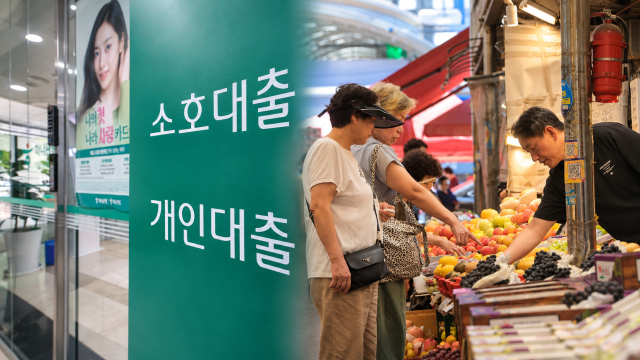
AJP Factbox: Poor Koreans rely on borrowing for living costs SEOUL, November 2 (AJP) —Living expenses accounted for nearly half — 45.3 percent — of credit borrowing among South Korean households in the lowest asset quintile in 2025, government data showed Monday. The share was the highest since the series began in 2017, according to the Korean Statistical Information Service (KOSIS), run by the Ministry of Data and Statistics (MODS). It rose from 44.3 percent in 2024 and 33.4 percent in 2017, underscoring the growing role of borrowing to meet everyday costs among households with the fewest assets. The share fell steadily as household assets increased: to 32.5 percent in the second quintile, 27.3 percent in the third, 23.1 percent in the fourth and 15.1 percent among the wealthiest fifth. Business financing followed the opposite pattern. It accounted for 29.7 percent of credit borrowing in the fourth asset quintile and 34.0 percent in the top quintile, making it the largest borrowing purpose in both groups. The divide was also evident when households were grouped by income. Living expenses accounted for 38.2 percent of credit borrowing among households in the lowest income quintile, up from 34.5 percent a year earlier and the highest since the series began. The share also reached a record 32.2 percent in the second income quintile. From the third through fifth quintiles, business financing outweighed living expenses as a borrowing purpose. The figures come from the 2025 Household Finance and Welfare Survey, jointly compiled by MODS, the Bank of Korea and the Financial Supervisory Service. Assets and debts were measured as of the end of March 2025. The growing share of borrowing for living expenses among households with fewer resources came as credit borrowing declined overall. The proportion of households with credit loans fell 2.1 percentage points from a year earlier to 19.5 percent, while the average credit loan balance dropped 11.9 percent.

Mokpo Celebrates 129 Years of Opening with Successful Heritage Night Event

The history and culture of Mokpo, which grew into a modern city 129 years ago with its opening, came alive across the streets on autumn nights.The city of Mokpo in South Jeolla Province announced on November 2 that the '2026 Mokpo Heritage Night,' held from October 30 to November 1, concluded with participation from citizens and tourists.This year's event, subtitled 'Modern Times: The Story of Mokpo's Opening 129,' showcased the changes and historical traces of Mokpo since its opening in 1897 through performances, exhibitions, and experiences.More than 30 programs were organized, utilizing actual historical sites such as modern buildings and alleyways, allowing visitors to engage with national heritage beyond mere observation.The event kicked off with the 'Time Road Parade' along the opening port street. This was followed by planned performances like 'Mokpo Chant,' 'Mokpo Scenery,' and 'Mokpo Romance,' which depicted the lives of Mokpo residents and the city's transformations since its opening.A K-Art media facade, featuring vibrant visuals on the exteriors of modern buildings, and a musical created by local arts groups added light and music to the historical spaces, enhancing the nighttime cultural experience.At the Mokpo Modern History Museum, a performance titled 'Harmony Across Generations' featured over 50 participants ranging from teenagers to seniors, while a street theater with historical narration allowed audience members to engage directly with the procession and performances.At Gyeongdong Cathedral, performances by local intangible cultural heritage artists and traditional dances by the late Woo Bong Lee Mae-bang were showcased, along with contemporary dance pieces. At the National Mokpo University Cultural Arts Park, seven teams from the university's cultural arts clubs presented various performances, including bands, vocals, and hip-hop dance, engaging younger audiences.A highlight of this year's Heritage Night was the former Mokpo Public Sim Sang Elementary School auditorium and outdoor experience area.In the auditorium, an exhibition and demonstration of jade crafts led by national intangible cultural heritage master Jang Joo-won, along with art experiences by local artists, took place.Outdoors, the National Institute of Maritime Heritage and local universities offered 17 programs, including underwater excavation experiences, marine character creation, and model ship assembly.Parents in their 30s and 40s visiting the event with children also participated in the experiences, demonstrating that the modern historical cultural space can serve as a family-friendly cultural venue.At Mokpo Jin, a historical tour linked with local cuisine was offered to guests, while interactive media performances and 1935 Gyeongseong-style costume experiences took place in the modern historical cultural street.Food trucks and craft flea markets were set up at the event site, allowing visitors to enjoy performances and experiences while exploring local businesses.This year's Heritage Night was significant as it was prepared collaboratively by the National Mokpo University, National Mokpo Maritime University, Mokpo Science University, National Institute of Maritime Heritage, Mokpo Cultural Foundation, along with local businesses and residents.Mokpo City also emphasized its commitment to eco-friendly event management by reducing single-use items through the use of reusable containers at the event site.Mayor Kang Seong-hwi stated, "The successful hosting of this Heritage Night has established Mokpo as a 'city worth revisiting,' enhancing the city's brand value. We will continue to expand the value of Mokpo's identity and cultural heritage."Meanwhile, the Mokpo Modern Historical Cultural Space is an area where traces of modern buildings, streets, and living culture formed after the opening remain. This Heritage Night connected these historical assets with nighttime tourism and citizen-participatory cultural content, leaving a meaningful impact, and the ongoing challenge is to continuously expand the event's effects on local businesses and sustainable tourism.* This article has been translated by AI.

POSCO Holdings Launches Public-Private Partnership Hub K-Maroo in Beijing
POSCO Holdings Launches Public-Private Partnership Hub 'K-Maroo' in Beijing

POSCO Holdings has established a public-private partnership platform, 'Beijing K-Maroo,' in China to support local operations of domestic companies. A total of 22 public institutions will provide various support services, including trade, finance, and technology, to companies entering the Chinese market.On November 2, POSCO Holdings held an opening ceremony for 'Beijing K-Maroo' at the Beijing POSCO Center, marking the start of its operations.Notable attendees included Noh Jae-hun, the South Korean Ambassador to China; Lee Sang-yoon, Director of the Public Policy Bureau at the Ministry of Economy and Finance; Jang Sang-hae, Head of KOTRA's China Regional Headquarters; and Lee Won-cheol, CEO of POSCO China.K-Maroo is designed to consolidate the offices of various domestic public institutions scattered around the world into a single platform, providing one-stop public services to local businesses and expatriates. The name combines 'K,' symbolizing Korea, with 'maru,' which refers to the floor space of a traditional Korean house.POSCO Holdings actively supports the government's policy of integrating and streamlining overseas public institution operations, establishing the first public-private partnership K-Maroo space at the Beijing POSCO Center.Located in Wangjing, the Beijing POSCO Center is situated in an international business district that hosts numerous global companies and South Korean exporters, making it an advantageous location for providing public support services.Once all 22 public institutions in fields such as trade, investment, finance, energy, environment, and digital technology are fully operational, K-Maroo will become the largest integrated hub among global K-Maroo locations.Korean companies operating in China will benefit from one-stop public support services in marketing, finance, technology, and infrastructure through 'Beijing K-Maroo,' while resident institutions can reduce administrative costs and enhance collaboration.A representative from POSCO Holdings stated, "With the successful opening of Beijing K-Maroo, we aim to establish the Beijing POSCO Center as a key support hub for our companies' overseas operations and the expatriate community by providing a stable working environment and top-notch infrastructure, thereby enhancing the trust in the POSCO brand."* This article has been translated by AI.

Art Festival SAD BOOK Explores Urban Themes in Seoul
Art Festival 'SAD BOOK' Explores Urban Themes in Seoul

The Great Commission (TGC) announced that it will host the exhibition festival 'SAD BOOK Rewriting: The City as Body' from November 2 to 8 in the Daehakro Artist House, Marronnier Park, and Naksan Park in Seoul. This exhibition is based on the five-act play 'SAD BOOK,' written by curator and researcher Jeon Min-kyung since 2015. Six domestic and international artists reinterpret the work in their own styles, showcasing video, installation, and performance art centered on themes of personal sorrow and collective memory. The core concept of the exhibition is 'overwrite.' Artists will create new works based on the play, with contributions from Rona Byrne, Choi Chan-sook, Florian Dombois, Hwang Min-kyu, Kwon Ah-ram, and Rona Simpson. Visitors can listen to a recorded reading of the play through headphones while viewing the exhibition. A reading room will also be available for attendees to explore the script. Throughout the exhibition period, related programs such as performances, workshops, and discussions will take place. The festival will kick off on November 2 with Rona Byrne's interactive performance 'Moving Threshold' at Marronnier Park, followed by Kwon Ah-ram's drone performance 'Flying' on November 5, and a discussion between Jeon Min-kyung and dramaturg Lee Yoon-jung on November 6. The final day, November 8, will feature Florian Dombois presenting a sound performance titled 'Trio Instruments (Seoul)' using kites and instruments at Naksan Park. Admission to the exhibition is free, but reservations are required.* This article has been translated by AI.

South Koreas 2027 Budget Proposal Focuses on Efficient Spending Amid Semiconductor Boom
South Korea's 2027 Budget Proposal Focuses on Efficient Spending Amid Semiconductor Boom

President Lee Jae-myung announced that the 2027 budget proposal, amounting to 820.9 trillion won, will be executed based on three principles: efficient spending, prioritizing fiscal expenditure, and favoring local governments. The government plans to secure funds through a restructuring of expenditures amounting to 107.2 trillion won, which includes the elimination of over 2,100 existing projects, and will focus investments on youth and future growth drivers to achieve 'growth for all.'In a speech to the National Assembly on November 2, President Lee emphasized, "We will transform into a growth model that allows all regions and citizens to share in the benefits." The government has increased total expenditures by 12.8% compared to this year, marking the largest total expenditure and growth rate in history.Addressing concerns about fiscal soundness, President Lee stated, "There is little need to worry about fiscal debt," asserting that the country can manage its finances without issuing new government bonds. However, with rising welfare expenditures due to low birth rates and an aging population, it is crucial not to be overly optimistic about fiscal capacity. The National Assembly must rigorously verify the necessity and effectiveness of the budget. Excessive fiscal spending can distort resource allocation and drive up prices, ultimately increasing the burden on citizens.It is essential to thoroughly filter out budget items that are included for political favors due to their local constituency nature, as well as overlapping and similar projects between ministries. Cash assistance programs with unclear policy effects should not be routinely included in the budget. If fiscal expansion is not used to improve citizens' lives but instead becomes a means to accommodate political demands or create a facade, the original purpose of the budget will be lost. The success of fiscal management depends not on how much spending is increased, but on how effectively limited resources are allocated to achieve tangible results.The future response fund, established with an excess tax revenue of 162 trillion won due to the semiconductor boom, is a key focus of this budget review. While the government and ruling party emphasize that this fund is an investment in advanced industries and future generations, it is necessary to examine whether the method of accumulating substantial resources in a separate fund undermines fiscal transparency and the National Assembly's oversight. Once established, it is difficult to reduce expenditures or change the direction of the fund. The justification of future investment should not lead to lax verification of the fund's size and project feasibility.The National Assembly's Budget Policy Office forecasts that an additional tax revenue of 57 trillion won will occur in 2028, but no further excess revenue is expected from 2029 onward. Given the uncertainty of how long the semiconductor boom will last, it is inappropriate to use temporary excess tax revenue as a basis for ongoing fiscal expansion. A concrete operational plan must be established to address how to maintain fund projects if tax revenue conditions change and who will bear the burden of any funding shortfalls.The historical roots of the parliamentary system reflect a commitment to controlling the power to collect and spend citizens' taxes. The National Assembly's budget review authority is an institutional mechanism to rigorously question where, how much, and for what effects taxes are spent. Both ruling and opposition parties must prioritize the feasibility of individual projects over partisan interests and local constituency complaints, and the government must not hide its fiscal responsibilities behind the justification of future investments. Citizens' taxes should be used for the future without any waste. The principle of reviewing the 821 trillion won budget is to ensure that future generations inherit opportunities for growth without also passing on fiscal burdens.

Korea plans next-day stock settlement in 2028

SEOUL, November 02 (AJP) —South Korean investors could receive cash the next business day after selling shares under a new settlement system planned for 2028, a day sooner than under the current system. Buyers would also have to pay a day earlier. Those who fail to cover a cash shortfall could face an earlier forced sale of their shares by brokerages seeking to recover the unpaid amount. The Korea Exchange (KRX) on Monday outlined plans to move from the current T+2 settlement cycle to T+1, shortening the interval between a trade and the exchange of cash and securities from two business days to one. The change would cover stocks, exchange-traded funds (ETFs) and exchange-traded notes (ETNs). An investor selling shares on Monday currently receives the proceeds on Wednesday. Under the proposed system, the money would arrive on Tuesday, assuming no market holidays. For investors who buy shares without enough cash in their accounts, the payment deadline would move forward by one business day. Failure to pay could trigger a forced sale on the second business day after the trade, rather than the third under the current system. The shorter cycle would also give investors an extra day to buy shares and qualify for dividends and other shareholder rights. Purchases could be made one business day before the record date, compared with two business days under the existing framework. The overhaul is intended to reduce the value of trades awaiting settlement and the risk that either side fails to meet its obligations. It could also lower margin requirements for brokerages and accelerate automation in trade processing. South Korea has operated a T+2 settlement framework since 1972. The two-day window gives financial institutions time to verify transactions, correct errors, arrange funding and complete transfers. Doing that work in a single day would require substantial changes to systems and operations at brokerages, custodians and clearing institutions. Overseas investors face the additional challenge of arranging currency conversions across time zones. The KRX and Korea Securities Depository (KSD) aim to complete infrastructure upgrades by October 2027. Financial institutions and overseas investors are expected to finish their own preparations by the first quarter of 2028, followed by at least six months of joint testing before a planned transition later that year. The launch date remains unsettled, however, as overseas institutions seek enough time to adapt. In a survey of 32 overseas brokerages, custodians and investors, 17 said they needed at least 18 months to prepare. Twenty-seven respondents, or 84.4 percent, preferred a launch in the second half of 2028 or later. Time-zone differences would leave foreign investors with a narrower window to confirm trades, convert currencies and obtain settlement approvals. Some institutions may need additional staff for overnight operations. The shift would bring South Korea into line with a growing number of major markets. The United States adopted T+1 settlement in May 2024, while the European Union and Britain are targeting October 2027. Hong Kong plans to follow in the second half of 2028. Ahead of the overhaul, South Korean brokerages are introducing loans that allow investors to access stock-sale proceeds before settlement, at lower interest rates than existing products. Mirae Asset Securities was scheduled to begin offering the loans Monday, followed by Kiwoom Securities on November 20. Other brokerages are expected to join later. The KRX said it would finalize the transition date after consulting financial authorities, domestic and overseas financial institutions and investors. Maintaining reliable settlement with minimal failures would remain a priority.

Hampyeong National Chrysanthemum Exhibition Features Artistic Bonsai Creations

The beauty of autumn chrysanthemums enhanced by intricate bonsai techniques is captivating visitors at the 2026 National Chrysanthemum Exhibition.Hampyeong County in South Jeolla Province announced on November 2 that the '2026 National Chrysanthemum Exhibition' is drawing attention at the Hampyeong Expo Park, particularly the premium bonsai gallery.This year's gallery is themed 'Botanical Garden and Relaxation,' designed to allow visitors to experience the artistic value of chrysanthemum bonsai alongside nature's tranquility.The space features the sounds of birds and flowing water, creating an atmosphere where the fragrance of chrysanthemums blends harmoniously, providing a place for visitors to pause and appreciate the artworks.The exhibition displays 49 chrysanthemum bonsai pieces in various forms, including wooden and stone bonsai, utilizing varieties developed by Hampyeong County.From one-year-old to three-year-old specimens, each piece showcases unique beauty based on age and shape, with explanatory panels expressing the characteristics of bonsai in poetic form.Notably, new varieties such as 'Nabi Saetbyeol' and 'Nabi Baekja,' which have recently been registered, are featured alongside works using varieties like 'Nabi Jojo,' 'Nabi Jo-hwang,' and 'Nabi Jo-a,' which are set for official registration in 2027.This exhibition not only displays chrysanthemums but also highlights the artistic development of locally cultivated varieties, showcasing Hampyeong's expertise in chrysanthemum cultivation and breeding.A special exhibition featuring 48 chrysanthemum bonsai varieties developed by Hampyeong County is also being held, allowing visitors to compare the shapes, colors, and growth characteristics of each variety and appreciate the county's achievements in chrysanthemum breeding.Additionally, free photo cards featuring images of chrysanthemum bonsai and a 2027 calendar are being distributed as souvenirs for visitors.Moon Jeong-mo, head of the Hampyeong Agricultural Technology Center, stated, "The premium bonsai gallery is a space where Hampyeong's chrysanthemum breeding technology harmonizes with the sounds of nature and the tranquility of the forest. We hope visitors enjoy the autumn ambiance while appreciating the diverse chrysanthemum artworks at the exhibition."Meanwhile, the 2026 National Chrysanthemum Exhibition will run until November 8 at Hampyeong Expo Park, featuring various chrysanthemum displays, cultural performances, and experiential programs, providing attractions and activities for tourists visiting Hampyeong in late autumn.* This article has been translated by AI.

Koreas Small Business Agency Supports Growth of 14 Graduate Startups
Korea's Small Business Agency Supports Growth of 14 Graduate Startups

The Small and Medium Business Administration announced on November 2 that it supported the participation of 14 graduate startups from the Youth Startup Academy at the '2026 Industrial AI EXPO' held from October 21 to 23.This support aimed to help startups with technology and products in the industrial artificial intelligence (AI) sector introduce their offerings to potential customers and expand their market reach. During the exhibition, a total of 2,634 visitors attended the integrated hall of the Youth Startup Academy, where the participating companies achieved 834 product consultations and identified 143 potential buyers.Kim Tae-kyung, CEO of Great Bee, stated, "Through this exhibition, we were able to introduce our services to corporate clients and directly assess their demand for AI utilization and criteria for consideration during implementation. We will work towards securing actual customers through follow-up discussions with consulting companies."Discussions for collaboration with overseas buyers also took place. Oh Kwon-seok, CEO of Ogané Program, received inquiries from SANX in Tokushima, Japan, regarding products that could connect with existing system users, and discussed potential partnerships with 250 companies from the Shikoku IT Cooperative. Additionally, discussions were held with ECOTEL in Indonesia regarding technology partnerships and local supply possibilities through a memorandum of understanding (MOU).The Youth Startup Academy continues to provide follow-up support considering the growth stages and demands of its graduates to ensure they can sustain growth beyond the initial startup phase. The support for participation in this exhibition is part of efforts to expand market access and enhance business competitiveness for graduate startups.Meanwhile, rumors of the academy's potential closure arose after the government’s proposed budget for 2027 did not include related funding. However, Minister of SMEs and Startups Lee So-young reaffirmed on October 7 during a National Assembly audit that the academy would be maintained.Im Ji-hyun, head of the Youth Startup Academy, expressed hope that the exhibition would serve as an opportunity to showcase the technological and product competitiveness of graduate startups and seek new business opportunities, stating, "We will continue to actively support graduate companies in discovering domestic and international customers and expanding collaboration opportunities."

Hana Bank Unveils Massive Media Facade at Euljiro Headquarters

Hana Bank announced the unveiling of its massive media facade, 'Hana Canvas,' on the exterior of its headquarters in Euljiro, Seoul, on November 2.The Hana Canvas is a large-scale video installation that spans from the 5th to the 15th floors of the building. Measuring 41.28 meters wide and 43.20 meters tall, it covers an area of approximately 1,783 square meters, making it the second largest media facade in South Korea.Hana Bank plans to use the Hana Canvas as a 'financial information hub' to provide real-time updates on exchange rates, key indices, and notifications related to financial policies and market trends.Seasonal video content will also be featured. Starting November 13, the facade will showcase a Christmas video titled 'A Winter Tale for Everyone.' The initiative aims to create a new attraction in the Euljiro area, making it a prominent winter media destination for the public.After completing a trial operation, the Hana Canvas officially began operations on this day. It will be open daily from 6 a.m. to midnight, year-round.