


Latest by
-
 National Assembly Committee Blames Opposition for Stalled Recount Members of the National Assembly's special committee investigating the shortage of ballots during the recent local elections stated on August 27 that blaming the People Power Party for the halt of the recount at Olympic Park is unreasonable.At a press conference held before a parliamentary workshop in Goyang, lawmakers Joo Jin-woo, Choi Bo-yoon, and Kim Eun-hye asserted, "The People Power Party proposed that we hold a special committee meeting to confirm the demands of the special investigation and conduct a thorough verification for fact-finding. It is the Democratic Party that is insisting on an immediate recount without justification."Earlier, the special investigation team, established to probe violations of citizens' voting rights, sent a request for cooperation to the special committee the previous day. The request reportedly included a plan for on-site verification to ensure that if any irregular ballots are found during the recount, a scientific and precise investigation can be conducted.Joo emphasized, "The recount should be conducted in a manner that prevents evidence destruction and aids the thorough fact-finding of the special investigation. It is not a matter of merely pretending to conduct a recount while assisting the Election Commission in destroying evidence and attempting to move the ballot boxes stored at Olympic Park to a third location after the counting has concluded."He added, "A recount led by the Central Election Management Commission is akin to entrusting evidence to a criminal. The Democratic Party is protecting the Election Commission and insisting on the methods proposed by them. If they prioritize the Election Commission over fact-finding, they will not escape the severe judgment and backlash from the public."The People Power Party claimed that the Democratic Party has blocked negotiations regarding the special investigation's position on ensuring effective participation in the recount and on-site verification. However, both parties' secretaries are expected to continue discussions regarding the full committee meeting scheduled for August 28 and the adoption of the national investigation report.Meanwhile, Democratic Party members of the special committee, including Yoon Geon-young, Lee Gi-heon, Lee Hae-sik, and Kim Nam-hee, held a press conference at the National Assembly that day, stating, "Over the past 75 days of the national investigation, we have accommodated all the demands of the People Power Party, but they have stubbornly sabotaged the recount that was agreed upon until the end."They criticized, "There is no intention to resolve the ballot shortage issue; they are merely politically exploiting the gathering at Olympic Park. Is the national investigation for the People Power Party merely a political tool for extending the political life of the leadership, rather than a genuine fact-finding mission?" 2026-08-27 15:24:10
 -
Mobile ID Issued on One Smartphone Per Person Starting August 28 Starting August 28, a 'mobile ID' will only be issued on one smartphone registered in the applicant's name.The Ministry of the Interior and Safety announced on August 27 that the enforcement decree of the 'Electronic Government Act' will take effect on the same day.The types of identification that can be issued via mobile will be clearly defined. These include resident registration cards, driver's licenses, disability registration cards, national veterans registration cards, foreigner registration cards, permanent resident cards, certificates of domestic residence for overseas Koreans, and public employee IDs.Citizens will now easily know which mobile IDs are protected under the 'Electronic Government Act.' Additionally, the use of mobile IDs will be safer from fraudulent activities such as misuse and forgery.The issuance process will also be strengthened. Issuing agencies must verify the identity of the applicant before issuing the mobile ID, and it can only be issued on one smartphone registered in the applicant's name. The validity period for the electronic information used to encrypt personal data will be limited to three years.Issuing agencies are required to keep the mobile ID information up to date to ensure it accurately reflects the actual personal information. They must also notify the Ministry of the Interior and Safety when a mobile ID is newly issued or canceled.The Ministry has ensured that various agencies issuing mobile IDs will utilize a common infrastructure linked to its own system to avoid the creation of separate systems.A revised 'Electronic Government Act' that allows for penalties for the fraudulent use or forgery of mobile IDs will also take effect.Hwang Gyu-cheol, head of the Ministry's Artificial Intelligence Government Office, stated, "We have clarified the mobile ID that citizens can use with confidence and established specific measures to ensure the safety and reliability that issuing agencies must adhere to."* This article has been translated by AI. 2026-08-27 15:20:00
-
Nvidia Reports Record Earnings Amid AI Investment Surge Nvidia, a leader in AI semiconductors, reported second-quarter earnings that surpassed market expectations, marking the company's 13th consecutive quarter of record revenue. This performance is seen as a positive sign that the investment boom in AI infrastructure will continue.On August 26, after the market closed, Nvidia announced that its revenue for the second quarter of fiscal year 2027 (May to July 2026) reached $96.22 billion, a nearly 18% increase from the previous quarter's record of $81.62 billion and a 106% surge compared to the same period last year. This figure also exceeded the market research firm LSEG's forecast of $92.18 billion. During the same period, earnings per share (EPS) were reported at $2.22, surpassing the market expectation of $2.10.The data center segment, driven by AI, was the primary contributor to this performance. Data center revenue soared 117% year-over-year to $89 billion. Notably, sales to hyperscale customers such as Google, Microsoft, and Amazon increased by 102% year-over-year to $48.7 billion, accounting for about 55% of total data center revenue.Nvidia also expressed optimism for future performance, projecting third-quarter revenue of $108 billion, which exceeds the market consensus of approximately $104 billion to $105 billion.Long-term growth prospects remain positive. Colette Kress, Nvidia's Chief Financial Officer, forecasted that revenue for fiscal year 2028 would increase by about 70% compared to the previous year, significantly higher than the existing market estimate of around 45%. This reflects confidence that investments in AI data centers will remain strong for the foreseeable future.Nvidia CEO Jensen Huang stated, "AI has reached a turning point. It is now performing useful tasks," adding, "Computing is revenue."Huang also expressed confidence in the next-generation AI platform, 'Vera Rubin,' stating, "The construction of AI infrastructure is currently in full swing," and emphasized that Vera Rubin, which has entered mass production, was created to support this moment.Despite concerns about a slowdown in AI investment and potential market bubbles, Nvidia's stock rose 4.71% in after-hours trading.However, uncertainties surrounding Nvidia's performance remain.One concern is the rising prices of memory semiconductors needed for AI processors, which could impact profitability. Nvidia projected a gross margin of 74% for the third quarter, slightly down from 75% in the second quarter. Kress indicated that margins could drop to 71-72% in the fourth quarter before stabilizing at 72-73% for fiscal year 2028.Additionally, accounts receivable for the second quarter increased to $63 billion, up significantly from $38.5 billion six months ago. This has raised market concerns about a 'circular finance' structure, where Nvidia's investments and financial support for AI companies lead back to chip purchases from Nvidia.Geopolitical risks related to operations in China also pose a variable. Nvidia reported that sales of its older AI chip, the Hopper series H200, accounted for less than 1% of data center revenue in China during the second quarter. The company noted that the current shipments of Hopper products to China are diluting its overall gross margin. Nvidia did not include Chinese data center revenue in its third-quarter performance forecast. 2026-08-27 15:20:00
-
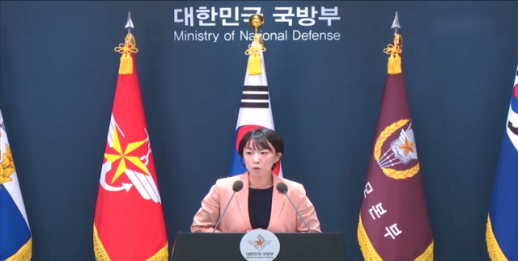 South Korea probes failed loitering munition test SEOUL, August 27 (AJP) - South Korea’s arms procurement agency said Thursday it is investigating why two domestically developed loitering munitions crashed into the sea immediately after being launched from a Navy ship, while stressing that the failed maritime test does not mean the underlying development project has fallen short of its original goals. The Defense Acquisition Program Administration (DAPA) said the medium-sized loitering munition was developed under an applied research program launched in 2024 to secure core technologies, including a data link connected to low-Earth-orbit satellites. The project was originally designed to develop technologies for ground-based operations, and its planned ground-launch tests had already been completed successfully, a DAPA spokesperson said during the Defense Ministry’s regular briefing Thursday. “The original ground-launch tests were successful,” the spokesperson said. “This was a challenging combat experiment conducted additionally to verify the possibility of maritime operations based on the technologies already secured.” DAPA said the core technologies required for the loitering munition have been secured, but the two aircraft launched from the amphibious assault ship ROKS Marado on Tuesday crashed into the sea shortly after takeoff for reasons that have yet to be determined. The development agency is currently investigating the cause. The remarks came two days after the Navy conducted its first combat experiment involving the domestically developed loitering munition at sea. During the test in waters off South Korea’s southern coast, the drone was supposed to launch from a rail installed on the flight deck of the 14,500-ton ROKS Marado, conduct reconnaissance and then track and strike a fast-moving unmanned surface target about 2 kilometers away. The first drone, launched at around 3:30 p.m., flew for only several seconds before falling into the sea. A second attempt using a backup aircraft at around 5:30 p.m. ended the same way, preventing the military from proceeding to the target-tracking and strike phase. An ADD official at the scene initially suggested that misalignment between the aircraft and its launcher under shipboard conditions could have contributed to the failures, noting that vibrations and movement at sea differ from the conditions of ground testing. DAPA said Thursday that investigators are examining such environmental factors and that it plans to provide the results of its initial cause analysis Friday. The failed test has also drawn questions over the cost of the domestically developed system compared with cheaper loitering munitions increasingly used in modern conflicts. Defense officials pushed back against direct comparisons with low-cost systems such as Iran’s Shahed drones, saying the South Korean aircraft tested this week belongs to a different, higher-end category. Vice Adm. Kwak Kwang-sup, commander of the Republic of Korea Fleet, also signaled that the Navy would continue pursuing the project despite Tuesday’s setback. “Today’s experiment is not the end,” Kwak told reporters following the test. “We will try again.” AJP Takeaways · South Korea is investigating why two loitering munitions crashed after launching from ROKS Marado. · DAPA says the system’s core technology has already been secured through successful ground tests. · The Navy plans to continue maritime testing despite the failed shipboard experiment. 2026-08-27 15:14:55
 -
No Brand Burger to Raise Prices Starting August 28, Burgers Up to 400 Won No Brand Burger, operated by Shinsegae Food, will raise prices on some menu items due to rising raw material and logistics costs. The average increase will be 2.5%, with burger prices for individual items and sets rising by up to 400 won.The company announced on August 27 that it will adjust the prices of burgers and some side menu items starting August 28.As part of this price adjustment, the prices of 22 burger items and sets will increase by 100 to 400 won. Among 34 side menu items, some will see price increases of 100 to 200 won, while the remaining 28 items will maintain their current prices.However, three flagship items—the Amazing Double, Amazing Double Cheese, and Amazing Double Salsa—will remain priced in the 4,000 won range for individual items and 6,000 won for sets. The value menu item, Amazing Bulgogi, will also maintain its industry-low price of 2,700 won after the adjustment.A representative from No Brand Burger cited the increase in raw material and logistics costs as the reason for the price hike. The company has absorbed cost burdens by enhancing purchasing competitiveness and streamlining store operations, but decided to raise prices for some menu items to ensure stable operations for franchisees.The representative stated, "In light of ongoing cost increases, we minimized the price adjustment while considering customer burden and the stable operation of franchisees. We will continue to strengthen our purchasing competitiveness and operational efficiency to ensure customers can enjoy No Brand Burger without added burden."Meanwhile, major burger franchises have been raising prices this year. Burger King increased the price of individual burgers by 200 won and side items by about 100 won in February. McDonald's raised prices on 35 menu items by an average of 2.4% in the same month, while Mom's Touch increased prices on 43 items by an average of 2.8% in March. Lotteria also raised prices on 22 burger items by an average of 2.9% in May.* This article has been translated by AI. 2026-08-27 15:12:00
-
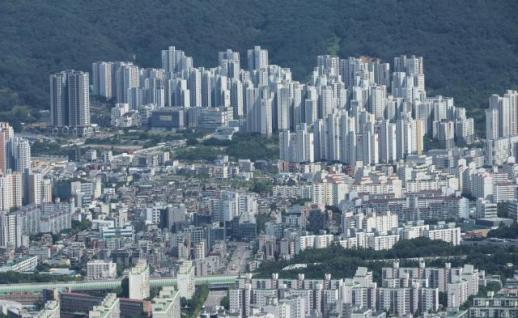
Seoul Apartment Prices Rise 0.29%, Some Areas in Gangnam Decline Seoul's apartment prices have seen an increase again. While some complexes are experiencing a wait-and-see approach and price adjustments leading to declines in transactions, rising contracts continue in key areas with good transportation and high demand.According to the Korea Real Estate Agency's weekly apartment price trends report released on August 27, the national apartment sales price index rose by 0.11% as of August 24. The metropolitan area increased by 0.22%, Seoul by 0.29%, and regional areas by 0.01%.The increase in Seoul's apartment prices expanded from 0.22% the previous week to 0.29%. The 14 districts in northern Seoul rose by 0.40%. Jungnang District saw a 0.56% increase, primarily in the Shinnae and Sangbong station areas, while Seongbuk District rose by 0.55%, mainly in small to medium-sized complexes in Jeongneung and Gil-eum. Gangbuk District also increased by 0.55%, and Dobong and Nowon districts rose by 0.54% each.The 11 districts in southern Seoul saw a 0.20% increase. Gangnam District rose by 0.11%, focusing on major complexes in Daechi and Apgujeong, while Seocho District fell by 0.05%, mainly in the Jamwon and Banpo areas. Gangseo District increased by 0.50%, primarily in the Deungchon and Yeomchang station areas, Guro District rose by 0.49%, and Gwanak District increased by 0.46%, focusing on large complexes in Sillim and Bongcheon.In Gyeonggi Province, apartment prices rose by 0.23%, a larger increase than the previous week's 0.15%. Suwon's Yeongtong District rose by 0.75%, mainly in small to medium-sized complexes in Mangpo and Yeongtong, while Gwangmyeong City increased by 0.69% in major complexes in Ha-an and Cheolsan, and Yongin's Suji District rose by 0.66%. In contrast, Goyang's Ilsandong District fell by 0.16%, and Icheon City decreased by 0.13%.In Incheon, prices rose by 0.01%. Geomdan District increased by 0.09%, and Yeonsu District rose by 0.07%, while Namdong District fell by 0.17%. Regional areas saw a 0.01% increase, with the four major metropolitan cities remaining stable, and Sejong City declining by 0.09%. Ulsan rose by 0.08%, but Busan fell by 0.02%.Rental prices also continued to rise. The national apartment rental price index increased by 0.11%. The metropolitan area rose by 0.20%, Seoul by 0.22%, and regional areas by 0.03%.The increase in Seoul's rental prices expanded from 0.19% the previous week to 0.22%. This is attributed to continued demand for rentals in areas with good proximity to workplaces and major complexes. Seodaemun District rose by 0.45%, mainly in Bukgajwa and Namgajwa, while Dobong and Nowon districts each increased by 0.37%, and Seongbuk District rose by 0.36%.Seocho District saw a 0.04% decrease, influenced by the influx of new units in the Jamwon and Banpo areas. Geumcheon District rose by 0.44%, focusing on Siheung and Doksan, Gwanak District increased by 0.28%, and Gangseo District rose by 0.26%, mainly in Deungchon and Gayang.In Gyeonggi Province, rental prices rose by 0.19%. Suwon's Gwonseon District increased by 0.62%, mainly in large complexes in Gwonseon and Geumgok, while Yongin's Giheung District rose by 0.44%. Both Hanam City and Hwaseong's Dongtan District increased by 0.41% each.* This article has been translated by AI. 2026-08-27 15:12:00
-
One in Five Foreign Tourists Arrive via Regional Airports; Cheongju Sees 109% Increase In the first half of this year, one in five foreign tourists visiting South Korea entered through regional airports. Notably, Cheongju Airport has seen its number of arrivals more than double in the past year, emerging as a new gateway for distributing international visitors across the country.The Korea Tourism Organization held the '2nd Recent Trends in Korean Tourism Data Seminar' on August 27 at The Plaza Hotel in Seoul, where it released an analysis of regional tourism data. The Ministry of Culture, Sports and Tourism highlighted the need to create a foundation for the 'K-Tourism Era of 40 Million Visitors' in its recent report, indicating the potential for distributing foreign visitors, who are currently concentrated in the metropolitan area, as evidenced by data on regional airport usage. As of July this year, the number of foreign tourists visiting South Korea reached 12.8 million, a 21.3% increase compared to the same period last year.Cheongju Airport Sees 109% Increase in Arrivals; Regional Airports as Tourism GatewaysAccording to the organization, 20.7% of foreign tourists arriving in South Korea in the first half of 2026 used regional airports such as Cheongju, Daegu, and Gimhae, equating to one in five visitors.The most significant growth was observed at Cheongju Airport, where arrivals increased by 109.1% compared to the same period last year. This surge is attributed to the expansion of low-cost carriers and an increase in tourists from Taiwan.51% of Routes from Taiwan to Regional Airports; Gimhae Sees 157% IncreaseThere has been a rapid increase in the use of regional airports among tourists from Taiwan. Kim Han-kyu, head of the Korea Visit Year Promotion Preparation Team, noted that in the first half of this year, 51.1% of routes from Taiwan to South Korea were to regional airports, surpassing those to metropolitan airports. Kim stated, 'This is a new phenomenon that has not been seen in any other country.'Regional marketing efforts targeting the Taiwanese market have also yielded results. The organization’s Taipei office began marketing centered around Busan in 2023 and expanded to surrounding areas the following year, eventually covering seven cities and provinces in the southern region last year. The number of Taiwanese arrivals through Gimhae Airport increased by 157.5% from 2023 to 2025. Last year, 360 travel products developed in the southern region attracted over 70,000 visitors.Attracting Visitors is Just the Start; Extending Their Stay is KeyKim emphasized the need to identify and promote 'killer content' specific to each region to invigorate local tourism. He explained that rather than promoting all tourism content simultaneously, it is essential to create successful examples centered around competitive content that can then be expanded to other regions.The organization is also accelerating efforts to attract foreign visitors through regional airports. A task force involving 29 departments was established in April to focus on developing tourism content, securing flight routes, and improving infrastructure centered around Cheongju and Daegu airports.Another challenge is encouraging tourists to extend their stays in the regions. The domestic accommodation market has seen steady growth over the past three years, driven by foreign demand. Activities such as performances and sports events have been cited as key reasons for travelers choosing to stay overnight.K-content has been identified as another key to increasing regional stays. A special session involving Studio Dragon shared strategies for converting interest in K-dramas into actual visits to local areas.Park Sung-hyuk, president of the Korea Tourism Organization, stated, 'As new tourism touchpoints like regional airports and K-content are translating into actual demand, it is crucial to accurately interpret changes through data and find effective solutions on the ground. We will continue to work with the industry and academia to generate quality data and expand opportunities to share the voices from the field, fulfilling our role as a partner in developing tourism policies that genuinely benefit the regions.'* This article has been translated by AI. 2026-08-27 15:08:00
-
 Top-income Koreans earn more cash, while real wages slide SEOUL, August 27 (AJP) - South Korea's richest households pocketed much larger income gains in cash terms than those at the bottom in the second quarter, widening the absolute income gap even as workers suffered a third straight month of falling inflation-adjusted wages. Average monthly household income rose 4.5 percent from a year earlier to 5.30 million won in the April-June period, according to the Ministry of Data and Statistics' quarterly household survey released Thursday. After adjusting for inflation, household income increased a much smaller 1.5 percent. Labor income, which accounts for the largest share of household earnings, rose only 0.8 percent to 3.22 million won, while transfer income surged 20.4 percent to 931,000 won. Public transfers alone jumped 27.6 percent. The headline increase also concealed a striking difference in the amount of additional income flowing to households at opposite ends of the income ladder. Average monthly income for households in the richest 20 percent rose to 11.15 million won from 10.74 million won a year earlier, an increase of about 407,000 won. Income for the poorest 20 percent climbed to 1.28 million won from 1.19 million won, an increase of about 89,000 won. The richest households therefore gained more than four times as much additional monthly income in won terms as the poorest households. The absolute gap between the two groups widened by about 318,000 won to 9.87 million won from 9.55 million won a year earlier. Income at the bottom rose at a faster percentage rate of 7.5 percent, compared with 3.8 percent for the top quintile, helped substantially by transfer payments, or government handout. The government's broader distribution indicator also pointed to an improvement rather than deterioration. The ratio of equivalized disposable income of the top 20 percent to the bottom 20 percent fell to 4.97 in the second quarter from 5.45 a year earlier. For workers dependent primarily on wages, however, purchasing power continued to deteriorate. South Korean workers saw their inflation-adjusted wages decline for a third consecutive month in June as stubbornly high prices erased modest pay gains, according to a separate Ministry of Employment and Labor survey released Thursday. Real monthly wages for workers at businesses with at least one regular employee slipped 0.1 percent from a year earlier to 3.41 million won in June. The three-month slide was the longest since real wages declined for five consecutive months from April through August 2023. The squeeze was more pronounced over the full second quarter. Real wages fell 0.8 percent to 3.37 million won even though nominal wages increased 2.1 percent to 4.04 million won. Consumer prices rose 3.0 percent over the same period, outpacing the increase in pay. The two sets of government data illustrate the divergence between rising headline household income and the weaker experience of workers relying on their paychecks. Much of the household-income increase came from transfers rather than wages, while inflation continued to erode the purchasing power of earned income. On the upside, household spending rose 3.0 percent from a year earlier to 3.99 million won per month in the second quarter. Consumer spending increased 3.4 percent in nominal terms but only 0.4 percent after adjusting for inflation. Higher borrowing costs continued to weigh on household budgets. Interest expenses climbed 12.1 percent from a year earlier, the household survey showed. AJP Takeaways South Korea's richest 20 percent gained about 407,000 won in monthly household income from a year earlier, versus about 89,000 won for the poorest 20 percent, widening the absolute top-bottom income gap to roughly 9.87 million won. The relative income picture was less unequal: bottom-quintile income rose 7.5 percent versus 3.8 percent for the top quintile, while the official equivalized disposable-income quintile ratio narrowed to 4.97 from 5.45. Workers' real wages fell for a third consecutive month in June and dropped 0.8 percent in the second quarter as 3.0 percent inflation outpaced a 2.1 percent rise in nominal pay. 2026-08-27 15:07:05
 -
FIU Enhances AI Detection for Money Laundering, Expands Financial Sector Teams 금융정보분석원(FIU)이 은행권을 제외한 금융회사의 자금세탁방지(AML) 전담조직을 강화하고 인공지능(AI)을 활용한 이상거래 탐지 시스템 고도화에 나선다.FIU는 16개 유관기관과 함께 ‘자금세탁방지(AML) 유관기관 협의회’를 열었다고 27일 밝혔다. FIU는 금융권의 AML 취약점을 △위험평가 △거버넌스 △시스템 고도화 △협회·중앙회 역할 강화 등 4개 분야로 나눠 대응 방안을 마련했다.우선 금융회사들이 업권과 개별 회사의 영업 특성을 반영해 자체 위험평가를 정기적으로 실시하도록 유도한다. 평가에서 취약점이 확인된 분야에는 인력과 예산, 정보기술(IT) 인프라 등을 우선 투입하도록 할 방침이다.AML 조직과 인력도 강화한다. FIU는 은행권을 제외한 대부분의 금융회사가 AML 전담조직이 없거나 담당 인력이 다른 업무를 겸직하고 있어 전문성 축적이 어렵다고 지적했다. 보고책임자의 직급이 낮은 점도 주요 취약점으로 꼽았다.이에 따라 금융회사에 AML 전담부서 운영을 독려하고 보고책임자의 직급 상향을 유도할 계획이다. IT와 데이터 분석 역량을 AML 업무에 접목할 수 있는 융합형 인재도 육성·확충한다.AML 시스템에는 AI 등 신기술을 적극 활용한다. 은행권을 중심으로 AI를 활용한 이상거래 탐지 시스템 고도화가 이뤄지고 있지만, 고위험 업권과 중소 금융회사의 시스템 개선은 상대적으로 미흡해 업권 간 디지털 격차가 커지고 있다는 게 FIU의 판단이다.FIU는 앞으로 AI 기반 탐지기법을 확대하고 분산거래나 우회거래를 포착할 수 있도록 탐지 로직을 다각화할 예정이다. AML 시스템에 입력되는 데이터의 정확성을 주기적으로 검증하는 품질관리 체계도 구축한다.협회와 중앙회의 역할도 강화한다. FIU는 개별 금융회사나 조합만으로는 갈수록 정교해지는 자금세탁 수법과 변화하는 규제에 대응하는 데 한계가 있다고 보고, 올해 하반기부터 각 협회·중앙회 차원의 ‘AML 고도화 TF’를 운영하기로 했다.하주식 FIU 제도운영기획관은 “최근 자금세탁이 다양화·복잡화하면서 금융회사의 대응도 단순한 시스템 고도화나 형식적 이행을 넘어 실질적 통제로 전환해야 한다”며 “FIU도 교육과 평가, 검사·감독 등을 지속적으로 개선해 업권별 역량 강화를 적극 뒷받침하겠다”고 말했다.* This article has been translated by AI. 2026-08-27 15:00:20
-
Taiwan Signs $4 Billion Deal to Purchase Over 2,000 Drones from U.S. Taiwan has signed a contract with the United States to purchase new drones worth approximately 269 billion Taiwan dollars (about $4 billion). As Taiwan's government pushes to expand its drone capabilities, the issue of arms sales to Taiwan is expected to become a significant point of contention ahead of the anticipated U.S.-China summit next month.According to local media, including the Liberty Times, Taiwan's Ministry of National Defense announced on the 27th that it had released the results of the bidding for the U.S. drone procurement project on its government electronic procurement platform. The total contract amount is 269 billion Taiwan dollars.The details of the purchase, previously disclosed by the Ministry of National Defense, indicate that a total of 2,032 drones will be acquired. This includes 1,554 Altius-700 M attack drones and 478 Altius-600 ISR reconnaissance drones.The Altius-600 ISR is designed for monitoring enemy movements and gathering intelligence, while the Altius-700 M can target military equipment such as tanks. Taiwan plans to deploy these drones to frontline army units.Deliveries are expected to begin in the fourth quarter of this year, with the entire order scheduled for completion by June 2033.This contract follows a large-scale arms sale to Taiwan approved by the U.S. last year. In December, the U.S. government notified Congress of a $11 billion arms package for Taiwan, the largest in history at that time. The sale of the Altius-600 and 700 M drone systems was valued at approximately $1.1 billion.Taiwan is actively working to enhance its drone capabilities independently. President Tsai Ing-wen urged the legislature on the 26th to pass a special budget of 210 billion Taiwan dollars (about $6.6 billion) over six years to secure around 210,000 military drones. The government argues that the importance of drones in modern warfare has been underscored by conflicts in Ukraine and the Middle East, necessitating a rapid expansion of drone capabilities.China has expressed strong opposition to Taiwan's military buildup. On the 26th, Zhu Fenglian, spokesperson for the Taiwan Affairs Office of the State Council, stated at a regular press conference, "Pursuing independence through force only hastens destruction" and claimed that "the great trend toward unification cannot be stopped."The U.S. arms sales to Taiwan have long been a source of tension in U.S.-China relations. China reacted strongly when the U.S. announced the $11 billion arms package in December. Observers suggest that the recent drone purchase contract could elevate the Taiwan issue as a key agenda item in the upcoming U.S.-China summit.* This article has been translated by AI. 2026-08-27 15:00:00