

[Yonhap News Photo]
SEOUL -- Jeong Eun-kyeong, a cool-headed woman who has led South Korea's quarantine war against COVID-19 with a prudential and stable attitude, was picked to head a new disease control tower that will have greater power than before. Her status was promoted to become a vice minister with independent authority.
Jeong, 55, had served as director of the Korea Centers for Disease Control and Prevention (KCDC), a state body affiliated with the Ministry of Health and Welfare since her appointment by President Moon Jae-in in July 2017. Her crisis management has shined since South Korea was battered by a new coronavirus epidemic in late February.
Jeong became the first head of the Korea Disease Control and Prevention Agency (KDCA), which will be launched on September 12. KCDC's status was elevated into an independent agency with more authority to respond to infectious diseases. The agency will oversee research on epidemics and the development of treatments and vaccines.
With enhanced disease control capabilities, the new agency will run five regional centers in Seoul and four other cities as well as a branch office on the southern island of Jeju.

Copyright ⓒ Aju Press All rights reserved.
Related News
-
 One in Three Adults Obese, Surge in Young Adults and Regional Disparities Highlighted
Recent findings indicate that one in three adults in South Korea is obese, with the obesity rate among adults rising nearly 27% over the past decade. Notably, over half of men in their 30s and 40s are classified as obese, while the obesity rates among young adults are increasing sharply, exacerbating health inequalities across regions.Lee Seung-kwan, head of the Korea Disease Control and Prevention Agency (KCDC), warned that obesity poses a significant health threat that can lead to chronic diseases. He emphasized the need for tailored management strategies that reflect local characteristics, alongside individual lifestyle changes.On November 9, the KCDC released an in-depth analysis of obesity trends based on the '2025 Community Health Survey.' According to the report, the national obesity rate for adults aged 19 and older is projected to reach 35.4% by 2025, a 7.5 percentage point increase from 27.9% in 2016, representing a relative change of 26.9%.Trends in Adult Obesity Over the Past DecadeFrom 2016 to 2025, the adult obesity rate has shown a consistent upward trend, rising from 27.9% in 2016 to 31.8% in 2018, 32.2% in 2021, 33.7% in 2023, and finally 35.4% in 2025. During this period, the percentage of individuals who perceive themselves as obese increased from 41.4% to 45.1%, and the annual attempts to control weight rose from 59.0% to 68.5%. However, these efforts have not curbed the rising obesity rates. Conversely, the underweight rate decreased from 5.2% in 2016 to 4.2% in 2025.Analysis of obesity risk factors revealed that individuals who do not engage in strength training are 1.3 times more likely to be obese (odds ratio of 1.28). Other contributing factors include sleeping less than six hours (1.2 times), skipping breakfast (1.1 times), not walking (1.1 times), and alcohol consumption (1.1 times).Obesity Rates Among Men and Young AdultsGender disparities in obesity rates are pronounced. The obesity rate for men stands at 42.5%, nearly 1.9 times higher than that of women at 22.9%. Men peak in obesity rates at ages 30 (52.1%) and 40 (53.1%), with rates declining in older age groups. In contrast, women have the lowest obesity rate in their 20s (16.4%), which gradually increases with age, peaking at 27.4% in those over 70.Notably, the surge in obesity rates among young adults over the past decade is striking. The obesity rate for men in their 20s rose from 29.7% to 42.6%, a 12.9 percentage point increase, reflecting a relative change of 43.4%. For women in their 20s, the rate increased from 10.2% to 16.4%, marking the highest relative change of 60.8% across all age groups. Most age groups saw worsening obesity rates, with the exception of women in their 60s, where the rate decreased by 3.2 percentage points (-10.9%).The analysis also highlighted a mismatch in weight perception. Among those who are actually obese but do not recognize it, 36.0% made no attempts to control their weight, with the majority being men (77.4%) aged 60 and older. Conversely, 39.0% of those who are underweight mistakenly perceive themselves as obese and attempt unnecessary weight loss, with 80.6% of this group being women, primarily in their 30s and 40s.Regional Disparities in Obesity RatesObesity rates have increased in all but one of the 16 cities and provinces, excluding Sejong City. As of 2025, the highest obesity rates are found in Ulsan (38.2%), Jeonnam (38.0%), and Gangwon (37.4%), while the lowest rates are in Sejong (29.4%), Daejeon (29.8%), and Seoul (30.2%). Ulsan saw a significant increase of 12.2 percentage points (from 26.0% to 38.2%) over the past decade, followed by Jeonnam with a 9.7 percentage point increase (from 28.3% to 38.0%) and Jeju with a 9.1 percentage point increase (from 28.2% to 37.3%).In the last three years (2023-2025), disparities among basic local governments (cities, counties, districts) have become even more pronounced. The highest obesity rates were recorded in Cheorwon County, Gangwon (44.2%), Danyang County, Chungbuk (42.9%), and Boeun County, Chungbuk (42.7%). In contrast, the lowest rates were in Gwacheon City, Gyeonggi (23.6%), Bundang District, Seongnam (24.1%), and Suseong District, Daegu and Seo District, Daejeon (both 24.3%), revealing a gap of up to 20.6 percentage points.Comparing the top 10 and bottom 10 regions for obesity rates, those in the higher obesity categories reported significantly lower average household incomes (3.77 million won vs. 6.83 million won), walking participation rates (36.0% vs. 64.5%), and strength training participation rates (20.5% vs. 34.4%). Additionally, the diagnosis rate for chronic diseases (hypertension or diabetes) was 40.6% in high-obesity areas, compared to 24.1% in low-obesity areas, indicating a direct correlation between obesity rates and residents' health and chronic disease prevalence.Lee Seung-kwan stated, “This in-depth analysis confirms that the obesity rate among South Korean adults has been steadily increasing over the past decade, particularly among men in their 30s and 40s, and highlights the significant rise in obesity rates among young adults. Given that obesity is a major health issue that increases the risk of chronic diseases such as hypertension and diabetes, it is crucial to foster proper body awareness and regular physical activity.” He further emphasized the need for local governments and related agencies to implement tailored prevention and management policies that reflect the characteristics and environments of local residents.* This article has been translated by AI.
-
 Why many South Korean women are exposed to unwanted pregnancies and STIs
Yonhap SEOUL, March 7 (AJP) - Despite a growing awareness of sexual health in South Korea, contraception remains largely a woman's responsibility, leaving many women vulnerable to unwanted pregnancies and exposing them to the risk of contracting sexually transmitted infections (STIs). In a country still steeped in Confucian traditions and values, many men often refuse to use condoms in their intimate relationships, leaving their female partners to often bear much of the blame for not preventing unintended pregnancies and STIs. A 2021 survey by the Korea Institute for Health and Social Affairs, which surveyed 2,500 adults, revealed that a mere 18 percent of men have no qualms about using condoms, one of the lowest rates among developed countries. As reasons for not using them, most respondents cited inconvenience, discomfort, and reduced pleasure. Yet health experts stress that condoms are the only contraceptive method that provides dual protection. The World Health Organization (WHO) also states on its website, "Condoms, when used correctly and consistently, are among the most effective methods of preventing most including HIV and unplanned pregnancies and the only method of contraception that can do both." Many health professionals agree that the use of condoms in sexual relationships is considered an ideal option, particularly as women are biologically more susceptible to certain diseases. According to the U.S. Centers for Disease Control and Prevention (CDC) recognizes that women are more prone to STIs than men due to anatomical factors and the risk of transmitting STIs to babies. But many women express difficulty in persuading their male partners to use condoms. "Almost all of my patients say their partners refuse to wear condoms. I hear that all the time," said Yang Ki-yeol, an ob-gyn at Trinity Women's Clinic in southern Seoul. "Women may consider taking birth control pills to prevent pregnancy, but that doesn't effectively prevent the spread of STIs," Yang added. A woman looks at a notice at an obstetrics and gynecology clinic in Seoul, in this file photo from March 2022. Yonhap In fact, South Korea has seen a growing rise in STIs among women. According to the Korea Disease Control and Prevention Agency (KCDC), there were about 3,100 cases of STIs as of December last year, up 22.1 percent from the previous year. HIV cases have also risen among young women by nearly 15 percent over the past decade. While men still account for the majority of HIV infections, the proportion of female infections has steadily increased, from 7.7 percent to 10.1 percent during the same period. Experts point to cultural norms as the reason behind the low usage of condoms, unlike in the U.S., where condoms are widely used and often included in campus health kits as part of safer sex supplies. Most ads for contraceptives here are often skewed toward options available to women such as birth control pills, intrauterine devices (IUDs), and hormonal implants. Commercials for condoms are rarely seen on television or other platforms, as they are classified as medical devices rather than pharmaceutical products, which are subject to stricter advertising regulations, requiring approval from multiple health-related agencies such as the Ministry of Food and Drug Safety and the Korea Communications Commission. The last and only television ad for condoms in South Korea, for example, was by the British brand "Durex," which aired briefly in 2013. By contrast, over-the-counter drugs like hormonal medications or morning-after pills for women face fewer restrictions in terms of marketing and advertising. Whether intended or not, these underlying factors may lead to a notion that contraception is primarily a woman's responsibility. Some scholars suggest that power dynamics exist even within romantic relationships, rather than it being simply a matter of wearing a condom or not. They say some men may feel empowered by refusing to wear a condom. "In a traditionally patriarchal society like South Korea, a power imbalance between men and women still appears to exist, even in sexual relationships. This should be taken into account when interpreting behaviors like men's refusal to wear condoms, which can be seen as an exercise of their innate power or an attempt to exert dominance over their partners," said Yang Hyun-ah, a law professor at Seoul National University. She also urged that the burden of contraception be addressed in line with both cultural and social changes, such as increasing public awareness that contraception is not something women alone should handle, while revising relevant regulations and encouraging the use of condoms for safe sex.
-
 Hanmi partners with domestic company to promote exports of saliva-based rapid antigen kits
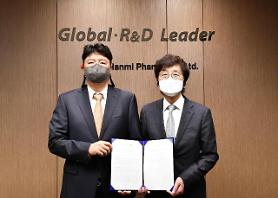
SEOUL -- Hanmi Pharmaceutical, a major drugmaker in South Korea, has partnered with PHC, a domestic bio company that focuses on in vitro diagnosis and digital healthcare business, to promote exports of COVID-19 self-testing kits, including a rapid antigen kit that use saliva as samples to acquire rapid results. Hanmi is in charge of product planning, sales, marketing, and local licensing for a neutralizing antibody kit using blood samples and two rapid antigen kits based on a nasopharyngeal swab and saliva, respectively, which were produced by PHC. "We will do our best to successfully launch it in foreign countries such as the United States by utilizing our global network and various licensing know-how," Hanmi CEO Kwon Se-chang said in a statement on March 4. Hanmi has introduced an antigen test kit to acquire results in 30 minutes by dropping samples taken from the nasal cavity to the kit like pregnancy diagnosis. PHC's saliva antigen diagnosis kit with a purported sensitivity of 95.8 percent has been approved by Australia's medicine and therapeutic regulatory agency, Hanmi said, adding the two companies would push for the U.S. release of saliva-based rapid antigen kits as soon as possible. "We will prove our excellent product competitiveness in the global market through the global network of Hanmi Pharmaceutical and actively promote the global expansion of various in vitro diagnostic products," PHC CEO Choi In-hwan was quoted as saying. The Korea Centers for Disease Control and Prevention (KCDC) has trusted nasopharyngeal swabs for the real-time polymerase chain reaction (PCR) method that amplifies specific DNA samples as the most reliable and accurate method. For quick sampling, KCDC has eased regulations to approve the use of antigen test kits at home or statge-designated screen centers and health clinics as the highly transmissible omicron variant sent South Korea's daily coronavirus cases exceeding 260,000 on March 4. Salaiva-based rapid test kits has yet to be introduced in South Korea. The explosive increase in the number of COVID-19 infections has led researchers and health officials to seek more accurate test methods. Currently, only those who received positive results from quick antigen tests receive PCR tests to ease the workload of test labs. The medical community cast doubt over the accuracy of antigen test kits.