

[Courtesy of KPEDCF]
KPEDCF was established to accelerate the interaction between Seoul and Manila's energy specialists and stimulate the development of nuclear power plants and renewable energy systems. Through the forum, energy specialists will share information and opinions in a bid to achieve carbon neutrality as soon as possible.
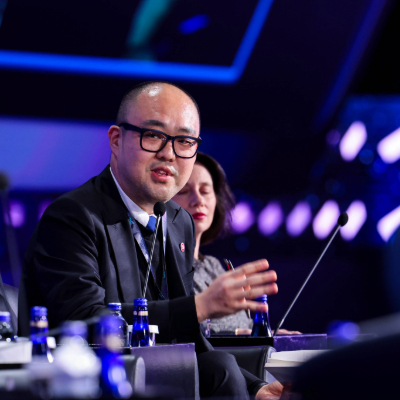
The committee meeting was held in Seoul on January 31 involving forum members and Lee Yong-oh, a lawmaker from the ruling People's Power Party, and Professor Kim Jin-wook from Konkuk University in Seoul. Professor Kim gave a special lecture on "the economic effect of carbon neutrality supported by nuclear power plant-friendly policies."
During the committee meeting, Professor Kim Jin-wook and Yang Kyu-hyun, the CEO of Seoul-based news media company Economic Daily, were commissioned as executive advisors of the forum.
According to the forum, KPEDCF plans to open a branch in the Philippines in 2023 to boost communication and cooperation between South Korean members and energy specialists in the Southeast Asian country.
Park Sae-jin
Experienced journalist and editor at AJU PRESS specializing in multilingual news. I cover international diplomacy, geolpolitics, and policy, consistently delivering highly accurate, compelling reporting for a worldwide audience.
Copyright ⓒ Aju Press All rights reserved.
Related News
-
 North Korea Vows to Deter Threats Amid South Korea's Nuclear Submarine Plans
North Korea has characterized South Korea's efforts to acquire nuclear-powered submarines and related actions by the United States and Japan as threats to regional strategic balance, emphasizing its commitment to strengthening naval power. This statement follows a day after Kim Jong-un inspected the construction site of a naval base on the East Coast.According to the Korean Central News Agency, Kim Jong-sik, the first deputy director of the Workers' Party of Korea's Military Industry Department, stated on November 12 that "the visible enhancement of enemy naval forces and the resulting security threats are a very serious challenge."Kim asserted, "We will not stop at merely condemning this; we will deter all threats through action and by demonstrating our changed capabilities."He specifically mentioned the U.S. Navy's deployment of nuclear submarines to Australia, South Korea's promotion of the 'Jangbogo-N' project, and Japan's discussions on acquiring nuclear submarines. He claimed that the naval power enhancement by the U.S. and its allies is aggressive and confrontational in nature.The Jangbogo-N project aims to develop South Korea's own nuclear-powered submarines through domestic research and development. The South Korean government recently approved the basic strategy for this project during a defense project promotion committee meeting.Kim also criticized the U.S. for attempting to dominate the Asia-Pacific region based on its nuclear superiority at sea and underwater. He argued that the sharing of nuclear technology among the U.S. and its allies is triggering an arms race in the region.He added that these developments necessitate diversifying North Korea's response capabilities to defend its maritime sovereignty and pledged to continue strengthening its military power. He described North Korea's military enhancement as a normal activity aimed at safeguarding national security and regional peace.This statement is seen as an attempt by North Korea to justify its plans for constructing large warships, developing underwater weapons, and expanding its naval bases.Currently, North Korea is pursuing the construction of new warships weighing 10,000 tons and has recently conducted tests of new torpedoes incorporating artificial intelligence (AI) and guidance technology. The day before, Kim Jong-un visited the naval base construction site and instructed the modernization, multifunctionalization, and fortification of the base, emphasizing its completion within the designated timeframe.* This article has been translated by AI.
-
Daewoo Engineering Faces Challenges in Czech Nuclear Project Amidst Arbitration Stalemate
Daewoo Engineering's position is weakening following the breakdown of negotiations for the construction contract of the new Dukovany nuclear power plant in the Czech Republic. Despite the company's request for public mediation from the Ministry of Trade, Industry and Energy, the government has clarified that it lacks the authority to intervene. As Korea Hydro & Nuclear Power (KHNP) moves forward with the selection process for a new contractor, Hyundai Engineering has also expressed interest in bidding, putting Daewoo in a precarious position.According to industry sources on November 12, Daewoo Engineering requested mediation from the Ministry after negotiations with KHNP for the main equipment construction contract for the Dukovany plant collapsed. Unable to find common ground on contract terms, Daewoo sought to restart negotiations through government intervention.However, the Ministry has stated that it does not have the legal authority to intervene in commercial negotiations between companies. There are also concerns within the Ministry regarding Daewoo's decision to publicly request mediation without prior consultation.KHNP has shifted its focus to selecting a new contractor. The company has held 91 discussions, including meetings with top executives, and extended the contract signing deadline set by the Czech client from September to the end of October, but no agreement has been reached.For Daewoo Engineering, this project is difficult to abandon. The company has been preparing for a long time since joining Team Korea in 2018, investing hundreds of millions of won and deploying dozens of personnel for construction and permitting processes. Moreover, the Czech project was intended to serve as a stepping stone for expanding its overseas nuclear business, so losing this opportunity could disrupt its long-term growth strategy.Hyundai Engineering's interest in bidding adds direct pressure on Daewoo. Hyundai has stated that it will consider participation once the schedule and conditions for the re-bidding of the Czech nuclear project are finalized. In 2018, Hyundai formed a consortium with Samsung C&T to compete against the Daewoo-Doosan Energy consortium. If renegotiations fail and Hyundai enters the bidding, Daewoo will face competition from its former rivals once again.Daewoo Engineering remains focused on reviving the existing negotiations. The company argues that entering into a fixed-price contract without a completed basic design could lead to losses due to increased quantities. On October 29, Daewoo submitted a final revised proposal that significantly lowered the amount, accepting the risk of incurring losses in the billions of won.A Daewoo representative stated, "I understand that the business division assessed the potential for significant losses if KHNP's proposal was fully accepted. We are requesting KHNP to facilitate another round of negotiations amicably."KHNP plans to select a new contractor to avoid delays in the project. The goal is to complete the selection by July 2027 to adhere to the scheduled site stabilization start in January 2029. While specific bidding conditions have yet to be finalized, evaluations will consider project conditions, compliance with timelines, and the feasibility of contract execution.Daewoo Engineering is also keeping the door open for new bidding opportunities. A company official remarked, "If there is a chance to participate, we will prepare, and from our perspective, there is no reason not to."However, another source cautioned, "Discussing participation in new bidding at this stage is speculative. It is essential to create a construction contract structure that reasonably shares risks without undermining national interests and the competitiveness and trust of Korean nuclear power."* This article has been translated by AI.
-
Seowang-jin: Nuclear Power Public Discourse Lacks Transparency
Seowang-jin, a member of the Justice Innovation Party, criticized the government's approach to the 'Nuclear Power Public Discourse Committee' on November 9, stating, "If the public discourse is conducted based solely on predetermined questions and limited information set by the government, it is not a democratic decision-making process but merely a formality to justify government decisions under the guise of citizen participation."During a press conference at the National Assembly, Seowang-jin noted, "Key information related to nuclear power has not been sufficiently disclosed to the public due to security reasons. Without adequate information, proper deliberation cannot take place." He emphasized the need for new questions that reflect the changing realities, such as the expansion of renewable energy, delays in nuclear power construction, and climate disasters, expressing concern about whether sufficient discussion can occur within the tight timeline set for the public discourse by the end of the year.The electricity supply basic plan is the government's long-term strategy that forecasts electricity demand over the next 15 years and outlines the direction for expanding power generation facilities. The government formed the Nuclear Power Public Discourse Committee on October 2 as part of the preparation for the 12th electricity supply basic plan, anticipating a significant increase in electricity demand due to the impact of three mega-projects, thereby increasing the role of nuclear power.In response, some experts and civic groups in the fields of energy, climate, and environment have recently united to launch the 'Different Questions Forum,' arguing that the realities surrounding the energy industry have changed and that new questions must be raised during the public discourse.Park Jin-hee, a professor at Dongguk University who attended the press conference, stated, "When the criteria change, the questions must change as well. We will present different questions that allow for new judgments based on the altered circumstances," adding, "I hope the nuclear power public discourse moves beyond past frameworks and is conducted based on objective and fair standards."The Different Questions Forum believes that the energy industry is undergoing rapid changes due to semiconductors and artificial intelligence (AI). In particular, the government has significantly increased its electricity demand estimate for AI data centers (AIDC) from 4GW to 11.9GW by 2040, warning that excessive estimates could lead to substantial stranded assets.In this context, Jeon Young-hwan, a professor at Hongik University, asserted, "If the planning for power generation facilities is excessive, it will all become stranded assets," stressing that the 12th electricity supply basic plan must be established rationally.* This article has been translated by AI.