
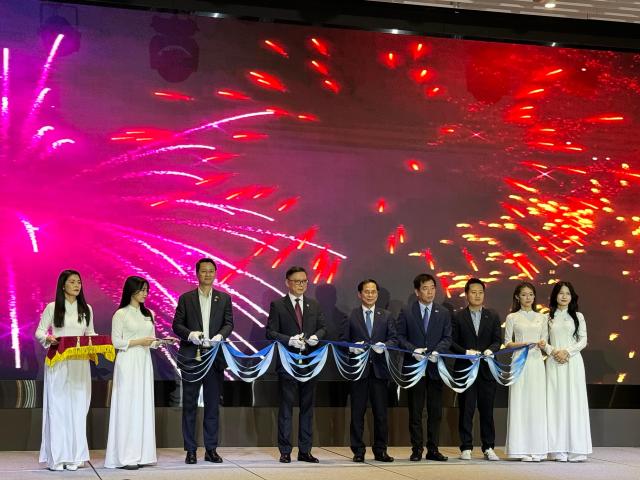
The organization was established in October 2023 to assist Vietnamese companies operating in Korea and promote investment and trade between the two countries. BAVik currently has some 40 member companies.
“Currently, the relationship between Viet Nam and Korea is at its highest stage of development," Vietnamese Foreign Minister Bui Thanh Son said in his congratulatory speech at the ceremony.
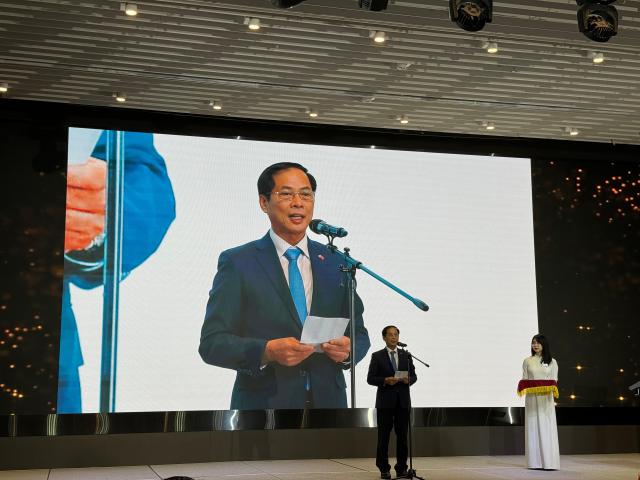
He highlighted that Korea ranked first in cumulative foreign direct investment (FDI) in Viet Nam as of the end of 2023, valued at $86 billion. Bilateral trade volume reached $76 billion in 2023, making Korea the third-largest trading partner of the Southeast Asian nation.
"The Vietnamese business community in Korea should take advantage of this opportunity to further enhance the two countries' economic ties," he said.
The minister further urged that swift and efficient decision-making actions are essential for Viet Nam to advance into a modern, high-income nation by 2045.
About 200 people attended the event including Vietnamese Ambassador to Korea Vu Ho.
Copyright ⓒ Aju Press All rights reserved.
Related News
-
 K-Food Festival Ignites Interest in Vietnamese Culture with Cooking Shows and Hands-On Activities
South Korean cuisine is evolving in Vietnam, transforming from mere food into a cultural experience that includes performances and hands-on activities. Events showcasing K-Food, from cooking and dance performances to making kimchi and kimbap, have been taking place recently.According to local reports, including VnExpress, a series of events combining Korean food and culture began on September 24. The non-verbal performance 'Chef Show' kicked off in Hanoi before moving to Hai Phong, while a separate Korean food festival was held in Hoi An that same weekend.Cooking, Dancing, and Singing: K-Food Takes Center StageThe first event was the Chef Show organized by the Korean Cultural Center. The performance in Hanoi on September 24 attracted around 300 attendees. The stage was set against a restaurant backdrop, featuring two chefs competing against each other.The performers conveyed their story through beatboxing, a cappella, breakdancing, singing, and dancing, without any spoken dialogue. The cooking process itself became part of the performance, with Korean actors showcasing dishes like Vietnamese pho, Italian pizza, Japanese sushi, and Korean bibimbap.During the preparation of chicken pho, one assistant chef humorously pretended to give artificial respiration to a chicken going into the pot, eliciting laughter from the audience.The sounds of chopping ingredients, boiling water, and cooking on the pan were seamlessly integrated into the beatboxing and a cappella. The audience was also invited on stage to taste the finished dishes and choose between the two chefs in an interactive segment.This Chef Show, branded as 'Eatertainment,' first debuted in 2008 under the name 'Bibap' and has continued since 2011 as the Chef Show. It has performed in 101 cities across 38 countries, including the Edinburgh Festival Fringe in the UK, Japan, and Kazakhstan. The show first performed in Hanoi in 2023 and returned for its second performance this year.In Hai Phong, Experience Korean Culture with Kimchi Making and HanbokAfter the Hanoi performance, the Chef Show moved to Hai Phong on September 26. The troupe participated in the 'K-Food & Culture Festival 2026,' performing once each day on September 26 and 27.The Hai Phong festival featured various programs allowing participants to experience Korean food and culture firsthand. Under the guidance of a Korean chef, attendees made traditional kimchi to take home. The Korean Cultural Center also set up a booth where visitors could try on hanbok, enjoy traditional Korean games, and take commemorative photos.The festival atmosphere was enhanced by K-pop and V-pop performances, with artists like Chipu and Hansara taking the stage. A K-Talent finals competition with a total prize of 30 million VND was also held. Some key opinion leaders and reviewers attended the event to experience the programs and share live updates.In Hoi An, Make Kimbap and Dalgona: An Interactive K-Food ExperienceOn the same weekend of September 26-27, the '2026 Hoi An Korean Food Festival' took place. Organized by the Korea Agro-Fisheries & Food Trade Corporation (aT) Ho Chi Minh City branch and operated by Shin ASEAN Vietnam, the event was supported by the Da Nang City Department of Culture, Sports and Tourism, the Hoi An People's Committee, and the Hoi An World Heritage Preservation Center.The Hoi An festival focused on hands-on experiences with K-Food. Visitors tasted dishes like tteokbokki and Korean-style convenience meals while participating in programs to make kimbap, dalgona, cup tteokbokki, and Korean ramen.Programs that combined Korean food with local culture were also offered. Traditional folk performances took place, with Hoi An artists playing Korean music on traditional Vietnamese instruments. Programs promoting the culture and tourism of Hoi An and Da Nang were also conducted. All events and activities were free, marking the second consecutive year for the Hoi An Korean Food Festival.This series of events has expanded K-Food's presence in Vietnam, transforming it from simple cuisine into a cultural content that local audiences can enjoy and participate in. Interest in Korean food has led to engagement with hanbok, performances, and traditional cultural experiences, establishing K-Food as a new avenue for connecting with Korean culture.* This article has been translated by AI.
-
Vietnamese Seasonal Workers in South Korea Face High Costs Amid High Earnings
Vietnamese seasonal workers in South Korea are earning substantial incomes, but they are also facing excessive departure costs and issues related to illegal recruitment. The Vietnamese government plans to investigate regional commission practices to alleviate the economic burden on workers and strengthen measures to prevent illegal residency. According to the Vietnamese Ministry of Public Security, Deputy Minister Bui Chien Thanh instructed strict management of costs incurred during the employment process in South Korea and called for blocking the involvement of illegal brokers during a meeting on October 15 in Ho Chi Minh City to evaluate the pilot project for sending seasonal workers. This meeting was convened to assess the operational results and issues of the seasonal worker cooperation project between local governments in Vietnam and South Korea, initiated under Resolution No. 59 of the Vietnamese government. Currently, 16 provinces and cities in Vietnam have agreements with South Korean local governments to send seasonal workers. Approximately 18,000 Vietnamese workers have been employed in South Korea to date. The seasonal worker program contributes to increasing the income of residents in rural, remote, and ethnic minority areas. Notably, it allows workers to return to their hometowns after working in South Korea during the agricultural off-season, which distinguishes it from other overseas employment methods. 18,000 Vietnamese Seasonal Workers in South Korea Earn Up to 3.1 Million Won Monthly The earnings of Vietnamese workers dispatched to South Korea are significant. Pham Dinh Loc, head of the Vietnam Overseas Labor Management Department, stated during the meeting that seasonal workers can earn between 4.5 million and 6 million dong (approximately 233,000 to 310,800 won) per month, including overtime pay. After deducting living expenses and other costs, they can save between 3 million and 4.5 million dong (approximately 155,400 to 233,100 won) monthly, accumulating a total of 15 million to 32 million dong (approximately 777,000 to 1,657,600 won) over 5 to 8 months of work. This amount significantly exceeds the average monthly income of Vietnamese workers, which is about 920,000 dong (approximately 47,000 won). Loc explained, "This program not only increases job opportunities and income but also helps reduce poverty and bridge employment opportunity gaps between regions. The money workers save can be used for improving living conditions, investing in production, developing household economies, and funding children's education." However, issues have arisen in some regions regarding the selection of workers and the collection of fees. Concerns have been raised about additional costs and opaque procedures due to local governments not managing the entire process directly or relying on inappropriate intermediary agencies for worker selection. The differing commission structures across regions have also been highlighted as a problem. Some local governments impose relatively high fees, and the lack of uniformity in collection methods could undermine the program's intent to operate on a non-profit basis. High initial costs may force workers to take out loans or face economic pressure even before departing, potentially reducing the amount they can save after working in South Korea and leading them to consider illegal employment. The issue of workers not returning after their contracts have ended has also emerged as a challenge. In some areas, there have been relatively high instances of workers not returning within the designated period, and if this situation continues, it could weaken trust between local governments in South Korea and hinder the signing or renewal of agreements. In response, the Vietnamese Ministry of Public Security plans to refine the selection criteria for workers and enhance the fairness and transparency of the recruitment process. They will verify the residency status, health, and agricultural experience of candidates while prioritizing low-income individuals, ethnic minorities, and economically disadvantaged households. Additionally, they will clearly disclose the administrative costs that workers must bear and implement measures to prevent the involvement of illegal brokers. In South Korea, there are also calls for establishing support systems to monitor labor contracts, insurance, and working conditions, as well as to address wage arrears, accidents, and disputes. Deputy Minister Thanh has ordered a thorough analysis of the operational methods and regional cost differences and has called for practical solutions to address contract violations and illegal residency issues. Meanwhile, the Vietnamese Ministry of Public Security plans to review the sustainability of the pilot project for sending seasonal workers based on the evaluation results and report to the relevant authorities. Addressing high fees and illegal recruitment issues while encouraging the normal return of workers after contract completion will remain key challenges.* This article has been translated by AI.
-
Vietnamese Rural Workers Flock to South Korea for Seasonal Jobs
Vietnamese rural workers are increasingly turning to seasonal jobs in South Korea as a way to save money. Those working in agriculture and fisheries can earn up to approximately 15 million won after expenses by working for up to eight months. However, issues such as broker fees, working conditions, and contract violations need to be addressed.Over 18,000 Seasonal Workers Sent to South Korea from 16 ProvincesAccording to Vietnamese labor authorities on September 29, over 18,000 seasonal workers have been sent to South Korea from 16 provinces and cities through agreements with local governments. These workers typically engage in agricultural and fisheries jobs for periods ranging from three to eight months.Pham Dinh Loc, head of the Overseas Labor Management Department at the Vietnamese Ministry of Labor, praised the results of the seasonal work program, stating, "The outcomes are very positive, and the outlook is bright." He noted that the program is particularly accessible for workers with agricultural experience and provides job opportunities for older farmers.High earnings are a significant draw. According to Vietnamese authorities, seasonal workers in South Korea can earn between 4 million and 6 million dong (approximately $209 to $314) per month. After deducting costs for food, accommodation, living expenses, and insurance, workers can save up to about 30 million dong (around 15 million won) after completing an eight-month contract.Deputy Director of the Overseas Labor Management Department, Bu Truong Giang, emphasized, "The work period has now been extended to eight months, which can be a substantial amount for low-income households and effectively reduce poverty."Particularly, Dak Lak Province is one of the regions expanding its dispatch of seasonal workers to South Korea. According to the Dak Lak Department of Internal Affairs, over 2,400 workers are set to work abroad, with approximately 1,360 of them going to South Korea.Dak Lak is also proactive in supporting overseas employment. The local government provides information on hiring conditions, wages, costs, and workers' rights to residents seeking jobs abroad before they depart. This aims to minimize potential harm during the overseas employment process and ensure that workers fully understand the conditions before accepting jobs.Broker Fees, Working Conditions, and Contract Violations Remain ChallengesHowever, there are risks associated with seasonal work in South Korea. Vietnamese authorities have identified broker fees, local working conditions, and instances of workers leaving their jobs without notice as major issues.The seasonal work program is operated through direct agreements between local governments in both countries. In principle, it does not involve recruitment agencies or individual brokers charging fees. However, some companies and individuals have been found to demand additional fees during the recruitment process.The normal costs that workers must bear for visas, airfare, and health checks amount to about 20 million dong, including administrative fees. However, in some areas, additional costs of 30 million to 40 million dong have been reported.Concerns have also been raised about the intensity of work and working conditions. Seasonal work often coincides with harvest periods, requiring long hours, and workers may have to perform outdoor tasks in cold weather during winter.There have also been cases of workers leaving their jobs without permission during their seasonal work in South Korea. Currently, the contract violation rate among seasonal workers is reported to be 3.97%. Vietnamese authorities are concerned that as the work period extends to a maximum of eight months, the likelihood of workers leaving their jobs for illegal employment or overstaying their visas may increase.The Vietnamese government is considering ways to continue the seasonal work program in South Korea while addressing these issues. Loc stated, "It is necessary for the government to prepare a resolution to continue the pilot seasonal work program in South Korea under the current circumstances."In response, Vietnamese authorities plan to review the entire process from worker selection to local employment and return, with a focus on enhancing working conditions and protecting workers' rights. They aim to ensure that residents are accurately informed about job duties, wages, and costs before departing for South Korea, while also strengthening management systems between local governments.* This article has been translated by AI.