

According to a survey of 1,500 users conducted by the Korea Consumer Agency and released on Thursday, participants were asked to express their satisfaction levels, with Netflix taking the top spot with an average score of 3.75 out of a possible 5 points.
It was followed by Tving with 3.66 points, Coupang Play with 3.64 points, Wavve with 3.62 points, and Disney Plus with 3.51 points.
About 20.3 percent of respondents cited the availability of diverse programs as their main reason for choosing a platform, while slightly fewer users ticked subscription fees.
Netflix earned the highest score of 4.07 points for content diversity, while Coupang Play scored 3.74 points for its relatively affordable subscription fees.
But some 12.2 percent of respondents said they experienced service disruptions due to server and connection problems.

Candice Kim
Candice Kim is a dedicated business and technology reporter specializing in the intersection of high-tech innovation and fast-paced consumer trends. Her core beats span the semiconductor, IT, cosmetics, and retail sectors, where she provides in-depth coverage of industry titans including Samsung Electronics, SK hynix, and LG Electronics, alongside leading consumer brands like Olive Young and Musinsa. Whether analyzing complex silicon supply chains or tracking the latest shifts in beauty and fashion retail, Candice is committed to delivering sharp, accurate reporting that keeps readers informed on the forces shaping today's most dynamic markets.
Copyright ⓒ Aju Press All rights reserved.
Related News
-
 Leading Producers Discuss New Worldview of K-Entertainment with Disney+
Domestic entertainment leaders gathered to discuss the evolution of entertainment in the era of online video services (OTT) and the potential for global expansion. The conversation delved into bold planning that breaks the mold, close communication with viewers, and strategies to expand a single piece of content into a vast worldview, assessing the current state and future of K-entertainment.On the morning of November 18, at the Conrad Seoul Hotel in Yeouido, a creator session for the '2026 Disney+ Media Day' took place. Among those present were PD Kim Tae-ho, Song Eun-yi, CEO of Content Lab VIVO ('If You Confess, You're Cut Off'), PD Hyun Jeong-wan ('Tag Game'), and PD Hwang Kyo-jin ('War of Destiny 49' and 'New Pal Stay'), who shared their thoughts on their new projects, their collaboration with Disney+, and the rapidly changing trends in content consumption.Song Eun-yi, the head and planner of Content Lab VIVO, opened the discussion by introducing the anti-romance reality show 'If You Confess, You're Cut Off,' which directly addresses the long-standing dilemma between men and women. This project, which starts from a completely opposite point to existing dating programs, reportedly showcased developments that exceeded the production team's expectations from the filming site.Song stated, "'If You Confess, You're Cut Off' is a program that poses the most philosophical question in relationships between men and women since the creation of the world: 'Does true friendship exist?' It is a reality show that observes whether male and female friends, who can even take a bath together, can overcome temptations and maintain their friendship 100% while breaking various solutions and taboos." She added, "Watching the youth, I was quite surprised. Today's friends are honest about their feelings and express themselves much more richly than the given situation. The results also concluded in ways that were much more diverse than we expected, and we just need to refine and present them well."PD Hwang Kyo-jin and PD Hyun Jeong-wan, who have built unique worlds by twisting the grammar of the survival genre, also shared the background of their new challenges. PD Hwang, who has garnered attention with 'War of Destiny 49' and is preparing for Season 2 and the spinoff 'New Pal Stay,' discussed the project’s intent, which stems from human curiosity. PD Hyun cited his long-standing affection for survival shows since his time as an assistant director as his motivation.PD Hwang explained, "The instinctive question and curiosity of 'Can you read destiny?' is something everyone is curious about, transcending national boundaries, which is why we planned it. While most entertainment PDs ponder 'Is this fun?' we asked ourselves, 'Does this make sense? Can we do this?' It was an unrealistic concept, but Disney+ boldly chose it, allowing us to create it together."PD Hyun Jeong-wan shared, "I have always liked survival entertainment and thought about 'What kind of survival do I want to see?' I used to edit chase scenes during my time as an assistant director on 'Infinite Challenge,' and the idea for 'Tag Game' started from thinking it would be fun to mix survival with that. We are currently preparing a new mystery game survival show with Disney+ as well."Regarding the essence of fun that viewers expect in the multi-media era, all producers presented 'depth' and 'communication' as key keywords. As the focus has shifted from universal family viewing to personalized consumption, they diagnosed that the creators' attitudes must also change.PD Kim Tae-ho analyzed, "In the past, families gathered in front of a single monitor or screen, compromising slightly on their preferences, but now each person seeks content that matches their tastes on their devices. Looking at current consumption trends, we are moving from 'breadth' to 'depth,' so it has become important to create content that is liked with loyalty rather than just how much is watched." He continued, "In the past, when we created content unidirectionally, we sometimes mistook ourselves for being correct, but now feedback is a crucial element, and we are making it interactively. The level of viewers has also risen, so we can't just create casually."CEO Song Eun-yi also remarked, "In the past, there was a clear division between consumers and content creators, but now consumers can become creators themselves, and everyone is exposed and well-informed. I believe that communicating closely with those who watch directly is a smart approach. Instead of hiding and then revealing, it is important to evolve while providing feedback in line with the flow, without losing our unique color." PD Hyun Jeong-wan agreed, stating, "OTT works inevitably lack timeliness, so we put a lot of effort into making them, and it seems that viewers strictly evaluate the depth of the content. Sometimes, I feel like 'Did the producer see this?' because they evaluate it so deeply, which makes us think we need to go deeper as well."When asked about Content Lab VIVO's planning approach, CEO Song expressed her ambition to broaden the genre while maintaining the root of 'comedy.'CEO Song stated, "Comedy is the base, so we fundamentally immerse ourselves in making it funny. We ponder whether it can be beneficial, harmless, and still entertaining. If we create the essence of the content well, it will evolve and spread on its own. Just as eating only one type of food leads to nutritional deficiencies, we are now trying to break away from picky eating and create a variety of things based on the foundation we have built over the past ten years. Based on the experience of podcasts becoming TV programs and being homaged, we will strive to maintain our unique imagination while breaking away from picky eating."The collaboration experience with the global platform Disney+ has also provided fresh stimulation and a solid foundation for domestic producers. The unique perspective of the overseas headquarters and the platform's strength in expanding worldviews have been evaluated as creating synergy.PD Hyun Jeong-wan shared, "Working with Disney+, the feedback from foreign officials at the U.S. headquarters was very refreshing. Their perspective and rhythm differ, making me feel anew that 'This is how content is viewed overseas.' I received the impression that Disney actively supports production and is warmer than expected."PD Hwang Kyo-jin also noted, "Disney is a content group that possesses classic elements while simultaneously pursuing novelty, and I felt positively about that color during our collaboration. They accepted bold attempts while empathizing with the classic essence of survival, allowing us to create it enjoyably. I believe Disney+'s greatest strength is its worldview. Through Disney's Marvel universe, the spinoff of 'War of Destiny' will be released soon, and I hope to showcase a new worldview with our own color to global viewers."* This article has been translated by AI.
-
AI Transforming the Subscription Economy in Finance
Subscription services are at a new turning point. While online video services (OTT) like Netflix once drove growth in the subscription market, artificial intelligence (AI) has recently emerged as a new growth engine. The focus is shifting from content consumption for enjoyment to productivity consumption aimed at improving work efficiency and personal development.A recent analysis of credit card payment data by Woori Card from 2024 to 2026 clearly illustrates this change. The subscription market has entered a phase of 'qualitative transformation,' where consumer usage purposes and spending structures are evolving beyond mere growth in size.Over the past two years, subscription market revenue increased by 11.5%. While this growth rate may suggest stability, the number of transactions rose by 28.2%, and the number of users grew by 24.7%. This indicates that the trend of 'multi-subscription,' where consumers use multiple services simultaneously, has become commonplace.Most notably, the criteria for choosing subscriptions have changed. In the past, price discounts and convenience were key factors, but now the focus is on 'how much practical value is provided.' Consumers expect utility proportional to their spending and are willing to pay for services they perceive as valuable.This shift is even more pronounced in payment data by category. Subscription services centered on content have seen a slowdown in growth. OTT services recorded a 2.1% decline, while overseas digital services dropped by 27.9%, and the education and learning sector fell by 57.0%.In contrast, AI subscriptions experienced an overwhelming growth rate of 589.6% during the same period. Subscription services related to shopping and delivery (67.2%) and home appliances and rentals (22.5%) also showed steady growth, but they lagged significantly behind AI's rapid expansion.The core of this change lies in the evolving purpose of consumption. While subscriptions were once primarily for leisure and convenience, AI subscriptions are now being utilized as productivity tools that enhance work efficiency and support learning and content creation. The focus of consumption is shifting from 'entertainment' to 'productivity.'Generational characteristics are also evident. Individuals in their 20s and 30s actively use AI for work, creation, and learning, showing a willingness to invest in productivity enhancement. In contrast, those aged 40 and above tend to maintain existing lifestyle subscriptions such as rentals, shopping, and OTT services. This indicates a divergence in consumption purposes within the subscription economy across different generations.Another reason AI subscriptions are gaining attention is their high added value. Currently, the subscription market shows that the top 5% of users account for about 24% of total revenue. Notably, the average spending per AI subscription user is approximately 2.5 times that of regular users, indicating that AI subscriptions are attracting a core consumer group with high spending tendencies.The average payment amount for AI subscriptions is also rapidly increasing. The average payment is projected to rise from 32,000 won in 2024 to 37,000 won in 2025, and to 50,000 won in 2026, marking an increase of about 59% over two years. This cannot be solely attributed to price increases; it suggests that users are opting for premium AI models and specialized services, willing to pay more for higher value.The subscription economy has entered a new phase. While past subscriptions represented a shift from 'ownership to usage,' subscriptions in the AI era now carry the new meaning of 'investment in productivity beyond consumption.' AI is no longer just a tool for early adopters; it has become an everyday tool that supports individual work, learning, and creation.Ultimately, the future competitiveness of the subscription market will depend less on the quantity of content provided and more on the level of productivity and value it generates. The subscription economy, reshaped around AI, is not only redefining consumer choice criteria but also offering new directions for corporate service strategies and business models. Credit card payment data indicates that this transformation has already begun.* This article has been translated by AI.
-
 Korea's Broadcasting Commission Plans Media Voucher for Low-Income Households
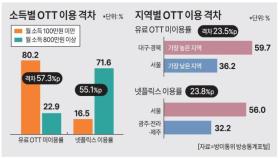
The Broadcasting and Communications Commission (BCC) is preparing to implement a "Media Basic Society" initiative as part of its budget planning for the upcoming year. The proposal includes a media voucher system aimed at supporting online video service (OTT) fees for low-income households, with the goal of expanding access to content and addressing the digital service gap. According to the BCC on June 11, the commission is reviewing policies to establish a Media Basic Society as a key objective for next year's budget. With a consensus among members, led by Chairman Kim Jong-cheol, the focus is on enhancing content access for vulnerable populations and reducing disparities in digital service usage. A BCC official stated, "We are preparing a media voucher system that would support OTT fees and paid broadcasting costs as a long-term project. However, discussions with the Ministry of Economy and Finance and other financial authorities are still needed." The push for this policy comes in response to changing content consumption patterns. While OTT services have become a primary source for content, significant disparities in usage based on income and region persist. Data from the BCC's broadcasting statistics portal indicates that 80.2% of households earning less than 1 million won per month do not use paid OTT services. In contrast, only 22.9% of households earning over 8 million won are non-users, revealing a 57.3 percentage point gap between the two groups. Usage rates for Netflix, the most popular OTT service in Korea, also vary significantly by income. Only 16.5% of households earning under 1 million won use Netflix, compared to 71.6% of those earning over 8 million won. Regional disparities are also evident. Netflix usage is highest in Seoul at 56%, while it is only 32.2% in Gwangju, Jeolla, and Jeju. The highest non-usage rate for paid OTT services is found in Daegu and Gyeongbuk at 59.7%, while Seoul's rate is 36.2%. The BCC is examining policies to mitigate these access gaps. However, opinions differ on whether the proposed subsidies will enhance the competitiveness of the domestic media industry. The paid broadcasting sector has expressed concerns that the voucher system could lead to increased use of global OTT services. Since users are likely to apply vouchers to well-known platforms like Netflix, the benefits for nurturing the domestic media ecosystem may be limited. There are also calls to clarify the policy objectives of the Media Basic Society. An industry insider noted, "It is essential to define whether the media voucher is a support policy for vulnerable groups, an access expansion policy, or a domestic media industry development policy, as the support methods should vary accordingly." Experts emphasize the need for a cautious approach to using government funds to support OTT usage. Kim Yong-hee, a professor at Sun Moon University, stated, "While the intention to expand content access for vulnerable groups is commendable, using national resources to support specific platforms could lead to market distortion. There needs to be ample discussion on the scope and intensity of market intervention." He added, "Supporting OTT usage could ultimately imply incorporating OTT into policy and regulation frameworks, suggesting that discussions on deregulation and market restructuring should precede simple fee support measures."* This article has been translated by AI.