

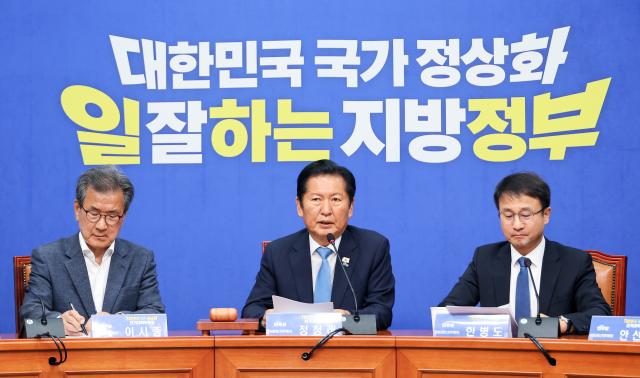
The ruling party has strengthened its position in the National Assembly and secured significant local power, bolstering the governance of Lee Jae-myung's administration. The government and ruling party are expected to accelerate their legislative agenda, focusing on economic and reform initiatives based on cooperation between central and local governments.
According to political sources on June 3, the local elections held on that day were the first nationwide elections since the inception of the Lee Jae-myung administration, effectively serving as a midterm evaluation of the new government. Exit polls indicated that the Democratic Party is projected to win most of the regional leadership positions.
The Democratic Party has established a favorable trend, particularly in the Seoul metropolitan area and the Chungcheong region. This continued momentum following last year's general election victory is seen as a reflection of the early stability narrative of the administration. The party emphasized the need for policy cooperation between the central and local governments during the election campaign, promoting support for the administration.
Lee Yeon-hee, the Democratic Party's Strategic Planning Committee Chair, commented on the exit poll results from the three major broadcasting networks (KBS, MBC, SBS), stating, "This is a predictive survey confirming public sentiment supporting President Lee Jae-myung's effective governance and national stability."
Regarding the high voter turnout exceeding 60%, she analyzed that "the Democratic Party's supporters and moderate voters seeking stability in governance came out to the polls to lend support to the Lee Jae-myung administration and to energize the government's agenda."
The party's advantage in the Seoul metropolitan area is considered significant, as this region is home to nearly half of the nation's voters and is a key battleground that can influence national election outcomes. While the main opposition party, the People Power Party, emphasized the need for checks on the administration, they failed to overcome the ruling party's narrative of national stability. Winning in the Chungcheong region, which has historically played a decisive role in elections, is also viewed positively.
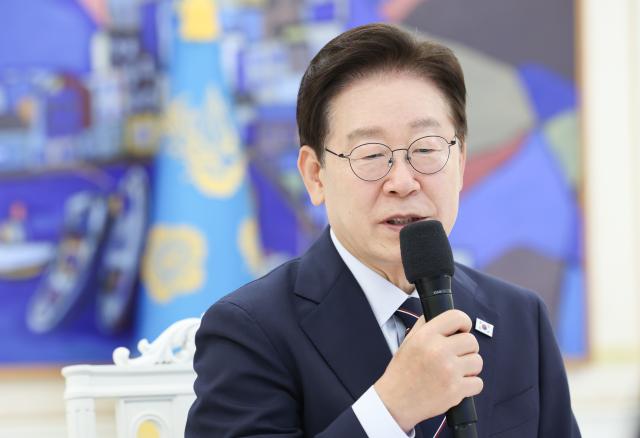
The nationwide public sentiment is expected to bolster the legislative process for the administration's agenda in the National Assembly. With the Democratic Party holding a majority in the National Assembly and securing significant local government positions, the momentum for policy initiatives is likely to increase. With no nationwide elections until the 2028 general elections, the government and the National Assembly have time to focus on completing reform tasks.
The ruling party plans to intensify efforts in the upcoming regular session of the National Assembly to address issues such as normalizing the real estate market and promoting balanced regional development, which President Lee has emphasized since taking office. Discussions on the proposed citizen dividend system utilizing artificial intelligence (AI) revenue, introduced by Chief Policy Officer Kim Yong-beom during the election period, may also commence in earnest.
The re-pursuit of the so-called "Special Prosecutor Law" granting the right to dismiss charges is also anticipated. Although the Democratic Party took a step back due to strong opposition from the opposition party and the legal community before the local elections, they have decided to process the special prosecutor law following the elections. President Lee also mentioned on May 4 that "it is essential to clarify the truth through a special prosecutor and to establish judicial justice," highlighting the necessity of the special prosecutor law.
However, the relatively close results in the Yeongnam region and some key battlegrounds suggest that the government and ruling party may need to moderate their pace in future governance. While they achieved victories nationwide, there remains significant public sentiment advocating for checks on the government in various regions.
As a result, rather than pushing forward with reform tasks unilaterally, the administration is expected to carefully monitor public opinion trends and adjust the pace and priorities of their initiatives. Policies directly related to people's livelihoods and the economy are likely to be approached with caution, fostering social consensus and cooperation with the opposition party.
* This article has been translated by AI.

Copyright ⓒ Aju Press All rights reserved.