

"Gold, a metal born from the death of stars, has captivated humanity for thousands of years. It is a marvel in itself." (p. 52)
Gold symbolizes divinity and desire. Once considered the flesh of gods, it transformed into a symbol of rulers' immortality and authority. Today, it shines as a token of marriage and a stable asset amid market fluctuations.
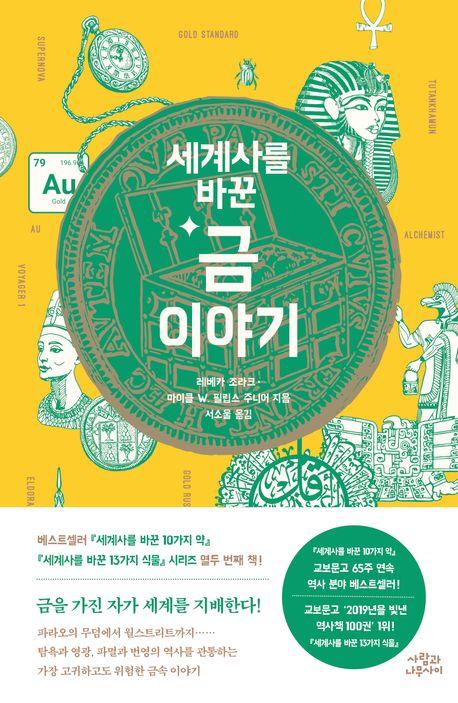
The book "The Story of Gold That Changed World History" (by Rebecca Zorach et al., translated by Seo Soul) chronicles humanity's fascination with gold in chronological and thematic order. The golden hue is both sacred and brutal. While it illuminated the smooth skin of deities, it also blinded plunderers, leading to the mass slaughter of Indigenous peoples in the Americas.
The authors examine the multifaceted reasons behind humanity's special regard for gold. Ancient Egyptians viewed gold as the skin of the sun god, and pharaohs dreamed of immortality through golden masks. The Aztecs and Incas referred to gold as "the excretion of the gods" and "the sweat of the sun," respectively.
In China, where bronze and jade were once more valued than gold, the arrival of Buddhism elevated gold's status. During the prosperous Tang Dynasty, goldsmithing flourished, leading to the creation of numerous gold-plated temples and golden stupas. Today, in Southeast Asian Buddhist cultures, adherents continue the tradition of gilding statues, reflecting a similar reverence.
The authors note, "Just as ancient Egyptians depicted their gods with gold, it was entirely natural for Buddhists to gild statues of the Buddha, whose 32 physical characteristics include a golden complexion and smoothness."
In the Catholic Bible, gold serves as both an object of worship and a cautionary symbol. It represents the idol to be destroyed, the "golden calf," as well as the sacred material that adorned Solomon's temple.
Rulers utilized gold to deify themselves. Citizens recognized their leaders by the lavishly adorned garments they wore. The medieval laws prohibiting luxury, including regulations on gold buttons and decorations, were interpreted as measures to maintain feudal order.
The authors illustrate how humanity's desire for gold has built civilizations and toppled empires through various historical examples. The discovery of the New World by Columbus, the fall of the Aztec Empire, the industrial growth of the United States, the Boer War, and the Congo Civil War all stemmed from humanity's insatiable quest for gold.
European conquerors melted down gold artifacts plundered from the Americas into bullion. The Bank of England continued to melt thousands of pounds worth of gold artifacts from the Americas until the mid-19th century.
Additionally, the book highlights how goldsmithing and alchemy contributed to the Renaissance and laid the groundwork for modern chemistry. It also addresses the ongoing human desire for gold, illustrated by tales of El Dorado, gold rushes, and the actions of multinational corporations seeking gold, which have led to environmental destruction and human rights violations.
Covering 6,000 years of gold-related history from pharaohs' tombs to Wall Street, the book's 336 pages may feel insufficient to encompass its vast narrative. Despite this, it is recommended for those curious about why statues are often gilded.
* This article has been translated by AI.
Copyright ⓒ Aju Press All rights reserved.