

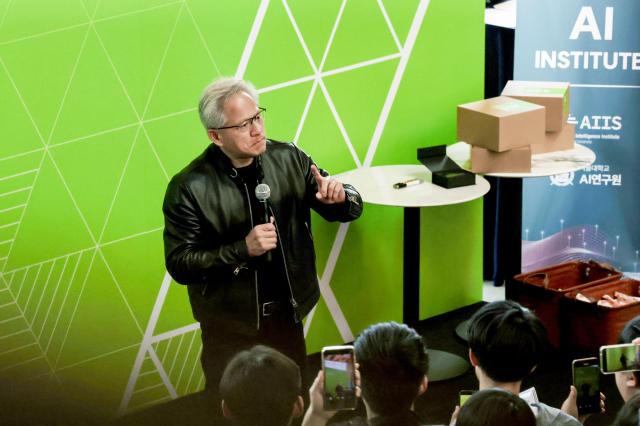
SEOUL, June 09 (AJP) — Nvidia CEO Jensen Huang surely knew how to mix business with pleasure.
He returned home Tuesday with deals on not just memory chips for Nvidia's next-generation Rubin and Vera platforms, but also bags of HBM chip snacks to munch on and the lingering aftertaste of chicken, soju and Korean hospitality.
Since his arrival last Friday, Huang dominated headlines and social media feeds, shuttling between beer and soju gatherings with Korean tech giants, a baseball stadium appearance complete with a ceremonial first pitch, meetings with esports icon Faker and ordinary pedestrians, a brief dance to a K-pop hit and an enthusiastic discussion of singer Hwasa.
While his meetings with business leaders focused on the future of artificial intelligence and multibillion-dollar partnerships, many of the moments that resonated most with the public reflected his enthusiasm for Korean culture and soft power.
Food topped the list.
"I love to eat," Huang told reporters. "I thought my favorite food in Korea was fried chicken, but I was wrong."
He had discovered samgyetang, Korea's traditional ginseng chicken soup, and samgyeopsal, the country's ubiquitous pork barbecue.
The food tour began almost immediately after his arrival.
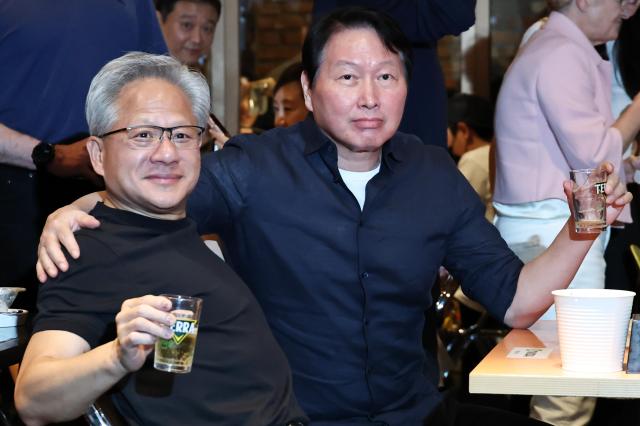
On his first evening, Huang was joined by SK Group Chairman Chey Tae-won, LG Group Chairman Koo Kwang-mo and Naver founder Lee Hae-jin for a barbecue dinner in Seoul's Hongdae district, with hundreds of fans and reporters closely following and livestreaming what was being served.
Reflecting on the meal during his appearance on tvN's popular talk show "You Quiz on the Block," Huang joked, "I ate most of it, because I'm the oldest."
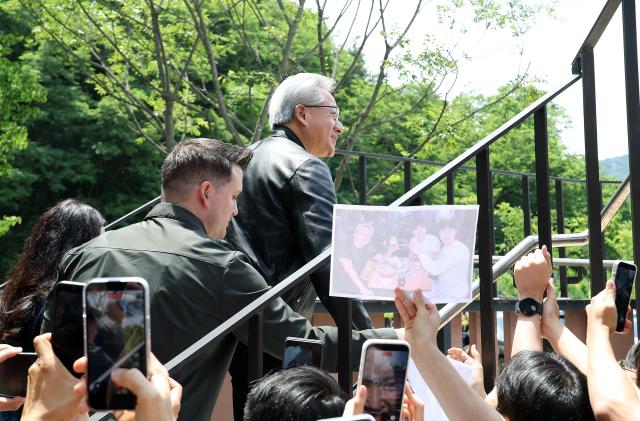
Afterward, he greeted citizens outside the restaurant, signing autographs and handing out HBM Chip snacks. The images quickly went viral. Convenience store chain Seven Eleven said sales of the snack jumped 704 percent during June 6-7 compared with a week earlier.
The following day, he was photographed enjoying samgyetang with family members at a well-known restaurant in central Seoul.
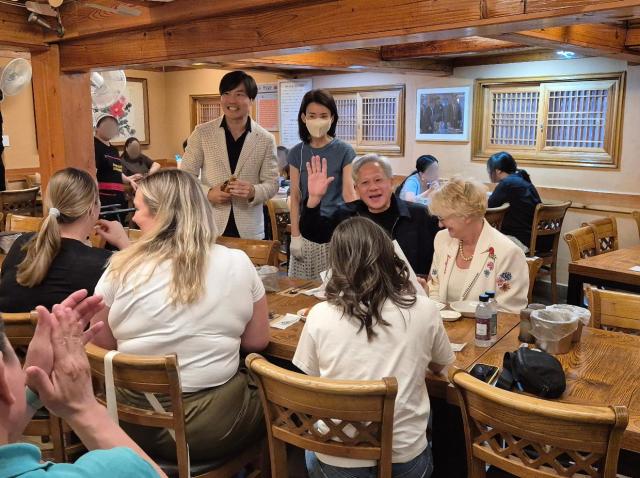
Korean media soon noticed a pattern: wherever Huang went, chicken seemed to follow.
During a previous visit to Seoul in October 2025, he attended a chimaek gathering with Samsung Electronics Chairman Lee Jae-yong and Hyundai Motor Group Executive Chair Chung Eui-sun at a chicken restaurant in Gangnam.
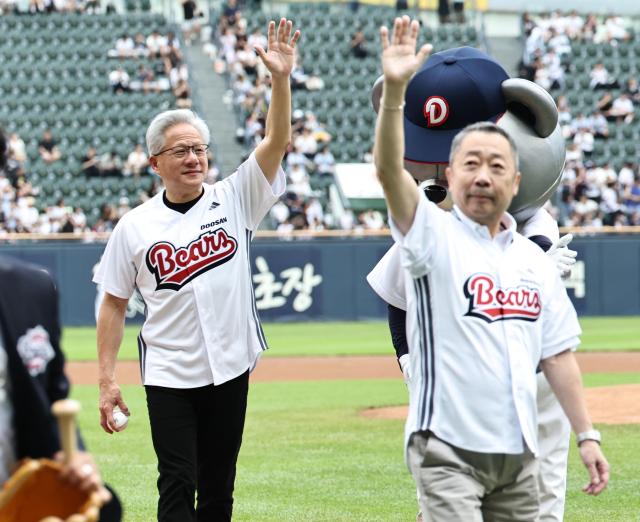
That theme resurfaced at Jamsil Baseball Stadium, where Huang threw out the ceremonial first pitch before a Korea Baseball Organization game.
"Nothing is better than chimaek," he said, using the popular Korean term for fried chicken and beer.
Even after a schedule dominated by AI, semiconductors and business meetings, food remained on his mind.
Speaking at the Shilla Hotel after a private meeting with Samsung Electronics DS Division Vice Chairman Jun Young-hyun at the Guest House, Huang enthusiastically revisited his first meal in Korea.
"A little sesame oil, a little bit of salt. Come on, that's incredible," he said, smacking his lips at the memory.
Food, however, was only one part of the story.
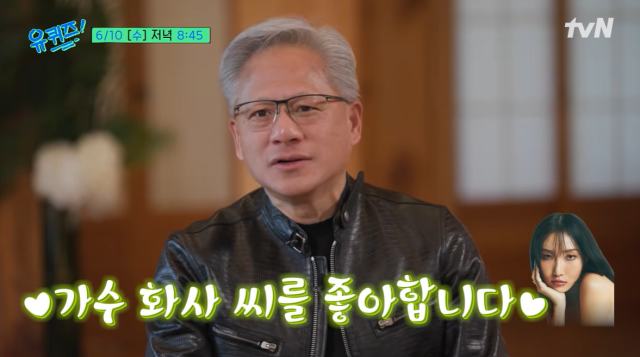
Later on "You Quiz on the Block," Huang surprised viewers by dancing to "Golden," the hit soundtrack from Netflix's animated film "KPop Demon Hunters."
"Who doesn't love Golden?" Huang said with a smile.
He also expressed admiration for singer Hwasa.
"I do also love Hwasa," Huang said. "She's a very good dancer, a good singer."
He even referenced her songs "Good Goodbye" and the newer "So Cute," surprising host Yoo Jae-suk with his familiarity with her music.
He was pleased with an observation from fortune teller Park Sung-jun, who interpreted his facial features on the show — saying his high forehead signified extraordinary intelligence and his nose indicated lifelong prosperity. Huang responded with characteristic humor.
"Your nose is not big enough," he told the host.
"My nose is extraordinary tycoon - "New Korea fashion: Jensen nose," he joked.
His up-close show appearance was notable for another reason. Despite being one of the world's most recognizable technology executives, Huang chose a Korean variety show for his first appearance on an entertainment program.
Shortly after arriving in Seoul, Huang visited T1 Base Camp and met legendary esports player Lee Sang-hyeok, better known as Faker.
Days later, he appeared at Jamsil Stadium wearing a Doosan Bears jersey bearing the number 93, a tribute to Nvidia's founding year.
Taken together, the images formed a striking contrast to Huang's public image as the face of the global AI boom.
Rather than appearing only in boardrooms and conference halls, he spent much of his visit engaging with the cultural experiences that millions of people around the world increasingly associate with South Korea.
For Huang, those experiences were not separate from the country's technology ambitions.
He told reporters what he had told Korea's deputy prime minister for science and ICT Bae Kyung-hoon - that Korea's cultural strengths are one reason the country is uniquely positioned for the AI era.
"I told the deputy prime minister that this is Korea's moment and that this moment must take advantage of Korea's culture," Huang said.
"Korea's culture is very, very adaptable to technology. The culture is very accepting of new technology. In the last 25 years, so much technology came into Korean culture and it was adapted so easily."
"The culture is perfect for new technology, artificial intelligence."
He also pointed to Korea's geopolitical position and openness to global partnerships.
"If there's a country that represents lovers, not fighters, it would be Korea," Huang said.
The comment drew laughter, but it also reflected a recurring theme throughout his visit: that Korea's appeal extends beyond manufacturing and technology.
For Huang, the country's competitive advantage lies equally in its people.
"There's a culture of Korea that is about knowledge and wisdom and dedication and suffering. You have to protect that," he said.
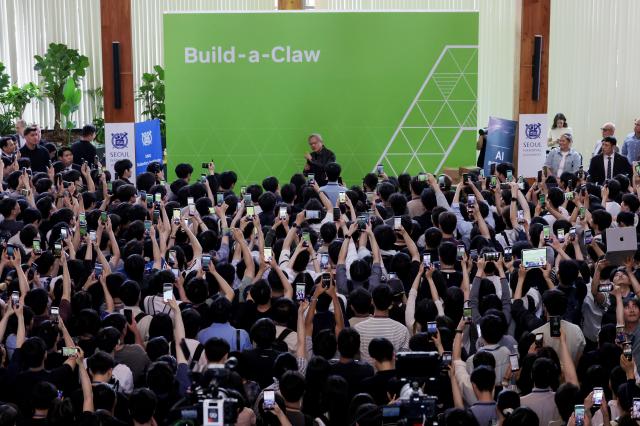
As artificial intelligence makes computing power and even intelligence itself increasingly accessible, Huang argued that character becomes the true differentiator.
"Intelligence is now a commodity because of artificial intelligence. Running fast is a commodity."
"Intelligence plus character is not a commodity."
"The character is suffering, the ability to suffer. I have a deep ability to suffer. Nobody can suffer better than I can."
Then he turned the observation toward Korea itself.
"No country can suffer better than Korea."
"The grandparents, your parents created everything that we see today from their suffering, from their resilience, from their incredible desire to create this future for you."
"This is the national character of Korea."
"If you combine that with AI, incredible things can happen."

Copyright ⓒ Aju Press All rights reserved.
