

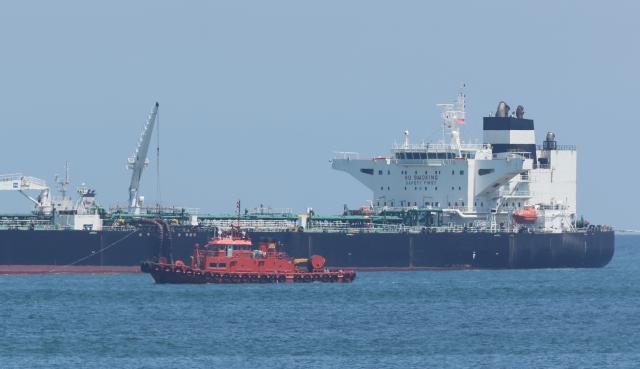
The deadline for the International Energy Agency's (IEA) joint resolution to release strategic oil reserves in response to global supply concerns stemming from the Middle East conflict has concluded. The South Korean government opted for a private release instead of directly tapping into its reserves, as alternative supplies and a strategic oil swap system have stabilized crude oil availability, while the burden of replenishing reserves remains significant.
According to relevant authorities, the IEA resolved on March 11 to release a record 400 million barrels of oil following the outbreak of the Middle East war. South Korea's share of this release amounts to 22.46 million barrels, or 5.6% of the total, which must be completed by today.
The IEA's conditions for the oil release include government-led physical releases from storage facilities and a reduction in the mandatory private stockpiling days. The Ministry of Trade, Industry and Energy decided to participate in the resolution by reducing the private stockpiling requirement from 40 days to 20 days. This approach is expected to result in an estimated release of 12 million barrels.
This method differs from previous releases. The IEA has previously resolved to release strategic oil reserves six times, including during the Gulf War in 1991, Hurricane Katrina in 2005, the Libyan Civil War in 2011, and the Russia-Ukraine conflict in March and April 2022. In all but this year’s instance, the government had opted for direct releases.
The government's choice to utilize private releases reflects the assessment that the current supply situation is not at its worst. Moon Sin-hak, the Deputy Minister of Trade, Industry and Energy, stated at a Cabinet meeting, "We have secured 86% of our crude oil needs for June and July," adding that private oil stockpiles are recovering to pre-war levels due to increased supply.
Additionally, the strategic oil swap system is proving effective. This system allows the government to lend out reserves in emergencies when private entities secure alternative supplies. A ministry official noted, "I understand that the IEA views the oil swap as a new method for the government to release its reserves into the market."
The burden of replenishing reserves after the release is another reason for the government's cautious approach. Following the release during the Russia-Ukraine conflict, international oil prices stabilized in the short term. However, the subsequent efforts by countries to refill their diminished reserves have been assessed as limiting downward pressure on prices.
Concerns about a potential crisis in August are also being considered. Previously, limited increases in international oil prices were attributed to U.S. crude exports and a slowdown in Chinese demand. However, ongoing supply shortages have led to declining oil inventories, raising worries about increased global oil demand due to rising electricity needs for cooling in summer and increased travel during vacation periods.
In light of these factors, the government is holding back on utilizing its strategic oil release option for now. A ministry official stated, "Given the uncertainty surrounding navigation through the Strait of Hormuz, we plan to release government reserves only when absolutely necessary in the future," adding that there would be no significant issues even if they do not release the quantities specified in the IEA resolution, as there are no penalties involved.
* This article has been translated by AI.

Copyright ⓒ Aju Press All rights reserved.