

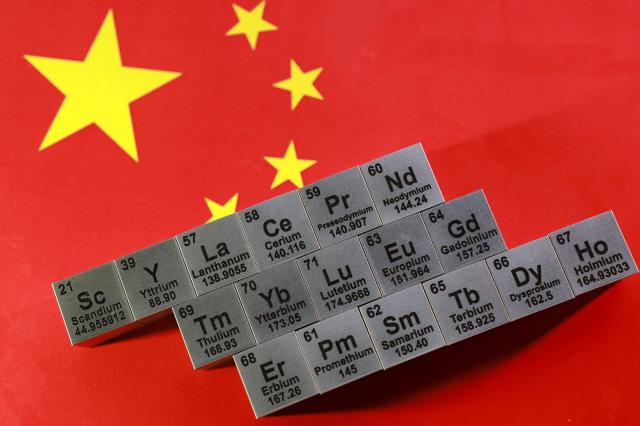
As China's restrictions on rare earth exports to Japan extend beyond the Japanese manufacturing sector to threaten U.S. medical and high-tech supply chains, the Trump administration has reportedly urged China to resume rare earth shipments to Japan. Japan is a key producer of advanced medical equipment, including MRI machines, and prolonged pressure from China could disrupt medical device procurement in the United States.
The Nihon Keizai Shimbun (Nikkei) reported on June 10, citing multiple U.S. and Japanese diplomatic sources, that the Trump administration is pressing Chinese leaders to restore rare earth supplies to Japan. During a meeting last month between U.S. Treasury Secretary Scott Vessen and Chinese Vice Premier He Lifeng, the U.S. expressed concerns over China's export restrictions to Japan and called for measures to prevent negative impacts on global supply chains, particularly for high-tech equipment.
The U.S. has intervened in Japan's rare earth procurement issues because it recognizes that the problem extends beyond Japan's manufacturing sector. Japan is a crucial hub for the global supply chain, producing advanced medical devices, semiconductor manufacturing equipment, and electric vehicle (EV) components. Since rare earth components are used in high-performance diagnostic equipment like MRI machines, prolonged production disruptions in Japan could lead to instability in medical device procurement in the U.S.
China added seven rare earth elements, including dysprosium and terbium, to its export regulation list in April of last year and has intensified scrutiny on shipments to Japan this year. Nikkei previously reported on June 8 that exports of these seven elements to Japan fell by 88% in March and 82% in April compared to the same months last year. Notably, there have been no exports of dysprosium and terbium to Japan since January, which are essential raw materials for high-performance magnets used in EV motors.
The U.S. and Japan addressed China's rare earth export restrictions during the G7 finance ministers and central bank governors meeting held from May 18 to 19. A senior U.S. official indicated to Nikkei that the issue will also be discussed at the G7 summit in Évian, France, from June 15 to 17, where responses will be considered.
The U.S. and China have sought to ease tensions, agreeing during last month's summit to aim for a "constructive strategic stability relationship." However, concerns persist that U.S.-China engagement could lead to Japan being sidelined, while Japan finds itself relying on the Trump administration's diplomacy regarding China.
The Japanese government is wary that prolonged rare earth procurement issues could increase Japanese companies' dependence on China. In 2010, when China restricted rare earth exports to Japan over the Senkaku Islands dispute, Japanese magnet manufacturers increased local production in China, ultimately enhancing the technological capabilities and market influence of Chinese firms.
A diplomatic source from Japan told Nikkei, "The situation of China's pressure on Japan has not yet eased. We need to continue cooperating with the U.S. and demand the resumption of supplies from China." The U.S. has not disclosed China's response to its request for the resumption of rare earth supplies to Japan.
* This article has been translated by AI.
Copyright ⓒ Aju Press All rights reserved.