

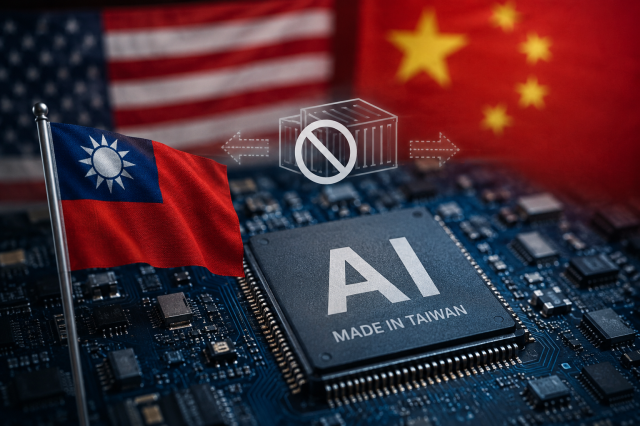
Bloomberg reported on June 9, citing sources familiar with the matter, that Taiwanese authorities are exploring options to restrict AI chip sales to all Chinese customers during trade negotiations with the United States.
Currently, Taiwan's export controls focus on specific companies listed as restricted, such as Huawei and SMIC. If the new measures are implemented, sales of AI chips with certain performance thresholds could be limited for all customers in China.
A key aspect of this review is to establish legal grounds for criminalizing the circumvention of AI chip exports. Since 2022, the U.S. has imposed restrictions on the export of high-performance NVIDIA chips to China to curb its access to advanced AI technology.
However, in Taiwan, sending AI chips to China without permission is not currently classified as a crime, forcing authorities to investigate suspected cases under existing laws, such as forgery.
Last month, Taiwanese authorities arrested individuals suspected of smuggling AI chips, but the charges were limited to forgery. Bloomberg noted that these individuals are believed to have sent servers to Hong Kong via Japan, raising suspicions. If new regulations are enacted, Taiwan would be able to treat the circumvention of AI chip exports to China as a separate criminal offense.
The Taiwanese Ministry of Economic Affairs stated to Bloomberg, "We will continue to strengthen oversight of strategic advanced technology products and enhance alignment with international export controls," adding that Taiwan and the U.S. are in ongoing discussions about including advanced chips in regulatory measures.
While Taiwan has agreed to restrict sales of AI chips with certain performance capabilities to China, specific details regarding the scope and criteria of these restrictions have yet to be finalized.
If these regulations come to fruition, the government of President Lai Ching-te will further tighten semiconductor controls on China. Given Taiwan's critical role in the production of NVIDIA AI chips and server assembly, expanded export restrictions could pose challenges for related companies. China is also likely to respond strongly to Taiwan's semiconductor limitations.
* This article has been translated by AI.
Copyright ⓒ Aju Press All rights reserved.