

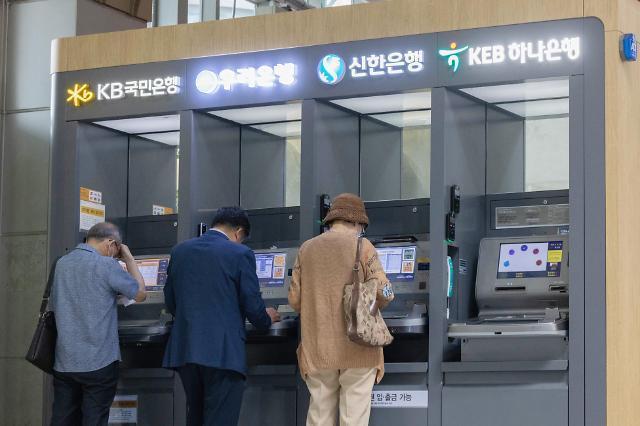
As mortgage rates approach 8%, jeonse loan rates have also surpassed 6%. With rising loan rates, the interest burden on vulnerable borrowers is increasing. Concerns about further rate hikes have grown, particularly after President Lee Jae-myung recently identified jeonse loans as a key factor in rising housing prices.
According to the financial sector on June 10, the jeonse loan rates from the five major banks—KB Kookmin, Shinhan, Hana, Woori, and NH Nonghyup—ranged from 4.11% to 6.71% for two-year loans. This marks an increase from the previous month’s rates of 3.77% to 6.27%, with the lower end rising by 0.34 percentage points and the upper end by 0.44 percentage points. As market interest rates have surged, the lower end of jeonse loan rates has exceeded 4% this month, while the upper end has climbed into the high 6% range. Variable-rate jeonse loans are also nearing 6%, with rates recorded between 3.15% and 5.85%.
The rise in bank loan rates is attributed to increasing market interest rates. The benchmark rate for financial bonds (non-guaranteed, AAA) for five years was 4.394% as of the previous day, up 0.895 percentage points from the end of last year’s 3.499%. The new handling rate for variable-rate jeonse loans, known as COFIX, also rose to 2.89% in April, an increase of 0.08 percentage points from the previous month.
However, there is ongoing upward pressure on jeonse loan rates. During a press conference marking his first anniversary in office on June 8, President Lee Jae-myung pointed to jeonse loans as a major cause of rising housing prices, expressing concern that banks have excessively issued these loans, leading to a concentration of funds in real estate. According to the Bank of Korea, the balance of jeonse loans from deposit banks stood at 166.6 trillion won at the end of last year, more than six times higher than a decade ago.
In the wake of the president's remarks, market analysts predict that the pressure to increase jeonse loan rates will intensify. With ongoing pressure from financial authorities to manage household loans, banks may find it challenging to actively expand lending.
The Bank of Korea's indication of a potential shift in its monetary tightening stance also raises concerns about rising loan rates. An increase in the benchmark rate would affect financial bond rates and COFIX, leading to higher mortgage and jeonse loan rates.
A financial sector official stated, "The situation in the Middle East and the potential for domestic and international benchmark rate hikes are being reflected in market interest rates, leading to continued increases in jeonse loan rates. If discussions on raising the benchmark rate coincide with jeonse loan regulations, further increases in loan rates are likely unavoidable in the near term."
* This article has been translated by AI.
Copyright ⓒ Aju Press All rights reserved.