

"(ABC Broadcasting's question) Can Busan combine its role as a maritime capital with that of an AI city to become South Korea's second growth engine?"
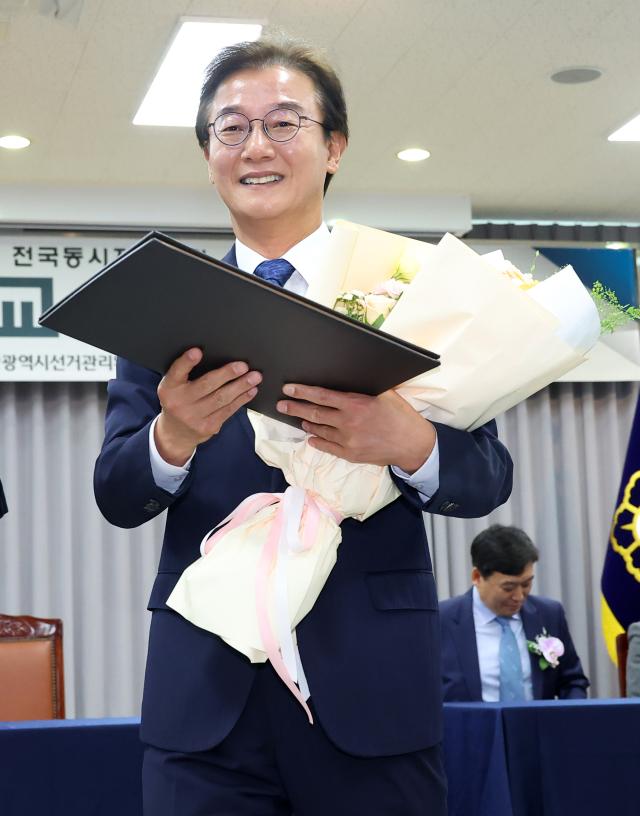
Regions across South Korea are facing a common crisis. Young people are leaving, businesses are flocking to the capital region, and local areas are on the brink of extinction. Busan is no exception. Once the country's second-largest city, it now grapples with a trifecta of challenges: population decline, industrial stagnation, and youth outmigration. In this context, Jeon Jae-soo, the newly elected mayor of Busan, has proposed a radically different solution. He aims to create a future-oriented industrial city that combines a maritime capital with an AI-leading city.
His vision includes preparing for the Arctic route era, establishing AI data centers and a digital industrial ecosystem, and transforming Busan Port into a smart port. A special committee for AI transformation and another for the Arctic route have been established within the transition committee. Now, the future of Busan can be distilled into one question: Can it evolve from a traditional port city into a hub for South Korea's future industries that integrate AI and maritime capabilities?
Preparing Busan for the Arctic Route Era
All of Jeon Jae-soo's pledges are interconnected.
Busan is the largest port city in South Korea. However, its port competitiveness has largely depended on cargo volume and location. Jeon aims to take a step further.
He is preparing for the Arctic route era.
With climate change increasing the feasibility of using Arctic sea routes, the global logistics map is changing. There are projections that routes connecting Asia and Europe could be shorter than those through the Suez Canal.
Jeon believes Busan can be the city that benefits the most from this change.
Thus, he established a special committee for the Arctic route within the transition committee. This is a strategic choice to prepare for Busan's future, not just a simple shipping policy.
He has emphasized that the relocation of the Ministry of Oceans and Fisheries to Busan should not be limited to merely moving an administrative body. He envisions building a maritime industry cluster that combines shipping, logistics, shipbuilding, ports, and finance, making Busan a central city for the Northeast Asian maritime economy.
Importantly, Busan's competitors are not Incheon or Ulsan.
Busan must compete with Singapore, Shanghai, and Hong Kong.
Jeon is well aware of this.
Therefore, he plans to enhance Busan Port's competitiveness by integrating advanced technology.
At the heart of this strategy is AI.
AI Transformation: A Game Changer for Busan's Industrial Structure
Among Jeon Jae-soo's pledges, the most notable is AI.
He has declared his intention to transform Busan into not just a maritime city but an AI-leading city. The establishment of a special committee for AI transformation within the transition committee aligns with this vision.
Jeon identifies the biggest issue facing Busan as not the decline of manufacturing or population loss, but rather the stagnation of its industrial structure.
Busan has long grown around shipbuilding, ports, and manufacturing. However, in the age of the AI revolution, new growth drivers are essential.
Jeon seeks to find these in the AI industry.
A key pledge is the establishment of an AI data center cluster.
He has announced plans to attract global companies and develop an AI data center complex in Busan through large-scale investments over the next five years.
Additionally, he pledged to invest 892.1 billion won in the AI transition project for Busan Port, aiming to innovate port operations and logistics systems based on AI.
This strategy is highly significant.
AI is not merely a new industry.
It is a universal technology that can transform manufacturing, logistics, healthcare, finance, education, and administration.
Jeon intends to leverage AI as a tool to innovate Busan's entire industrial structure.
Particularly, the need for industrial transformation is greater in Busan than in the capital region.
Relying solely on existing manufacturing competitiveness does not guarantee a secure future.
Ultimately, AI represents not just an option for Busan, but a survival strategy.
This is why Jeon has made AI a core focus of his administration.
Transforming a City Losing Youth into One That Attracts Them
Busan's most pressing reality is youth outmigration.
Even graduates from good universities struggle to find quality jobs.
Many young people leave for Seoul and the capital region.
The city is aging, and its economy is losing vitality.
Jeon views this as the most urgent issue facing Busan.
The reason he emphasizes both the AI and maritime industries ultimately comes down to job creation.
Good jobs must be created to retain people.
People must stay for the city to thrive.
He has pledged to create new high-quality jobs by combining the maritime and AI industries.
In particular, he stresses the importance of building an AI ecosystem that connects universities, businesses, and research institutions.
This is far more critical than merely attracting investments.
The competitiveness of a city ultimately stems from its people.
Jeon asserts that Busan must not be a city that merely follows Seoul but one that possesses its own competitiveness.
This competitiveness lies in the integration of maritime and AI.
It is a strategy that connects what Busan excels at with future industries.
In fact, major cities around the world are pursuing similar paths.
Singapore has combined finance and digital technology, while Dubai has integrated logistics and AI.
If Busan can successfully combine its port with AI, it can create a new growth model.
Can Busan Serve as a Testing Ground for South Korea's Local Era?
Jeon Jae-soo's vision is not merely a set of pledges for the mayor of Busan.
It represents an experiment for South Korea's local era.
Until now, local development policies have primarily relied on budget support or the relocation of public institutions.
However, there have been limitations to this approach.
Jeon is taking a different approach, aiming to revitalize the city through industry and technology.
Maritime capital.
Arctic route.
AI data centers.
Smart ports.
Youth jobs.
All of these elements are part of a single strategy.
Of course, there are significant challenges.
Building AI data centers requires substantial power and capital.
The Arctic route also carries considerable uncertainty.
Busan's financial conditions are not robust.
Above all, execution is crucial.
Anyone can propose a vision.
However, it is execution that changes the fate of a city.
The political execution capability that Jeon emphasizes is now under scrutiny.
If he succeeds in creating a new growth model that combines maritime and AI, Busan could become not just the second city but a forward base for South Korea's future industries.
Busan's challenge is ultimately South Korea's challenge.
If local areas thrive, the nation thrives.
And Busan is currently testing that potential.
: SWOT Analysis:
Strength
Jeon Jae-soo's greatest strength is his clear vision for the future. The dual focus on maritime capital and AI-leading city is evident. His policy priorities are clear, as seen by the establishment of special committees for AI transformation and the Arctic route. The potential benefits from the relocation of the Ministry of Oceans and Fisheries and Busan Port's competitiveness are also strengths.
WeaknessEstablishing AI data centers and transforming the industry requires immense resources. Many projects may be difficult to pursue solely with Busan's finances. Additionally, Busan's economy still heavily relies on traditional industries, which may slow the pace of industrial transformation.
OpportunityThe AI revolution and the Arctic route era present new opportunities for Busan. The AI transition at Busan Port, the establishment of data center clusters, and the advancement of the maritime logistics industry could become key drivers of growth in the next decade.
ThreatThe concentration of resources in the capital region remains strong. Global economic slowdowns and volatility in the shipping industry also pose risks. The competition to foster the AI industry is likely to intensify among local governments.
* This article has been translated by AI.
Copyright ⓒ Aju Press All rights reserved.