

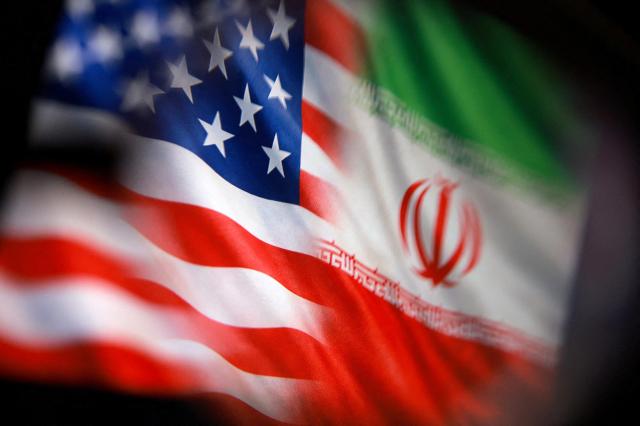
June 15, 2026, is likely to be recorded as a turning point in modern Middle Eastern history. On this day, President Donald Trump announced that peace negotiations between the United States and Iran had reached a final agreement, which was officially confirmed by the Iranian government and the mediating country, Pakistan. The two sides are set to sign a memorandum of understanding (MOU) for peace in Switzerland on June 19. The war, which began with a large-scale airstrike by the U.S. and Israel on Iranian nuclear and military facilities on February 28, has effectively come to an end after 106 days.
The duration of 106 days can be seen as both short and long. However, it encapsulated a period where decades of hostility between the U.S. and Iran, Israel's security concerns, sectarian conflicts in the Middle East, the international energy order, and U.S.-China power competition collided. This war was not merely a military conflict involving missiles and drones; it represented a geopolitical clash that condensed the core contradictions of 21st-century international politics.
While the fighting has ceased, history is just beginning. The true winners and losers of this war will be determined by what order is established in the aftermath of the gunfire.
◆ How the War Started and Ended in 106 Days
The immediate trigger for this war was the preemptive strike by the U.S. and Israel. They assessed that Iran was on the verge of acquiring nuclear weapons. Reports from the International Atomic Energy Agency (IAEA) and analyses from Western intelligence agencies indicated that Iran had secured a significant amount of enriched uranium.
From Israel's perspective, there were few options. The moment Iran obtained nuclear weapons, the strategic balance in the Middle East would be completely disrupted. Since its founding, Israel has survived surrounded by hostile nations. Therefore, Iran's nuclear armament was not just a security issue but a matter of national survival.
The U.S. also concluded that it could no longer tolerate Iran's nuclear development. The Trump administration maintained a firm stance since taking office, declaring, "Iran's nuclear armament will never be tolerated." Ultimately, at the end of February, the U.S. and Israel launched a large-scale airstrike.
However, contrary to expectations, Iran did not collapse. Instead of engaging in direct confrontation, Iran opted for asymmetric warfare. It employed long-range missiles, drones, maritime blockades, and indirect attacks through Iran-aligned armed groups. Hezbollah in Lebanon, Houthi rebels in Yemen, pro-Iran forces in Syria, and Shiite militias in Iraq all became involved, quickly expanding the frontlines across the Middle East.
The world grew tense. Particularly, the Strait of Hormuz was effectively paralyzed, causing international oil prices to soar and financial markets to become unstable. As over 20% of the world's oil trade passes through this strait, the entire Asian economic zone felt the shock.
As time passed, however, the U.S., Iran, and Israel began to realize the limits of war. The U.S. could not topple the Iranian regime, Iran could not expel the U.S. from the Middle East, and Israel could not secure complete safety.
Ultimately, all three countries acknowledged that the costs of continuing the war had far exceeded the costs of seeking peace.
◆ Netanyahu's Calculations: Between Victory and Burden
To understand this war, one cannot overlook Israeli Prime Minister Benjamin Netanyahu.
Netanyahu has maintained one of the most hardline stances against Iran in history. For decades, he has argued that "Iran's nuclear armament could lead to a second Holocaust."
In this war, Netanyahu achieved some of his objectives. Many Iranian nuclear facilities were struck, and Iran's military infrastructure suffered significant losses. Pro-Iran groups across the Middle East also faced considerable damage.
However, it was not a complete victory.
Israel incurred massive military expenditures, and tourism and investment were stifled. Most importantly, the public began to feel fatigued from the endless war. What the Israeli people desire is not perpetual conflict but a stable daily life.
Ultimately, Netanyahu chose to face reality. He adjusted his position to accept an agreement based on Iran's abandonment of nuclear weapons and an international monitoring system. He found a balance between ideals and reality.
Trump's True Goal: Not Iran, But China
The key to understanding this peace agreement lies with China. While it may appear that the U.S.-Iran war was the focus, American strategists had China in mind.
Today, the center of U.S. national strategy is not the Middle East but the Indo-Pacific. The U.S. is more concerned about China's rise than Iran. The U.S.-China competition spans nearly all strategic industries, including artificial intelligence, semiconductors, quantum technology, space industry, electric vehicles, and rare earth supply chains.
For President Trump, a prolonged war in the Middle East is a strategic nightmare. If military, diplomatic, and financial resources are tied up in the Middle East, the U.S. cannot focus on countering China.
Thus, this peace agreement can be seen not merely as a diplomatic accord but as a strategic realignment for the U.S. It aims to resolve some Middle Eastern issues and shift the focus toward the Indo-Pacific.
The U.S. has now entered an era where semiconductors are considered more important than oil. Trump's decision to pursue peace symbolizes this shift.
◆ What China and Russia Gained
Interestingly, China and Russia were quieter during this war than expected.
China publicly called for peace but played a crucial role in supporting Iran's economy. It remains a major importer of Iranian oil.
China's goal was clear: it hoped the U.S. would remain bogged down in the Middle East. The longer the U.S. expended energy in the region, the more strategic space China could secure in East Asia.
Russia shared a similar perspective. Burdened by the war in Ukraine, Russia did not view the U.S. diverting its attention to the Middle East negatively.
However, if the war prolonged, the instability in the international oil market could become excessive. Ultimately, both China and Russia also came to desire a certain level of peace.
◆ Understanding Iran and the Persian Spirit
The West often views Iran as merely a theocratic state. However, this perspective fails to grasp the complexity of Iran.
Iran is not just a country; it is the successor of Persian civilization. Since the establishment of the Achaemenid Empire by Cyrus the Great in the 6th century B.C., Persia has created one of the greatest civilizations in human history. Cyrus, who liberated the Jews from Babylonian captivity, is still regarded today as a symbol of tolerance and inclusivity.
The Persians possess a strong sense of pride and historical consciousness. They distinguish themselves from the Arab world. Their language, culture, and historical identity are different.
The reason Iran was able to endure throughout this war was not merely due to military strength but also this civilizational pride.
Iran is a nation that chooses to endure suffering rather than admit defeat. It has developed a unique spirit of resilience and resistance through thousands of years of foreign invasions.
Thus, the U.S. ultimately abandoned its goal of toppling the Iranian regime. It reaffirmed that Iran is not a country that can be easily subdued, even under military pressure.
◆ Impact on the South Korean Economy and Energy Market
South Korea is likely to be one of the direct beneficiaries of this peace agreement.
South Korea imports most of its energy. If oil and LNG supplies from the Middle East are not stable, the South Korean economy will face immediate shocks.
Particularly, the refining, petrochemical, steel, shipbuilding, and automotive industries are closely linked to international oil prices. If the Strait of Hormuz normalizes, logistics costs are likely to stabilize, reducing energy cost burdens.
Most importantly, uncertainty in financial markets will decrease, aiding in stabilizing exchange rates.
Stability in energy prices could also positively impact the semiconductor industry, as it would enhance manufacturing competitiveness.
The South Korean economy is affected by even a $10 fluctuation in oil prices, impacting the entire export-import structure. In this regard, this peace agreement is not just a diplomatic development but a significant variable for the South Korean economy.
◆ Where is the Middle East Heading?
If this agreement is successfully implemented, the Middle East could enter a new era.
First, the relationship between Saudi Arabia and Iran may stabilize further. Second, normalization of relations between Israel and the Arab world could be pursued again. Third, Middle Eastern economic development projects could gain momentum. Fourth, the competition between China's Belt and Road Initiative and the India-Middle East-Europe Economic Corridor (IMEC) could enter a new phase. Fifth, the Middle East could transform from a land of war into a land of investment and technology.
Of course, numerous obstacles remain before these prospects become reality, including issues of nuclear verification, sanctions relief, Hezbollah and Houthi rebel concerns, and domestic political issues in Israel.
However, for now, the gunfire has ceased.
Peace is more challenging than war.
Humanity has experienced too much war: World War I, World War II, the Korean War, the Vietnam War, the Gulf War, the Iraq War, the Ukraine War, and now this war with Iran. History continually reveals humanity's destructive instincts.
Yet, it is peace that has advanced civilization, not war.
War destroys cities, but peace builds them. War kills people, but peace saves them. War breeds hatred, but peace creates a future.
This 106-day war has left many lessons. The U.S. learned that it cannot change the Middle East solely through force, Iran learned that resistance alone cannot lead to prosperity, and Israel learned that military power alone cannot guarantee eternal safety.
Ultimately, all three nations returned to the negotiating table.
This is the essence of international politics. War begins when negotiations fail, and negotiations resume when war fails.
The signing ceremony scheduled for June 19, 2026, in Switzerland is not just a diplomatic event. It marks the end of a 106-day war and the starting line for a new order in the Middle East.
History is now turning another page in the Middle East. Whether that page will be one of peace or another chapter of conflict remains uncertain. However, one thing is clear.
The sounds of gunfire and bombing that echoed for 106 days are coming to a halt.
And humanity is once again presented with the opportunity to choose peace over war. Seizing that opportunity is now the most important task for the U.S., Iran, Israel, and the international community.
* This article has been translated by AI.
Copyright ⓒ Aju Press All rights reserved.