

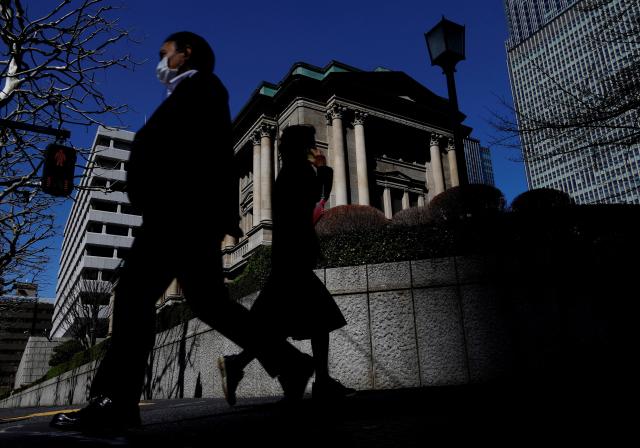
The Bank of Japan (BOJ) is expected to raise its benchmark interest rate from the current 0.75% to 1.0% during its monetary policy meeting on June 15-16. This marks the first time in 31 years that the rate will reach the 1% level. However, according to the Nihon Keizai Shimbun (Nikkei), market attention is focused more on the next rate hike rather than the current one, as there is a belief that a single increase will not be sufficient to control inflation.
On June 15, Nikkei reported that the market has already accepted the upcoming rate hike as a given. Furthermore, the market anticipates that the BOJ will continue to raise rates semi-annually, potentially reaching 1.75% by the end of 2027.
The reason the market views the 1% increase as inconsequential lies in inflation expectations. Japan, long considered a country with stagnant prices, is now seeing a rapid shift in expectations for rising inflation. As of June 11, the market's forecast for Japan's future inflation rate has risen to levels nearly comparable to those in the United States. However, this reflects expectations of future inflation rather than current prices, bringing Japan's inflation outlook closer to that of the U.S. According to Tsuruya Keisuke, chief bond strategist at Mitsubishi UFJ Morgan Stanley Securities, the BOJ's slow pace of rate increases will struggle to quell these inflation expectations.
Another noteworthy aspect is that the BOJ is attempting to pursue two opposing strategies simultaneously. On one hand, it plans to raise interest rates to tighten monetary policy, while on the other hand, it intends to maintain its bond purchases, which it has been gradually reducing. By continuing to buy government bonds, the BOJ injects liquidity into the market and supports bond prices, which can help mitigate further increases in interest rates. According to Nikkei, the BOJ is considering maintaining its bond purchase volume at 2.1 trillion yen (approximately $19.85 billion) per month starting in April 2027. This is seen as a compromise to prevent turmoil in the bond market. However, there are concerns in the market that the BOJ is effectively supporting the spending policies of the Takaiichi Sanae administration, with some analysts suggesting that a deal was made to halt bond purchase reductions in exchange for accepting the rate hike.
An unusual aspect of this meeting is the absence of BOJ Governor Kazuo Ueda. The BOJ announced on June 10 that Ueda has been hospitalized. It is rare for a sitting governor to miss a monetary policy meeting. However, the absence of the governor is not expected to alter the decision to raise rates, as such decisions are made by the executive board and require a majority vote from the policy committee. The market does not view the governor's absence as a significant factor that could overturn the rate hike outlook. The real variable may emerge during the press conference following the meeting, which will be led by Shinichi Uchida, the deputy governor with extensive experience in monetary policy. This will be his first time explaining monetary policy in a public forum since July of the previous year, and his comments could significantly impact the yen's exchange rate and bond yields.
Additionally, news that the U.S. and Iran have agreed to end hostilities has led to a drop in international oil prices, which could also influence inflation. If oil prices stabilize, the upward pressure on inflation may ease. However, Nikkei suggests that stable oil prices could reduce concerns about an economic downturn, making it easier for the BOJ to push for rate hikes. This agreement is not expected to change the plan for a 1% increase.
The backdrop for this rate hike includes pressure from the United States. According to Nikkei, U.S. Treasury Secretary Scott Vessenet has indirectly pressured the BOJ to raise rates, viewing the slow pace of rate increases as a cause of yen depreciation. Vessenet, a frequent visitor to Japan, is particularly wary of Japan repeating the 'Truss Shock' that occurred in the UK in 2022, when the government proposed large tax cuts without a financial plan, leading to soaring interest rates and a plummeting pound.
Similar signs have emerged in Japan. In January, the Japanese bond market experienced a phenomenon where interest rates rose while the yen weakened, which is typically contrary to expectations. Vessenet referred to this as a '6-sigma' event, statistically rare and indicative of a lack of confidence in Japan's fiscal and monetary policies, according to Nikkei.
Ultimately, the real test will come with the 'next rate hike' and even further increases thereafter. The key question is whether Takaiichi, who has remained silent until now, will adopt the same stance regarding additional hikes. The government aims to stimulate the economy through increased spending, while the BOJ seeks to raise rates to control inflation. The move to a 1% rate after 31 years is not the end of tightening but rather the beginning of a tug-of-war between the government and the BOJ.
* This article has been translated by AI.
Copyright ⓒ Aju Press All rights reserved.