

South Korea's exchange-traded fund (ETF) market has reached a historic milestone, surpassing 500 trillion won in net assets for the first time. With individual investors and pension funds emerging as key drivers of growth, ETFs are no longer just products for institutional investors but have become popular among the general public.
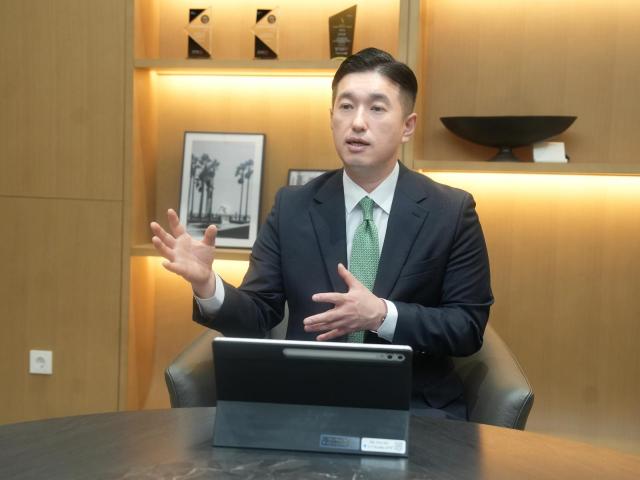
Kim Do-hyung, head of ETF consulting at Samsung Asset Management, stated in an interview with Aju Economy on June 11 that the ETF market has entered a phase of structural growth based on three pillars: the expansion of individual investors, the influx of pension funds, and product diversification. He expressed confidence that the ETF market could grow to 1,000 trillion won within the next three to five years.
He identified 'bottleneck' as the key investment theme for the second half of the year, highlighting AI semiconductors and power infrastructure as the most promising investment areas.
Kim emphasized that the expansion of individual investors is the primary factor behind the growth of the ETF market.
He noted, "Before the COVID-19 pandemic, individual investors accounted for only about 10% of the ETF market, but that figure has now increased to around 40%. While institutions used to lead the ETF market, individual investors are now at the center of its growth."
He particularly highlighted the rapid growth of the pension market, stating, "The scale of ETF investments through retirement and personal pensions is increasing quickly. Since pensions are long-term funds rather than short-term, they are one of the most important growth drivers for the ETF market."
He added, "The rapid growth of the ETF market is being fueled by increased individual demand, proactive product offerings from asset management firms, and the rise of the domestic stock market."
Kim described Samsung Asset Management's recently launched single-stock leveraged ETFs for Samsung Electronics and SK Hynix as a new milestone for the domestic ETF market.
He explained, "One reason domestic investors are looking to the U.S. market is to find products that are not available here. The introduction of single-stock leveraged ETFs is significant as it narrows the product gap between the U.S. and domestic markets."
However, he expressed caution about further expansion, stating, "Leveraged products require sufficient trading volume, market capitalization, and liquidity in the derivatives market. There are not many stocks that meet the conditions of Samsung Electronics and SK Hynix, so it won't be easy to expand to other stocks immediately."
Nonetheless, he emphasized that this case could serve as a starting point for expanding the diversity of ETF products.
Looking ahead to the second half of the year, Kim identified AI and semiconductors as key investment themes for the domestic equity ETF market.
He stated, "The industry that continues to drive profit forecasts for domestic listed companies is still semiconductors. The improvement in the semiconductor sector due to increased AI demand is likely to continue into next year."
He noted that the benefits are spreading to equipment, materials, and component companies, particularly those centered around Samsung Electronics and SK Hynix. He explained, "When semiconductor companies grow, benefits will inevitably extend to post-processing, packaging, and equipment firms, and ETF funds are expected to continue to concentrate on semiconductor-related products."
Kim identified 'bottleneck' as the key theme for the ETF market in the second half of the year.
He explained, "As the AI industry grows, supply shortages are occurring in various fields, including semiconductors, power, and networks. Ultimately, industries experiencing bottlenecks will receive the most significant benefits."
He particularly noted the shortage of power facilities due to the expansion of data centers. He stated, "U.S. big tech companies cannot reduce investments in data centers to secure AI competitiveness, leading to ongoing shortages of transformers and transmission facilities, which enhances the growth potential of power infrastructure companies."
He added that optical communications, networks, and the aerospace industry should also be considered as beneficiaries of bottlenecks.
Regarding the differences between the domestic and U.S. ETF markets, Kim pointed to market size, product diversity, and tax systems.
He remarked, "The U.S. market is overwhelmingly larger, and investors have much broader choices. If the domestic market continues to see regulatory easing and product innovation, we can gradually narrow the gap with the U.S."
He emphasized the importance of developing products tailored to investor demand, as seen with the approval of single-stock leveraged ETFs.
He stated, "Asset management firms must supply products that investors want while also strengthening investor education. In the future, we can expect to see products similar to those in the U.S. or Hong Kong markets gradually becoming available domestically."
Kim identified pension funds as the most significant growth driver for the ETF market in the future.
He noted, "Investment culture has changed significantly since COVID-19, and the 2030 generation is actively preparing for retirement and asset formation. ETF investments through pension accounts will continue to grow rapidly."
He predicted, "ETF products will become more segmented and specialized, with new products reflecting emerging industries and themes such as AI semiconductors, power facilities, aerospace, and optical communications continuing to emerge."
He concluded, "If the influx of individual investors and pension funds continues, the domestic ETF market can certainly welcome the era of 1,000 trillion won."
* This article has been translated by AI.
Copyright ⓒ Aju Press All rights reserved.