

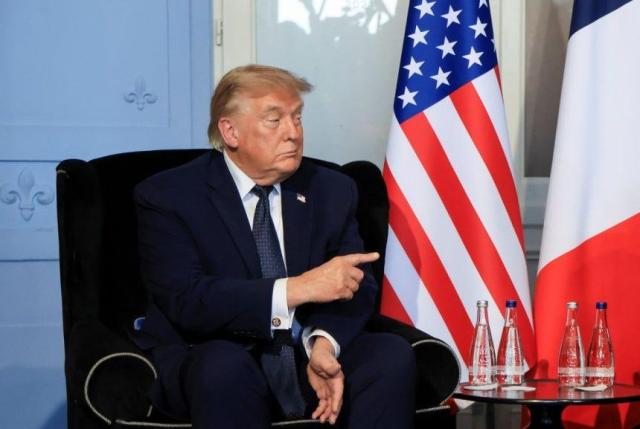
On June 15, during the G7 summit in Évian-les-Bains, France, Trump told reporters that "the agreement has been signed by all parties" while meeting with French President Emmanuel Macron. He added that the Hormuz Strait is already partially open and will be fully accessible by June 19.
This MOU represents an initial agreement aimed at halting military conflict between the U.S. and Iran and moving toward a final peace agreement. Reports indicate that Trump and Vice President JD Vance signed electronically, while Mohammad Bagher Ghalibaf, the Speaker of Iran's Parliament, also signed. An official signing ceremony is scheduled for June 19 in Geneva, Switzerland, with Vance set to represent the U.S.
The full text of the agreement has not yet been released. Trump mentioned that it would be made public "soon," possibly after the official signing ceremony on June 19. Specific terms regarding the management of the Hormuz Strait, nuclear verification, and sanctions relief are expected to be clarified once the document is released.
Trump highlighted the prevention of Iran acquiring nuclear weapons as a key achievement of the agreement, stating, "Iran has agreed not to possess nuclear weapons under a strong monitoring system." However, details regarding the handling of enriched uranium and verification processes are likely to be addressed in technical negotiations over the next 60 days.
Sanctions relief will not be immediate. Trump stated that easing sanctions is "dependent on Iran's actions," adding, "Sanctions relief will begin once Iran does what it needs to do." This indicates that, unlike Iran's demands for the release of frozen funds or sanctions relief as a condition for signing the MOU, the U.S. plans to provide gradual compensation based on specific compliance measures from Iran regarding nuclear disarmament and verification.
The issue of tolls in the Hormuz Strait has led to differing interpretations between the two sides. Trump asserted that the strait will be open for free navigation as it was before the conflict, stating, "There is no need for large-scale support from allies." However, he acknowledged that "some countries deploying a ship or two could be helpful," leaving the door open for limited support to ensure safe navigation.
Conversely, Iranian sources have left the possibility of imposing fees for navigation. The semi-official Fars News Agency reported that the MOU includes provisions for Iran and Oman to manage future maritime navigation services in the Hormuz Strait, which recognizes Iran's right to collect fees. Iranian authorities have maintained that these would not be tolls but rather costs associated with providing maritime services.
Vice President Vance also stated in a CNBC interview that the U.S. expects the Hormuz Strait to remain open without tolls in the long term, but noted that specific conditions will be determined in future technical negotiations. This suggests that while the MOU guarantees short-term access to the strait, the long-term management approach remains undecided.
President Macron described the U.S.-Iran MOU as an important step toward peace, stating that "France is ready to contribute to ensuring safe navigation in the Hormuz Strait." While the agreement has halted military conflict between the U.S. and Iran, issues such as nuclear verification, sanctions relief, the release of frozen funds, and the tolls in the Hormuz Strait will all remain challenges to be addressed in future negotiations.
* This article has been translated by AI.
Copyright ⓒ Aju Press All rights reserved.