

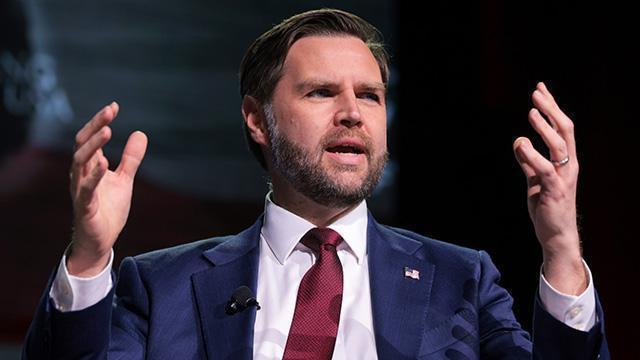
The U.S. delegation will include Vice President JD Vance, Middle East Special Envoy Steve Witkoff, and Jared Kushner, senior advisor to President Donald Trump. Iranian representatives are expected to include Mohammad Bagher Ghalibaf, Speaker of Parliament, and Foreign Minister Abbas Araghchi.
Officials from Pakistan and Qatar, who have mediated previous negotiations between the two countries, are also anticipated to participate in the discussions. CNBC reported, citing Iranian state media, that Araghchi mentioned the likelihood of the first technical negotiations taking place in Switzerland on June 19.
The U.S. and Iran announced the conclusion of the ceasefire MOU the day before, completing electronic signatures. The signing ceremony in Geneva on June 19 is expected to formalize the already agreed-upon MOU and transition into subsequent negotiations for a final ceasefire agreement.
The full text of the MOU has not yet been made public. According to both sides, the agreement is believed to include the reopening of the Strait of Hormuz, the lifting of U.S. maritime sanctions against Iran, and a 60-day timeline for follow-up negotiations.
Nuclear issues will be a central topic in the follow-up negotiations. In an interview with CNBC, Vice President Vance stated, "There are many details that need to be resolved at the negotiation table," highlighting the handling of Iran's stockpile of enriched uranium and the establishment of a long-term verification system as key tasks.
The operation of the Strait of Hormuz remains a contentious issue. The U.S. hopes for the long-term opening of the strait without tolls, while Iran maintains that it could charge for maritime services instead of tolls.
Immediate relief from sanctions and the release of frozen funds are not expected to occur right away. The U.S. has stated that it will consider gradual sanctions relief only if Iran takes concrete steps toward nuclear disarmament and accepts a verification system. Conversely, Iran has argued that the release of frozen funds and economic compensation are necessary before entering subsequent nuclear negotiations.
* This article has been translated by AI.
Copyright ⓒ Aju Press All rights reserved.