

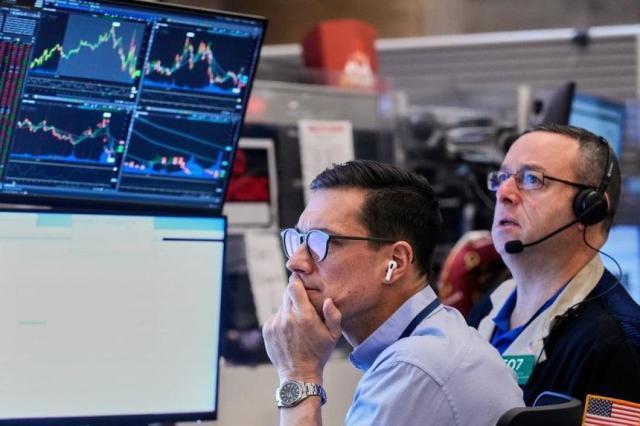
U.S. stocks surged on news of a peace agreement between the United States and Iran. Expectations for the reopening of the Strait of Hormuz led to a significant drop in international oil prices, alleviating inflationary pressures and driving buying interest in technology and growth stocks.
On June 15, the Dow Jones Industrial Average closed up 468.77 points (0.92%) at 51,671.03. The S&P 500 rose by 122.83 points (1.65%) to finish at 7,554.29, while the Nasdaq composite jumped 795.10 points (3.07%) to close at 26,683.94.
The Dow closed at an all-time high, and the Nasdaq's daily gain was the largest since March. The Russell 2000 index, which focuses on small-cap stocks, also rose by 21.10 points (0.72%) to finish at 2,965.09.
The market reacted positively to the memorandum of understanding (MOU) between the U.S. and Iran, which included agreements to halt hostilities and reopen the Strait of Hormuz, easing concerns about oil supply disruptions. Brent crude prices fell by approximately 4.8%, reducing fears that rising energy costs could further drive inflation.
The decline in oil prices benefited sectors heavily impacted by fuel costs, such as airlines and transportation. Conversely, energy stocks struggled due to the weakness in international oil prices. Investors viewed the stabilization of oil prices as a potential relief for consumer prices and corporate cost burdens, which could influence the Federal Reserve's interest rate decisions.
Technology stocks and those related to artificial intelligence led the market rally. Semiconductor stocks rebounded as buying interest returned following recent adjustments. Major semiconductor companies like Nvidia and Micron saw strong gains, buoyed by positive analyst assessments and expectations for AI demand.
SpaceX also attracted market attention, with its stock rising significantly after its initial trading, boosting investor sentiment towards tech stocks. In contrast, Fox experienced a sharp decline following its announcement of acquiring Roku.
The upward trend was not limited to large tech companies; both the New York Stock Exchange and Nasdaq saw more advancing stocks than declining ones, indicating a broader recovery in risk appetite.
However, the specifics of the U.S.-Iran agreement have not been fully disclosed. Key issues such as nuclear verification, sanctions relief, the release of frozen funds, and the operational management of the Strait of Hormuz remain subjects for future negotiations. While the market is relieved by the short-term stabilization of oil prices and reduced tensions in the Middle East, it will closely monitor the implementation of the agreement and the upcoming Federal Reserve monetary policy meeting.
* This article has been translated by AI.
Copyright ⓒ Aju Press All rights reserved.