
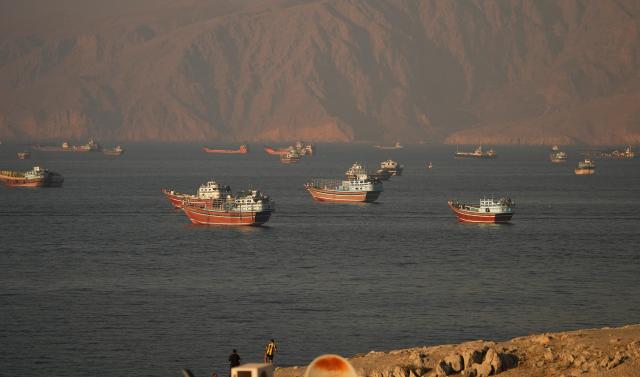
While the United States and Iran have reached a tentative agreement to extend the ceasefire and reopen the Strait of Hormuz, experts warn that it may take considerable time for international oil prices to return to pre-war levels.
MarketWatch reported on June 15 that the reopening of the Strait could mark the beginning of oil price stabilization, but that recovery of crude oil inventories, a decrease in shipping costs, and the confirmation of safe passage for large vessels are necessary for market normalization.
According to Dow Jones Market Data, West Texas Intermediate (WTI) crude closed at $80.75 per barrel on that day, approximately 21% higher than the pre-war price of $67.02. The global benchmark, Brent crude, traded at $83.17 per barrel, about 15% above its pre-war price of $72.48.
Rob Thermal, a senior portfolio manager at Tortoise Capital, stated, "The reopening of the strait is the first step. It may take years of supply exceeding demand to replenish the 1 billion barrels of crude oil lost due to the war."
Since the war began on February 28, the global oil market has faced a supply gap of 1 to 1.5 billion barrels due to production cuts and transportation disruptions. To address this, the U.S. decided in March to release 172 million barrels from its Strategic Petroleum Reserve (SPR), while member countries of the International Energy Agency (IEA) also agreed to release a total of 400 million barrels from their reserves.
Thermal noted that if global oil flows remain uninterrupted and oversupply persists for an extended period, prices could drop to the $60 range. However, he cautioned that it would take at least a year for global oil inventories to recover sufficiently to support prices at that level.
Experts believe that for oil prices to decline rapidly, increased production from the Organization of the Petroleum Exporting Countries (OPEC) and its allies, known as OPEC+, is also necessary. Jay Hatfield, chief investment officer at Infrastructure Capital Advisors, predicted that if OPEC+ increases production beyond pre-war levels, it could quickly fill the inventory shortfall.
OPEC+ has already decided to increase its July production target by 188,000 barrels per day. The reopening of the Strait of Hormuz is expected to alleviate logistical and storage constraints in the Persian Gulf region, potentially enhancing the production capacity of oil-exporting countries.
Shipping costs also play a critical role in the normalization of oil prices. Paul Baris, CEO of the supply chain consulting firm EpisiO, reported that shipping insurance premiums are currently about ten times higher than pre-war levels. He indicated that while insurance rates could begin to fall within days of a peace agreement, it would take at least three to six months to return to pre-war levels.
Baris emphasized the need for confirmation of safe passage, stating that not just 20 to 30 vessels, but over 100 ships must pass through the strait without incident.
Rebecca Babin, a senior energy trader at CIBC Private Wealth, added that the duration of any agreement is important, but the messaging surrounding the agreement also matters. She noted, "If one side claims the strait is open while the other hints at threats or ongoing restrictions, that uncertainty will delay normalization."
* This article has been translated by AI.
Copyright ⓒ Aju Press All rights reserved.