

China is broadening its export controls beyond rare earths to include critical supply chains such as solar equipment and battery materials, leveraging supply chain bottlenecks as a new economic weapon, according to analysis.
The Washington Post reported on June 16 that the Chinese government is expanding the scope of its export controls to include various sectors, including solar equipment and battery materials, as part of its strategy to weaponize supply chains.
In response to former President Donald Trump’s tariff policies, China implemented restrictions on rare earth exports last year. The Post noted that "China's continued expansion of export controls aims to pressure the U.S. while enhancing its political leverage and maintaining its industrial competitiveness."
A recent survey by the U.S.-China Business Council revealed that over one-third of its member companies reported suffering from China's export controls in the past year, with automotive and logistics firms being particularly hard hit.
Market research firm Rhodium Group stated in a recent report that "raw materials and refined minerals are just the tip of the iceberg," emphasizing that China's influence extends across intermediate manufacturing areas, including silicon wafers, permanent magnets, light-emitting diodes (LEDs), and battery materials.
Kabil Boulenuah, a vice president at Rhodium Group, told the Post, "These export controls are not merely retaliatory measures but rather a means for China to maintain its dominance over supply chains."
In addition to rare earths, solar manufacturing equipment has emerged as a new "bottleneck" for China. According to the Post, China controls over 80% of global solar manufacturing capacity. Data from the China Photovoltaic Industry Association shows that by 2024, China is expected to produce 92% of solar cells and 97% of wafers, a key component of solar panels.
As demand for electricity surges due to the spread of artificial intelligence (AI), the U.S. will need to secure mostly Chinese-made equipment to rebuild its domestic solar supply chain.
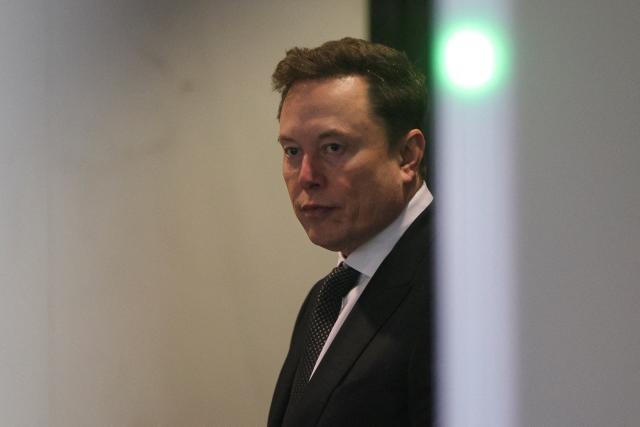
Elon Musk has announced plans to expand solar manufacturing capacity in the U.S. to 100 gigawatts (GW) and began negotiations earlier this year to purchase equipment from Chinese solar manufacturer Suzhou Maxwell. However, these negotiations have reportedly stalled. In March, Chinese authorities instructed Suzhou Maxwell to halt discussions with Musk and refrain from selling equipment for the time being.
Tu Qian, a professor at Beijing International Trade and Economics University, told the Post, "Selling solar manufacturing equipment is akin to providing tools for other countries to target China," interpreting that China aims to avoid repeating past mistakes where the U.S. allowed the outflow of industrial manufacturing technology and capital.
However, there are concerns that overly stringent controls on advanced technology exports could inadvertently encourage self-sufficiency among competing nations, potentially backfiring on China.
Following China's export controls on rare earths, the U.S. and its allies are accelerating efforts to reduce dependence on China by restructuring supply chains. Hanwha Q CELLS, which has production facilities in the U.S., announced last August that its newly established supply chain is entirely non-Chinese.
* This article has been translated by AI.
Copyright ⓒ Aju Press All rights reserved.