
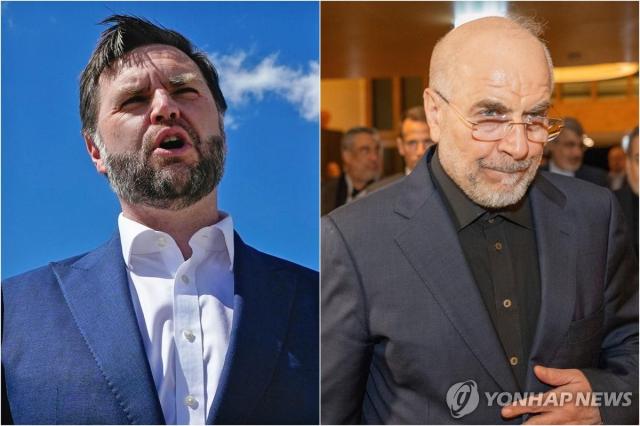
On June 21, U.S. and Iranian delegations commenced serious diplomatic negotiations aimed at ending hostilities in Switzerland's Bürgenstock resort. However, the talks were marked by a palpable tension, heightened by Israel's airstrikes on the Iran-aligned militant group Hezbollah in Lebanon. In response, Iran threatened to reimpose a blockade on the Strait of Hormuz. Compounding the situation, President Donald Trump issued a warning on his social media platform Truth Social, stating that if Iran fails to control Hezbollah, the U.S. would respond with significant force, pushing the negotiations to the brink of collapse.
Despite the tense atmosphere, the first round of marathon negotiations, conducted over two days, concluded early on June 22 with some visible achievements. Qatar and Pakistan, acting as mediators, issued a joint statement praising the "positive and constructive atmosphere" that led to encouraging progress. Iranian Foreign Minister Abbas Araghchi expressed satisfaction over what he described as a significant advancement toward ending the war in Lebanon via a post on X (formerly Twitter).
Prior to the talks, the U.S. and Iran had signed a memorandum of understanding (MOU) aimed at ceasing military operations across all fronts in the Middle East, including Lebanon. However, Israel is expected to pose a major obstacle to the final peace agreement between the U.S. and Iran. Ironically, the military actions of Israel, which is not a party to the negotiations, could determine the fate of the agreement. If Israel continues its airstrikes in Lebanon, Iran could use the MOU's violation as justification to reintroduce the blockade of Hormuz. This creates a dilemma for the U.S., as appeasing its ally could jeopardize the negotiations, while maintaining the talks could infuriate Israel.
During the first round of talks in Switzerland, mediators agreed to establish a conflict prevention mechanism to ensure compliance with the military operation cessation agreement between Israel and Hezbollah. However, the effectiveness of this mechanism is questionable, given Israel's reluctance to heed U.S. directives. Iran is prioritizing the Lebanon issue in the peace negotiations, and should Israel engage in further military actions, Iran is prepared to withdraw from the negotiating table at any moment.
Just days before, the U.S. and Iran had signed an MOU containing 14 provisions, including the cessation of military operations in Lebanon, reopening the Strait of Hormuz, resuming Iranian oil exports, and initiating nuclear negotiations over the next 60 days. The international community breathed a sigh of relief, causing oil prices to drop from $110 to around $80 per barrel.
However, before the ink could dry, Israel disrupted the situation. The Israeli military announced it had targeted 80 Hezbollah-linked sites, prompting the Iranian Revolutionary Guard Corps (IRGC) to declare that Israel's attacks on Lebanon violated the U.S.-Iran agreement, leading to the reimposition of the Hormuz blockade. Iran unilaterally postponed the Swiss talks originally scheduled for June 19, employing a brinkmanship strategy.
After much back and forth, the first round of the "Swiss talks" concluded early on June 22 with three apparent outcomes. First, an agreement on a roadmap aimed at achieving a final agreement within 60 days and the establishment of a high-level committee. Second, the creation of a "de-confliction cell" to monitor the cessation of military operations in Lebanon, involving the U.S., Iran, and Lebanon, with Qatar and Pakistan mediating. Third, the establishment of a communication channel between the U.S. and Iran to ensure the safety of maritime traffic in the Strait of Hormuz.
Iranian officials viewed the outcomes positively. Foreign Ministry spokesman Esmail Baghaei stated in a national broadcast that there had been "good progress" on issues related to ensuring safe passage through Hormuz, permitting Iranian oil sales, and unfreezing assets. However, as U.S. Vice President Vance noted, this first round of negotiations was merely the "starting point for practical discussions." Araghchi also referred to the Lebanon de-confliction mechanism as the "first real test" of the negotiations.
Nonetheless, Israel has yet to find a reason to halt its military actions in Lebanon, contrary to the hopes of the U.S. and mediators. The greatest risk in these negotiations lies not with Iran, but with Israel, a U.S. ally. While Iran is at the negotiating table, Israel is undermining it.
Trump's administration is likely to frame this agreement as a success. With the Strait of Hormuz reopening, oil prices have fallen, and Iran has engaged in negotiations. As the fall midterm elections approach, the narrative of ending a war that has hindered the global economy and curbing Iran's nuclear development could resonate with voters. The U.S. is also attempting to shift the direct financial burden of rebuilding Iran onto Gulf Arab states.
However, a closer look reveals a different picture. The Trump administration initially justified the war by aiming to "destroy" Iran's missile capabilities and "eradicate" proxy forces like Hezbollah and the Houthis. Yet, the key issues in the publicly available MOU focus on the nuclear program, while missile capabilities and proxy networks have been sidelined. A deeper concern is the precedent set; Iran has demonstrated that it can draw a superpower to the negotiating table through asymmetric tactics, such as blocking the Strait of Hormuz, despite being at a disadvantage in conventional military terms.
Iran has paradoxically reaffirmed its most potent weapon through this conflict, not its nuclear or missile capabilities, but its ability to disrupt global trade routes. The war has shown that a nation at a conventional disadvantage can influence a superpower by targeting its economic lifelines rather than occupying its cities.
In 1956, when Egyptian President Nasser nationalized the Suez Canal, Britain and France attempted to reclaim it through military force. However, they ultimately capitulated to U.S. pressure, Soviet threats, and global public opinion. This event marked the beginning of the end for British hegemony, remembered as the "Suez Moment." Recently, Sun Degang, director of the Middle East Research Center at Shanghai Fudan University, posed a question in the Chinese state-run Global Times: "Is the shadow of the Suez Crisis now being replayed for the U.S. in the Strait of Hormuz?"
The facts that U.S. military power is not as overwhelming as imagined, that Western alliances have not solidified, and that the costs of waging war against a single isolated adversary like Iran have escalated exponentially suggest that a "Hormuz Moment" may be approaching for the U.S.
The "Suez Moment" that heralded the end of British hegemony was not solely due to a weakened fleet. The critical moment was when the political, economic, and diplomatic costs of maintaining control over the canal became untenable. The current "Hormuz Moment" reflects a similar situation. The issue is not whether the U.S. Navy can "open" the Strait, but rather the cumulative costs—military tensions, alliance management, rising insurance premiums, risks of maritime conflict, and market panic—associated with keeping it open, which are rapidly diminishing the efficiency of U.S. hegemony.
60-Day Negotiation's Three Major Minefields
The first round of talks in Geneva established a roadmap. However, this roadmap is essentially placed on a 60-day timer, within which at least three minefields exist.
First, the effectiveness of the de-confliction mechanism. The most notable achievement of this round of talks is the agreement to establish a "de-confliction cell" for Lebanon. However, skepticism arises from the structure. This mechanism involves the U.S., Iran, and Lebanon, with Qatar and Pakistan mediating, but notably excludes Israel, which is conducting the attacks. If Israel continues its strikes against Hezbollah, Iran will have grounds to withdraw from negotiations citing "MOU violations."
Second, the limitations of the Hormuz communication channel. The newly established communication line between the U.S. and Iran aims to prevent accidental clashes. While this is a meaningful advancement, having a communication channel does not eliminate the will to impose a blockade. Unless Iran completes mine clearance operations, shipping insurance premiums will remain high, and commercial vessels will continue to fear navigating the strait. Although Hormuz has been declared open, it is not yet fully accessible.
Lastly, Bab-el-Mandeb poses a potential threat. It is crucial to remember that Iran's weaponry extends beyond Hormuz. The Houthi rebels in Yemen have previously attacked over 190 vessels in the Red Sea between 2024 and 2025, reducing traffic through the Suez Canal by 90%. If negotiations turn unfavorable for Iran and Bab-el-Mandeb closes again—resulting in a worst-case scenario where Hormuz, Bab-el-Mandeb, and Suez are simultaneously blocked—the shock could once again destabilize the global economy.
The Quiet Winner: China
Amid all this chaos, the country that has quietly gained the most is China. Through this conflict, China has secured rare diplomatic gains. As the war began, it continued purchasing Iranian oil and issued critical statements against the U.S. while avoiding direct confrontation. President Xi Jinping proposed a four-point peace plan, and Iran's foreign minister visited Beijing, followed by the Pakistani prime minister. Trump himself praised Xi at the G7 for maintaining neutrality and aiding in resolution efforts. Notably, Qatar and Pakistan, the mediators in the Geneva talks, have close ties with China. As the repeated scenes of "U.S. military dominance" failing to yield desired outcomes unfold, the world is naturally lowering the "psychological threshold for a multipolar order."
While the first round of talks in Geneva has concluded, practical discussions will continue this week. How the Lebanon de-confliction mechanism addresses Israeli military actions, how the unfreezing of funds for Iran navigates congressional barriers, and whether the Hormuz communication channel functions effectively in crisis situations will determine the course of the next 60 days.
As mentioned earlier, the most significant variable in these negotiations may not be Iran, but Israel. In this scenario, every choice the U.S. makes incurs costs. Ignoring Israel could destabilize negotiations and increase risks in Hormuz. Pressuring Israel could weaken alliance cohesion and reveal cracks in U.S. influence in the Middle East.
This dilemma encapsulates the essence of the "Hormuz Moment." Hegemony is measured not by the size of power but by the total amount of contradictions that can be managed simultaneously.
Lee Su-wan's Major Career Highlights
▷Reporter for Korea Times ▷Senior Correspondent for Reuters ▷Editor at Reuters ▷President of the Seoul Foreign Correspondents' Club ▷Global Head of Ajou Economic Group ░Editorial Writer for Ajou Economic Group
* This article has been translated by AI.
Copyright ⓒ Aju Press All rights reserved.