

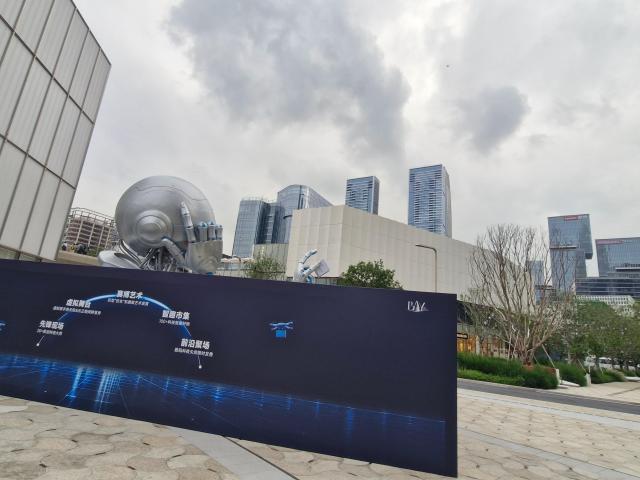
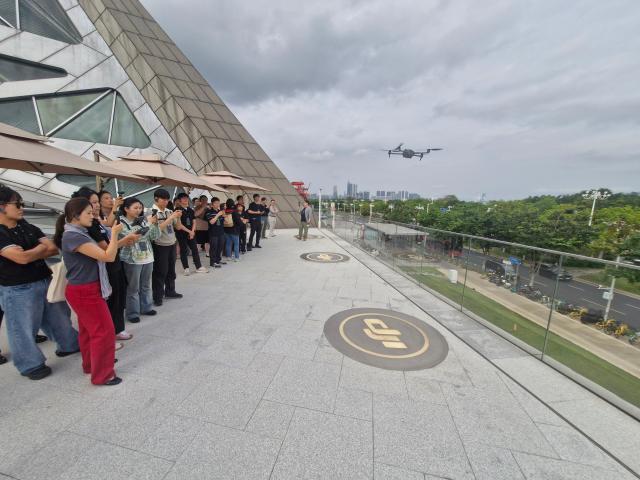
Shenzhen, home to the world's largest drone manufacturer DJI, is a key city for China's low-altitude economy initiative. Here, drones have evolved from hobbyist devices to essential tools for food delivery, logistics, power line inspections, and infrastructure management.
This transformation is evident at DJI's headquarters, where the first-floor exhibition hall is filled with a variety of products, ranging from palm-sized beginner drones to surveying and transport drones.
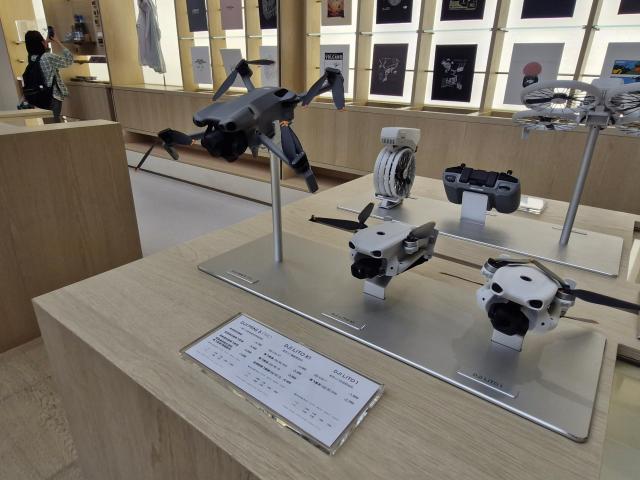
A store representative noted, "Recent consumers prioritize portability and ease of use. The 249-gram model can fly in authorized areas without additional applications, making it the most popular choice."
Drones are rapidly expanding their applications in various industries. From industrial drones inspecting airports and roads to agricultural drones dispersing pesticides, fertilizers, and seeds, their utility is broadening. On that day, DJI introduced transport drones capable of operating in extreme conditions, from minus 20 degrees Celsius to plus 40 degrees Celsius, and at altitudes up to 6,000 meters.
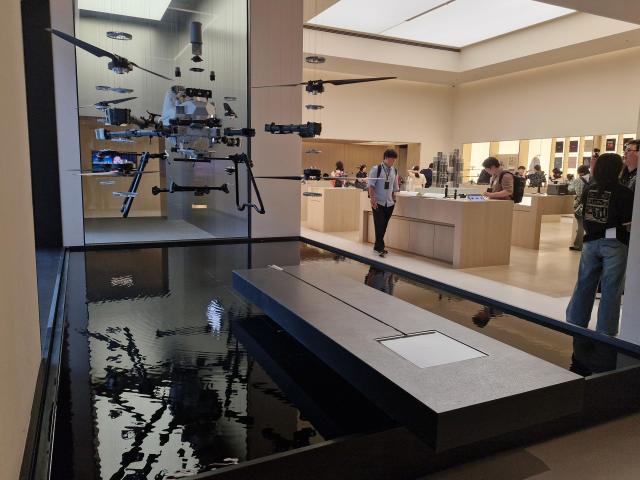
Recently, DJI has expanded beyond drone manufacturing into broader business areas. Leveraging its expertise in video processing, artificial intelligence, and obstacle avoidance technology, the company has ventured into smart hardware, including gimbal cameras, action cameras, and robotic vacuum cleaners. Research is conducted at its headquarters to verify the electromagnetic performance of new products in an anechoic chamber and antenna testing lab.
The South Korean Ministry of National Defense is promoting a project to train 500,000 drone operators to encourage the use of domestic drones. However, recent findings of foreign drones being used in army training programs have raised concerns about technological independence.
Kim Seung-yeon, president of the Korea Drone Utilization Association, stated, "It is a reality that closing the technology gap with China in a short period is challenging. We need policies that promote cooperation among domestic companies, develop drone service industries in education, disaster response, and sports, and expand the use of domestic drones in the public sector."
* This article has been translated by AI.
Copyright ⓒ Aju Press All rights reserved.