

Industrial accidents in South Korea's defense sector are on the rise, as companies view safety investments as a cost rather than a competitive advantage for the future. Experts argue that to maintain the hard-earned brand trust of 'K-Defense,' companies must elevate their safety management systems to global standards.
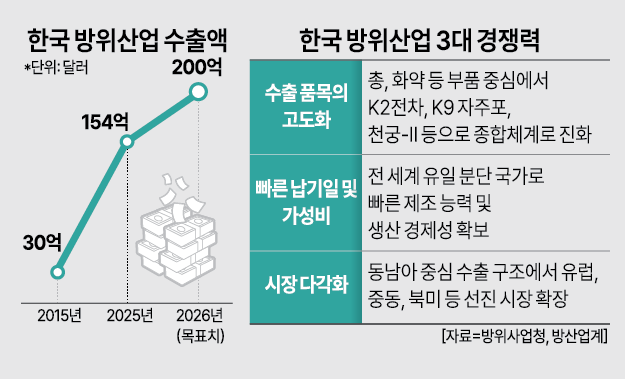
According to the Defense Acquisition Program Administration, South Korea's defense exports reached $15.4 billion (approximately 23.75 trillion won) last year, a staggering 413.3% increase from $3 billion (about 4.62 trillion won) in 2015. This explosive growth is attributed to the sophistication of export items, quick delivery times, cost-effectiveness, and market diversification. The government has set a defense export target of $20 billion (around 30.8 trillion won) for this year, a 29.9% increase from last year.
The challenge lies in the fact that as production ramps up to accommodate increased export volumes, safety incidents are also rising. In reality, investments in workplace safety by defense companies have not kept pace with the surge in orders. A review of the '2025 Sustainability Report' from five defense firms revealed that only Hanwha Aerospace disclosed its safety management status, safety investment amounts, and expenditure details. However, even Hanwha Aerospace reduced its safety and health investment budget by 51.4% compared to the previous year. Other companies, including LIG D&A, KAI, Poongsan, and Hyundai Rotem, have not provided specific safety investment budgets or expenditure details.
In contrast, foreign defense companies actively disclose performance indicators related to safety investments, such as Total Recordable Incident Rate (TRIR) and Lost Time Injury Rate (LTIR). Global defense firms like Lockheed Martin (U.S.) and BAE Systems (U.K.) are particularly sensitive to health and safety issues, branding their safety systems. Lockheed Martin has implemented a 'Target Zero' policy aimed at reducing workplace injuries and environmental risks to near zero, sharing the results with investors annually. BAE Systems applies 'Life Saving Rules' across its global operations, allowing both employees and contractors to halt work immediately if high-risk situations, such as fires or explosions, are detected.
As stress levels rise among defense workers, the likelihood of minor assembly errors or defects in weapons also increases. Experts suggest that to achieve a quantum leap in K-Defense, safety management systems must be elevated to global standards, as effective workplace safety ultimately enhances the quality competitiveness of K-Defense.
An industry insider noted, "Due to the lack of clear standards and penalties for safety investments, companies are reluctant to disclose specific investment details. The practice of treating safety costs as 'confidential' leads to opaque investments, and the results of related policy implementations are often consumed as promotional figures by companies." The insider emphasized that for substantial safety improvements, detailed expenditure reports on equipment modernization, training costs, protective gear purchases, and environmental enhancements must be made public, and monitoring mechanisms should be refined for greater precision.
* This article has been translated by AI.
Copyright ⓒ Aju Press All rights reserved.