

Celltrion Pharmaceutical has officially announced a plan to invest a total of 2 trillion won in pharmaceutical production infrastructure centered around Osong, South Korea.
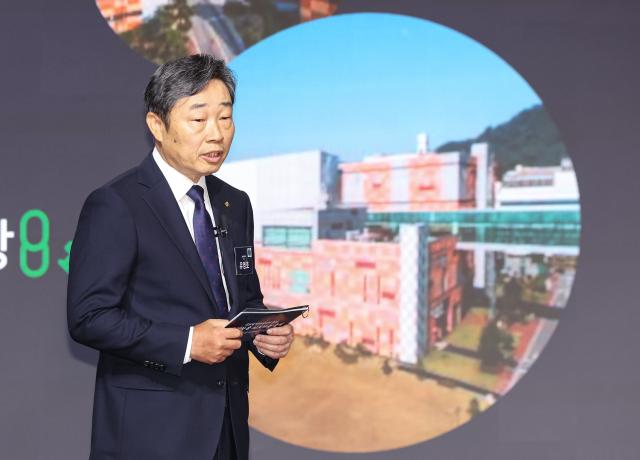
On July 2, CEO Yoo Young-ho unveiled a blueprint to gradually expand pre-filled syringe (PFS) production facilities during a national report meeting on advanced industry development in the Chungcheong region, hosted by President Lee Jae-myung in Asan.
Celltrion stated that it plans to invest 2 trillion won in the Chungcheong region to establish PFS production facilities. Once this investment is completed, the company’s PFS production capacity will increase from the current 20 million syringes per year to 70 million.
Yoo emphasized, "We are proactively responding to the increasing global demand by pursuing additional investments in PFS production facilities. By adding 50 million syringes to the existing 20 million, we will secure a total production capacity of 70 million syringes."
He further explained the rationale behind the investment, stating, "PFS medications are experiencing rapid growth in demand due to their convenience and safety in administration. Currently, supply is insufficient to meet demand, and this gap is expected to widen in the future."
PFS refers to a formulation where drugs are pre-filled into syringes, enhancing convenience and safety during administration while reducing the preparation burden on healthcare professionals, leading to increased demand in the global market.
The investment will be carried out in phases. In the first phase, approximately 1 trillion won will be invested, with design and construction expected to begin in 2028 and full-scale production starting in 2032. An additional 1 trillion won will be invested later to further expand production capacity.
Celltrion plans to strengthen its competitive edge by establishing a one-stop production system that encompasses everything from preparation to aseptic filling, assembly, and packaging, along with its own material production facilities.
Yoo stated that this investment in the Chungcheong region aims to foster growth alongside the community and enhance the competitiveness of the national biohealth industry, adding, "We will efficiently share production infrastructure and specialized personnel while improving logistics competitiveness based on the regional transportation network."
* This article has been translated by AI.
Copyright ⓒ Aju Press All rights reserved.