

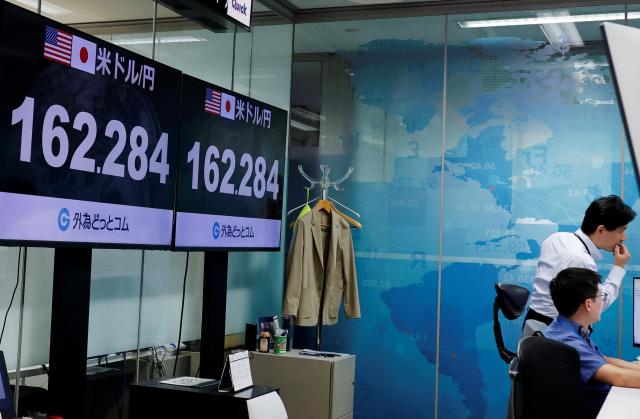
As the value of the yen has fallen to its lowest level in 40 years, the Japanese government is reportedly planning to conduct surprise currency interventions without prior notice, according to a report by Reuters on July 2, citing two sources. This move is seen as a strategy to enhance the effectiveness of currency interventions, particularly targeting speculative forces.
The report indicates that the Japanese Ministry of Finance is preparing to shift away from its previous practice of verbal interventions before actual currency actions. Instead, it plans to execute unannounced interventions aimed at rapidly liquidating speculative yen positions. Additionally, officials are expected to refrain from mentioning specific target exchange rates for potential interventions, the sources noted.
This approach marks a more aggressive stance in the foreign exchange market, suggesting that interventions could occur suddenly when speculative yen selling positions accumulate, rather than only when the yen surpasses a certain level. As a result, sources explained, speculative sellers of the yen may find themselves with little time to react to future interventions by Japanese authorities.
One source stated, "Determining the timing of currency interventions is challenging," but emphasized that the goal is to deliver a strong blow to speculative forces, asserting that authorities will intervene if necessary. The criteria for deciding on interventions, the source added, will not be based on the yen's level but rather on preventing excessive declines in its value.
This announcement comes as the yen continues to weaken, with the exchange rate surpassing 162 yen per dollar for the first time since 1986. Notably, despite the Japanese government's record intervention of $72 billion (approximately 112 trillion won) in late April and early May, aimed at selling dollars and buying yen, the downward pressure on the yen has not eased, increasing the burden on future currency policies.
In response, Bank of Japan (BOJ) Deputy Governor Ryozo Himino and other BOJ officials have argued for the necessity of a stringent monetary policy, citing that the yen's depreciation could contribute to rising import prices and inflation.
Meanwhile, some analysts speculate that the Japanese government may decide on intervention following the release of the U.S. non-farm payroll data for June, which is set to be announced on July 2. The current forecast for U.S. non-farm payrolls is an increase of 114,000 jobs, significantly lower than the previous month's increase of 172,000. Should the U.S. employment figures come in as expected, it could diminish the likelihood of further interest rate hikes by the Federal Reserve, potentially stabilizing the recent strength of the dollar and the weakness of the yen, thereby reducing the need for intervention.
Indeed, Federal Reserve Chair Kevin Warsh mentioned the previous day that inflation risks in the U.S. have eased. According to the Chicago Mercantile Exchange's FedWatch Tool, the probability of a 25 basis point (1 basis point = 0.01%) rate hike at the upcoming Federal Open Market Committee (FOMC) meeting has decreased from 33.1% to 29.4%.
Dutch investment bank ING suggests that, from a short-term perspective, the Japanese authorities may hold off on currency intervention ahead of the U.S. employment report, predicting that the Fourth of July holiday, when U.S. financial markets are closed, could be a potential time for intervention.
* This article has been translated by AI.
Copyright ⓒ Aju Press All rights reserved.