

Daegu feels familiar once again. Just a few years ago, I vividly recall wandering through the bustling Seomun Market, the lights of Dongseongro, and the seasonal charm of the modern alleys with a notebook in hand. Leaving behind the familiar urban landscape, this journey takes me into the depths of history, where time has quietly stood still.
Beginning in the serene landscape of Gunwi and continuing into the lush surroundings of Dalseong, this two-day trip leads me to various sites, including tombs, gardens, art museums, and shrines. Each location, while distinct, shares a common thread: they all whisper stories that have endured for centuries. The warmth and traces of those who have withstood the trials of time are palpable in these spaces.
◆ Eom Heung-do's Tomb in Gunwi: A Legacy of Loyalty Preserved by Descendants
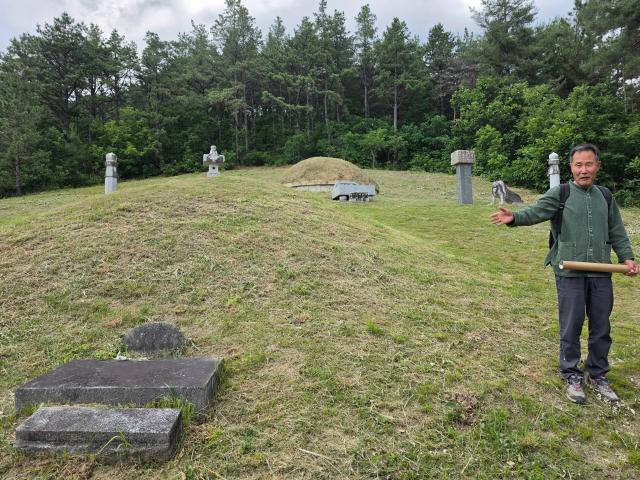
First, I head to Hwabon-ri in Gunwi's Sanseong-myeon. Following the sign for the 'Eom Heung-do Historical Exploration Trail,' I ascend the stairs to find Eom Heung-do's tomb. There are no extravagant stone monuments; only a neatly arranged mound and a weathered gravestone stand before me. The simplicity of the site invites contemplation.
Eom Heung-do, known as a loyal figure from Yeongwol, is said to have taken care of the young King Danjong's remains and conducted his funeral. In a time when fear of repercussions loomed under King Sejo's rule, he bravely honored Danjong's final moments. Recently, the film 'The King and the Man' has brought renewed attention to Danjong's tragedy, further popularizing Eom Heung-do's name.
The narrative surrounding his final resting place remains unresolved. There is also a tomb attributed to Eom Heung-do in Yeongwol, and the Gunwi clan believes he fled here with his second son, Gwang-soon, to escape danger. Eom Jong-hoon emphasizes, "The genealogy and oral records passed down through generations support this claim."
Determining the historical consensus is not straightforward. However, it is clear that someone has tended to this remote site for centuries, pulling weeds and caring for the mound. The well-maintained appearance of the tomb, undisturbed by the passage of time, attests to the dedication of those who have cared for it.
◆ Suyowon: A Contemplative Forest of Ancient Trees
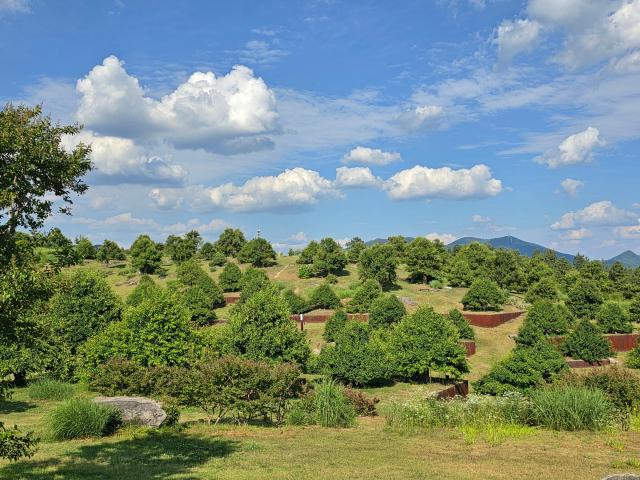
Carrying the echoes of Eom Heung-do's tomb, I proceed to Suyowon in Gunwi's Bugye-myeon. This site has recently gained attention as one of the most notable travel destinations in Daegu and Gyeongbuk. Suyowon began with the intention of preserving ancient quince trees that were at risk of being exported to Japan. Old trees relocated from various regions have taken root at the foot of Palgong Mountain, creating a space where gardens, architecture, and art harmoniously coexist over time.
Covering approximately 700,000 square meters, Suyowon features 108 quince trees that have withstood centuries, along with various other trees and stones. The gnarled and twisted trunks, rough bark, and branches stretching toward the sky silently tell the story of time's passage.
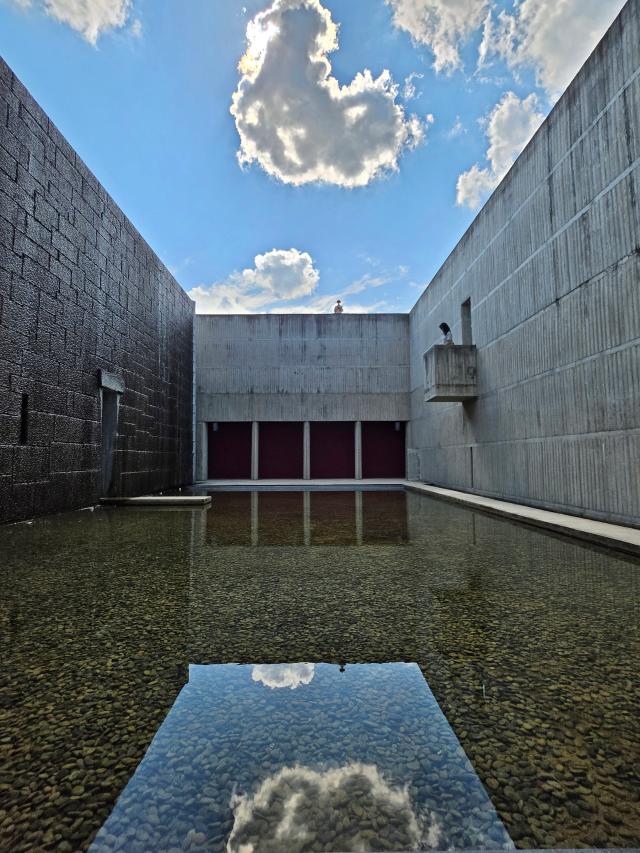
As I walk along the forest paths, I encounter a variety of architectural structures. The So-yohun and So-dae, designed by Portuguese architect Álvaro Siza, and the Hyeonam and Sadam, which involved architect Seung Hyo-sang, are nestled within the Palgong Mountain landscape. These buildings do not overpower the scenery; instead, they blend seamlessly into the natural surroundings.
The allure of Suyowon becomes evident when I slow my pace. After navigating a steep path, the ridge of Palgong Mountain fills my view. Among the many spots, the grove of quince trees draws me in. The sound of leaves rustling in the wind is the only noise that breaks the silence. Pausing to listen, I find my busy mind clearing, momentarily free from the chaos of daily life.
◆ Daegu Gansong Art Museum: The Passage of Time in Chusa's Orchids
The next day, my journey begins at the Daegu Gansong Art Museum in Suseong-gu. Established by Gansong Jeong Hyung-pil, who preserved cultural heritage during the Japanese occupation, this museum has quickly become a new cultural hub in Daegu since its opening.
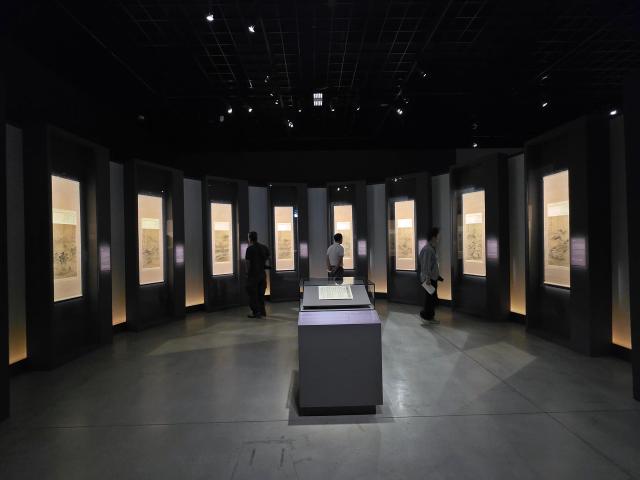
I visit the museum to see the special exhibition 'Chusa's Painting Class.' While Kim Jeong-hee, known as Chusa, is familiar to the public as a calligrapher and the creator of 'Sehando,' this exhibition highlights him as a mentor who nurtured students and an artist who completed his own world through painting.
Visitors linger longest in front of Chusa's orchid paintings. Their gazes are serious as they admire the works. The orchids from his youth exhibit strong brushwork and tension, while those from his later years are more fluid and profound, stripped of excess. The few strokes that fill the canvas convey a deep beauty through the art of emptiness.
This exhibition features Chusa's masterpieces, including the national treasure 'Sehando' and the treasures 'Nanmaengcheop' and 'Buliseonran-do.' The exhibition runs until July 5.
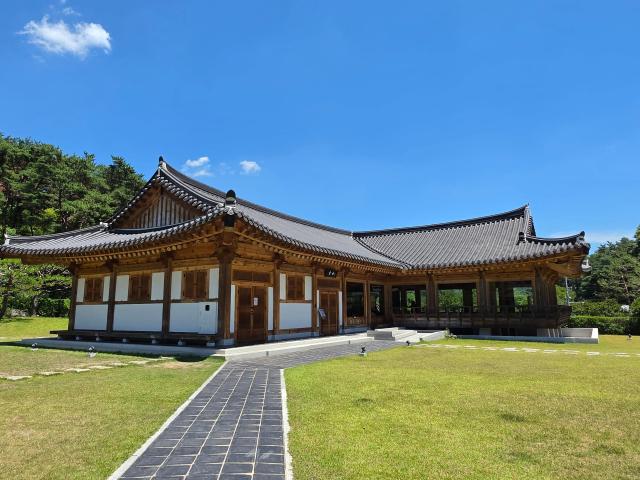
◆ Myogol Village in Dalseong: The Spirit of Scholars Embedded in Daily Life
Leaving the art museum, I head to Myogol Village in Dalseong-gun's Habin-myeon. This village is home to descendants of Park Paeng-nyeon, one of the Six Loyal Subjects.
Along the stone-walled paths, traditional tiled houses line the alleys, radiating warmth from the homes of the residents. The village, with its traces of hundreds of years, feels like a living museum, seamlessly blending the ordinary lives of its inhabitants with history.
Before visiting Yuksinsa, I stop by Cafe Myoun, run by a descendant of Park Paeng-nyeon. The cafe preserves traditional hanok architecture while ensuring comfort for its guests. The neatly arranged courtyard and tiled roof create a serene atmosphere, with views of the village beyond the windows.
As I gaze at the scenery through my teacup, I am reminded of Chusa's orchids at the Daegu Gansong Art Museum. The ambiance of Myogol Village resonates similarly, leaving a profound impression without being ostentatious. In the spaces where things are stripped away, the weight of time subtly seeps through, creating a tranquil landscape that invites lingering.
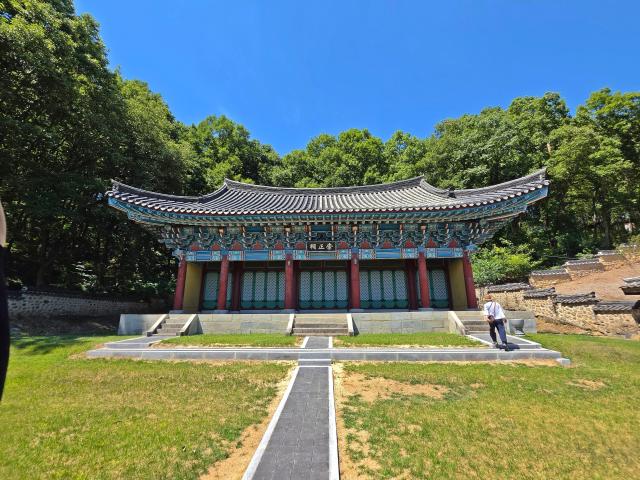
◆ Yuksinsa in Habin: The Unyielding Power of Memory
I conclude my journey at Yuksinsa, located deep within Myogol Village. Yuksinsa is a shrine dedicated to the six loyal subjects—Park Paeng-nyeon, Seong Sam-mun, Ha Wi-ji, Lee Gae, Yoo Seong-won, and Yoo Eung-bu—who sacrificed their lives in the pursuit of restoring King Danjong.
The shrine's location in Dalseong Habin is tied to a dramatic narrative involving Park Paeng-nyeon's descendants. Park Paeng-nyeon's second son, Park Soon, and his wife, Lee, managed to protect their child during a time of persecution. This child would later be known as Park Bi and received a pardon during the reign of King Seongjong, becoming Park Il-san. The story of the Park Paeng-nyeon lineage, the only one to continue among the Six Loyal Subjects, remains deeply rooted in this village.
Yuksinsa has experienced various ups and downs over the years. Initially centered around rituals for Park Paeng-nyeon, it later expanded to honor all six loyal subjects. Despite suffering from the destruction caused by Heungseon Daewongun's edict to abolish shrines, the descendants have maintained the rituals. Today's Yuksinsa stands as a space that has revived these memories.
The shrine is not large, but every pillar and door handle bears the passage of time, meticulously cared for by the descendants. Standing here, one can sense the enduring spirit of loyalty without the need for grand proclamations.
From Eom Heung-do's tomb to the quince trees of Suyowon, the Daegu Gansong Art Museum, Myogol Village, and finally Yuksinsa, each stop on this journey is unique. Yet, they all share a common thread: the traces of those who sought to preserve the essence of time.
Instead of the dazzling city lights, the ancient time captured in tombs, gardens, art museums, and shrines seeps deep into the heart. The clear stories etched in my heart, having crossed centuries, leave a lasting impression that will not easily fade after this journey concludes.
* This article has been translated by AI.
Copyright ⓒ Aju Press All rights reserved.