SEOUL, August 14 (AJP) — Actress Hayoung thought she was telling a family story.
Speaking on television about coming from four generations of doctors, she proudly recalled a great-grandfather who had studied Western medicine in Japan, opened one of Seoul's early Western-style clinics and, she said, treated Emperor Gojong.
Soon, internet users were digging through colonial-era records. They identified the relative as Ahn Sang-ho, whose name appeared in organizations associated with cooperation with imperial Japan.
What followed had little to do with Hayoung's latest acting role.
Instead, just before South Korea marks the 81st anniversary of liberation from Japanese colonial rule on Aug. 15, the 35-year-old actress found herself at the center of a much older argument: How far should responsibility for collaboration reach across generations?
The question is particularly combustible in Korea, where disputes over forced labor, wartime sexual slavery and territory continue to keep memories of Japan's 1910-45 colonial rule politically alive.
But Hayoung's case is more complicated than the online shorthand that quickly took hold.
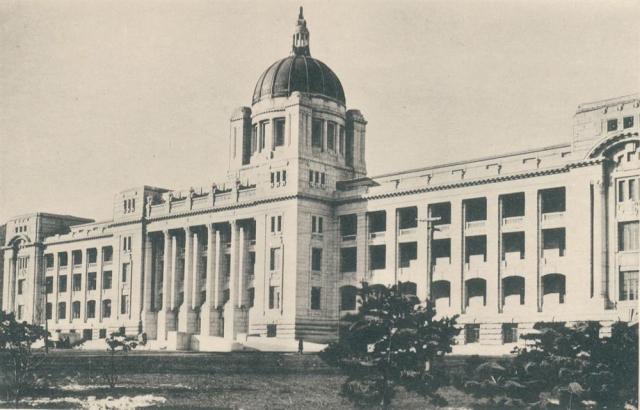
Ahn's name appears on a 1916 roster of governors of the Daejeong Chinmokhoe, an organization that promoted assimilation between colonial Korea and Japan. His name also appeared on a 1909 committee formed to mourn Ito Hirobumi, the Japanese statesman assassinated by Korean independence activist Ahn Jung-geun.
Yet Ahn was not included in the widely cited Encyclopedia of Pro-Japanese Collaborators, published in 2009, and historians differ over whether the records are enough to classify him as a collaborator.
Historian Sim Yong-hwan has cautioned against applying that label solely because someone's name appeared in an organization associated with colonial rule.
Bang Hak-jin, secretary-general of the Center for Historical Truth and Justice, has said Ahn's participation in such organizations is documented but that the available evidence did not meet the threshold for inclusion in the dictionary.
Former Independence Hall director Lee Jun-sik has taken a stricter position, arguing that serving as a governor of an organization promoting assimilation should itself be regarded as collaboration.
Those distinctions largely vanished once the debate moved online.
Posts began describing Hayoung simply as the descendant of a "chinilpa," a deeply charged Korean term commonly used for people regarded as collaborators with imperial Japan.
Hayoung herself has not expressed support for Japan's colonial rule or involvement in any colonial-era activity. Yet the controversy rapidly spread beyond historical debate, drawing in her television appearances, her family's wealth and eventually the companies that had hired her.
Samsung Electronics removed six advertisements featuring the actress from its official YouTube channel, while other brands also withdrew campaigns.
The episode unfolded just as her Netflix romance drama "Our Sticky Love," co-starring Chung Hye-in, had reached No. 5 among the platform's non-English television series after airing in the first week of August.
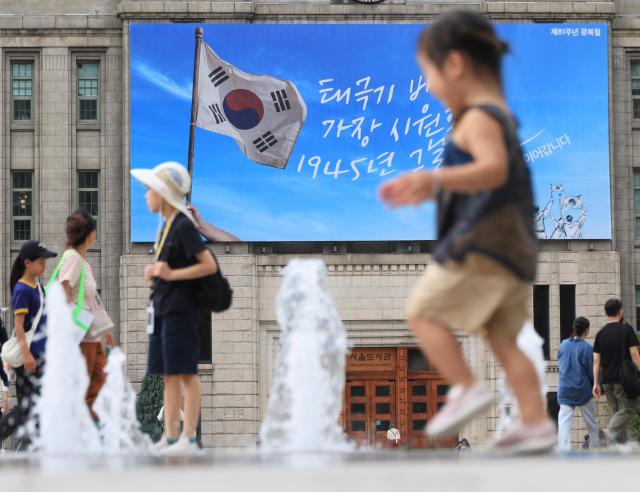
The intensity of the reaction is difficult to understand without Korea's unfinished reckoning with collaboration after liberation in 1945.
A special committee established to investigate Koreans accused of assisting Japanese colonial rule was dismantled in 1949 amid political
resistance. Many of those accused were never prosecuted, and some retained or later regained wealth and influence.
South Korea returned to the issue decades later.
A government commission operating from 2005 to 2009 identified 1,006 people as having engaged in pro-Japanese and anti-national activities. A separately compiled private dictionary applied broader criteria and named nearly 4,800 people.
More than eight decades after liberation, "chinilpa" remains more than a historical classification. It can function as a political accusation, a moral judgment and, in the age of social media, a label capable of spreading faster than the evidence behind it.
Whether that stigma should extend to descendants is another matter.
The young Koreans interviewed by AJP did not generally argue that it should.
"I sometimes feel bad when someone gets criticized just because they are a descendant," said Kang Seung-yeon, a 21-year-old university student from Seoul's Dongjak district.
But Kang said Hayoung's own television appearances made the reaction more complicated.
"In Hayoung's case, I think the things she said on television probably made people view the situation more negatively," she said.
Kim Su-hwan, a 35-year-old office worker from Gangdong district, had never heard of the actress before the controversy erupted.
"I don't think this is a witch hunt just because she's a collaborator's descendant," Kim said.
Nor, he said, did the online debate look entirely one-sided.
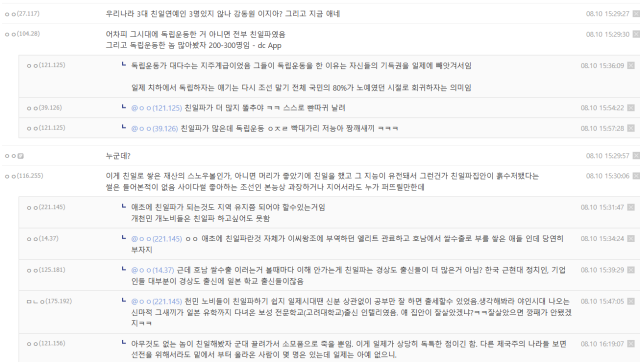
"People with different opinions are busy arguing with each other in the comments."
That divide is visible across social media.
Some users rejected the idea that Hayoung should bear responsibility for something her great-grandfather may have done nearly a century ago. Others were less concerned with inherited guilt than with whether wealth and social status acquired during the colonial period might have survived across generations among families that benefited under Japanese rule.
Others pushed back against that assumption as well.
There is no evidence that Hayoung's family's present-day wealth came from Ahn Sang-ho's colonial-era activities.
When ancestry met privilege

The tenor of the controversy shifted after older clips of Hayoung began circulating alongside the historical material.
In footage from a 2025 cooking program, she said her family home had five refrigerators and joked that food sometimes went to waste because no one finished it.
The comment had nothing to do with colonial history when it was made.
Neither, on its own, did talking about generations of doctors in her family.
But after internet users identified Ahn, those remarks were recirculated through a different lens: not simply as family anecdotes, but as displays of inherited status.
For some younger Koreans, that was the point at which the controversy stopped being primarily about ancestry.
"Korea clearly has a painful history when it comes to pro-Japanese collaborators, but in Hayoung's case I think a lot of the problem came from being careless about what she said," said Kim So-young, a 23-year-old student.
She cited the comments about the refrigerators and the family's medical background.
"I think people did not respond well because it sounded like she was boasting," Kim said. "Then people started looking further into her family history."
For Kim, having an ancestor suspected of collaboration was not enough on its own to justify the reaction.
"Being a celebrity means your livelihood depends on how you are seen," she said. "You have to be careful and humble."
Timing intensified the scrutiny.
The controversy erupted in the run-up to Liberation Day, when stories of independence fighters, colonial repression and Koreans who cooperated with Japanese authorities return to the center of public attention.
Sim has offered a similar interpretation of the episode, saying the anger appeared to be driven less by Hayoung's bloodline than by the impression that she had proudly presented a family history she did not fully understand.
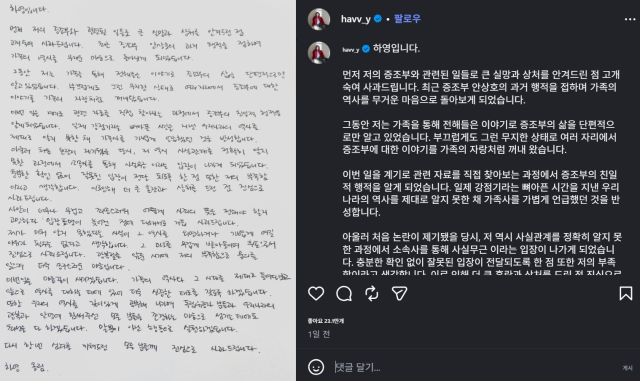
Hayoung later acknowledged that point herself.
In an apology posted on Instagram, she said she had known her great-grandfather only through fragmentary stories passed down within the family. She said she began examining historical records after the controversy and learned about his activities connected to pro-Japanese organizations.
Her agency had initially dismissed the allegations as baseless. It reversed its position after confirming the authenticity of the 1916 roster and apologized for responding before adequately checking the historical record.
Korea has seen it before
Hayoung is hardly the first Korean celebrity to discover that an ancestor's colonial-era record can suddenly become part of a modern career.
Actor Kang Dong-won faced controversy in 2017 over his maternal great-grandfather. Criticism intensified after his agency sought the removal of articles discussing the family history. Kang later apologized, saying he had not properly understood his ancestor's record.
Actress Lee Ji-ah responded differently after reports emerged about her grandfather. She visited the Center for Historical Truth and Justice to examine historical documents herself and later said that no circumstance could justify collaboration.
Musician Jeon Beom-sun disclosed his own descent from a figure associated with collaboration before public controversy forced the issue.
Those cases suggest that ancestry alone does not determine the scale of the backlash. How a public figure discusses that history — and how the person responds once it emerges — can matter just as much.
The opposite dynamic also carries weight.
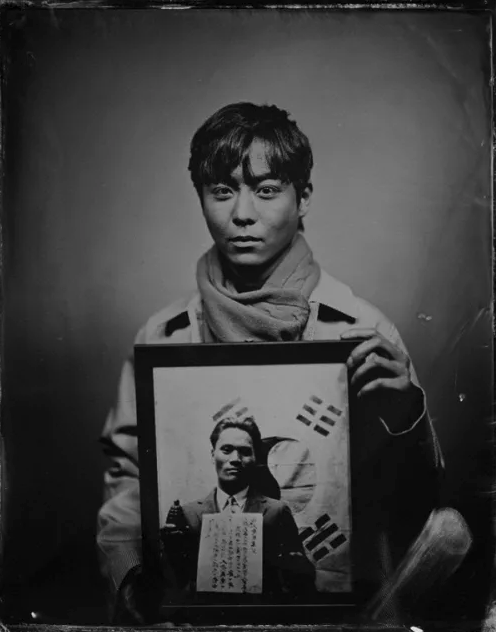
Actor Yoon Ju-bin is the grand-nephew of independence fighter Yoon Bong-gil, one of Korea's most celebrated anti-colonial activists. He kept that connection largely out of public view for years after making his acting debut and has said his family warned him against using Yoon's name for commercial benefit.
That contrast has resurfaced during the debate over Hayoung.
One family connection can become a source of suspicion if it appears to have been celebrated without scrutiny. Another can generate respect precisely because it was not exploited.
More than inherited guilt
Hayoung's case ultimately offers little evidence of a simple generational vendetta against descendants of people associated with colonial rule.
The young Koreans interviewed by AJP did not say people should be condemned because of their bloodline.
Their judgments were more conditional.
For some, whatever Ahn Sang-ho did should have no bearing on how his great-granddaughter is judged today.
For others, the issue became harder to separate from Hayoung herself after she publicly expressed pride in a family history that she later acknowledged she did not fully know.
The historical question remains unsettled as well.
Ahn's participation in organizations associated with colonial rule is documented. But historians still disagree over how that participation should be classified, and he was not among those included in the best-known private dictionary of collaborators.
There is also no evidence that Hayoung's family's present wealth originated from his colonial-era activities.
What the controversy reveals instead is how quickly separate questions can collapse into one another in South Korea: what an ancestor did, whether descendants benefited, how wealth is displayed and what responsibility a person has when invoking family history in public.
For most Koreans alive today, Japanese colonial rule survives through textbooks, films, family stories and national commemorations rather than personal memory. The generation that experienced it directly is rapidly disappearing.
The argument has not disappeared with them.
Eighty-one years after liberation, Korea is still deciding not only how to remember those who collaborated and those who resisted, but where historical responsibility ends and the lives of their descendants begin.
AJP Takeaways:
· Actress Hayoung is facing backlash ahead of South Korea's Aug. 15 Liberation Day after colonial-era records linked her great-grandfather Ahn Sang-ho to organizations associated with cooperation with imperial Japan.
· Ahn appeared in records tied to pro-Japanese organizations but was not included in the 2009 Encyclopedia of Pro-Japanese Collaborators. Historians remain divided over whether his activities warrant the collaborator label.
· Interviews with Koreans in their 20s and 30s suggest the controversy is not simply about inherited guilt. Hayoung's remarks about her family's wealth and four-generation medical pedigree have also fueled criticism.
Copyright ⓒ Aju Press All rights reserved.