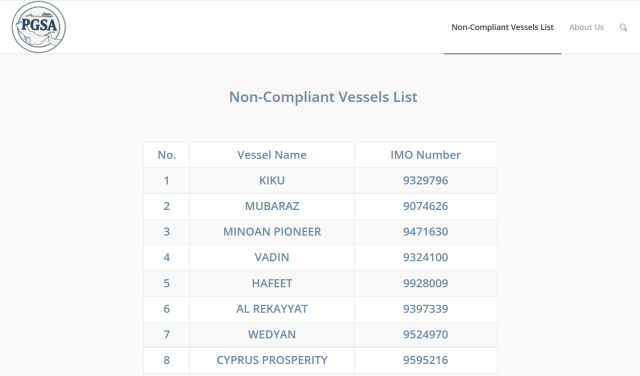
The five ships are the Cyprus Prosperity (IMO 9595216), Mombasa B (IMO 9739501), Singapore Prosperity (IMO 9419967), Sweden Prosperity (IMO 9588392) and Rotterdam Energy (IMO 9508859).
All five appear on a list of 45 vessels designated as non-compliant by Iran's newly established Persian Gulf Strait Authority (PGSA). U.S. Coast Guard vessel records also link each of the five ships to Sinokor Maritime.
The PGSA announced the blacklist in a post on X on Monday, saying vessels that violated Iranian protocols for transiting the strait could face restrictions on future passages, including fines, detention or confiscation.
The authority also warned that ships conducting ship-to-ship transfers with blacklisted vessels could themselves be added to the list.
The 45 vessels include very large crude carriers, LNG and LPG tankers and petroleum-product vessels. Ships associated with the United Arab Emirates' ADNOC Logistics & Services and its Navig8 subsidiary, Saudi Arabia's national shipping company Bahri, Norway's Klaveness Ship Management and Stolt Tankers are also on the list.
Sinokor has not commented publicly on the matter.
Iran did not specify what rules each vessel allegedly violated. Tehran has previously said ships should receive Iranian clearance before transiting the Strait of Hormuz and pay fees for security and other services.
Vessels seeking removal from the blacklist can submit an explanation to Iranian maritime authorities, according to the PGSA.
The move could also affect so-called shuttle operations that have emerged during the Iran war, in which smaller or more mobile tankers move through the strait and transfer cargo to larger vessels waiting outside the waterway.
Iran's warning comes as the United States has sought to restore energy flows through Hormuz while maintaining a naval blockade against Iran-related shipping.
U.S. Energy Secretary Chris Wright said the U.S. military had helped move a seven-day average of about 8 million barrels of oil per day through the Strait of Hormuz, although commercial ship-tracking data has produced significantly lower estimates.
Before the conflict disrupted shipping, the Persian Gulf accounted for roughly 20 percent of the world's daily crude oil and liquefied natural gas flows through the Strait of Hormuz.
The blacklist was announced days after Washington threatened Iran with what it called the "toughest sanctions in history," while Tehran warned that its response to further U.S. pressure would be "devastating."
AJP Takeaways
· Iran has blacklisted 45 vessels over alleged Strait of Hormuz transit violations, including five ships linked to South Korean carrier Sinokor Maritime.
· The PGSA warned that blacklisted ships could face fines, detention or confiscation, while vessels conducting ship-to-ship transfers with them may also be added to the list.
· The move comes amid continued disruption to Hormuz shipping, U.S. efforts to restore oil flows through the strait and renewed threats of tougher sanctions on Iran.

Copyright ⓒ Aju Press All rights reserved.