SEOUL, September 16 (AJP) - Traffic on Olympic-daero, the major artery running along the southern bank of the Han River, is rarely free-flowing. On Wednesday, the stretch near Yeouido Hangang Park appeared closer to a parking lot, with rows of police vans, ambulances and black limousines lining the area.
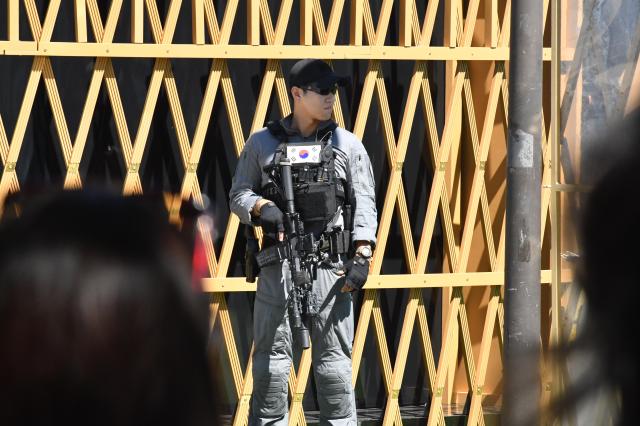
Inside the park, police moved cyclists, joggers and pedestrians away from restricted paths as security tightened around a visit by Kazakh President Kassym-Jomart Tokayev.
Many people caught in the restrictions had little idea why.
“Who’s coming?” one resident muttered among a small crowd asking much the same question.
“Police blocked the bike path and wouldn’t let people cross,” fumed Kim Seon-yeong, a 42-year-old office worker near Yeouido Station who commutes from Bundang.
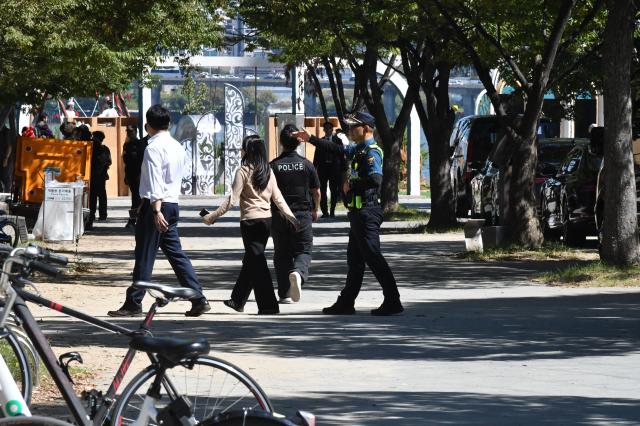
Kim said she had seen no advance notice that movement through the area could be restricted.
“I didn’t see a single banner or notice anywhere,” she said.
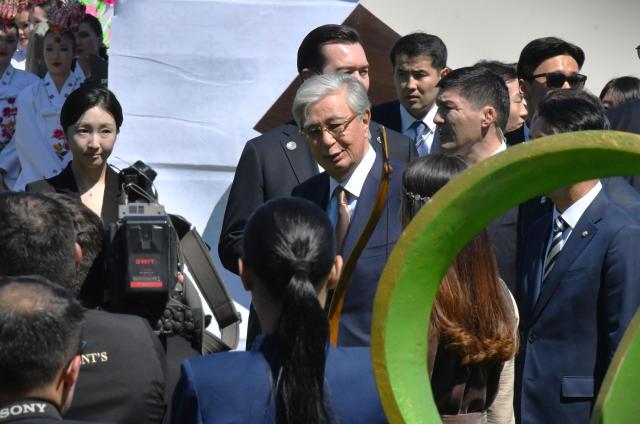
The security operation accompanied Tokayev’s appearance at a cultural heritage event in Yeouido during his state visit to South Korea.
Tokayev had held a bilateral summit with President Lee Jae Myung on Tuesday and attended a Korea-Kazakhstan business roundtable before joining the inaugural Korea-Central Asia Summit on Wednesday. Kazakhstan was one of three Central Asian countries whose presidents were received on state visits ahead of the multilateral gathering.
The Yeouido appearance stood apart from the more controlled settings of the bilateral summit, business meetings and Wednesday’s leaders’ gathering.
Bringing a visiting president into one of Seoul’s busiest public parks meant presidential-level security had to coexist with cyclists, commuters, joggers and other park users going about their normal routines.
The resulting contrast was conspicuous: extensive security was visible on the ground, while information explaining how that security would affect the public was not.
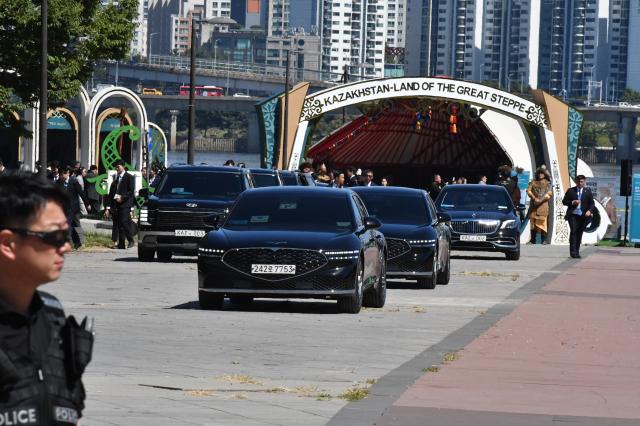
South Korea’s Korea Heritage Service and Kazakhstan’s Culture Ministry jointly organized a “Nomadic Traditional Cultural Heritage Exchange” in Yeouido to introduce Kazakh traditions and promote cultural cooperation.
The program included a digital exhibition space modeled on a traditional Kazakh yurt, displays of crafts, jewelry, clothing and musical instruments, performances and presentations on Korean and Kazakh archery traditions. It also highlighted the history and culture of Koryo-saram, ethnic Koreans in Central Asia.
Kazakhstan’s embassy had also publicized separate cultural programs at Yeouido Park and Yeouido Hangang Park as part of Tokayev’s state visit. Its notices invited the public to attend and listed the venues and program times.
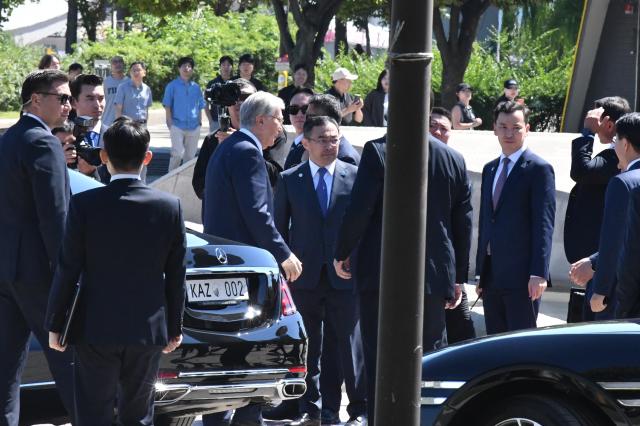
What the notices did not spell out was that presidential security could temporarily cut or divert pedestrian and bicycle routes around the riverside area.
That omission became more noticeable because the event itself was promoted as open to the public.
Kim Min-su, a 24-year-old university student from Jamsil, encountered the restrictions while cycling along his usual Han River route.
“My route normally takes me past Yeouido and back to Jamsil,” he said. “Suddenly the path was blocked and they told me there was an event and that I’d have to take a long detour.”
The concentration of security personnel made him curious enough to stop.
“There were six or seven police and security officers within about 10 meters,” Kim said. “Given how much manpower was deployed, out in the sun with hardly any shade, I decided to stick around and see who would show up.”
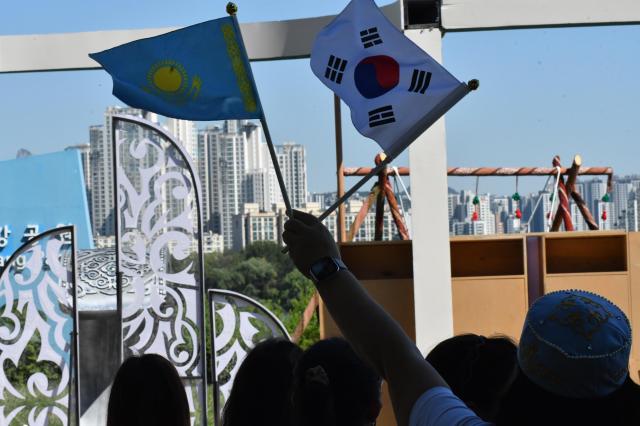
Kang Sun-ja, a 68-year-old longtime Yeouido resident, was similarly unsure what was happening.
“I’ve never seen this kind of commotion at Hangang Park before, with police lined up because someone important was coming,” Kang said. “I couldn’t tell whether it was for a foreign dignitary or some famous person from Korea.”
The problem was not a lack of advance publicity for the cultural program itself.
Both Korean and Kazakh organizers had announced the events.
Rather, there was a gap between publicity for the event and notice of the restrictions required to secure it.
The difference was particularly striking compared with preparations for the Korea-Central Asia Summit elsewhere in Seoul.
The Presidential Security Service’s Security and Safety Control Team announced on Sept. 9 that Sowol-ro and parts of Euljiro 1-ga would face traffic restrictions on Sept. 16.
Authorities specified that all lanes on Sowol-ro would be closed briefly six or seven times in line with the movements of visiting leaders rather than shut for an extended period.
They also said information would be distributed through electronic displays at Gwanghwamun Square and Seoul City Hall, roadside signs, the security service’s YouTube channel and navigation services including T map, Kakao Map and Naver Map.
The planning involved the presidential security team, the Foreign Ministry’s summit task force, the Seoul Metropolitan Government, Seoul police and the Korea Road Traffic Authority.
No comparable public guidance on temporary pedestrian or bicycle restrictions around the Yeouido riverside programs was included in the notices reviewed by AJP.
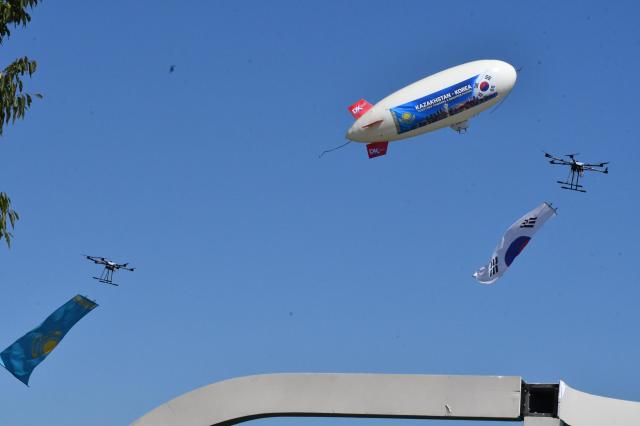
The episode does not suggest that public cultural diplomacy has no place in a state visit. Kazakhstan’s embassy openly promoted the Yeouido programs as opportunities for Seoul residents to experience Kazakh culture, with admission free and the public encouraged to attend.
But an open venue also requires a different level of coordination from a closed summit hall.
It was not immediately clear from public materials which side proposed Tokayev’s Yeouido appearance or when the security arrangements surrounding it were finalized.
For Seoul, which had spent months preparing to host the first Korea-Central Asia summit at the leaders’ level, the relatively small episode offered a practical reminder that summit readiness extends beyond meeting rooms and motorcades.
AJP Takeaways
- Presidential-level security around Kazakh President Kassym-Jomart Tokayev’s Yeouido appearance temporarily disrupted pedestrian and bicycle routes, catching some park users by surprise.
- Korean and Kazakh organizers had publicly promoted the cultural programs, but the notices reviewed by AJP did not specify possible access restrictions linked to presidential security.
- The gap contrasted with summit-related road controls elsewhere in Seoul, where authorities provided advance closure schedules and distributed information through road signs, navigation apps and other channels.
Copyright ⓒ Aju Press All rights reserved.