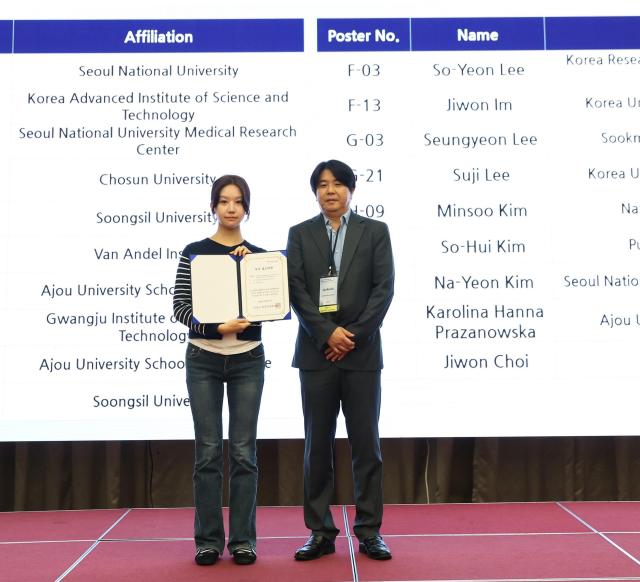
SEOUL, September 30 (AJP) - A graduate student at Sookmyung Women's University won an excellent poster award at South Korea's leading genomics conference for research on an artificial intelligence platform that helps scientists find drug targets in vast sets of biological data, the prominent university in Seoul said Wednesday.
Lee Seung-yeon, a master's student in the university's Department of Biological Sciences, received the award on Sept. 5 at the Korea Genome Organization's 35th international annual conference, Sookmyung said. She is advised by Professor Yoon Suk-joon.
The Korea Genome Organization (KOGO) holds the conference each year to share the latest research in genomics and bioinformatics, the field that uses computing to make sense of biological data. Lee's poster was titled "Biological intelligence for target, biomarker and mechanism discovery from omics data."
The research introduced Q-omics, an AI-based platform built to mine omics data. Omics refers to large-scale measurements of a cell's molecules, such as every gene it carries or every protein it makes. A single study can produce millions of data points.
According to the university, Q-omics lets researchers analyze that data without running complex computational work themselves. It is designed to identify therapeutic targets, the genes or proteins a drug can act on, and biomarkers, the measurable signs in the body that indicate disease or how a patient responds to treatment.
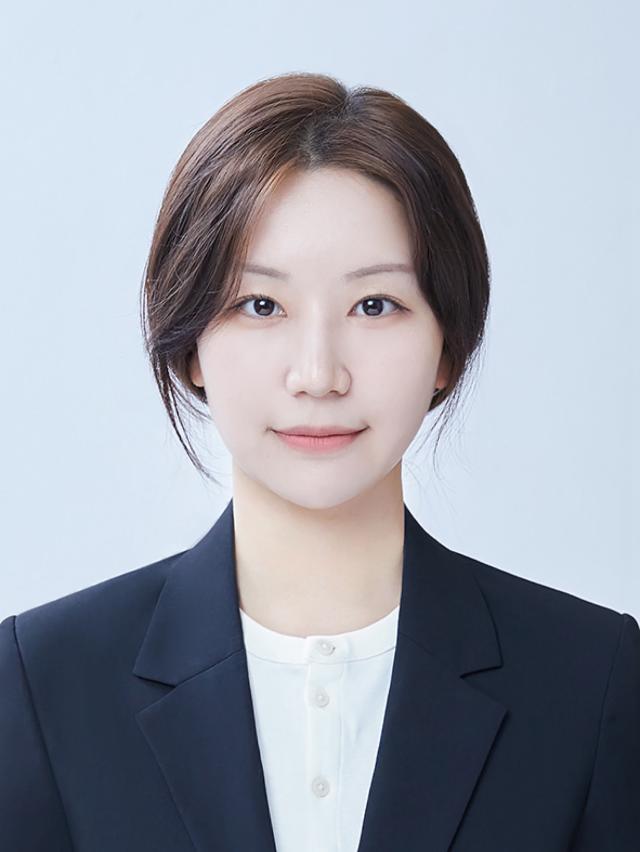
The core of the work is how the AI model learns. The researchers built a biological ontology, a structured catalog of what genes are known to do and how those functions relate, directly into the model's learning structure.
Earlier approaches focused on analyzing genes one at a time. Q-omics instead learns the functional relationships among genes within their biological context, the university said. From that, it can map the gene interactions and functional modules, groups of genes that work together, that appear in a specific disease.
Sookmyung said it expects the approach to help find target genes and biomarkers for treating disease, predict how patients respond to drugs, and explain how diseases develop and progress.
Defaults applied since the open items were not settled: Lee Seung-yeon as the romanization and Department of Biological Sciences as the department name, taken from Yoon's published affiliation. Swap either if Sookmyung uses something different.
Copyright ⓒ Aju Press All rights reserved.