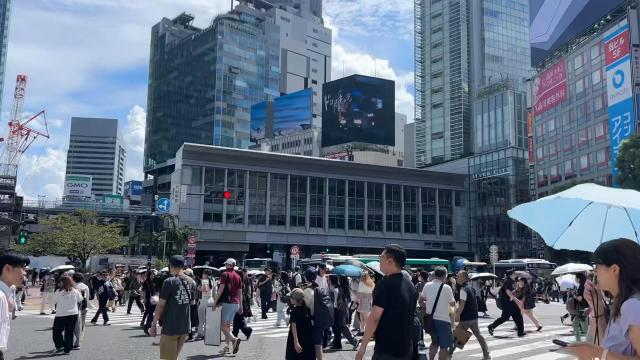
Japan accounted for 38.7 percent of overseas travelers in BC Card’s customer data, up 8.9 percentage points from the first half of 2024. The analysis released Monday compared overseas travel and spending patterns during the first six months of 2024 through 2026.
The currency backdrop has since made Japanese shopping even more attractive. The won’s recent strengthening against the U.S. dollar has coincided with persistent yen weakness, allowing Korean travelers to buy more yen with their won.
In October, 100 yen cost roughly 840 to 850 won — levels last seen in 2008. That gives Korean visitors greater purchasing power at Japanese shops, restaurants and hotels, reinforcing Japan’s appeal beyond the period covered by BC Card’s analysis.
Higher fuel costs have added to the incentive to stay closer to home. Middle East tensions drove up oil prices and airline fuel surcharges earlier this year, with another round of increases taking effect in November. Korean Air’s one-way fuel surcharge this month is 76,000 won for Tokyo and Osaka, compared with 408,100 won for New York — before the base fare and other charges.
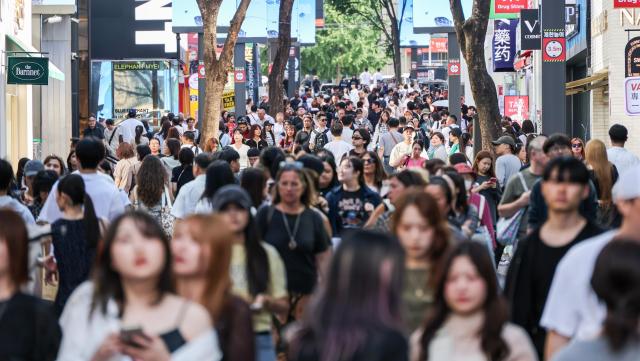
South Korea welcomed 3.12 million Japanese visitors from January through September, up 16.9 percent from a year earlier, according to Ministry of Culture, Sports and Tourism figures. Japan accounted for 18.2 percent of Korea’s 17.11 million foreign arrivals during the period.
The increase extended a trend evident through July, when South Korea attracted 28 percent of all Japanese outbound travelers. Japanese arrivals in Korea rose 18.8 percent during those seven months, well ahead of the 4.1 percent increase in Japan’s overall overseas travel.
A stronger won makes Korean purchases more expensive for yen earners. But short flights, extensive air connections and the popularity of Korean culture continue to underpin demand. For Japanese travelers facing a weak currency and expensive long-haul flights, nearby Korea remains an accessible overseas getaway.
BC Card’s findings show a broader shift toward Asia among Korean travelers.
Asian destinations accounted for 74.3 percent of overseas travelers in its data, up from 60.4 percent two years earlier. Europe’s share fell 6.7 percentage points to 12.3 percent.
The company attributed Europe’s decline to a slower recovery in long-haul demand alongside higher airfares and local prices. It also said a strong dollar had increased the perceived cost of North American travel.
China followed Japan among individual destinations with an 11.2 percent share, ahead of Vietnam at 11.0 percent and the United States at 10.5 percent. China’s share increased 5.8 percentage points from 2024, while the U.S. share fell 4.8 points.
Shopping figured prominently in trips to Northeast Asia. It accounted for 65.9 percent of card transactions in Japan, compared with 66.3 percent in China and 56.4 percent in Taiwan. These figures measure transaction counts rather than spending amounts.
The preference was particularly clear among repeat travelers.
BC Card classified customers who traveled abroad at least twice between January 2025 and June 2026 into six groups. The largest, accounting for 27.2 percent, sought new destinations and devoted 80.9 percent of their travel spending to shopping.
Another 24.5 percent favored short, repeat visits to familiar destinations for value shopping. Japan accounted for 51 percent of this group’s overseas card-use days.
Younger, wealthier customers and residents of the Seoul metropolitan area were more likely to travel abroad. Customers earning at least 100 million won a year were 2.2 times as likely as the average customer to do so, with overseas spending averaging 1.28 million won per person.
The most frequent travelers made an average of 7.2 overseas trips over the 18-month period and spent 3.76 million won each — the highest among the six groups.

Copyright ⓒ Aju Press All rights reserved.