

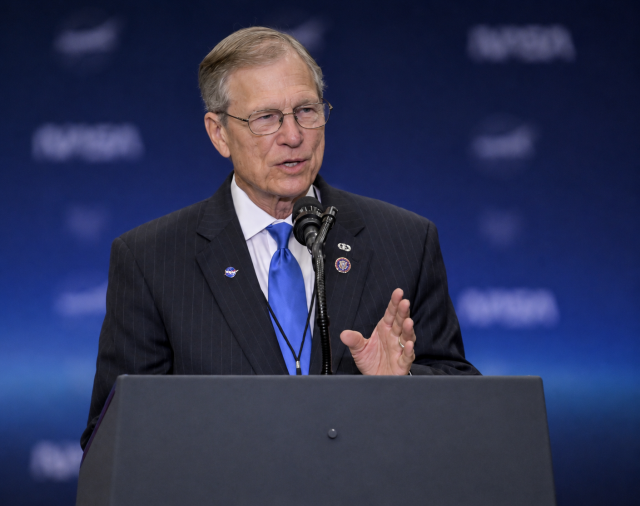
“While our nations will naturally have different economic considerations, we must remain closely aligned when it comes to protecting critical technologies, securing supply chains, and addressing the national security challenges posed by China,” Rep. Brian Babin said in a recent email interview.
“South Korea is an important partner in several critical technology sectors, particularly semiconductors, super intelligence (SI), and advanced manufacturing,” he said.
“I believe our cooperation should focus on delivering tangible results that strengthen our respective industries, secure critical supply chains, and keep our nations at the forefront of scientific and technological progress.”
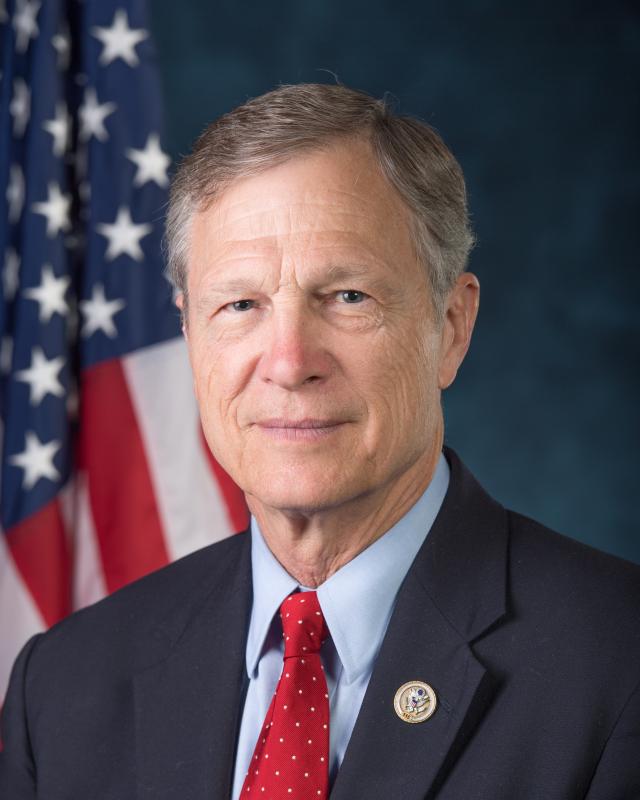
Babin, a Republican who has represented Texas’s 36th Congressional District since 2015, is seeking a seventh term in the Nov. 3 midterm elections. His district includes NASA’s Johnson Space Center, placing space exploration at the center of his congressional interests.
His comments reflect the widening scope of an alliance whose industrial cooperation increasingly connects semiconductor production, the electricity needed to power advanced computing and technologies for exploration beyond Earth.
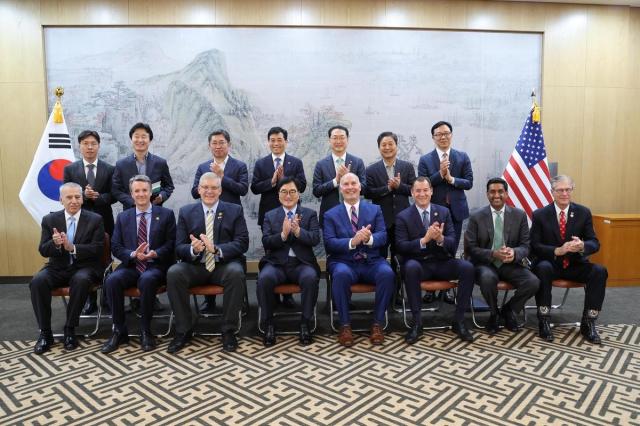
“Protecting sensitive American technologies from foreign adversaries must remain a national security priority,” Babin said.
“At the same time, trusted allies like South Korea play an important role in our semiconductor industry, including through significant investments in my home state of Texas. We should work to provide a predictable regulatory environment that encourages investment while maintaining these necessary and appropriate safeguards.”
Samsung Electronics has committed substantial investment to semiconductor manufacturing in Texas, while SK hynix is expanding its American presence. Both must navigate U.S. technology controls affecting their existing operations in China.
The broader framework for cooperation includes the Technology Prosperity Deal signed in October 2025, covering AI, quantum technology, biotechnology, space exploration, next-generation communications and research security.
Babin repeatedly used “super intelligence,” or SI, terminology adopted by the Trump administration. A Sept. 29 executive order directed federal agencies to use the term in place of “artificial intelligence” in official communications and non-statutory documents.
The order initially applies the existing statutory definition of AI, making the change one of federal terminology rather than a declaration that human-level intelligence has been surpassed.
For Babin, maintaining leadership in advanced computing also requires sufficient energy.
“America cannot lead the global SI race without the reliable, affordable energy and infrastructure needed to power it,” he said. “Congress must pursue an all-of-the-above energy strategy that expands domestic production, supports advanced nuclear technologies, modernizes our electric grid, and removes unnecessary permitting barriers that delay critical infrastructure projects.”
That creates an opening for South Korea’s nuclear industry as expanding data centers place growing demands on U.S. electricity generation and transmission systems.
A bilateral nuclear cooperation framework announced in September envisages eight large reactors in the United States: six Westinghouse AP1000 units and two Korean APR1400 units.
The framework provides for up to $120 billion from the Korea-U.S. Strategic Investment Fund. That is a maximum potential allocation, including contingency funding, rather than a finalized commitment to individual projects. Sites, commercial arrangements and construction schedules still require further decisions.
“Nuclear energy is essential to America's energy security and economic future. I welcome opportunities to work with trusted allies like South Korea to expand domestic nuclear capacity, strengthen our supply chains, and accelerate the deployment of reliable technologies,” Babin said.
“These partnerships can complement the expertise and capabilities of America's own energy industry,” he added.
Space offers another avenue for cooperation.
Asked about deeper engagement following South Korea’s successful fifth launch of its homegrown Nuri rocket on Oct. 7, Babin welcomed a larger Korean role in exploration.
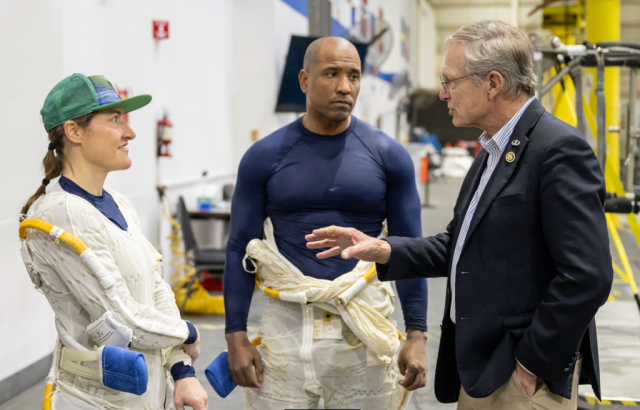
Seoul and Washington have expanded cooperation under NASA’s Artemis program, which aims to establish a sustained human presence on the Moon and prepare for missions to Mars.
In July, the Korea Aerospace Administration (KASA) and NASA signed a joint statement of intent on lunar-base development. Discussions have covered landers, communications and navigation systems, rovers and infrastructure for long-term operations on the lunar surface.
South Korea also participated in April’s Artemis II mission through K-RadCube, a small satellite designed to study space radiation. Although successfully deployed, it failed to establish normal communications or return observation data during initial operations.
KASA said in October that it was reviewing a technical report on the failure.
Babin said American leadership in space would require sustained investment as China advances its own lunar ambitions.
“America's leadership in space is not guaranteed, particularly as China pursues its own ambitions on the Moon and beyond. We must ensure NASA has the resources and capabilities necessary to safely return American astronauts to the lunar surface, establish a sustained presence, and prepare for future missions to Mars,” he said.
That position has put him at odds with the Trump administration over NASA funding.
At an April congressional hearing, Babin criticized the proposed $18.8 billion NASA budget for fiscal 2027, roughly 23 percent below the previous year’s appropriated funding. He said the proposal could not support the missions assigned to the agency by the president and Congress.
He nevertheless emphasized Congress’s responsibility to scrutinize expenditure.
“Congress also has a responsibility to carefully review spending priorities and ensure taxpayer dollars are being used effectively,” he said.
Babin also called for regulatory changes to support commercial space companies, whose launch services, spacecraft and other technologies play an expanding role in the U.S. space program.
“America's commercial space industry is moving at an extraordinary pace, and our regulatory framework must be able to keep up,” he said.
“I believe we should focus on streamlining federal requirements, improving coordination among agencies, and eliminating unnecessary duplication so American companies can continue innovating, investing, and operating here at home.”
Copyright ⓒ Aju Press All rights reserved.
