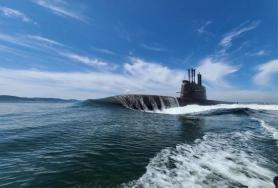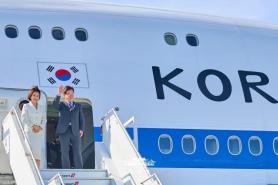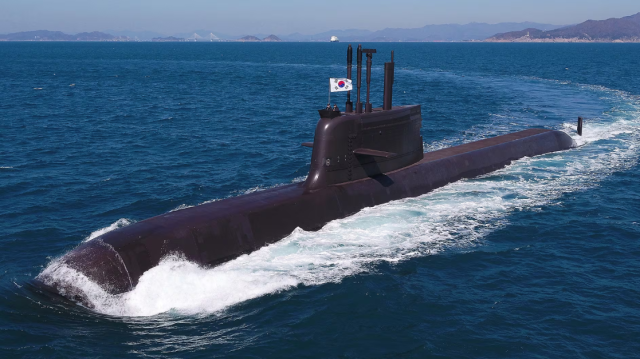
Seoul has approved a development program scheduled to begin next year. Tokyo remains at the policy review stage, with its ruling coalition divided over whether the military benefits of nuclear propulsion justify the costs and legal complications.
Japan's ruling Liberal Democratic Party (LDP) and its coalition partner, the Japan Innovation Party (JIP), began working-level discussions Tuesday on revisions to three key national security documents expected to be finalized by year-end.
The two parties remain divided over several defense issues, including the possible acquisition of nuclear-powered submarines and changes to Japan's longstanding non-nuclear principles. Neither issue was directly discussed at Tuesday's opening meeting, according to Japan's Kyodo News.
The JIP has called for the early introduction of nuclear-powered submarines, arguing that Japan needs to strengthen its underwater capabilities as China's naval activities expand across the Pacific.
Some LDP members, however, have questioned whether the operational benefits would outweigh the enormous costs and legal hurdles.
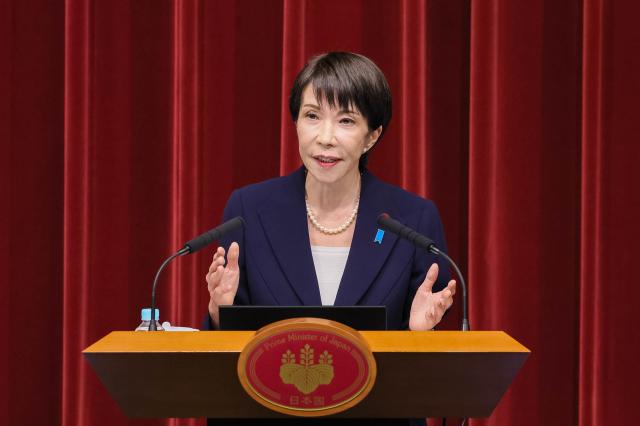
That balance leaves Takaichi and the LDP firmly in control of Japan's defense agenda, even as their junior partner presses for more ambitious military capabilities.
Takaichi herself has signaled openness to nuclear-powered submarines.
"We will seriously consider the possibility in a concrete and realistic manner," she told parliament on Oct. 14, citing neighboring countries' growing military activities and the need to strengthen Japan's intelligence-gathering and surveillance capabilities in the Pacific.
Her remarks signaled a willingness to examine an option Japan has long avoided, although the government has yet to decide whether to acquire such vessels.
A Japan-based security expert told AJP that Tokyo's growing interest in nuclear propulsion should not be interpreted as a response to South Korea's submarine program.
"The ROK's decision to pursue nuclear submarines has not influenced the debates," said the expert, who requested anonymity because of the nature of their work.
Japan's discussions are instead driven by an increasingly challenging security environment involving China, North Korea and Russia, the expert said.
Japan already operates advanced conventionally powered submarines. Nuclear propulsion, however, could allow vessels to remain submerged much longer and sustain operations over greater distances without periodically surfacing to recharge their batteries.
The expert cautioned that Tokyo would need to weigh the strategic and operational benefits against the costs and practical challenges, alongside the political considerations.
South Korea has moved beyond preliminary policy discussions.
On Nov. 6, the Defense Acquisition Program Administration (DAPA) approved the basic acquisition strategy for the Jang Bogo N project, also known as KSS-III Batch-III, clearing a major procedural hurdle for the country's first domestically developed nuclear-powered attack submarines.
The project has been exempted from a preliminary feasibility study that typically takes one to two years, allowing development to begin in 2027. A separate in-depth review will still be conducted.
DAPA plans to select a domestic shipbuilder through competitive bidding in the first half of next year and sign a contract by the end of 2027.
The government will separately secure key components, including small modular reactors for propulsion, while South Korean shipbuilders will design and construct the vessels.
Seoul aims to launch its first nuclear-powered submarine in the mid-2030s and bring it into operational service in the late 2030s or later.
The program is intended primarily to counter North Korea's nuclear and missile threats by improving underwater endurance and mobility, enabling extended surveillance and strike operations.
Although Washington has consented to Seoul's pursuit of nuclear-powered submarines, the two countries have yet to finalize arrangements to supply the nuclear fuel needed to operate them.
Securing that fuel remains one of the project's most significant challenges, even as domestic development advances.
Despite being at different stages, both countries face unresolved questions over nuclear fuel procurement, uranium enrichment levels and international safeguards.
"In terms of nonproliferation issues, the biggest challenges/questions are likely to arise around the nature of the procurement of the nuclear fuel for the on-board reactors and the enrichment level of that fuel," said Jamie Kwong, a fellow in the Nuclear Policy Program at the Carnegie Endowment for International Peace, in an emailed response to AJP.
Kwong outlined two broad approaches to securing fuel for naval reactors: obtaining it from another country or producing it domestically.
Under AUKUS, Australia plans to acquire U.S.-built Virginia-class submarines beginning in the early 2030s, followed by domestically built SSN-AUKUS vessels in the early 2040s. The latter will use sealed nuclear propulsion units supplied by Britain.
Australia has already concluded a separate naval nuclear propulsion cooperation agreement with the United States and Britain. South Korea, by contrast, is still working out the legal and technical arrangements for fuel supplies following Washington's approval of its submarine ambitions in 2025.
Brazil is taking a different route, developing its own nuclear propulsion capabilities, including domestic fuel production.
South Korea has indicated that it intends to seek an overseas fuel supply arrangement similar to Australia's. Japan has yet to establish a clear procurement strategy.
"I don't believe advocates of a Japanese SSN program have definitively stated which approach they'd prefer (and opinions might differ), but presumably, Japan would seek a similar arrangement," Kwong said, referring to nuclear-powered attack submarines.
Another key distinction is the level of uranium enrichment used in naval reactors.
South Korea plans to develop its own reactors using low-enriched uranium (LEU), which poses fewer proliferation concerns than highly enriched uranium (HEU).
Its planned LEU-powered submarines would, however, require periodic refueling during their operational lives, potentially creating additional monitoring and verification challenges, Kwong said.
Australia plans to use HEU supplied by the United States and Britain in sealed, welded propulsion units that will not require refueling during the submarines' service lives.
Although HEU poses greater proliferation risks, the arrangement is designed to prevent Australian operators from routinely accessing the nuclear material.
Kwong said a similar arrangement could be considered if Washington were to supply HEU to Japan, although such cooperation remains uncertain.
Its Atomic Energy Basic Act limits nuclear energy use to peaceful purposes, raising obstacles to installing nuclear reactors in military submarines.
"In that regard, Japan would need to amend that law to allow for SSNs, which would constitute a military use of nuclear technology," Kwong said.
That question is distinct from Japan's three non-nuclear principles, which prohibit the possession, production and introduction of nuclear weapons. Nuclear-powered attack submarines use nuclear energy for propulsion and do not necessarily carry nuclear weapons.
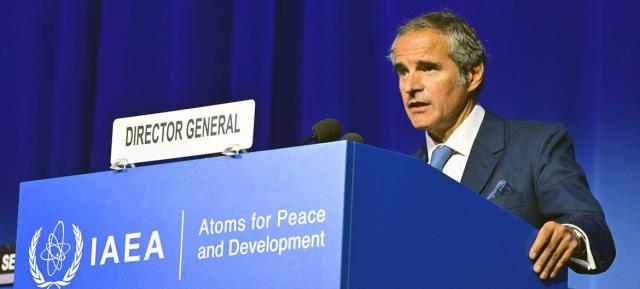
Both South Korea and Japan would also need to negotiate special safeguards arrangements with the International Atomic Energy Agency (IAEA).
Their comprehensive safeguards agreements with the agency contain provisions under Article 14 allowing nuclear material to be excluded from the application of safeguards for certain activities, subject to special arrangements.
South Korea's agreement explicitly permits such arrangements for nuclear material used in non-prohibited military activities, including naval nuclear propulsion.
Japan's agreement contains a similar provision but omits references to military activities, likely reflecting its domestic restrictions on nuclear energy use. Japan would therefore face additional legal questions over military applications of nuclear propulsion, Kwong explained.
Even when submarines do not carry nuclear weapons, the material in their reactors remains subject to international nonproliferation obligations. Both countries would need arrangements with the IAEA to ensure that fuel intended for naval propulsion is not diverted into nuclear weapons programs.
"These arrangements are likely to be program-specific and will take significant time to negotiate," Kwong said.
Australia and Brazil began negotiations related to their respective submarine programs around 2023, but there is still no clear public indication of when those discussions will conclude.
South Korea began its own consultations with the IAEA in September, according to Kwong.
Any Japanese decision to pursue nuclear-powered submarines would therefore need to account for the time required to negotiate safeguards, amend domestic laws and develop specialized infrastructure and personnel.
The obligations would also extend beyond construction and deployment.
Kwong said both countries would need to plan for fuel management throughout the submarines' service lives, including the handling and disposal of nuclear material after decommissioning.
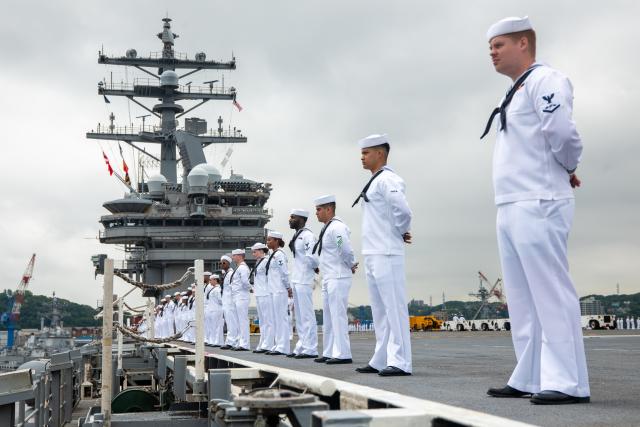
"The impact on US-Japan-ROK defense cooperation/coordination would much depend on the security strategies of the three countries, but there is definitely much potential in enhancing coordinated defense readiness against anti-status quo powers," the Japan-based security expert said.
If both countries eventually acquire the vessels, their greater underwater endurance and operational reach could expand opportunities for coordinated maritime surveillance and defense alongside U.S. forces.
The extent of that cooperation would depend on their ability to align defense priorities and coordinate operations.
The United States has emphasized the importance of its allies' military capabilities but has stopped short of offering a specific assessment of either country's submarine plans.
"Capable allies are central to regional security and we remain committed to strengthening our alliances and partnerships in the Indo-Pacific," said Lt. Cmdr. Molly Fresher of the U.S. Pacific Fleet Public Affairs office in an emailed response to AJP.
"For more information about military acquisitions in Japan or the Republic of Korea, we would refer you to those countries," Fresher added.

Copyright ⓒ Aju Press All rights reserved.