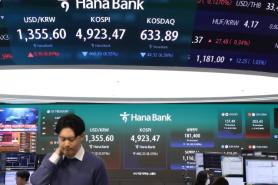

The won’s resilience offers policymakers some breathing room. Despite sharp equity market swings and continued foreign selling, the currency has held near its strongest levels in two years, cushioning imported inflation and giving the central bank more scope to assess whether the market turmoil will spill into the broader economy.
The BOK held its benchmark rate at 3.00 percent in October after back-to-back increases in July and August and also retained a tightening bias, raising expectation for an increase in this year's final policy meeting on Nov. 26.
That bet has sharply eased. The three-year government bond yield has averaged 3.678 percent so far this month, its lowest monthly average since May, when the base rate was still 2.50 percent. The 10-year yield has averaged 3.922 percent, down sharply from 4.464 percent in September following the two summer increases.
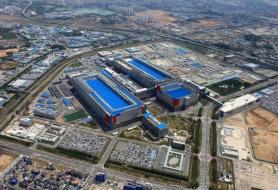
The changing outlook reflects uncertainty over the industry underpinning much of Korea’s growth, exports and stock market gains.
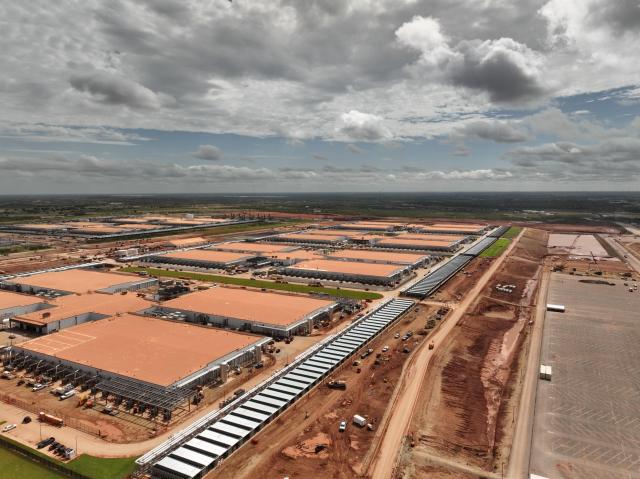
Democratic victories in Texas and Georgia have raised the prospect of tighter scrutiny of data center construction in two major U.S. development hubs.
Texas Governor-elect Gina Hinojosa has called for extending a pause until lawmakers adopt new protections, while Georgia Governor-elect Keisha Lance Bottoms also campaigned for a moratorium. The election results increase the risk of delays, although campaign pledges have yet to become a uniform set of restrictions.
For Korean chipmakers and AI infrastructure suppliers, the concern is whether tougher permitting rules, power constraints and political opposition will slow orders from U.S. hyperscalers and data center operators.
The controversy surrounding Huang has added a separate source of uncertainty at a company central to that cycle.
Nvidia’s board said Sunday it had launched an independent investigation following reports that Huang had been targeted by a foreign intelligence effort.
The board said it retained confidence in him and had no reason to believe national security or company secrets had been compromised.
The investigation introduces uncertainty over leadership at a pivotal customer and partner for Korean chipmakers. Its implications for Nvidia’s operations and investment plans remain unclear, however, and it does not by itself establish that semiconductor orders will weaken, given the towering influence of Huang over management affairs.
Together, the political and corporate shocks give the BOK more reason to examine whether the foreign exodus represents a repricing of expectations or an early warning of a broader slowdown in AI spending.
A further rate increase while that distinction remains unsettled could add pressure to borrowers and domestic demand just as the export outlook becomes less predictable.
Moreover, the won has been untouched by the storm.
The currency closed at 1,337.5 per dollar Tuesday, remaining near October’s two-year highs. That resilience limits the additional inflation pressure that would arise if foreign equity selling were accompanied by a sharp depreciation.
The Korea Institute of Finance (KIF) said Tuesday that large current account surpluses have helped offset foreign exchange pressures from direct and portfolio investment outflows, even as overseas investors reduced their holdings of Korean shares.
The institute expects the surplus to widen to $563 billion in 2027 from an estimated $452 billion this year, supported by strong semiconductor exports and favorable trade prices.
Those earnings provide a substantial currency buffer.
"When the exchange rate climbed into the 1,360-won range Monday, exporters rushed to sell dollars, and foreign investors' stock-sale proceeds were not enough to offset that supply," said Min Kyung-won, an economist at Woori Bank.
Equity volatility can weaken confidence and raise financing uncertainty, while a relatively firm currency helps contain the won cost of imported energy, raw materials and other goods.
If that combination persists, the BOK would have more room to hold rates steady while assessing the effects of its earlier increases.
The currency cushion nevertheless rests heavily on the same semiconductor cycle now unsettling investors.
KIF estimates that the third-quarter merchandise trade surplus of $115.5 billion would have been about $47 billion without recent export and import price effects. The gap illustrates how favorable prices, including unusually strong semiconductor prices, have bolstered external earnings.
A sharper downturn in AI investment could therefore weaken both growth and the currency support that currently makes a longer policy pause easier to contemplate.
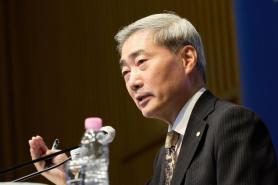
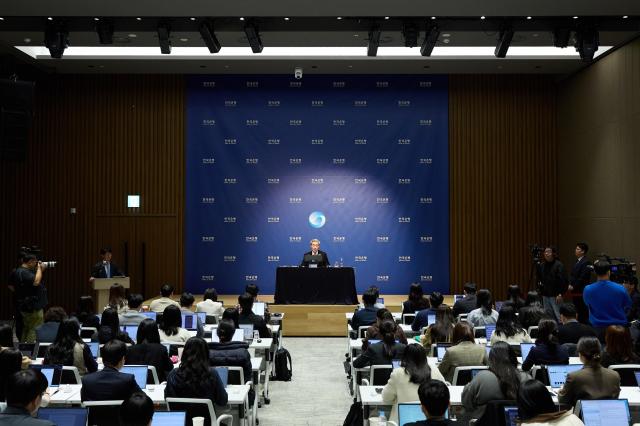
"If semiconductor demand falls sharply because expectations for AI profitability are revised or data center investment is delayed, the shock could spread beyond exports and investment to consumption," Kim Hyun-tae, head of KIF’s macroeconomic research division, said at a seminar in Seoul on Tuesday.
Such a downturn could pressure the won through weaker export receipts and renewed foreign selling of Korean equities. The effects would not necessarily arrive together: share prices can adjust well before orders, export payments and corporate currency conversions.
For now, continued semiconductor strength remains KIF’s baseline.
The institute expects long-term memory chip contracts and firm export prices to sustain external earnings, with economic growth moderating to 3.1 percent next year from an estimated 3.8 percent in 2026.
Domestic debt burdens add another reason for the BOK to proceed cautiously.
In September, the central bank estimated that a 25-basis-point increase could add roughly 7 trillion won ($5.2 billion) to household and corporate interest expenses, although the actual impact would depend on loan repricing, economic conditions and policy support.
The delinquency rate among financially vulnerable self-employed borrowers reached 12.71 percent in the second quarter, compared with 1.99 percent for self-employed borrowers overall.
The vulnerable group comprised 411,000 borrowers, or 12.8 percent of the total, with outstanding loans of 119.2 trillion won.
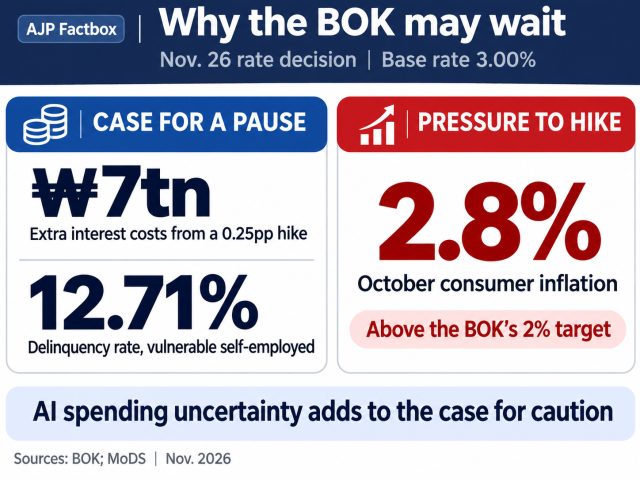
That strengthens the argument for allowing more time to assess the existing tightening before adding to debt-servicing costs.
Inflation still limits how far policymakers can relax. The BOK’s October assessment pointed to persistent price pressures, rising housing prices in Seoul and surrounding areas, and household debt risks. Its decision to pause left further increases on the table.
KIF likewise expects inflation to ease to 2.4 percent next year from 2.7 percent in 2026, remaining above the BOK’s 2 percent target. Its forecast assumes a stronger won and lower oil prices, while its projected average three-year government bond yield rises to 4.1 percent from 3.7 percent.
The case for a longer pause therefore depends on how the risks evolve.
Persistent market volatility and growing uncertainty over chip demand would favor patience, particularly while the won remains firm enough to cushion imported costs.
Copyright ⓒ Aju Press All rights reserved.